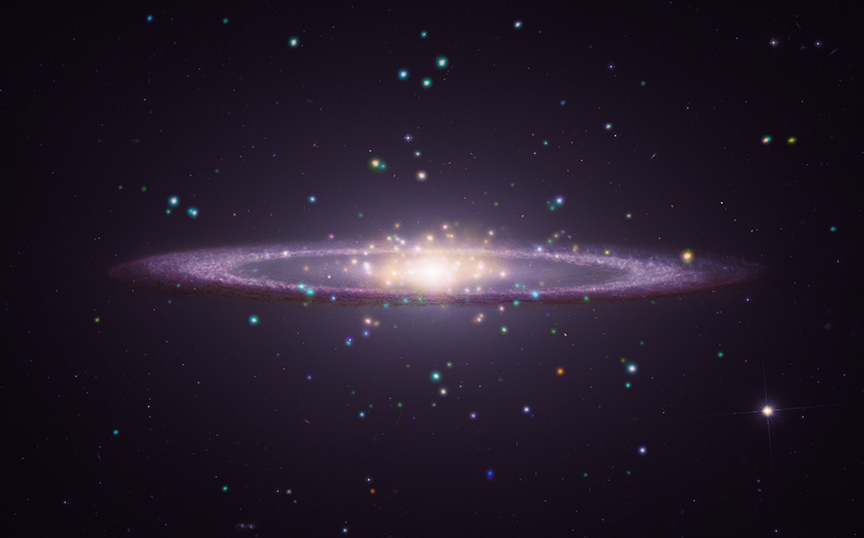
Hubble's visible-light vision highlights the glow of the galaxy's center (warm white), while @chandraxray isolates point sources and hot gas in the galactic halo (cyan and orange). Plus, @NASAWebb's infrared data brings out dust lanes (purple-red): https://t.co/FnzenFQCjZ
Together, NASA's telescopes wear many hats – capturing different wavelengths of light and cosmic happenings.
This group image of the Sombrero Galaxy shows how! ⬇️
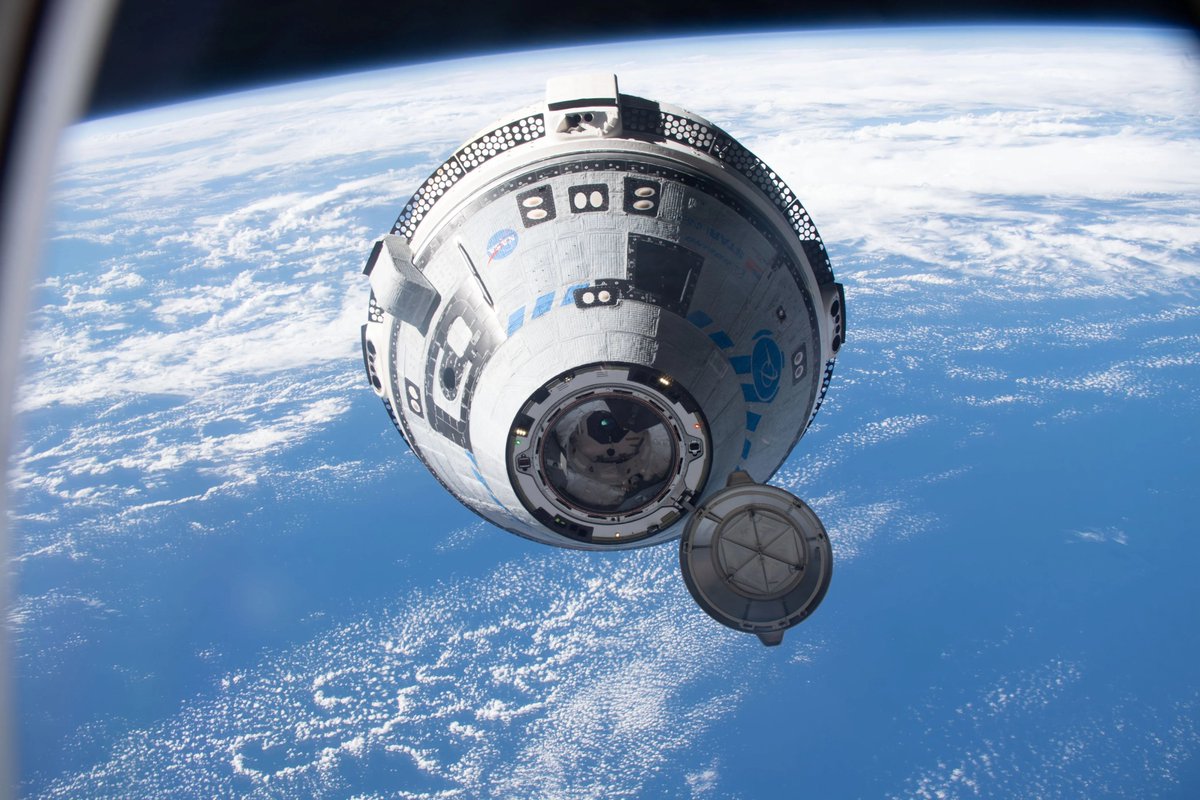
Today at 3 p.m. EDT, @NASA and @Boeing leadership will discuss the Starliner spacecraft and crew missions to the International Space Station. More... https://t.co/J6HXnH2tDu
The JUICE spacecraft returned to Earth on Sept. 28 for a brief visit to pick up a gravity assist to continue its voyage to Jupiter. https://t.co/31glSQzglR
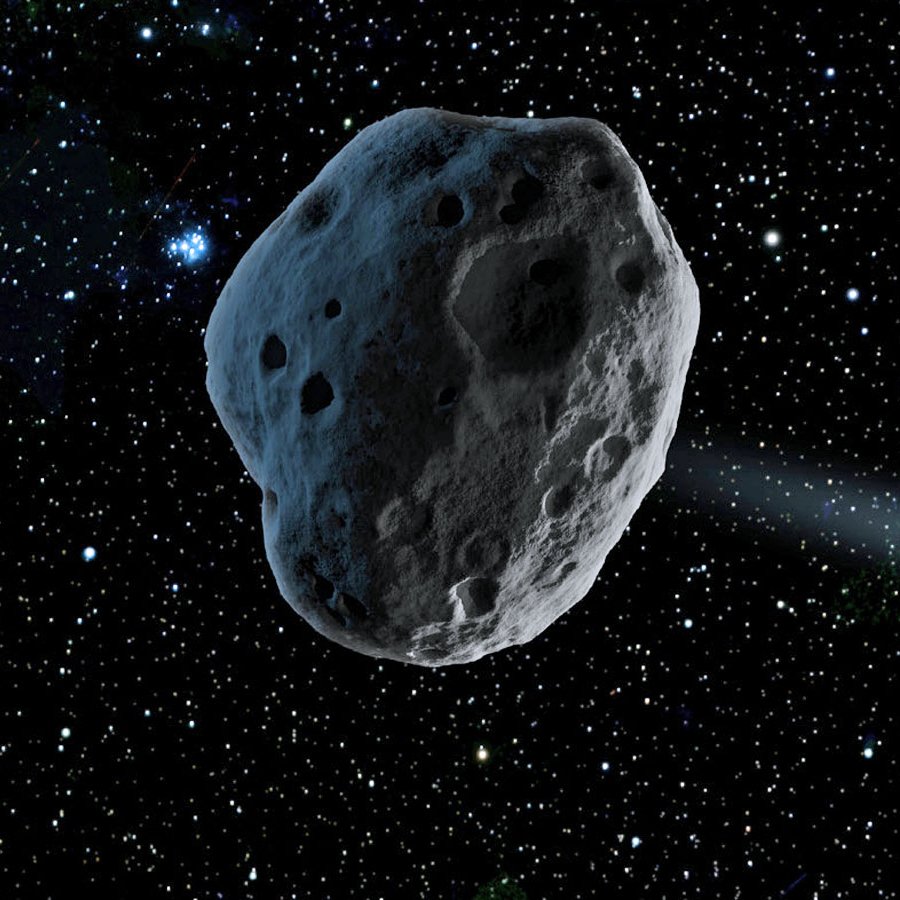
How do we respond when we detect an asteroid that could pose a threat to Earth?
Follow the story behind a recent real-world test in our newest documentary, Planetary Defenders: This Is Not an Exercise, now streaming for free on NASA+. https://t.co/SzFMgNwxEW
Black holes come in a vast array of sizes, from many times the mass of the sun, up to billions of times the size of our star, but the "burps" they emit when feeding seem to be remarkably similar. https://t.co/Q3QY5p0j57
NEWS 🚨: Astronomers have officially named an asteroid after "Weird Al" Yankovic
He joins Elvis, Freddie Mercury, Dolly Parton and the Beatles, who all have asteroids named after them
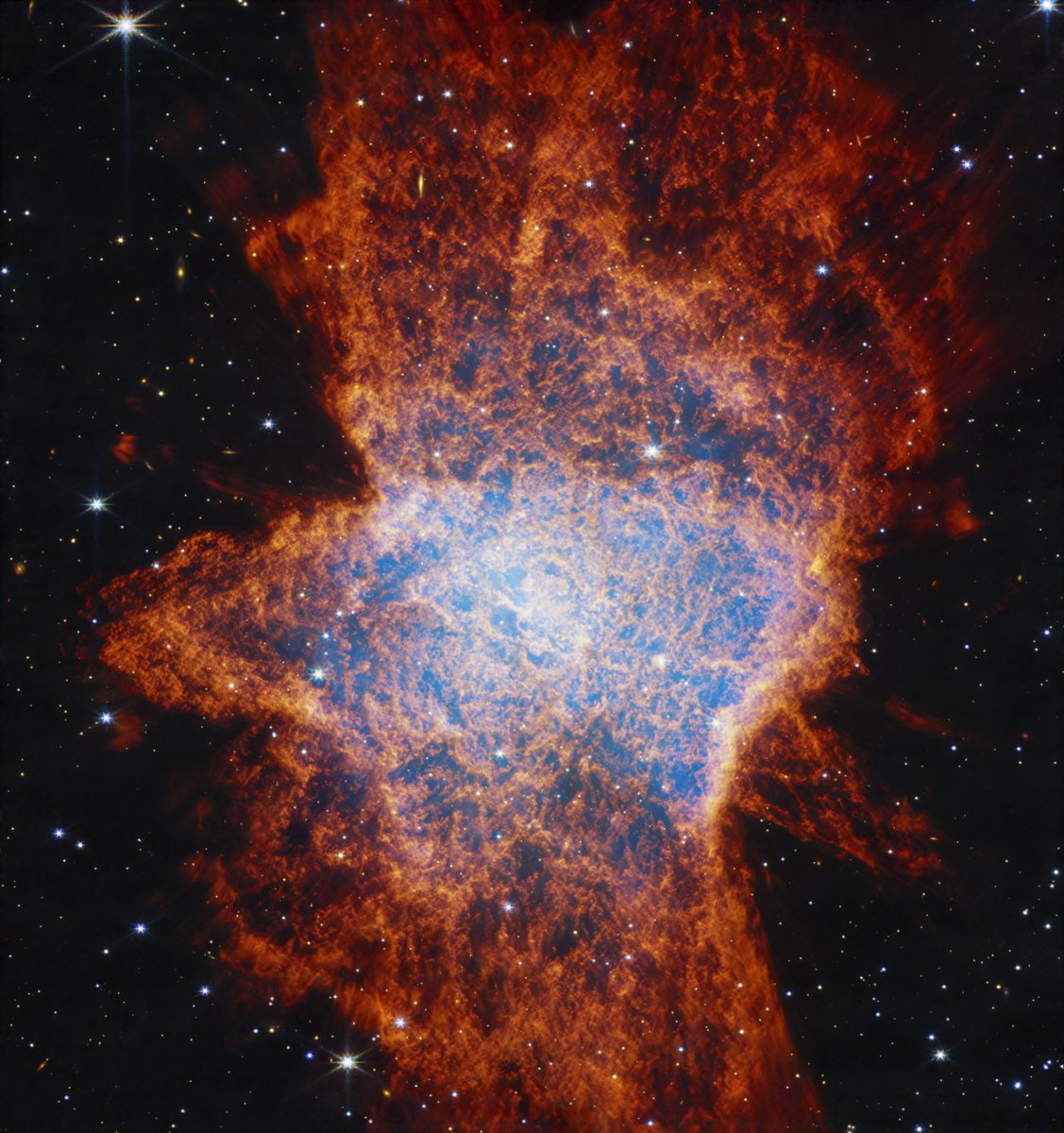
@NASAWebb@NASAHubble A planetary nebula can be one of the eeriest places in space, haunted by a dead star. This @NASAWebb image of NGC 6072 showcases a mess of gas and dust expelled by the central star at the end of its life.
https://t.co/4zAXlEJkDW
On Sept. 24, 2014, India's first interplanetary mission entered into orbit around Mars in a stunning feat of space engineering. Here's why it mattered. https://t.co/Npcr4RWMH4
مركبة جويس الفضائية تُحلّق قرب الأرض في 28 سبتمبر في مناورة جاذبية نحو المشتري
تستعد مركبة جويس (JUICE) التابعة لوكالة الفضاء الأوروبية لإجراء مناورة مساعدة جاذبية مع الأرض يوم الاثنين 28 سبتمبر 2026، بوصفها خطوة محورية في رحلتها الطويلة نحو أقمار المشتري. وستمر المركبة على بُعد 8,640 كيلومتراً من سطح الأرض، وذلك في أقرب نقطة لها عند الساعة 11:45 بالتوقيت العالمي.
أُطلقت مركبة جويس في الثالث والعشرين من أبريل 2023 بهدف استكشاف أقمار المشتري الجليدية، ولا سيما غانيميد وأوروبا. ومنذ إطلاقها، نفّذت المركبة سلسلة من المناورات المعقدة؛ إذ أجرت أول عملية عبور قمري-أرضي في تاريخ رحلات الفضاء في التاسع عشر من أغسطس 2024، ثم استفادت من جاذبية الزهرة في الحادي والثلاثين من أغسطس 2025 لتسريع مسارها.
سيُهيئ العبور الأرضي القادم المركبةَ لعبور أرضي أخير في يناير 2029، قبل أن تصل إلى المشتري في يوليو 2031. ومن المقرر أن تدخل جويس في مدار حول غانيميد عام 2034.
قبيل الاقتراب الأقصى، ستمر جويس عبر ظل الأرض من الساعة 20:29 بالتوقيت العالمي في 27 سبتمبر حتى الساعة 16:29 بالتوقيت العالمي في 28 سبتمبر، مما يعني اعتمادها على البطاريات فقط وإغلاق بعض الأجهزة للحفاظ على الطاقة. بيد أن المركبة ستُواصل جمع البيانات العلمية عن الأرض والقمر بين 23 سبتمبر و3 أكتوبر، شأنها شأن ما فعلته خلال عبورها عام 2024، لمعايرة أجهزتها العلمية استعداداً للمهمة الرئيسية حول المشتري.
تشمل الأهداف العلمية لهذا العبور رصد الذيل المغناطيسي للأرض، وهو الامتداد الخلفي لغلافها المغناطيسي في اتجاه مخالف للشمس.
لمزيد من المعلومات:
https://t.co/ooPJv9L2Ca
Curling up next to a crackling fire? @NASAWebb and @NASAHubble captured this cosmic scale bonfire in the Cigar Galaxy, M82, no matches needed. The galaxy is in the midst of a burst of intense star formation, likely the result of a galaxy merger.
https://t.co/abydjDIC8I
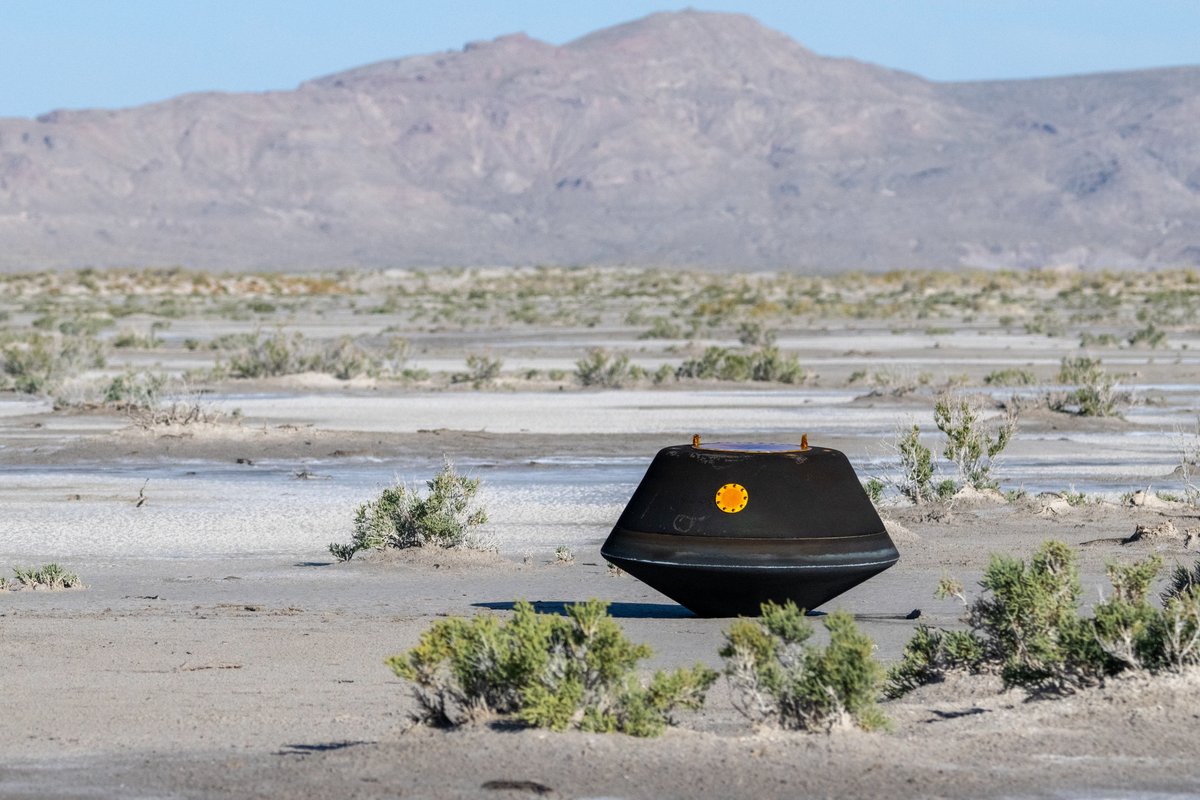
Stuck the landing!
Three years ago today, the OSIRIS-REx spacecraft released a sample capsule at the edge of Earth’s atmosphere to land perfectly upright in the Utah desert.
The capsule held a record amount of pristinely captured rocks and dust from asteroid Bennu. Scientists have studied the extraterrestrial sample, learning it contains all the ingredients key to life.
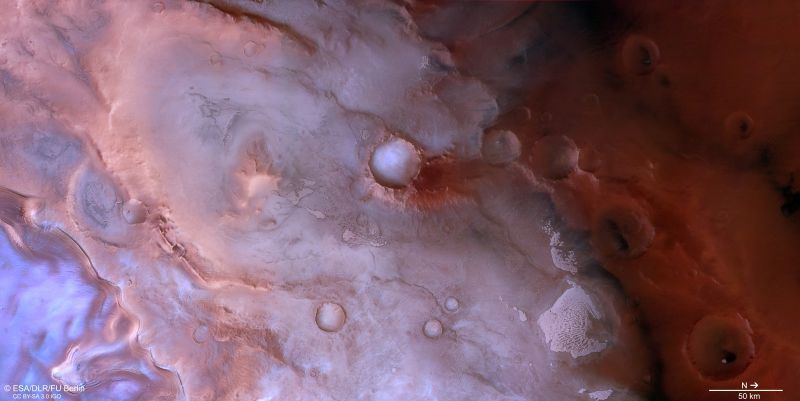
This unusual purplish terrain lies near #Mars' south pole. ESA’s #MarsExpress orbiter captured this view of the ridge #ThylesRupes. At the center is an ice-filled crater, with frost-covered sand dunes at lower right. 🔴🟣
https://t.co/9jESktPboL
📸 ESA/ DLR/ FU Berlin.
A small portion of the Rosette Nebula features in this #HubbleTopImage 🏵️
The Rosette Nebula is a star-forming region spanning 100 light-years across – this detail of the nebula measures just 4 light-years across! 1/2
.@NOAA's #GOESEast (#GOES19) 🛰️ is monitoring a strong coastal storm off the East Coast this morning that is expected to bring moderate to major coastal flooding, strong winds, heavy rainfall and high surf to the Mid-Atlantic and New England.
Coastal #Flood Watches and Warnings are in effect for some areas.
Latest updates and advisories: https://t.co/FdGeSaDj7C
Saturn under near-perfect conditions on Tuesday morning; a truly staggering sight to behold.
By far the most stable night I’ve experienced in a ~decade of doing astrophotography. The visual view at the eyepiece was something out of science fiction!
Info on the last slide.
.@NOAA's #GOESWest (#GOES18) 🛰️ has been monitoring monsoonal moisture streaming into the Southwest via its water vapor channel.
#Flood Advisories and Watches as well as #FlashFlood Warnings are in effect throughout the region—particularly southeastern New Mexico, western Texas and the Oklahoma Panhandle.
Latest updates: https://t.co/FdGeSaDj7C