You just made your first $1M. Your brain immediately jumps to the bigger house, the nicer car, that business idea you’ve been itching to execute.
Resist all of it, that instinct is exactly why most people who come into money are broke again within a few years.
The move nobody teaches you: do nothing.
Let it sit. Don’t deploy it, don’t try to flip it, don’t show it off. Park it somewhere safe that pays you while you think. Lock it into a 2–3 month yield-bearing instrument e.g T-bills, low-risk positions, safe and battle-tested protocols.
You’re not trying to get rich off it; you’re already there. You’re buying yourself time to think clearly and getting paid to do it.
Run the numbers. $1M at just 5% APR:
→ $50,000 a year → $4,167 a month → $137 a day
Every day you wake up, $137 landed in your account. You didn’t touch your principal. You didn’t lift a finger, and if that 5% compounds daily, you’re closer to $51,200 a year, the money starts making money on the money.
So before you spend a single dollar or naira, ask yourself one question: can this purchase pay for itself from the interest alone? If yes, you’ve earned it. If no, you’re eating your seed.
Anyone can GET money. Keeping it is a different skill entirely and it starts with the discipline to sit still while everyone expects you to splurge.
Sometimes parking it and letting it pay you is the best play ever. This is from experience, don’t joke with your once-in-a-lifetime SEED when it comes your way.
It's painfully obvious to me, after 12 years of shipping production code, that:
We are massively overestimating AI and massively underestimating it at the same time.
→ 96% of the code I write today is AI-generated
→ but I review every single line like my job depends on it
→ the developers who win won't be the ones who prompt the fastest but be the ones who know what "good" looks like
Here's what nobody wants to admit:
AI didn't make engineering easier.
It made judgment the entire job.
The bottleneck was never typing.
It was knowing what to build, what to throw away, and what will break at 3am six months from now.
Juniors are shipping 10x more code.
And introducing 10x more bugs they can't explain.
The skill isn't writing anymore.
It's reading. Reviewing. Saying no.
Taste is the new 10x.
The engineers who treated coding as typing are panicking.
The ones who treated it as thinking have never been more valuable.
Adapt accordingly.
1- AI-generated code just creates more technical debt.
2- At the end of the day, you (the developer) are responsible for the code, not the LLM that generated it. So the less code you have, the easier it is for you to own it.
3- A good engineer knows what code to write, and equally importantly, what code not to write or to delete.
(BTW, this is what we old-school software engineers have been saying for a long time, and we've been called all sorts of names for it.)
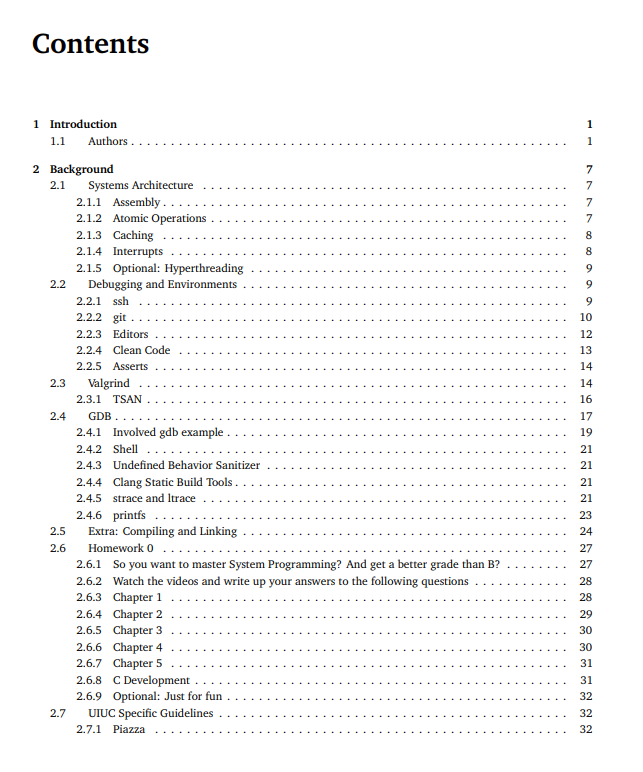
a professor at Illinois got frustrated with existing systems programming textbooks
so he started a wikibook project and had students help write it
it covers C, processes, threads, synchronization, memory allocation, networking, filesystems, scheduling and security
all in one free PDF
it eventually became the official textbook for CS 241 at UIUC with more than 1000 students taking the course every year
written for people who already know how to code and want to understand what actually happens underneath
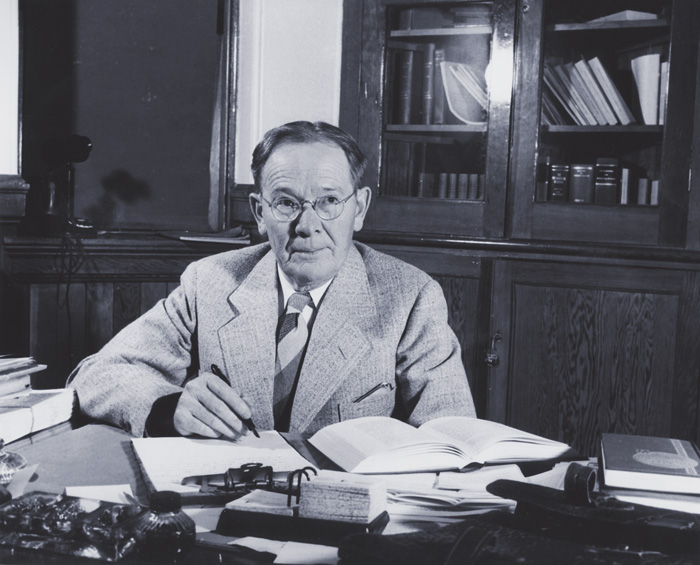
A Stanford psychologist spent 35 years trying to prove that high IQ produced genius. He selected 1,528 of the smartest children in California and tracked them for the rest of their lives.
Not one of them won a Nobel Prize. Two of the boys he had rejected from the study won the Nobel Prize in Physics.
The trait he had built his entire career on did not predict the thing he thought it predicted.
His name was Lewis Terman. The study is one of the most honest accidents in modern psychology.
In 1921, Terman was the most famous psychologist in America. He had translated and adapted the original French intelligence test into the version that would dominate American schools for the next 50 years.
He called it the 'Stanford-Binet'. He believed, with the certainty of a man who had built a career on a single idea, that intelligence was the master variable behind every form of human achievement. The doctors, the inventors, the senators, the artists, the great writers and great scientists. All of them, in his model, were sitting at the top end of the same bell curve. If you could find the children with the highest scores, you could predict the future leaders of the country.
So he set out to prove it.
He sent his research team into California schools and screened roughly 168,000 children. He had teachers nominate their brightest pupils. He gave the nominees the Stanford-Binet. He kept the ones who scored 135 or higher, which placed them in roughly the top one percent of the population. The final sample was 1,528 children, average age 11. They had a name in his lab notebooks within a year. Termites.
He planned to follow them for the rest of their lives. He died in 1956 having tracked them for 35 years. Stanford kept the study going. The last surviving Termites were tracked until the 2000s. The data set is one of the longest continuous psychological studies in human history.
Here is what the data showed.
The Termites did well. They went to college at higher rates than their peers. They earned more money. They became professors and engineers and lawyers and physicians at higher rates than the general population.
Terman was not entirely wrong. High IQ is correlated with conventional success. The correlation is real and the effect size is meaningful.
But that was not what he had set out to prove.
He had set out to prove that high IQ produces genius. The kind of genius that wins Nobel Prizes, writes great novels, founds new fields, and reshapes the technological direction of the world. And on that specific question, the dataset turned on him.
None of the 1,528 Termites won a Nobel Prize. None of them won a Pulitzer. None of them became world-class musicians. None of them produced a single piece of work that historians of science or art still talk about. They were accomplished. They were comfortable. They were not, in any sense Terman would have recognized in his original ambition, geniuses.
The detail that haunts the study is what happened to the children he rejected.
In the screening phase, his team had tested two boys named William Shockley and Luis Alvarez. Both scored below the cutoff. Both were sent home. Shockley went on to co-invent the transistor and win the 1956 Nobel Prize in Physics, the same year Terman died. He founded the company that seeded the entire ecosystem we now call Silicon Valley. Alvarez won the 1968 Nobel Prize in Physics for his work on subatomic particles, and later proposed the asteroid impact theory of dinosaur extinction that turned out to be correct, too.
Two of the most consequential American physicists of the 20th century had been measured by Terman's own instrument and judged not gifted enough to be worth tracking.
There is an important caveat here that the more honest critics have raised in recent years. A 2020 simulation study from researchers at Utah Valley University showed that even with a perfect IQ test, the base rate of Nobel Prizes is so vanishingly low that Terman would have been statistically unlikely to catch a future laureate in any sample of his size, no matter where he set the cutoff.
The Shockley and Alvarez story is dramatic but it does not, on its own, prove that IQ does not matter. It proves that rare outcomes are hard to predict from any single variable, including a very good one.
That caveat is real. It is also not the most important thing the study showed.
The most important thing the study showed is what Terman himself eventually admitted, late in his career, in a quieter voice than he had used for the previous three decades. He wrote that the relationship between intelligence and achievement was, in his words, far from perfect. Within the Termite sample itself, the highest-IQ children did not become the most accomplished adults.
The variation in outcomes inside the group of geniuses was enormous, and IQ explained almost none of it. Some of the Termites had unremarkable careers. Some of the Termites had remarkable ones. The thing that distinguished the two groups was not the score he had used to select them.
What distinguished them, when researchers eventually analyzed the data more carefully, was a cluster of traits Terman had not been measuring. Persistence. Curiosity. Health. Stable family circumstances.
The willingness to keep going when a project stopped being interesting and started being hard. Most of the Termites who went on to do meaningful work were not the ones with the highest scores. They were the ones who had spent decades grinding on a single problem.
The lesson is the part that should change how anyone reading this thinks about talent.
The trait you select for is the trait you optimize for. If you measure children on a test of pattern recognition and verbal recall, you will find children who are good at pattern recognition and verbal recall. You will not find the children who will spend 30 years thinking about a single equation. You will not find the children who will quietly read the same difficult book six times.
You will not find the children whose curiosity is wider than their working memory. Those traits do not show up on the test you are running, which means they do not show up in the dataset you build.
Terman spent his life trying to find genius and ended up proving that he had been measuring the wrong thing all along. The kids he rejected were not stupider than the kids he kept. They were running a different program underneath, and his instrument could not see it.
The trait you can measure is almost never the trait that actually matters.
Most people building careers, hiring teams, and raising children are still selecting for the version of the trait that fits on a test.
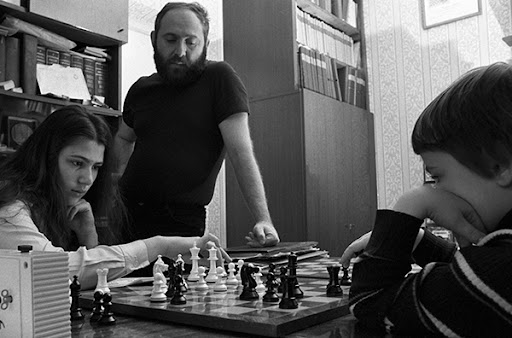
A Hungarian psychologist raised three daughters to prove that any child could become a chess grandmaster through early specialization. He succeeded. Two of them became grandmasters. One became the greatest female chess player who ever lived.
Then a sports scientist looked at the data and found something nobody wanted to hear.
His name is David Epstein. The book is called "Range."
The Polgar experiment is one of the most famous case studies in the history of deliberate practice. Laszlo Polgar wrote a book before his daughters were even born arguing that geniuses are made, not born. He homeschooled all three girls in chess from age four. By their teens, Susan, Sofia, and Judit were dominating tournaments against grown men. Judit became the youngest grandmaster in history at the time, breaking Bobby Fischer's record. The story became the gospel of early specialization. Pick a domain young, drill it hard, and you can manufacture excellence.
Epstein opens his book by telling that story honestly and then quietly demolishing the conclusion most people drew from it.
Chess works that way. Most things do not.
Here is the distinction that took him four years of research to articulate, and that almost nobody who quotes the 10,000 hour rule has ever read.
There are two kinds of environments in which humans develop expertise. Psychologists call them kind and wicked. A kind environment has clear rules, immediate feedback, and patterns that repeat reliably. Chess is the cleanest example. Every game ends with a winner and a loser. Every move is recorded. The board never changes shape. The pieces never invent new ways to move. A child who plays ten thousand games will see most of the patterns that exist in the game, and pattern recognition is exactly what chess mastery is built on.
A wicked environment is the opposite. Feedback is delayed or misleading. Rules shift. The patterns that worked yesterday may be exactly the wrong patterns to apply tomorrow. Most of the real world looks like this. Medicine is wicked. Investing is wicked. Building a company is wicked. Scientific research is wicked. Almost every job that involves a complex changing system with humans in it is wicked.
The Polgar sisters trained in the kindest environment any human can train in. Their success was real and the method was correct. The mistake was generalizing the method to fields where the underlying structure of the environment is completely different.
Epstein's research is what made the implication impossible to ignore.
He looked at the careers of elite athletes outside of chess and golf and found that the pattern was almost the inverse of what people assumed. The athletes who reached the very top of their sports were overwhelmingly people who had played multiple sports as children, specialized late, and often switched disciplines well into their teens. Roger Federer played squash, badminton, basketball, handball, tennis, table tennis, and soccer before tennis became his focus. The kids who specialized in tennis at age six and trained year-round for a decade mostly burned out, got injured, or topped out at lower levels of the sport.
The same pattern showed up everywhere he looked outside of kind environments. Inventors with the most patents had worked in multiple unrelated fields before their breakthrough work. Comic book creators with the longest careers had drawn for the most different genres before settling. Scientists who won Nobel Prizes were dramatically more likely than their peers to be serious amateur musicians, painters, sculptors, or writers.
The skill that mattered in wicked environments was not depth in one pattern. It was the ability to recognize when a pattern from one domain applied unexpectedly in another. That kind of thinking cannot be built by drilling a single subject. It can only be built by accumulating mental models from many subjects and learning to move between them.
The deeper finding is the one that should change how you think about your own career.
Specialists in wicked environments often get worse with experience, not better. Epstein cites studies of doctors, financial analysts, intelligence officers, and forecasters showing that years of experience in a narrow domain frequently produce more confident judgments without producing more accurate ones. The expert builds elaborate mental models that feel comprehensive and turn out to be increasingly disconnected from the actual structure of the problem. They stop noticing what does not fit their framework. They mistake fluency for understanding.
Generalists do better in wicked domains for a reason that sounds almost mystical until you understand the mechanism. They have less invested in any single mental model, so they abandon broken models faster. They are used to being a beginner, so they are not threatened by the discomfort of not knowing. They have seen enough different domains that they can usually find an analogy from one field that unlocks a problem in another. The technical name for this is analogical thinking, and the research on it is one of the most underrated bodies of work in cognitive science.
The single most useful sentence in the entire book is the one Epstein puts almost as a throwaway.
Match quality matters more than head start.
A person who tries six different fields in their twenties and finds the one that genuinely fits them will outperform a person who picked one field at fourteen and stuck to it on willpower alone. The lost years were not lost. They were the search process that produced the match. Every field they walked away from taught them something they later imported into the field they finally chose.
The reason this is so hard to accept is cultural, not empirical. We tell children to pick a path early. We reward the prodigy who knew at six. We treat the late bloomer as someone who failed to launch on time, when the data suggests they were running an entirely different and often more effective optimization process underneath.
The Polgar sisters were not wrong. The conclusion the world drew from them was.
If your environment is genuinely kind, specialize early and drill hard. If it is wicked, and almost every interesting human problem is, then the people who win are the ones who refused to specialize until they had seen enough to know what was actually worth specializing in.
You are not behind. You were running the right experiment all along.
There's a physicist at Stanford named Safi Bahcall who modeled this exact principle and the math is wild.
He calls it "phase transitions in human networks." When you're stationary, your probability of a lucky event is limited to your existing surface area: the people you already know, the places you already go, the ideas you've already been exposed to. Your opportunity window is fixed.
When you move, your collision rate with new nodes in a network increases nonlinearly. Double your movement (new conversations, new cities, new projects) and your probability of a serendipitous encounter doesn't double. It roughly quadruples. Because each new node connects you to their entire network, not just to them.
Richard Wiseman ran a 10-year study at the University of Hertfordshire tracking self-described "lucky" and "unlucky" people. The single biggest differentiator wasn't IQ, education, or family money. Lucky people scored significantly higher on one trait: openness to experience. They talked to strangers more, varied their routines more, and said yes to invitations at nearly twice the rate.
The "unlucky" group followed the same routes, ate at the same restaurants, and talked to the same 5 people. Their networks were closed loops. No new inputs, no new collisions.
Luck isn't random. Luck is surface area. And surface area is a function of movement.
The lobster emoji is doing more work than most people realize. Lobsters grow by shedding their shell when it gets too tight. The growth requires a period of total vulnerability. No protection, no armor, soft body exposed to the ocean.
That's the cost of movement nobody posts about. You have to be uncomfortable first. The new shell only hardens after you've already moved.
Naval is right, and the math proves it in a way most people aren’t processing.
GPT-4 launched at $60 per million output tokens. Today, equivalent capability costs under $1. That’s a 98% price collapse in two years. Demand didn’t fall. It exploded. OpenAI went from $1B to $12B+ in ARR while slashing prices every quarter.
This is Jevons Paradox at civilizational scale. When coal got cheaper in the 1800s, England didn’t use less coal. They burned 10x more. Intelligence is following the same curve, except the adoption rate is compressing a century of energy economics into 36 months.
The part nobody’s thinking through: every previous commodity with “unlimited demand” eventually restructured the labor market around it. Electricity didn’t create unlimited demand for electricians. It eliminated most of the jobs that electricity replaced and created entirely new ones that didn’t exist before.
The 280x cost reduction Stanford measured between 2022 and 2024 means a task that cost $1,000 in AI compute now costs $3.57. At that price, companies don’t just automate what humans were doing. They start doing things that were never economically viable at human-labor pricing. Analysis that would have required a $200K analyst for a year now runs for $50 in an afternoon.
Unlimited demand for intelligence at near-zero marginal cost means intelligence stops being the scarce input. Taste, judgment, and the ability to ask the right question become the bottleneck. The returns flow to people who can direct intelligence, not people who provide it.
That’s the real trade: the value of raw intelligence is cratering while the value of knowing what to do with intelligence has never been higher. And that gap is only getting wider.
Appreciate the detailed response by @chat. The HSM implementation with 20-attempt lockout for the east/west realms is meaningful progress from where this was in June.
A few technical clarifications:
1. Your own key ceremony document acknowledges you deviated from Juicebox's air-gapped ceremony approach, performing setup on networked datacenter hosts instead of air-gapped machines with verifiable boot DVDs. You also used a 1/1 ACS quorum rather than distributed trust across multiple parties. These are meaningful deviations from the security model Juicebox was designed around.
2. Juicebox's protocol designer Nora Trapp analyzed X's deployment and found realm-a and realm-b are software realms (TLS-only, no Noise). The HSM ceremony only covers realm-east1 and realm-west1. Users routing through software realms don't get HSM protection.
3. "X cannot read your messages" is architecturally different from "X structurally cannot read your messages." Your own support documentation acknowledges a malicious insider or X itself could compromise conversations.
Signal's model means keys never leave the device. X's HSMs are controlled by X.
4. Forward secrecy and self-custody being "on the roadmap" confirms they don't exist today. That was the core of my original critique.
5. "Cannot be disabled after registration" is unverifiable without open source code. When can we expect the open source release mentioned in June?
I want 𝕏 Chat to succeed. The path there is publishing the implementation for independent audit, not asking users to trust claims that can't be verified.