i feel bad for "KOLs" fudding the most secure wallet 🦊
their followers are missing out on
- gasless txs
- crosschain swap/bridge
- smart tx/mev protection
- 15% card rewards
- auto yield
- w3a key abstraction
- secure profile sync
- bip 44, eip 7702, pectra
the list goes on..
We're proud to share that Consensys is supporting SWIFT with early-stage prototyping as the global financial infrastructure adds a blockchain-based digital ledger to its technology stack.
@swiftcommunity's move is a pivotal one for global finance, beginning with instant, always-on cross-border payments at unprecedented scale. 👇
As ETH bulls, there's lots to smile about lately 🐂
Including a new @edge_pod dropping today with @sharplink Co-CEO @joechalom and @Consensys CSO @0x81B on why they're committed to growing investor access to ETH, combined with novel exposure to ETH yield through $SBET 👀
like or retweet this post if you didn’t turn bearish on Ethereum, ETH, and its developers and community at the bottom
because you deeply understood that Ethereum is the future of global settlement and trust
and you weren’t going let someone psyop you out of it
Lately, there have been a few incredible investment reports on ETH, created from within the Ethereum community, but one standout I feel deserves more respect is the Trustware Report by @Consensys.
Here's a few takeaways as long term investor in ETH...
https://t.co/9ehnbPTvqN
🔥 This changes everything
We acquired @Web3Auth & this is a statement:
🔐 Embedded wallets are the future
👥 Social login & SSO are crucial for onboarding
🛠️ Devs get infra that just works
Let’s onboard the next billion 🚀
In today's video, I go deep on how to use @DefiLlama to analyze crypto fundamentals.
I look at dozens of DeFi metrics, what they mean, how to use them together, and how to view them on the platform.
Watch here:
gPectra!
MetaMask Extension support for 7702 is live on @Ethereum Mainnet!
Thanks to smart accounts and batch transactions, users can benefit from fewer clicks and faster transactions.
Did you know the Delegation Toolkit can be used to stream native tokens?
In this video, @MarioChristop showcases a demo app which uses @MetaMask Snaps, ERC-7715 and ERC-7710 to request, grant and redeem permissions. 🐊
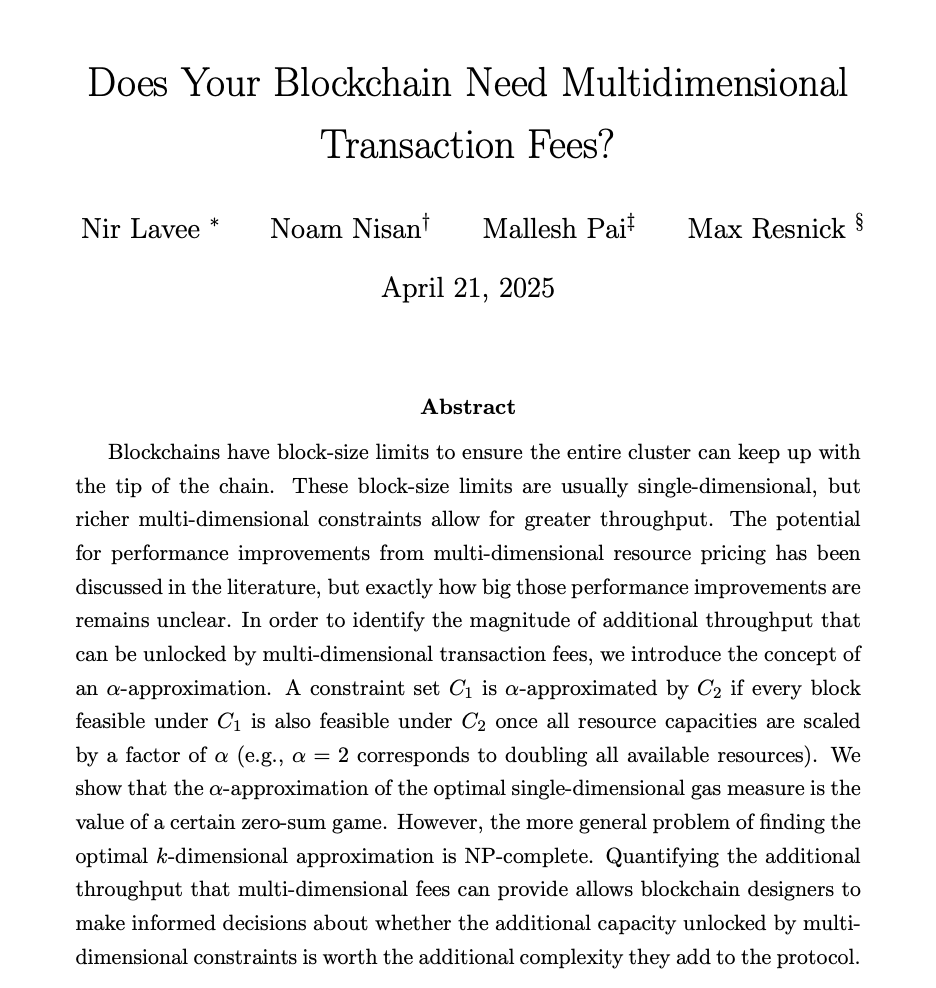
🚨 Blockchains meter transactions (Ethereum’s “gas”, Solana’s “compute units”), but transactions consume multiple resources: CPU, memory, bandwidth, etc. Should we meter and price them separately? Our new paper with (Nir Lavee, @noamnisan, and @maxresnick ) has answers.
This week's upgrade of the MegaETH testnet includes an interesting new feature: realtime_sendRawTransaction. This new RPC method sets the foundation for realtime dapp frontends on MegaETH.
It solves a simple yet important problem: how to retrieve the receipt of a transaction with absolutely minimum latency?
Why it’s an important problem
A key feature of realtime applications are short feedback loops. That is, apps will heavily depend on UX patterns where users can observe the effects of their transactions almost immediately after they send them. This gives users a feeling of interactivity and control like driving a race car, as opposed to remote controlling a Mars landing mission!
The feedback loop of a user transaction is pretty simple. It consists of three parts: first, the transaction travels from the user to the chain; second, the chain executes the transaction, i.e., computes its effects; and third, the effects are communicated back to the user. The goal of every realtime application is to minimize the amount of time taken by each part.
For applications on MegaETH, the first part is easy to optimize. The user simply sends transactions to the sequencer. It is the only entity (at any given point of time) that builds blocks, so the shortest path is to send transactions directly to it. The second part is equally easy. Thanks to MegaETH’s high throughput streaming EVM, transactions seldomly wait in the transaction pool. (Recall that significant queuing only happens when demand is close to or greater than capacity, of which MegaETH has a lot, or when service is bursty, of which stream processing is the exact opposite.)
This leaves us with only the third part to worry about: communicating transaction results back to users. In EVM terms, this means retrieving the receipts. We need to minimize its latency.
Solution prior to realtime_sendRawTransaction
On non-realtime chains, executing transactions (the aforementioned second step) takes significant time such that optimizing receipt retrieval is not a priority. Shaving off 200ms is not that important when the overall latency can never go lower than the multi-second block time!
As a result, standard EVM chains chose polling as the solution to receipt retrieval. Basically, the user (frontend) calls eth_getTransactionReceipt repeatedly until a non-null receipt is returned. (Examples: Viem https://t.co/6TIDcU79cf, Ethers.js https://t.co/GZK3m0JTnc.) Polling is suboptimal for latency because if a receipt unfortunately becomes ready for retrieval right after an eth_getTransactionReceipt attempt (that returned null), we must wait until the next attempt, which wastes time. In order not to waste too much time, we need to reduce the interval between two consecutive eth_getTransactionReceipt calls, i.e., the polling period. However, setting the polling period too low causes too many failed attempts, which burdens the infra. This is like going to the mailbox every 10 minutes to check on the delivery you look forward so much to. I guess many people would prefer a notification pushed to their phone instead!
realtime_sendRawTransaction is eth_sendRawTransaction and eth_getTransactionReceipt bundled together
Entering realtime_sendRawTransaction. The idea behind this new RPC method is quite simple. As mentioned, in MegaETH, almost every transaction is executed immediately after it arrives at the sequencer. So, by just waiting a little bit of extra time, the sequencer will have the receipt ready and can return it to the transaction sender, relieving the sender of polling.
The most natural way to implement this idea is to let eth_sendRawTransaction (the RPC method that sends a transaction to the sequencer) wait until execution completes (which, again, is practical because it takes less than 10ms on MegaETH) and return the receipt of the executed transaction as the RPC response. In order not to break backward compatibility, we gave it a new name: realtime_sendRawTransaction. It takes the same parameter as eth_sendRawTransaction, but returns the receipt of the submitted transaction instead of just the hash.
[The following figure compares polling (left) and realtime_sendRawTransaction (right).]
Implementing realtime dapp frontends using realtime_sendRawTransaction is very easy, since each user interaction requires just one RPC call. There is no polling, subscription, or callback to worry about. The frontend simply uses realtime_sendRawTransaction in place of eth_sendRawTransaction, and it will get transaction receipts preconfirmed by the sequencer in responses.
We believe it will greatly improve the DevEx when building realtime applications on MegaETH as well the end to end UX.
This is probably the most valuable thing that I have ever written here. If you want to know what probably happened, what are the most important facts from CEXes and blockchain and how the market behaved - take a look at my article.
You will not regret it. If so, I will refund $0 that I have made during my Twitter career.
Read it, save for future self and make conclustions for yourself.
Thinking about building an app for the Solana Breakout Hackathon? Join our very own @somemobiledev on 4/17/2025 for two online workshops on building & launching apps for the Solana Mobile dApp Store.
Sign up 👇
https://t.co/8LQTHHw0jO (5pm UTC)
https://t.co/ssPEFxlD5a (9pm UTC)
$11 million was lost to MEV bots/frontrun attacks in July 2024
but only $5 of that amount lost were MetaMask users
there is a reason we are the most secure wallet 🦊 coupled with DIN, Infura, Lava Moat, and Phishing Detect repos which other wallets tap into for support
LFG 🦾
Update: Along with my work @consensys/ @specialmech , I’m excited to share that I’ll be contributing @paradigm as a Research Advisor, bringing perspectives from economics, game theory and mechanism design to improving the protocol and application layers at both. (1/4)
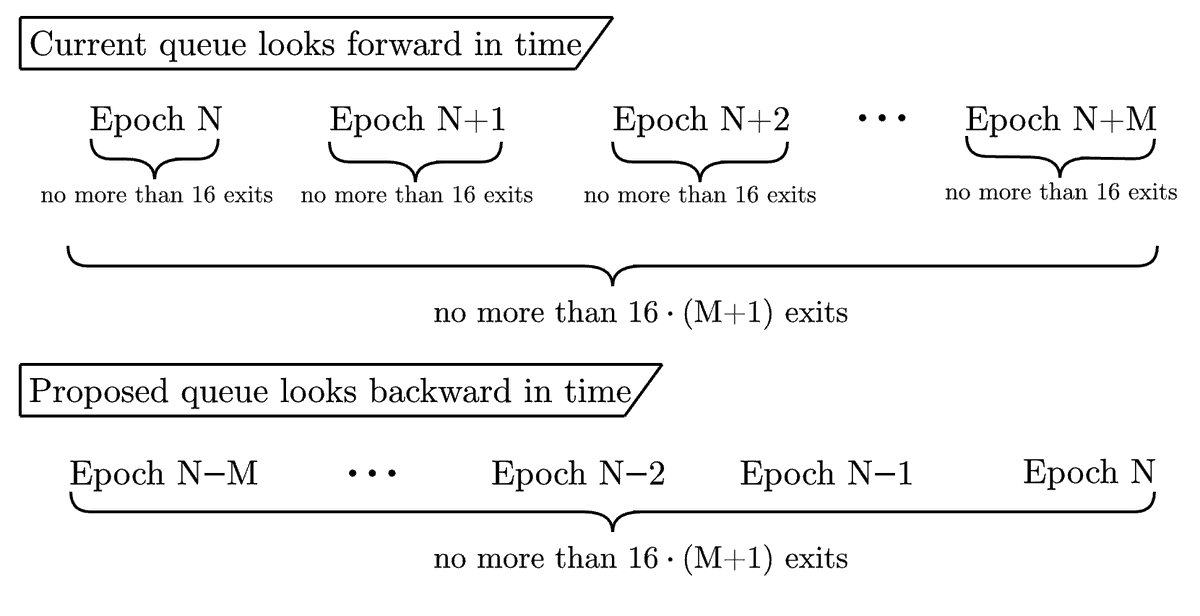
While your TL is cluttered with questionable April fool's gags, here's a palette cleanser by @mikeneuder, @mkalinin2, and myself--- an article describing and motivating our recently proposed EIP-7922 improving voluntary validator withdrawals (1/n)


![yangl1996's tweet photo. This week's upgrade of the MegaETH testnet includes an interesting new feature: realtime_sendRawTransaction. This new RPC method sets the foundation for realtime dapp frontends on MegaETH.
It solves a simple yet important problem: how to retrieve the receipt of a transaction with absolutely minimum latency?
Why it’s an important problem
A key feature of realtime applications are short feedback loops. That is, apps will heavily depend on UX patterns where users can observe the effects of their transactions almost immediately after they send them. This gives users a feeling of interactivity and control like driving a race car, as opposed to remote controlling a Mars landing mission!
The feedback loop of a user transaction is pretty simple. It consists of three parts: first, the transaction travels from the user to the chain; second, the chain executes the transaction, i.e., computes its effects; and third, the effects are communicated back to the user. The goal of every realtime application is to minimize the amount of time taken by each part.
For applications on MegaETH, the first part is easy to optimize. The user simply sends transactions to the sequencer. It is the only entity (at any given point of time) that builds blocks, so the shortest path is to send transactions directly to it. The second part is equally easy. Thanks to MegaETH’s high throughput streaming EVM, transactions seldomly wait in the transaction pool. (Recall that significant queuing only happens when demand is close to or greater than capacity, of which MegaETH has a lot, or when service is bursty, of which stream processing is the exact opposite.)
This leaves us with only the third part to worry about: communicating transaction results back to users. In EVM terms, this means retrieving the receipts. We need to minimize its latency.
Solution prior to realtime_sendRawTransaction
On non-realtime chains, executing transactions (the aforementioned second step) takes significant time such that optimizing receipt retrieval is not a priority. Shaving off 200ms is not that important when the overall latency can never go lower than the multi-second block time!
As a result, standard EVM chains chose polling as the solution to receipt retrieval. Basically, the user (frontend) calls eth_getTransactionReceipt repeatedly until a non-null receipt is returned. (Examples: Viem https://t.co/6TIDcU79cf, Ethers.js https://t.co/GZK3m0JTnc.) Polling is suboptimal for latency because if a receipt unfortunately becomes ready for retrieval right after an eth_getTransactionReceipt attempt (that returned null), we must wait until the next attempt, which wastes time. In order not to waste too much time, we need to reduce the interval between two consecutive eth_getTransactionReceipt calls, i.e., the polling period. However, setting the polling period too low causes too many failed attempts, which burdens the infra. This is like going to the mailbox every 10 minutes to check on the delivery you look forward so much to. I guess many people would prefer a notification pushed to their phone instead!
realtime_sendRawTransaction is eth_sendRawTransaction and eth_getTransactionReceipt bundled together
Entering realtime_sendRawTransaction. The idea behind this new RPC method is quite simple. As mentioned, in MegaETH, almost every transaction is executed immediately after it arrives at the sequencer. So, by just waiting a little bit of extra time, the sequencer will have the receipt ready and can return it to the transaction sender, relieving the sender of polling.
The most natural way to implement this idea is to let eth_sendRawTransaction (the RPC method that sends a transaction to the sequencer) wait until execution completes (which, again, is practical because it takes less than 10ms on MegaETH) and return the receipt of the executed transaction as the RPC response. In order not to break backward compatibility, we gave it a new name: realtime_sendRawTransaction. It takes the same parameter as eth_sendRawTransaction, but returns the receipt of the submitted transaction instead of just the hash.
[The following figure compares polling (left) and realtime_sendRawTransaction (right).]
Implementing realtime dapp frontends using realtime_sendRawTransaction is very easy, since each user interaction requires just one RPC call. There is no polling, subscription, or callback to worry about. The frontend simply uses realtime_sendRawTransaction in place of eth_sendRawTransaction, and it will get transaction receipts preconfirmed by the sequencer in responses.
We believe it will greatly improve the DevEx when building realtime applications on MegaETH as well the end to end UX.](https://pbs.twimg.com/media/Go0vfZtWoAAqX0l.jpg)