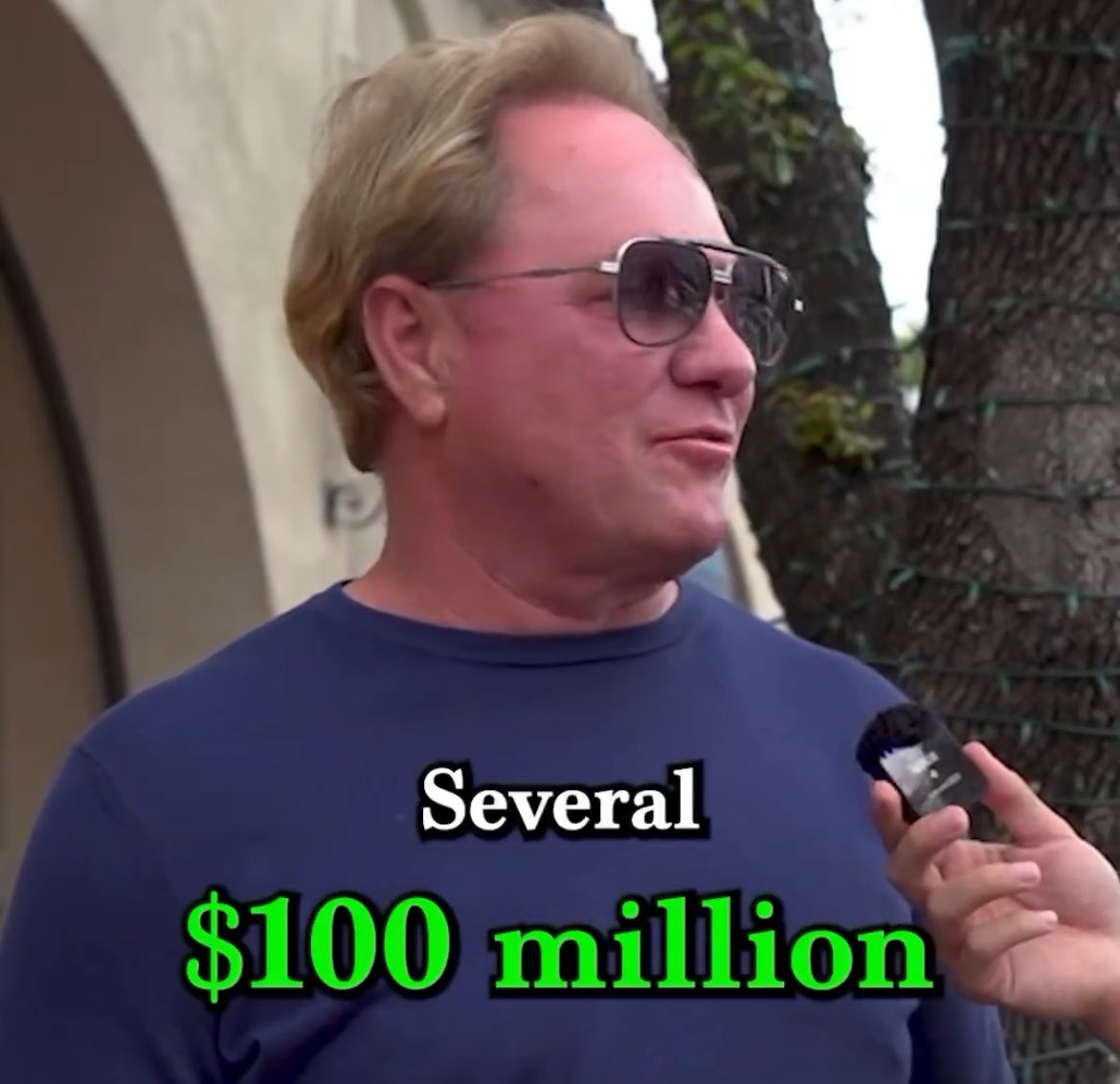
I found three guys who go around asking multimillionaires how they made their wealth.
Surprisingly all of them said the one same thing.
Here are the best 7 videos:
“𝗣𝗲𝗼𝗽𝗹𝗲 𝘄𝗵𝗼 𝗸𝗻𝗼𝘄 𝘄𝗵𝗮𝘁 𝘁𝗵𝗲𝘆'𝗿𝗲 𝘁𝗮𝗹𝗸𝗶𝗻𝗴 𝗮𝗯𝗼𝘂𝘁 𝗱𝗼𝗻'𝘁 𝗻𝗲𝗲𝗱 𝗣𝗼𝘄𝗲𝗿𝗣𝗼𝗶𝗻𝘁.”
That was Steve Jobs.
He believed in his vision so deeply, he never needed slides to sell it.
Passion and belief, that’s it.
𝗧𝗵𝗲 𝗿𝗲𝗮𝘀𝗼𝗻 𝗺𝗮𝗻𝘆 𝗽𝗲𝗼𝗽𝗹𝗲 𝗳𝗮𝗶𝗹 𝗶𝘀 𝗮 𝗹𝗮𝗰𝗸 𝗼𝗳 𝗽𝗮𝘀𝘀𝗶𝗼𝗻.
As Steve Jobs said, “If you don't love something, you're not going to go the extra mile, work the extra weekend, challenge the status quo.”
Passion is the fuel for persistence.
Paul Graham explains why you shouldn’t try to be a visionary
“Empirically, the way to do really big things seems to be to start with small things and grow them bigger. Want to dominate microcomputer software for decades? Start by writing a basic interpreter for a machine with a couple thousand users. Want to make the universal website and a giant vacuum for people’s time? Start by building a website where Harvard undergrads can stalk one another.”
Paul Graham continues:
“Neither Bill Gates nor Mark Zuckerberg knew how big their companies were going to get. All they knew was that they were onto something… Maybe it’s a bad idea to have really big ambitions initially, because the bigger your ambitions, the longer they’re going to take to realize and the long you’re projecting into the future, the more likely you’re going to be wrong.”
PG suggests starting with something small that works instead.
“I think the best way to do these big ideas is not to try and identify a precise point in the future and say, How do I get from here to there? Like the popular image of a visionary. I think a better model is Columbus who thought there was something to the West—I’ll sail westward. Start with something that works, that you know works, that’s small, and then when the opportunity comes to move, move westward. The popular image of a visionary is someone with a very precise view of the future, but empirically it’s probably better to have a blurry one.”
Everyone should start a faceless YouTube channel and make lots of money!
Sadly, 99% of people think it will take years to achieve.
Here's how you can do it in the next 30 days: ↓
Bill Ackman on dealing with disaster: “Make a little progress every day”
After losing $4 billion in Valeant Pharmaceuticals, other Wall Street investors started betting against his firm, Pershing Square, to further compound its catastrophic 30%+ loss and force a liquidation.
To make matters worse, his shareholders filed a lawsuit and he was in the middle of a divorce.
He eventually bought back control of his company with a loan from JP Morgan, settled the shareholder lawsuit, and resolved his divorce. But when asked how he dealt with his psychology during this period, Bill responds:
“This was not my first proximity to disaster. I had another moment in my career in 2002, and I learned this method for dealing with these kind of moments which is: you just make a little progress every day.”
During this period, he would say to himself:
“Today, I’m going to wake up and make progress. I’m going to make progress on the litigation; I’m going to make progress on the portfolio; I’m going to make progress on my life.”
He explains in the clip below:
“Progress compounds a bit like money compounds. You don’t see a lot of progress in the first few weeks and you can’t look up at the mountain top where you used to be, because you’ll just give up. Just take it step by step by step… And one day, you wake up, and you’re like ‘wow, it’s amazing how far I’ve come.’”
He reflects on the chart of Pershing Square’s share price:
“That huge drop that felt like a complete, unbelievable disaster looks like a little bump on the curve. And that really gives you perspective on these things. You just have to power through…. Nutrition, sleep, exercise, and a little progress everyday.”
Source: @lexfridman
Vinod Khosla: An investor is an employee you can’t fire
In the clip below, Sam Altman asks Vinod how founders who want to build significant companies that will be around for decades should think about their investors.
Vinod believes that money is the smaller part of what you get from an investor.
“Advice and the right approach is the much more important part.”
He warns that investors who are happy with 3x their money may want to sell before you do. People who care about your vision won’t, and they’ll be much more tolerant when things inevitably go wrong.
To figure out if an investor will care about your vision, you have to talk to other founders—especially founders with a large vision who had hiccups along the way.
“When things go wrong along an ambitious path is when you can actually judge an investor. I think an investor is an employee you can’t fire, and that’s how you should think about it.”
He continues:
“Most investors are negative value add to a company that’s trying to be ambitious if they’re just trying to get to liquidity as soon as possible.”
When a founder comes to Vinod with an ambitious vision, he tries to help them think through the steps to get there and how to thoughtfully discover the risks on the path to that vision.
Sam Altman adds:
“The only recipe I’ve ever seen work for making really impactful companies is both a giant vision and a good step one, two, and three. You have to have both, and neither without the other will work.”
Source: @ycombinator
Sam Altman is looking to raise $7 trillion, or nearly 10% of global GDP, for an AI chip company.
It's hard to comprehend, but no person would even consider this unless they achieved something that will fundamentally reshape the entire world.
And people think AI is in a bubble, lol.
The first week of the Vision Pro was absolutely insane.
Here are 12 examples that prove the Vision Pro is the best piece of tech ever invented.
1) Next-level surgery