pair personal finance AGI with open financial markets and what do you get?
a meaningfully better future for everyone. its criminal how under-educated our communities are on personal finance.
worse, is that for anyone trying to manage their personal finance actively, the existing system makes it an absolute nightmare
financial freedom and financial access are why I started working in crypto almost a decade ago. Its why I'm still here today
personal finance AGI is upon us, and as this paper demonstrates, will lift all boats!
and the results of this experiment would be even stronger if ran today.
this experiment ran on GPT 5.2.
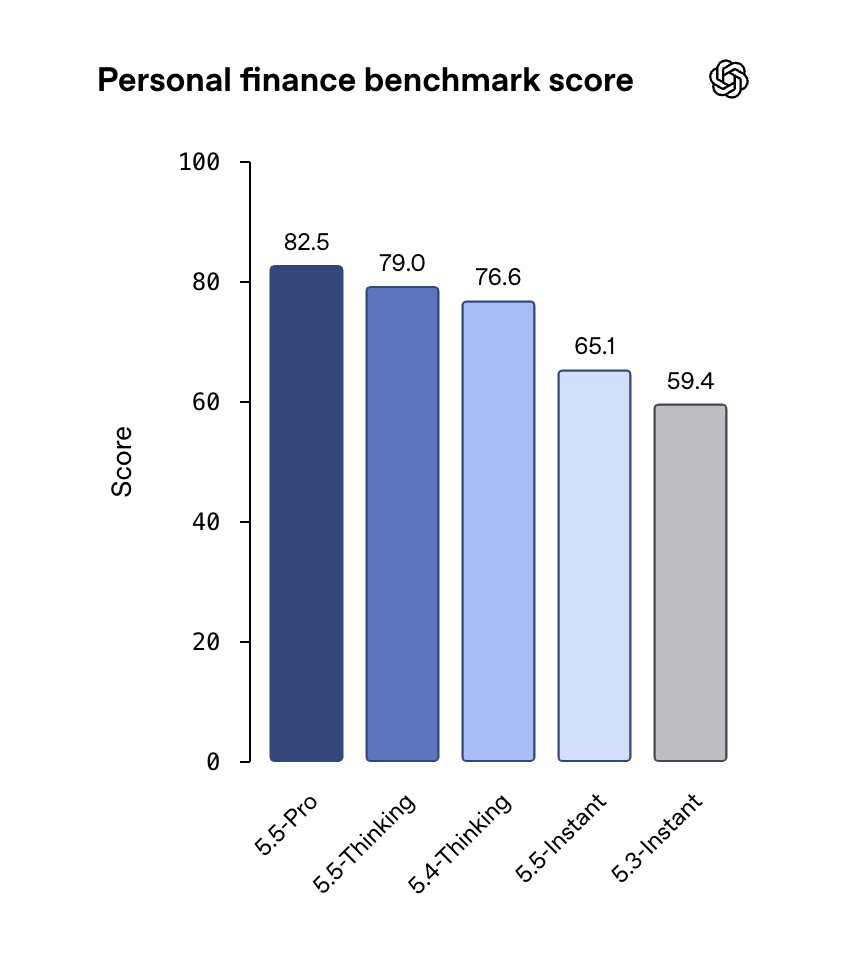
OpenAI's Personal Finance benchmark, shared around the time of 5.5, demonstrated a huge improvement over 5.3.
now we're onto 5.6, no external benchmarks to share, but I promise you it's better.
we still need to do a better job though, helping users ask better questions, so they get the best answers!
🫡 ON IT!
Agreed: GPT-5.6 Pro (which is only available via the chatbot) is the smartest model out there. GPT-5.6 Ultra (the best model in Codex) is not near as powerful on hard tasks.
For really hard problems: GPT-5.6 Sol Pro>Fable 5 Ultracode > GPT-5.6 Sol Ultra. (Yes, this is confusing)
In defense of the specialists:
One of the biggest productivity gains of the Industrial Revolution came from specialization: instead of one person building the entire car, people became excellent at distinct parts of the process.
I’m skeptical that AI suddenly reverses that logic and makes product, design, and engineering interchangeable disciplines.
AI creates more T-shaped people. Engineers can independently define more complete user stories, designers can work closer to production, and PMs can prototype concepts without waiting on the full team. That reduces handoffs, shortens feedback loops, and helps each function execute more efficiently s.
But broader capability does not eliminate the need for specialists. The outcome we’re seeing at @coinbase is smaller, faster teams where people can cross boundaries, while experts still own the judgment and quality bar in their discipline.
Otherwise we risk unknowingly reducing quality across the board by
rapidly producing more good-looking work that a specialist would scoff at.
TLDR I would never invest in a founder that lacks introspection and stating zero introspection is a good thing is net harmful to the founder community and cope for someone trapped in their ego.
I've been meditating for over a decade, struggled with chronic anxiety and have been a founder. My thoughts on the "no introspection for founders" narrative:
1. Michael Allan Singer is a yogi that founded a $5 billion dollar company. He's a great counterpoint to this narrative. He pledged to surrender to the universe's current which led him to develop a deep passion for software and healthcare, which evolved into a massive business.
He's the author of "The Untethered Soul" which is an incredible secular guide to awareness, and "The Surrender Experiment" which documents his experiences surrendering to life and saying yes when he wanted to say no.
2. @pmarca should have said "retrospection" or "rumination", not "introspection". Experientially they "feel" similar, but are vastly different in outcome
Rumination can be harmful, unproductive, and reinforcing of "negative" behaviors and thought patterns. In fact, many meditative traditions warn against rumination and focus on acceptance and letting go opposed to dissection of past events.
Introspection, building awareness of your own thought process and patterns, what consumes your attention and where your attention is blind is critical for improved decision making and leadership, and the recognition that you are awareness and not separate from it. And its an antidote to becoming rudderless after an "ego-death" experience either from deep prolonged meditation or psychoactive encounters.
Psychoactive drugs can free people temporarily from rumination and retrospection and seemingly "make sense" of trauma, eliminating anxiety, which is powerful and should be used intentionally. Ideally wrapped within a meditative process before and after with a guide.
(Using claims of intense experiences disorienting and destroying peoples lives in order to write off an entire practice is clearly an "appeal to extremes" fallacy. I promise sitting with your breath for 10 minutes a day wont leave you unmoored and rudderless)
3. Many people's motivations are founded in trauma. Solving those traumas can lead to disruption in motivation if done alone. In-fact, introspective practice can help stabilize realizations from these experiences and help folks identify the "right" reasons to work hard (being in service to family and your community, improving the world, or innate passions)
That said its certainly true that some of the worlds most impactful entrepreneurs were driven by trauma and died incredibly unhappy.
This is an outlier response to trauma.
Most people have trauma. Most people don't found billion+ dollar companies. And it certainly shoulnd't be viewed as a requirement to success.
4. "anxiety is my fuel" is cope, and thats okay
I myself was driven by anxiety until about 25 years old. It undoubtedly contributed to where I am today, but was also a very suboptimal way to live my life.
That anxiety was the result of an unknown mineral deficiency caused by Lyme disease I contracted as a child. After a slue of blood tests identified this issue, I started taking supplements and within 2 weeks it disappeared. It was meaningfully disorienting for months. I felt like a completely different person, a key driver of my work had disappeared. I had been meditating for 5+ years at that time trying to fix my anxiety and suddenly it was gone.
But now I'm more effective than ever, happier than ever, and pursue my work for reasons which fulfill and validate me. This is a much better experience than attempting to use work as an antidote to an embattled ego. (recognize i'm fortunate my anxiety was solvable thorugh a simple suplement and that for most its not so simple)
People who struggle with anxiety and use it to fuel them look to validate their anxiety by claiming they're better off because of it. "I'm here because I struggled and I turned that struggle into success". That makes sense of their struggle. I know I did exactly this.
imagine what it would feel like if there were overwhelming proof that your anxiety wasn't actually the cause of their success and that they would be even more successful if they didn't have any and they would be happier. That wouldn't feel so great.
If you have anxiety and use it for your fuel, that's okay. But I'd encourage you to start building other motivators and pursue practices which help address the anxiety opposed to embracing it and making it a self-reinforcing aspect of your identity. (obvious disclaimer that I'm just a person on the internet and not a psychologist and recognize that mental health takes many different forms and need a wide variety of treatments)
5. Self selection in public discourse
Those who struggle with anxiety or an embattled ego are more likely to be on a social media platform talking about it than someone who isn't
Michael Alan Singer has dedicated his whole life to introspection. He doesn't have an X profile
There are also those who take advantage of peoples insecurities. "Hustle Porn" is pervasive and used to sell people products and services after making them feel inferior. Avoid it like the plague.
I've learned the hard way that the 12th hour of work in the day is much better spent in they gym AND sitting quietly meditating than "grinding 😤💪💯" for another hour.
---
Finally, its impossible to know for sure until you attempt it yourself.
meditation and introspection, becoming aware of your awareness, changes how you experience your life. Not passively but actively. The way I experience every moment now is wildly different than before because meditation has taught me how to identify that I'm not my mind, that the mind creates a Rorschach Inkblot test overlayed on every experience (your dreams are the inkblot test void of active input from your surroundings)
I always say "please meditate". I'd be willing to guarantee that you will be better off because of it.
And if you're a founder, it will make you a better leader and help you survive when everything is going wrong because you have a more sustainable motivator than a screaming mind
what do you define as "consciousness"?
I would not consider my brains neural activity which expresses thoughts of pain, sadness, joy, etc to be indications of consciousness, its just neural activity which my consciousness experiences
further how can we hope to identify consciousness in ai when we still haven't discovered the seat of consciousness in human biology?
This is the challenge of the consciousness question. I can tell you I experience the world and have internal experience separate from the activity in my mind. But we have yet to find any way to actually prove that this is true in entities other than ourselves.
What can you definitively point at in a humans behavior which proves that they anything other than an advanced biological system executing as a series of inputs and outputs void of any conscious experience?
June was a huge month for agentic commerce on @base
We saw significant transaction volume growth (+297% from May), driven largely by the success of @BlockRunAI
And the average transaction size significantly decreased during June as well, going as low as $0.11 from a high of $1.04 in March
micropayments are fundamental to agentic commerce and will unlock entirely new economies previously stuck behind large transaction minimums
Source: Artemis[.]ai
@kashdhanda cards charge minimum of 30 cents and 2%+
That friction is prohibitive for economies built around micropayments which the agentic economy will be
@XenBH On 3. Maybe the emergent quality then is grit? Everyone has some level of trauma, those who keep have and continue to develop grit which definitely is a prerequisite for success (RE Angela Duckworth's research)
recharge is a great time to meditate 🧘🤝
what AI product design tools actually work for folks?
* Figma: requires $30+ /month plan for any real usage
* Pencil: terrible case of laziness, designs don't look at all like product interfaces despite very detailed prompts
* Claude Design: Don't love being dependent on anthropic rn and don't like the separate usage based billing setup
Introducing a limited preview of GPT-5.6 Sol, our next generation frontier model, as well as GPT-5.6 Terra, a balanced model for efficient, everyday work, and GPT-5.6 Luna, a fast and affordable model for high-volume work.
https://t.co/OoM83SyISN


![0xEricBrown's tweet photo. June was a huge month for agentic commerce on @base
We saw significant transaction volume growth (+297% from May), driven largely by the success of @BlockRunAI
And the average transaction size significantly decreased during June as well, going as low as $0.11 from a high of $1.04 in March
micropayments are fundamental to agentic commerce and will unlock entirely new economies previously stuck behind large transaction minimums
Source: Artemis[.]ai](https://pbs.twimg.com/media/HMjhjOuWoAAtSH6.png)


![0xEricBrown's tweet photo. June was a huge month for agentic commerce on @base
We saw significant transaction volume growth (+297% from May), driven largely by the success of @BlockRunAI
And the average transaction size significantly decreased during June as well, going as low as $0.11 from a high of $1.04 in March
micropayments are fundamental to agentic commerce and will unlock entirely new economies previously stuck behind large transaction minimums
Source: Artemis[.]ai](https://pbs.twimg.com/media/HMjiSe8XYAATjZn.png)


