1/ 🌍 Building the future we actually want to accelerate toward.
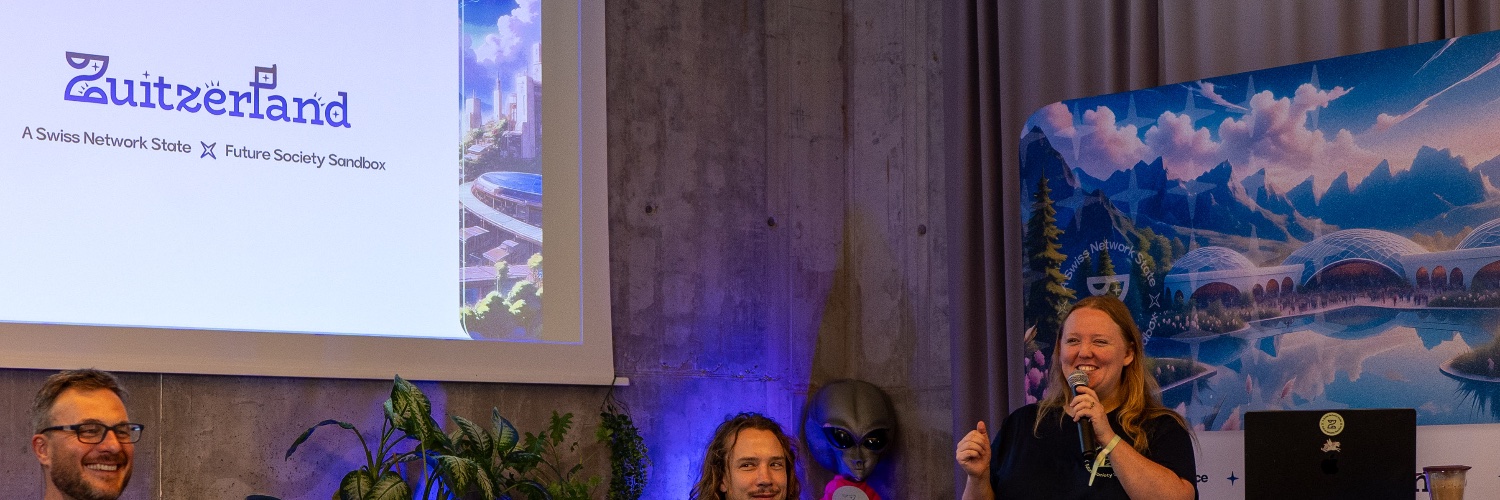
Last week I spoke at @balajis’ Network State Conference, sharing what we’re building in Switzerland- a permanent village and accelerator for decentralized, open-source, and d/acc technology.
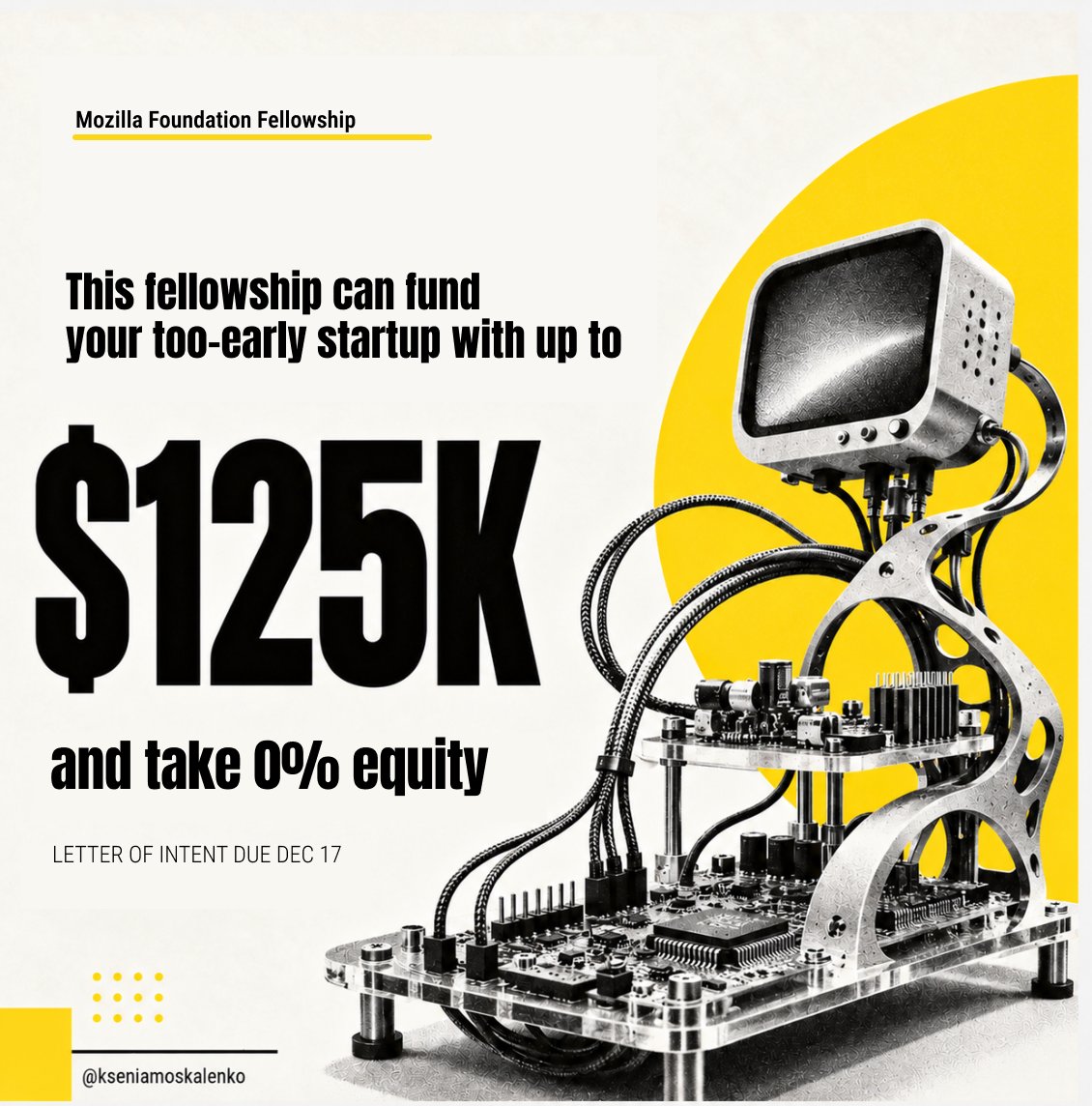
FELLOWSHIP‼️: Working on tech that's too early or too weird for VCs? Mozilla Foundation is giving up to $125,000. No equity.
This is @Mozilla Foundation Fellowship 2027.
What you get:
- $100K stipend + $25K project budget
- 12 months, starts June 1
- only 10 fellows
- 200+ fellow alumni network
What they want:
- neurotech, biotech, physical AI
- compute, energy, quantum
- business models for the agentic web
- security tools for small orgs
Who qualifies:
- individual builders, apply directly
- building alternatives, not polishing the status quo
- host-nonprofit track pays $100K
The catch: it backs a person and a project, not your cap table. Letter of intent first, and only a small shortlist gets invited to a full application in February.
Deadline: letter of intent Thu Dec 17, 11:59pm PT
🖇️ Apply → https://t.co/KYfr0H1tqv
P.S. Keep your project, traction and links in one place before you go out & raise → @ThePageform
BREAKTHROUGH🚨: One of the deadliest and hardest-to-treat cancers, pancreatic cancer, can now be treated with a pill that appears to shrink and possibly even eliminate tumours in patients.
I once heard someone say there are two types of founders: warlords and poets.
You could use other words: generals & artists, empire builders & missionaries, conquerors & dreamers.
I think that since Zuckerberg, Bezos, and Travis replaced Steve Jobs as the go-to SV template, we have been short on poets.
To me, the distinction is about whether your goal is conquest or about a deeper belief in something.
This is not to knock conquest. I think the warlords are far more commonly "great" entrepreneurs. But the poets tend to be more likely to create the truly new--more likely to really bend the arc of things. Perhaps poets were/are more commonly artists, scientists, inventors...
In the modern era, it is interesting to look at AI leaders from Altman to Dario to Ilya on this spectrum. I suspect some are easy to place and others might be more hotly debated.
I also think this is the most interesting way to look at the complexity of Elon: he reads as a warlord, and often feels the need to act that way. But my hot take is that I think he is a poet deep down. Perhaps that may be lost, but I hope not.
I’m thrilled to share that my collaborators and I have been awarded a $1.1 million grant from the John Templeton Foundation to build a global atlas of moral beliefs for better aligned AI.
AI is reshaping people's lives around the world, but its training comes from a small fraction of humanity. Everyone should have a say in the values that shape AI.
We're building the Global Virtues Atlas: a map of how people understand moral values and navigate moral dilemmas across the globe.
The atlas will offer insights into how people approach moral tradeoffs worldwide and serve as a benchmark and training resource for AI. To support human flourishing, AI must draw on global wisdom.
Thankful to be creating this with an amazing team: Mirta Galesic, @MohammadAtari90, @mnvrsngh, @kurtjgray, Niket Tandon, @BA_Helgason, Sijin Chen, Baihui Wang, Chen Cecilia Liu, and Daniele Barolo
We’re looking for collaborators in regions traditionally underrepresented in AI research. If you’re interested, please get in touch at [email protected]!
One benefit of younger generations investing more in stonks and other digital things instead of housing is that it reduces perverse incentives that drive people to push to keep housing expensive, instead of rejoicing when prices drop as we do for all other life necessities.
That said, an advantage housing has/had is that it's a culture and policy-encouraged default of investing in a safe non-crazy thing that you can't easily liquidate. Modern platforms encourage the opposite of this, leading to more irresponsible behavior. We need the equivalent of those good properties that housing investment has, for modern digital assets.
https://t.co/4uV8Q1rGuN
several decent explanations for what’s going on, but keep in mind that politicians have exactly 0 incentive to generate panic & bank runs by admitting their system is failing.
Remember how they originally said “face masks don’t prevent COVID” to prevent ppl from buying masks 😷
If our network does not go down over the next 6 months despite holding $550B, then people and institutions will race to deposit their livelihoods onto the future-proof + post-AI sanctuary that we call Ethereum: a place where you can be safe without giving someone else your keys.