10 REPOS DE GITHUB QUE DEBERÍAN SER ILEGALES
(están destruyendo +50.000 millones de dólares en ingresos a grandes empresas)
GUÁRDALO.
1. yt-dlp
Descarga cualquier vídeo de YouTube, X, TikTok, Instagram y muchas otras plataformas.
YouTube Premium cobra 14 $ al mes por hacer menos que esto. Es 100 % gratuito.
Repo → https://t.co/L4bOkQSleR
2. Ollama
Ejecuta modelos de IA de nivel GPT-4 directamente en tu portátil. Sin costes de API.
Muchos desarrolladores gastan 500 $ al mes en OpenAI para tareas que Ollama puede hacer sin conexión por 0 $.
Repo → https://t.co/mWbs3b1MxO
3. Fooocus
Generación de imágenes con calidad similar a Midjourney usando tu propia GPU.
Midjourney cuesta 30 $ al mes.
Fooocus permite generaciones ilimitadas de forma gratuita.
Repo → https://t.co/WiM16vgHwc
4. Whisper
El modelo de transcripción de OpenAI, liberado como código abierto.
Otter cobra 20 $ al mes por algo que Whisper hace gratis y en 99 idiomas.
Repo → https://t.co/hbhOLJBw0h
5. Plausible Analytics
La alternativa de código abierto y centrada en la privacidad a Google Analytics.
Google Analytics 360 cuesta hasta 150.000 $ al año para empresas.
Plausible, alojado por ti mismo, cuesta 0 $.
Repo → https://t.co/984vBOLmGc
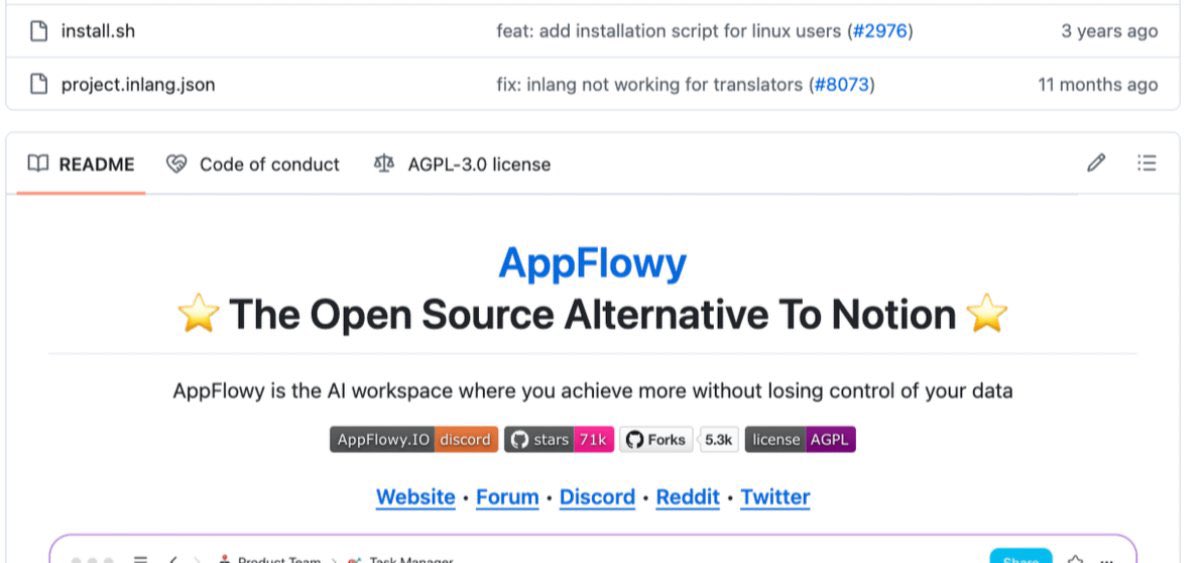
6. AppFlowy
El Notion de código abierto. Notion cobra 20 $ por usuario al mes para equipos.
AppFlowy permite usuarios ilimitados en tu propio servidor de forma gratuita.
Repo → https://t.co/mcpYZ8Fk6f
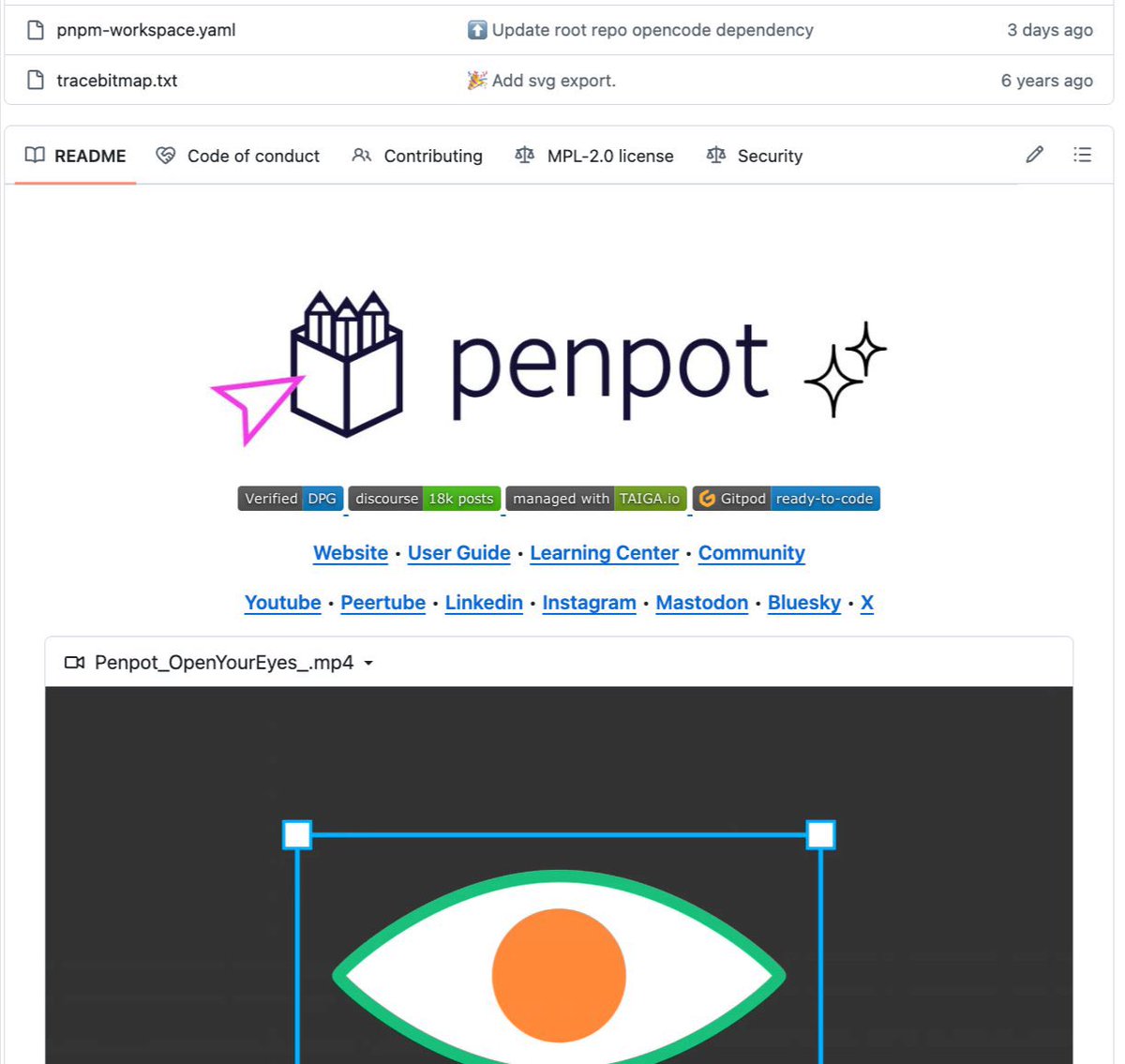
7. Penpot
La alternativa open source a Figma. Figma cobra 45 $ al mes por editor.
Penpot ofrece prácticamente la misma experiencia, autoalojada y gratis para siempre.
Repo → https://t.co/PtqNDHNawH
8. n8n
El Zapier de código abierto. Zapier Pro puede costar hasta 600 $ al mes para automatizaciones complejas.
n8n, autoalojado, permite automatizaciones ilimitadas por 0 $.
Repo → https://t.co/FUTazRXz24
9. https://t.co/3AJZo26yFM
La alternativa open source a Calendly. Calendly Teams cuesta 16 $ por usuario al mes.
https://t.co/3AJZo26yFM es gratuito para particulares y de código abierto para equipos.
Repo → https://t.co/vmHj0wsCWO
10. Bitwarden
La alternativa de código abierto a 1Password.
Muchos gestores de contraseñas cobran unos 8 $ por usuario al mes.
Bitwarden ofrece una versión gratuita muy completa y es de código abierto.
Repo → https://t.co/QuFAYKm1VD
Estos repos están destruyendo silenciosamente 50.000 millones de dólares en ingresos a grandes empresas cada año.
Ninguno de ellos es ilegal.
Guarda este hilo.
Compártelo con esa persona que sigue pagando por herramientas que llevan años teniendo alternativas gratuitas.
100 % gratis. 100 % código abierto.
🚨 Anthropic just showed a 27-minute workshop on how to actually do prompts for Claude.
Taught by the people who built it.
Free. No registration. No paywall.
I've seen $300 courses that don't cover what they teach in the first 8 minutes.
Watch it and bookmark it now.
My friend applied to 250 tech jobs in two years. No MIT. No Stanford. No PhD.
Last month Anthropic offered him $750,000.
I asked him how he broke in from zero.
He sent me the exact video that got him in. Andrej Karpathy's 4-hour course on "How to build a full LLM from scratch."
Anthropic's own researcher gives up the exact playbook behind building LLMs like ChatGPT & Claude.
I watched it last night.
Halfway through, I realized I could break into an AI lab in months, not years.
Bookmark this and read the article below.
• 00:00 - LLMs as new OS
• 40:58 - LLM tokenization architecture
• 53:22 - LLM neural network internals
• 1:04:20 - LLM pretraining
• 3:21:37 - LLM RLHF & DeepSeek R1
Google just released free 1-hour course on building agentic knowledge Graphs from 0% to 100%:
10% → 4:01 - how to build a GraphRAG agent
30% → 15:00 - Graph Engineering explanation
55% → 30:00 - Agentic search Engineering
80% → 35:48 - Graph Engineering practice
100% → 47:06 - self-improving agents in graphs
this free Google course mass replaces a $500 graph engineering bootcamp - learn it in 60 min to 100%
watch it today - then read the full graph playbook in the article below ↓
THIS GUY MAKES COMPLEX AI AGENT CONCEPTS RIDICULOUSLY EASY TO UNDERSTAND.
No jargon wall. No assuming you already know what a reward model or an evaluation harness is.
Just a straight line from "I have no idea how agents actually work" to "oh, that's genuinely simple."
The best explainers do not simplify by cutting corners. They simplify by finding the one analogy that makes the whole thing click.
the secret of building a billion-dollar company is revealed in a 50 minute lecture.
Stanford released this complete framework , led by Peter Thiel (co-founder of Palantir & Paypal ) that founders at billion-dollar startups are known to use.
bookmark & watch today. it is the most valuable 50 minutes in startup strategy right now.
then read the breakdown below.
Nassim Taleb on a bet most people would take: 70% chance to win $1, 30% chance to lose $1 - should you bet?
His answer: in most cases no. Not because of risk aversion. Because it's a bad strategy in multi-period reality
Same Kelly Criterion math that powers Shannon's information theory - there's a sweet spot, and most behavioral finance papers ignore it
Bet too much and the law of large numbers ruins you. Bet too little and you leave returns on the table
this is what every quant learns before they touch capital
This 9-minute lecture by Nassim Taleb on "Probability Distribution" will teach you more about prediction trading than 2 months as a Quant intern at Jane Street.
Bookmark it & give it 9-minutes today. It’ll be the most productive start for your week. Then read article below.
ANTHROPIC JUST RELEASED THE OFFICIAL PLAYBOOK FOR BUILDING A COMPANY WITH CLAUDE CODE.
30 minutes. free. from the engineers who built it.
Bookmark this before you forget.
CEO: 1 human. Employees: AI agents. Operations: fully automatic.
The zero-headcount company is no longer a joke.
Excited about the continued rollout of top institutional data on-chain via Chainlink; @sixgroup, the exchange of Switzerland has adopted @chainlink as the data standard it is using to get critical market data on-chain: https://t.co/GpQP6dnYnJ.
Chainlink is the global leader powering DeFi and TradFi RWAs, with this data helping increase institutional demand for both. This is now starting to be driven by TradFi users wanting their existing data sources on-chain as they move more capital into institutional grade RWAs, which require market data to function in similar ways to how DeFi couldn't operate without a reliable data layer like Chainlink. Below are just some more examples of top institutional grade data providers choosing to put their data on-chain via Chainlink as the leading data standard powering over 70% of DeFi globally, with it now becoming the data standard that their institutional users will be asking for in order to consider an RWA as reliable enough to put institutional capital into.
Also, being able to easily access key market data from CRE workflows should accelerate your speed of building a tokenized fund, tokenized equity, on-chain vault and many other on-chain financial products. If Chainlink is the place you can receive all your needed market data, reference data and identity data on-chain, that is just the first initial level of Chainlink integration for your RWAs. If you are then choosing to build your entire on-chain financial product via CRE because it can help you reliably create key conditional statements around the use of that data, with privacy and off-chain level compute scalability, that is a whole new level of Chainlink integration. The type of data listed below opens the door for DeFi, Prediction Markets, RWAs and many new categories of on-chain smart contracts to adopt Chainlink, but then once the full capabilities of reliable on-chain data are combined with CCIP cross-chain and CRE chain abstraction, that becomes a whole different level of orchestration, reliability and privacy.
S&P: https://t.co/6udBRjSzTU
FTSE Russell: https://t.co/gCpz6Eu99v
Tradeweb: https://t.co/d18kWaCifK
Deutsche Börse Group: https://t.co/KANxCI6uIF
Intercontinental Exchange: https://t.co/QWS7ETO9Kd
Coinbase: https://t.co/FS2MLqy4VB
Among many others....
Instead of watching an hour of Netflix, watch this 2-hour Stanford lecture on AI careers. It will teach you more about winning in the AI race than all the AI content you’ve scrolled past this year.