🚀 $Simp, the first #ERC404 Token on @arbitrum, has launched NFT!
🎁 There are 10,000 #SimpDoge 404 NFTs available, with each token representing a blind box.
🧵 Check out the details 👇
How do we manage configurations in a system?
The diagram shows a comparison between traditional configuration management and IaC (Infrastructure as Code).
🔹 Configuration Management
The practice is designed to manage and provision IT infrastructure through systematic and repeatable processes. This is critical for ensuring that the system performs as intended.
Traditional configuration management focuses on maintaining the desired state of the system's configuration items, such as servers, network devices, and applications, after they have been provisioned.
It usually involves initial manual setup by DevOps. Changes are managed by step-by-step commands.
🔹 What is IaC?
IaC, on the hand, represents a shift in how infrastructure is provisioned and managed, treating infrastructure setup and changes as software development practices.
IaC automates the provisioning of infrastructure, starting and managing the system through code. It often uses a declarative approach, where the desired state of the infrastructure is described.
Tools like Terraform, AWS CloudFormation, Chef, and Puppet are used to define infrastructure in code files that are source controlled.
IaC represents an evolution towards automation, repeatability, and the application of software development practices to infrastructure management.
–
Subscribe to our weekly newsletter to get a Free System Design PDF (158 pages): https://t.co/uc5M7CdXXC
Lance (@RLanceMartin) has done a TON to bring advanced retrieval topics to @langchain and make them easily approachable and understandable
This image he put together for our "RAG from Scratch" YouTube series is absolutely 🔥
(YouTube: https://t.co/kq285rHcZz)
12 RAG Pain Points and Proposed Solutions 💡
Building production RAG is hard. @wenqi_glantz compiled a list of 12 (!!) RAG pain points + added a full solution list to each one with @llama_index abstractions 🔥
We’ve put out cheatsheets before, but this one is much more comprehensive. This is a must have mapping if you have pain points in any one of the following listed areas:
1. Context Missing in the Knowledge Base
2. Context Missing in the Initial Retrieval Pass
3. Context Missing After Reranking
4. Context Not Extracted
5. Output is in Wrong Format
6. Output has Incorrect Level of Specificity
7. Output is Incomplete
8. Ingestion Pipeline Can't Scale to Larger Data Volumes
9. Inability to QA Structured Data
10. Document (PDF) Parsing
11. Rate Limit Errors
12. LLM Security (prompt injection)
Check out the blog: https://t.co/sP12g5Hli0
This builds on the paper “Seven Failure Points When Engineering a Retrieval Augmented Generation System” by Barnett et al. (check it out here: https://t.co/670udFeewI).
Linux file system explained.
The Linux file system used to resemble an unorganized town where individuals constructed their houses wherever they pleased. However, in 1994, the Filesystem Hierarchy Standard (FHS) was introduced to bring order to the Linux file system.
By implementing a standard like the FHS, software can ensure a consistent layout across various Linux distributions. Nonetheless, not all Linux distributions strictly adhere to this standard. They often incorporate their own unique elements or cater to specific requirements.
To become proficient in this standard, you can begin by exploring. Utilize commands such as "cd" for navigation and "ls" for listing directory contents. Imagine the file system as a tree, starting from the root (/). With time, it will become second nature to you, transforming you into a skilled Linux administrator.
Have fun exploring!
Over to you: which directory did you use most frequently?
–
Subscribe to our weekly newsletter to get a Free System Design PDF (158 pages): https://t.co/uc5M7CdXXC
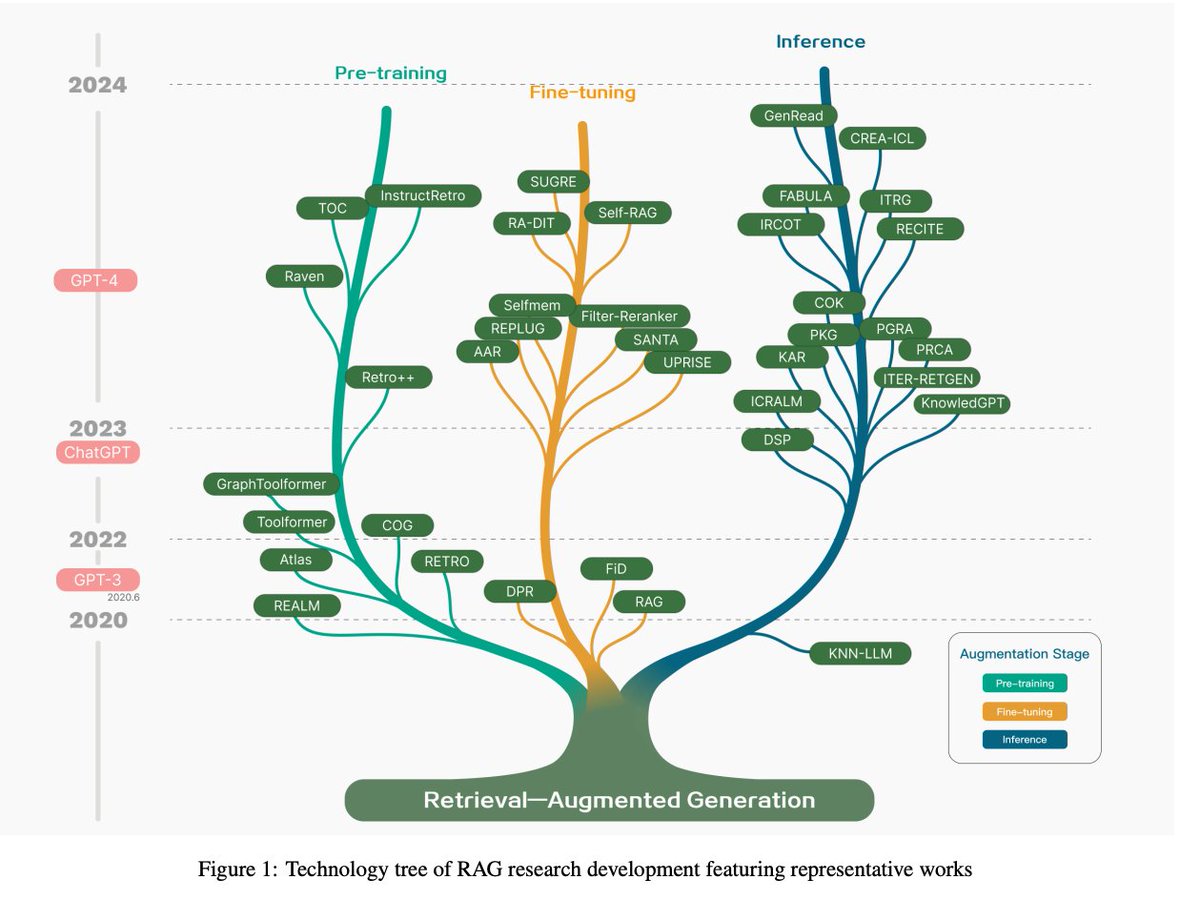
There was a lot of cool RAG research in the past year or two, and luckily for you, all of these efforts are tracked under one place!
“Retrieval-Augmented Generation for Large Language Models: A Survey” by Gao et al. does an admirable job categorizing all RAG research into three categories: 1) pre-trained models (e.g. RETRO), 2) Fine-tuning + RAG (e.g. RA-DIT), and 3) RAG in inference mode (e.g. DSP).
Within the last category (which @llama_index has predominantly focused on), the paper walks through all the different components.
Check the paper out! ttps://arxiv.org/abs/2312.10997
This paper inspired @_nerdai_’s fantastic blog post that we posted about: https://t.co/G1hAyRy1Jf
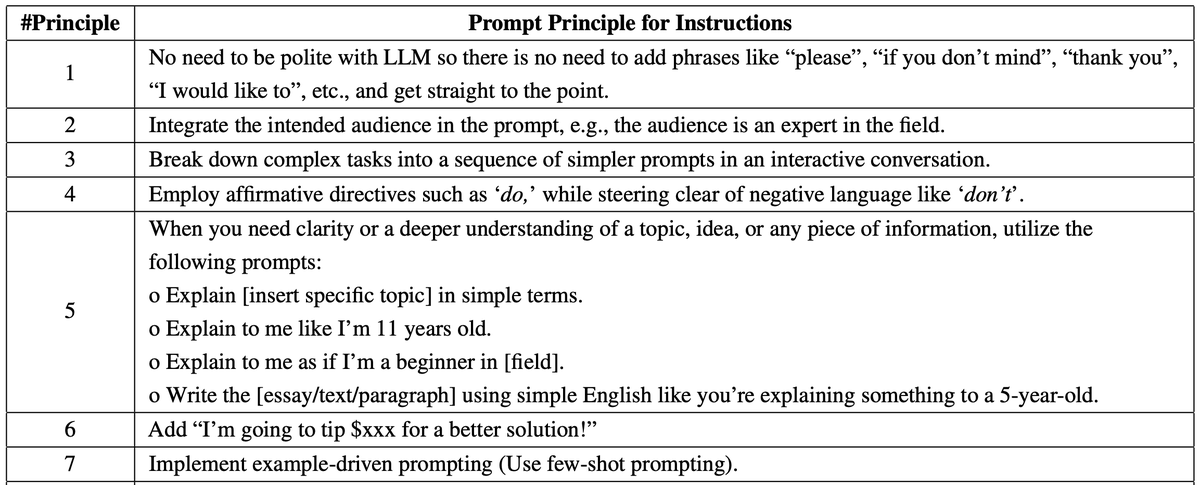
Key observation one: For improved responses, it’s not necessary to be overly polite with your LLM, and don't be too stingy. Consider 'tipping' your model for more informative outputs!😀
🤖️Discover your innovative AI friends!
🎁Win amazing Badges, Linea ETH rewards and so much more!
🥳Join us today and get ready for an unforgettable AI x Web3 life. Let the fun begin!
@LineaBuild#Myshell
https://t.co/meEtCZi1Ig
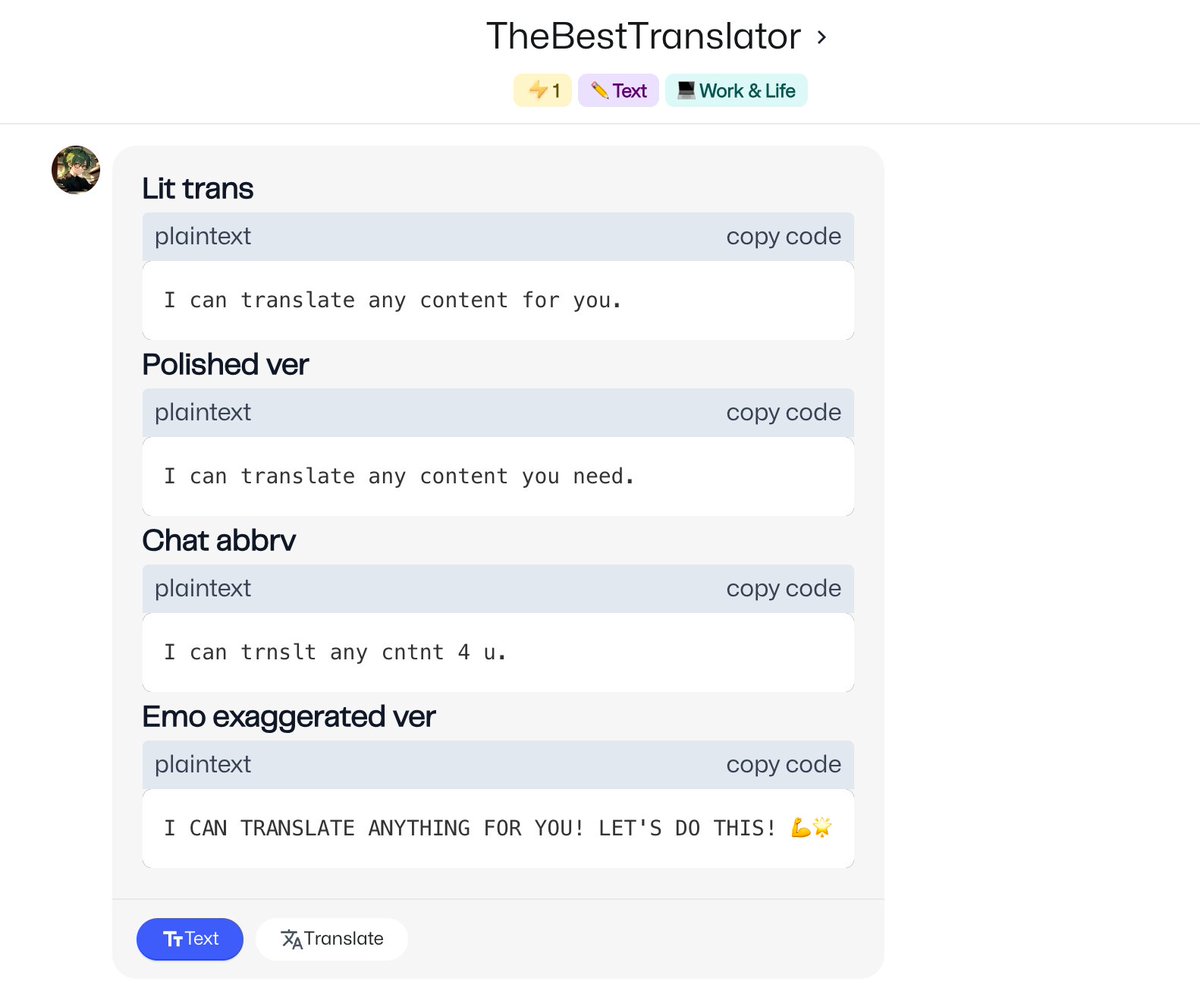
The BEST translation tool EVER is here! 🤯
1️⃣ Four different tones to fit any translation scenario!
2️⃣ One-click copy with Markdown - so easy! 🖱️
👇 Check out this reference prompt, customizable for any target language!
Click this link to try it now:https://t.co/xsuA0PdulN