A headteacher said something to me this week that I’ve been thinking about since.
Her teachers enjoy reading to their classes.
They value it.
They know pupils enjoy it too.
But they do not always see it as the best use of their time.
Do you care about questioning??
Do you want to get better at questioning??
IF YES then you have just a few more days to sign up to our webinar next week. We'll be covering a bunch of easy and effective strategies, link here and video example in reply!
https://t.co/DIQRiFDT27
I've seen a fair few people suggest recently that the 'science of reading' can essentially be boiled down to two messages:
1. Explicitly teach kids to decode (i.e. systematic phonics).
2. Build knowledge.
But in many schools, these two things alone will fail.
>>
What has Europe provided?
Democracy. The concept you are currently stress-testing to destruction.
The Enlightenment. The intellectual foundation upon which every single item on your list was built.
The scientific method. Without which there is no medical innovation, no space programme, no AI, no computing, and frankly no list.
The internet, since you mention it, was built on protocols developed at CERN. In Switzerland. In Europe.
The Renaissance. The printing press. Penicillin. The theory of relativity. Quantum mechanics. The jet engine. The World Wide Web. Radar. The telephone. Television. Aspirin. X-rays. The combustion engine.
The accumulated body of philosophy, literature, art, music and architecture that gave Western civilisation something worth calling civilisation in the first place.
And the largest trading partner the United States has ever had, generating trillions in mutual prosperity across decades of genuine cooperation.
Europe is not a charity case that received American gifts. It is the foundation upon which the American project was built.
And if you are European yourself, perhaps a moment of quiet reflection on what that actually means would do you more good than a list on the internet.
🇯🇵 Japan is trending on X today. Good. It’s long overdue.
Let me tell you three things about this country that will quietly rearrange everything you thought you knew about human nature. And animal nature, for that matter.
Someone left an iPhone on a bench in Tokyo. Not in a sleepy suburb. In Tokyo, a city of thirty-seven million people, most of them late for something. The phone sat there. The next day, it was still there. Which means that every single person who walked past it made a small, private decision: not my phone. Leave it.
In most cities, that phone would have had the life expectancy of a mayfly in a thunderstorm.
Then there are the football fans. Japan plays a match, the stadium shakes, and then they tidy up. Every wrapper, every cup, every last plastic bag. They leave the stands cleaner than they found them. As a matter of course. As if it simply never occurred to them to do anything else.
And then there is Nara. In this ancient city, over a thousand wild deer roam freely among temples and schoolchildren and tourists. They have lived alongside humans for thirteen centuries, considered sacred messengers of the gods. They will walk up to you, look you in the eye, and bow. Deeply and deliberately. It is, I should mention, a learned trick to get rice crackers. But here is the thing: somewhere along the way, a deer decided that the correct way to ask a human for something was to bow politely first. In Japan, even the wildlife has manners.
No law requires any of this. No fine threatens it. It emerges from something much harder to legislate: the quiet, unshakeable conviction that the space around you is shared, and therefore your responsibility.
Three small stories. One very large idea.
The rest of us might want to take notes.
ありがとう、日本。
Thank you, Japan.
Gandalv / @Microinteracti1
I was just listening to a podcast where someone was talking about teaching kids 'inferencing skills'.
Every example they gave of an inference was one that would be automatic (or at least fairly obvious) with relevant knowledge, but impossible without that same knowledge.
>>
Robert Mueller died last night.
He was 81 years old. He had a wife who loved him for sixty years. He had two daughters, one of whom he met for the first time in Hawaii, in 1969, on a few hours of military leave, before he got back on the plane and returned to Vietnam. He had grandchildren. He had a faith he practiced quietly, without performance. He had, in the way of men who have seen real things and survived them, a quality that is increasingly rare and increasingly mocked in the country he spent his life serving.
He had integrity.
And tonight the President of the United States said good!
I have been sitting with that word for hours now. Good. One syllable. The thing you say when the coffee is hot or the traffic is moving. The thing a man who has never had to bury anyone, never had to sit in the specific silence of a room where someone is newly absent, reaches for when he wants the world to know he is satisfied. Good. The daughters are crying and the wife is alone in the house and good.
I want to speak directly to the Americans reading this. Not the political Americans. Just the human ones. The ones who have lost a father. The ones who know what it is to be in that first hour, when you keep forgetting and then remembering again, when ordinary objects become unbearable, when the world outside the window seems obscene in its indifference. I want to ask you, simply, to hold that feeling for a moment, and then to understand that the man you elected looked at it and typed a single word.
Good.
This is not a country having a bad day. I need you to understand that. Countries have bad days. Elections go wrong. Leaders disappoint. Institutions bend. But there is a different thing, a rarer and more terrible thing, that happens when the moral center of a place simply gives way. Not dramatically. Not with a single catastrophic event. But quietly, in increments, until one evening a president celebrates the death of an old man whose family is still warm with grief, and enough people find it acceptable that it becomes the weather. Just the weather.
That is what is happening. That is what has happened.
The world knows. From Tokyo to Oslo, from London to Buenos Aires, people are not angry at America tonight. Anger would mean there was still something to fight for, some remaining faith to be betrayed. What I see, in the reactions from everywhere that is not here, is something older and sadder than anger. It is the look people get when they have waited a long time for someone they love to find their way back, and have finally understood that they are not coming.
America is being grieved. Past tense, almost. The idea of it. The thing it represented to people who had nothing else to believe in, who came here with everything they owned in a single bag because they had heard, somehow, across an ocean, that this was the place where decency was written into the walls. That idea is not resting. It is not suspended. It is being buried, in real time, with 7,450 likes before dinner.
And the church said nothing.
Seventy million people have decided that this man, this specific man who has cheated everyone he has ever made a promise to, who has mocked the disabled and the dead and the grieving, who celebrated tonight while a family wept, is an instrument of God. The pastors who made that bargain did not just trade away their credibility. They traded away the thing that made them worth listening to in the first place. The cross they carry now is a costume. The faith they preach is a loyalty oath with scripture attached. When the history of American Christianity is written, this will be the chapter they skip at seminary.
Now I want to talk about the men who stand next to him.
Because this is the part that actually breaks my heart.
JD Vance is not a bad man. I have to say that, because it is true, and because the truth matters even now, especially now. Marco Rubio is not a bad man. Lindsey Graham is not a bad man. They are idiots, but not bad, as in BAD! These are men with mothers who raised them and children who love them and friends who remember who they were before all of this. They are not monsters. Monsters are simple. Monsters do not cost you anything emotionally because there is nothing in them to mourn.
These men are something more painful than monsters.
They are men who knew better, and know better still, and will get up tomorrow and do it again.
Every small compromise they made had a reason. Every moment they looked the other way had a justification that sounded, at the time, almost reasonable. And now they have arrived here, at a place where a president celebrates the death of an old man and they will find a way, on television, to say nothing that means anything, and they will go home to houses where children who carry their name are waiting, and they will say goodnight, and they will say nothing.
Their oldest friends are watching. The ones who knew Rubio when he still believed in something. Who knew Graham when he said, out loud, on the record, that this exact man would destroy the Republican Party and deserve it. Who sat next to Vance and thought here is someone worth knowing. Those friends are not angry tonight. They moved through anger a long time ago. What they feel now is the quiet, irrecoverable sadness of watching someone disappear while still being present. Of watching a person they loved choose, again and again, to become less.
That is what cowardice costs. Not the coward. The people who loved him.
And in the comments tonight, the followers celebrate. People who ten years ago brought casseroles to grieving neighbours. Who stood in the rain at gravesides and meant the words they said. Who told their children that we do not speak ill of the dead because the dead were someone's beloved. Those people are tonight typing gleeful things about a man whose daughters are not yet done crying. And they feel clean doing it. Righteous. Because somewhere along the way the thing they were given in exchange for their decency was the feeling of belonging to something, and that feeling is very hard to give up even when you can no longer remember what you gave for it.
When Trump is gone, they will still be here.
Standing in the silence where the noise used to be. Without the permission the crowd gave them. Without the pastor who told them their cruelty was holy. They will be alone with what they said and what they cheered and what they chose to become, and there will be no one left to tell them it was righteous.
That morning is coming.
Robert Mueller flew across the Pacific on military leave to hold his newborn daughter for a few hours before returning to the war. He came home. He buried his dead with honour. He served presidents of both parties because he understood that the institution was larger than any one man. He told his grandchildren that a lie is the worst thing a person can do, that a reputation once lost cannot be recovered, and he lived that, every day, in the quiet and unglamorous way of people who actually believe what they say.
He was the kind of American the world used to point to when it needed to believe the story was true.
He died last night. His wife is alone in their house in Georgetown. His daughters are learning what the world is without him in it. And somewhere in the particular hush that falls over a family in the first hours of loss, the most powerful man and the biggest loser on earth sent a message to say he was glad.
The world that loved what America was supposed to be is grieving tonight. Not for Robert Mueller only. For the country that produced him and then became this. For the distance between what was promised and what was delivered. For the suspicion, growing quieter and more certain with each passing month, that the America people believed in was always partly a story, and the story is over now, and there is nothing yet to replace it.
That is all it needed to be.
A man died. His family is broken open with grief.
That is all it needed to be.
Instead the President said good.
And the country that once stood for something looked away 🇺🇸
Gandalv / @Microinteracti1
@PieCorbett Grammar embedded into the teaching of writing shouldn’t be automatically dull and ineffective. Unless you buy into some dull scheme, of course. Having knowledge and control of language can be powerful and exciting, and is an enduring life skill.
My latest article for @NEUnion's Educate magazine is about verse novels. I explore how they help make reading possible for children who might feel overwhelmed by the amount of text on a page, why they work brilliantly as read-alouds & how they're helpful for developing empathy.
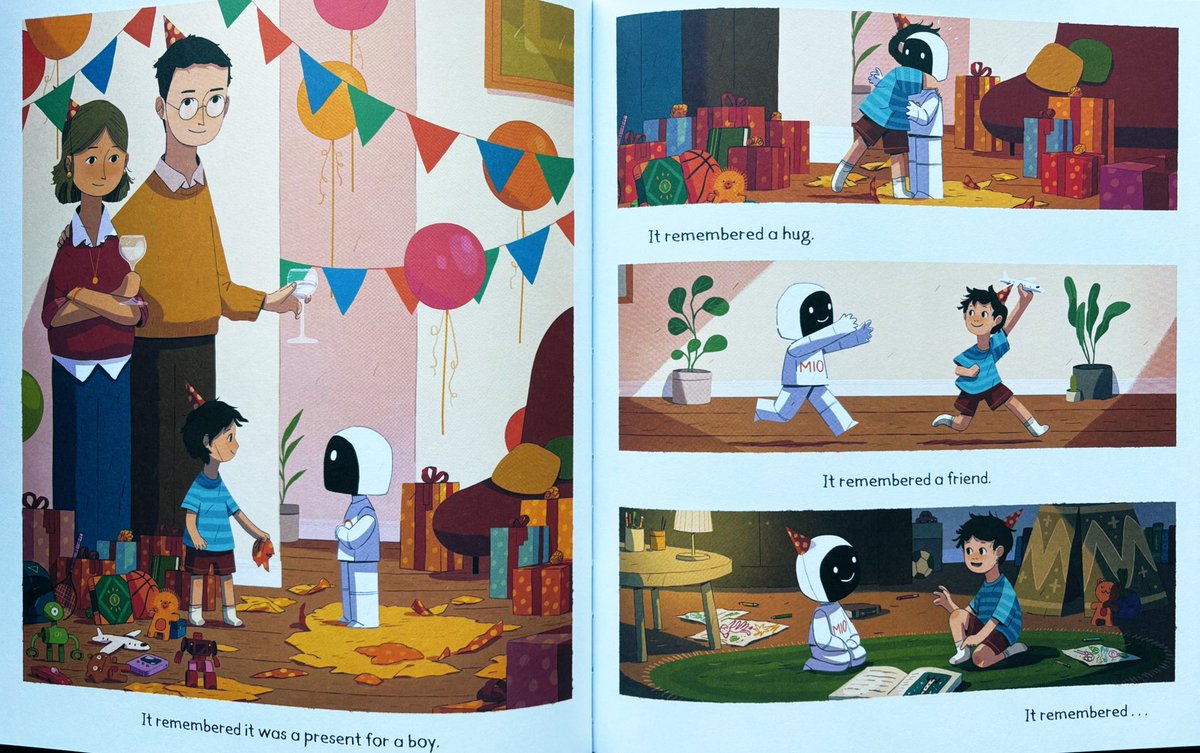
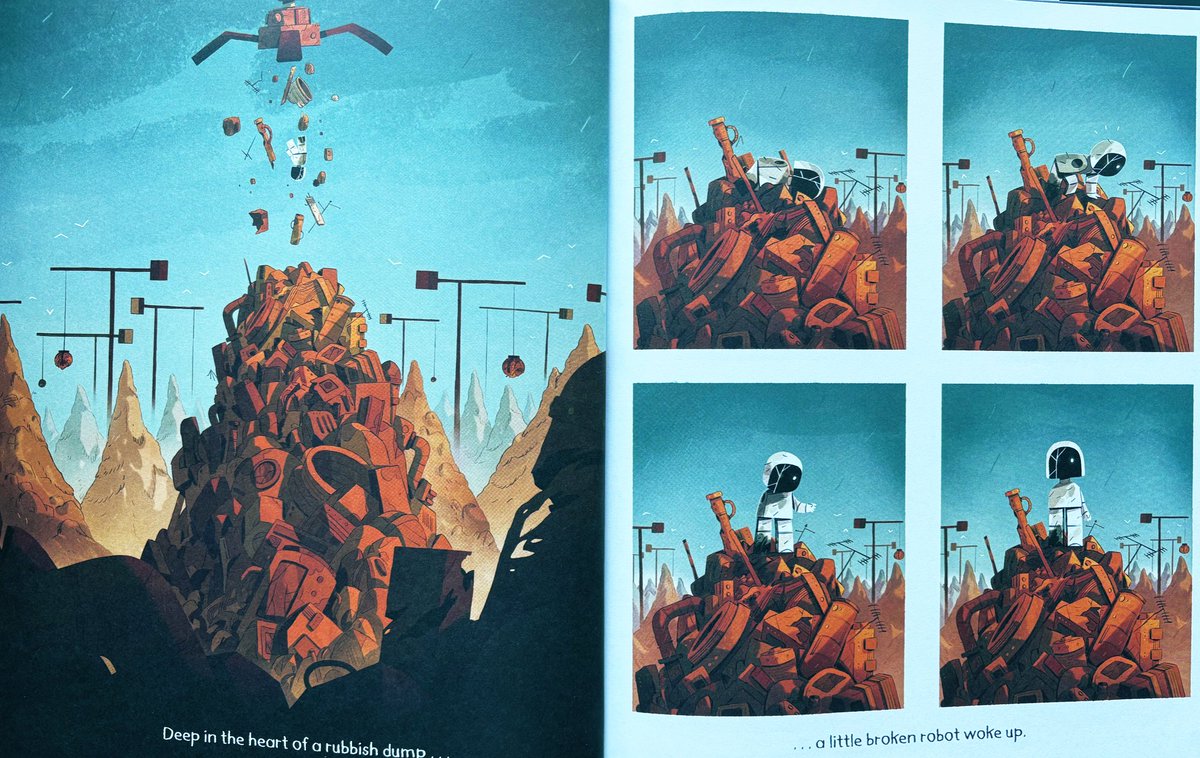
“The Lost Robot” by Joe Todd‑Stanton = visual storytelling at its very best.
Epic spreads, emotional depth, and a robot you’ll root for from page one. Brilliant picturebook craft. Stunning and full of heart, a modern classic in the making #PicturebookPage@FlyingEyeBooks
If your child becomes a reader, about 80% of the education job is already done. That's my honest assessment after working in education for over thirty years. Everything else is secondary. Most parents think science education is important. Yes it is. But if you can't read the biology textbook, you're not going to learn biology.
Reading is the meta-skill that enables all other skills. History requires reading. Science requires reading. Even math increasingly requires reading as it becomes more sophisticated. The child who reads voraciously will figure out everything else. The child who doesn't will struggle with everything.
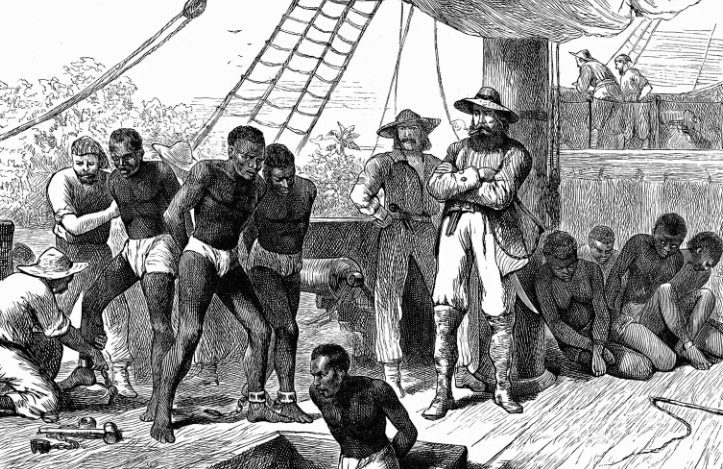
Elon, I love America as much as you do, realizing it is THE shining city on a hill, but you do realize that millions of Black Africans were stolen from Africa and brought to America in chains, right?
They did not “come here” chasing opportunity. They were trafficked, enslaved, brutalized, and forced to build the economic foundation of the country you are romanticizing. Cotton. Tobacco. Rice. Sugar. Rail lines. Infrastructure. Generational wealth. All of it soaked in the blood pouring from open gaping wounds of stolen people.
So what exactly is “American culture” without them?
Jazz. Blues. Rock. Hip-hop. Gospel. Soul. R&B. Much of modern pop. Southern cuisine. Barbecue traditions. Language, slang, fashion, sports dominance, military service in every major war. Civil rights movements that forced America to live up to its own Constitution.
Invisible because they're not English-Scotts-Irish?
Or inconvenient to the narrative?
If American culture is “worth fighting for,” then be honest about who built it. You cannot praise the house while pretending the people who laid the bricks do not count because they arrived in chains instead of steerage.
History does not start at Ellis Island nor did it start on Plymouth Rock.
If you're a millionaire walking past an individual experiencing homelessness you have three options.
1) take a photo and tweet it.
2) help the individual.
3) stop hoarding wealth, stop avoiding paying your fair share of tax, and realise that you are the problem.