What really happened at the Eiffel Tower? A fact-based look at the BAPS visit, the monks’ celibacy discipline, SETE’s staffing decisions, French law on equality & religious freedom. Facts before outrage. #baps#bapsparis#eiffeltower#paris#Hindutemple https://t.co/wsBJXifmID
Recent media reports and political commentary in France have led to claims that BAPS “disrespects women.” But that is a much broader accusation than one incident can establish. If there are genuine concerns about how BAPS treats women, they should be examined objectively.
Any credible independent organization can look at the freedom, participation and empowerment of women within BAPS, including female engineers, data analysts, pharmacists, managers and other professionals who have spent years contributing to BAPS mandirs around the world.
BAPS sadhus (Swamis) follow a strict form of brahmacharya, or celibacy, which limits certain interactions with women. People may find this practice outdated or difficult to understand, but the restriction is on the monk, not on women or ordinary BAPS members.
That is also where I think the Eiffel Tower situation went wrong. BAPS asked for limited interaction with women, and SETE (Société d’Exploitation de la Tour Eiffel), the company that operates the Eiffel Tower and manages its staff, agreed to accommodate the request. Female employees were then reportedly moved or replaced by male colleagues. SETE later acknowledged that these conditions should not have been accepted.
BAPS made the request, but SETE decided how to implement it with its employees. Both points matter.
At the same time, if a religious vow requires a monk to avoid interaction with women, the responsibility for maintaining that vow should primarily fall on the monk. Women simply doing their jobs should not have to change their normal working arrangements because of someone else’s religious practice.
We can criticize what happened without turning it into a claim that BAPS “dislikes women” or pointing it negatively at the Hindu religion. The monks have the right to practice their religion, and Women have the right to equal treatment at work.
Meet women affiliated with BAPS and hear their views. See how free and empowered they are. 👇
#RealInclusion #WomenOfBAPS #baps #bapsparis #eiffeltower #paris #Hindutemple
I have been thinking about the recent visit of BAPS Swaminarayan monks to the Eiffel Tower, and it brought back an experience of my own that I have never quite known how to articulate.
Some time ago, I was staying at an accommodation where Swaminarayan monks were also living next door. They followed a practice of not “seeing” women, which meant that, at certain hours, I could not access some common areas.
My first reaction was indignation. I remember thinking: Is this not exactly why women have to try twice as hard to be considered half as good? As someone who has always been outward-looking and travelled extensively, I was even tempted to write an X thread about how such seemingly regressive practices could thrive in the 21st century.
And then something unexpected happened.
The monks cooked their own food — simple, beautiful sattvic meals. Their sahayaks began leaving breakfast, lunch and dinner for me too, checking whether I needed more or less. Once, in passing, I mentioned that I particularly liked one of the desserts. Somehow, that comment reached the monks, and they began making extra desserts because they had heard that I loved them. The day I left, they even packed me a meal for the road.
The care was difficult to explain. It was quiet and completely unselfconscious — simply an attentiveness to whether I had eaten, whether I needed something, whether I was comfortable.
My initial irritation slowly transformed into a feeling I have experienced very few places outside my own home: the feeling of being cared for almost as one is cared for by one's parents.
It made me question my own assumptions.
Sometimes, a practice that appears exclusionary to us may have a very different meaning within the spiritual framework of those who follow it. That does not mean every practice is beyond scrutiny. If women are asked to temporarily leave a space when Swamis visit, it is entirely legitimate to ask why, whether they have a choice, whether they feel humiliated, and whether anyone is actually being harmed.
But perhaps we should investigate such questions without deciding the answer beforehand.
There is, however, another responsibility — particularly when such traditions travel abroad.
Practices that have evolved within a specific cultural and spiritual context can lose not merely perspective, but context itself, when transplanted into another society. In Bharat, someone may understand a monk's practice through familiarity with its traditions, vocabulary, discipline and philosophy of renunciation. In Paris, London or New York, someone encountering it for the first time may have none of that context.
What is understood internally as spiritual discipline can therefore appear externally as discrimination or humiliation.
This is something BAPS must be conscious of. When traditions enter public spaces abroad, intentions alone are not enough. The host society encounters the action, not the internal reasoning behind it. There is therefore a responsibility to explain, contextualise and, where appropriate, adapt how such practices are conducted in shared public spaces.
That does not mean abandoning religious beliefs.
It means recognising that religious freedom and cultural sensitivity must travel together.
My experience taught me not to judge unfamiliar traditions solely by their outward appearance. But it also taught me that those who carry traditions across cultures have an equal responsibility to ensure that unfamiliarity does not become needless offence.
We should be able to hold both truths at once: traditions deserve scrutiny, women deserve dignity, and unfamiliar practices deserve understanding before condemnation.
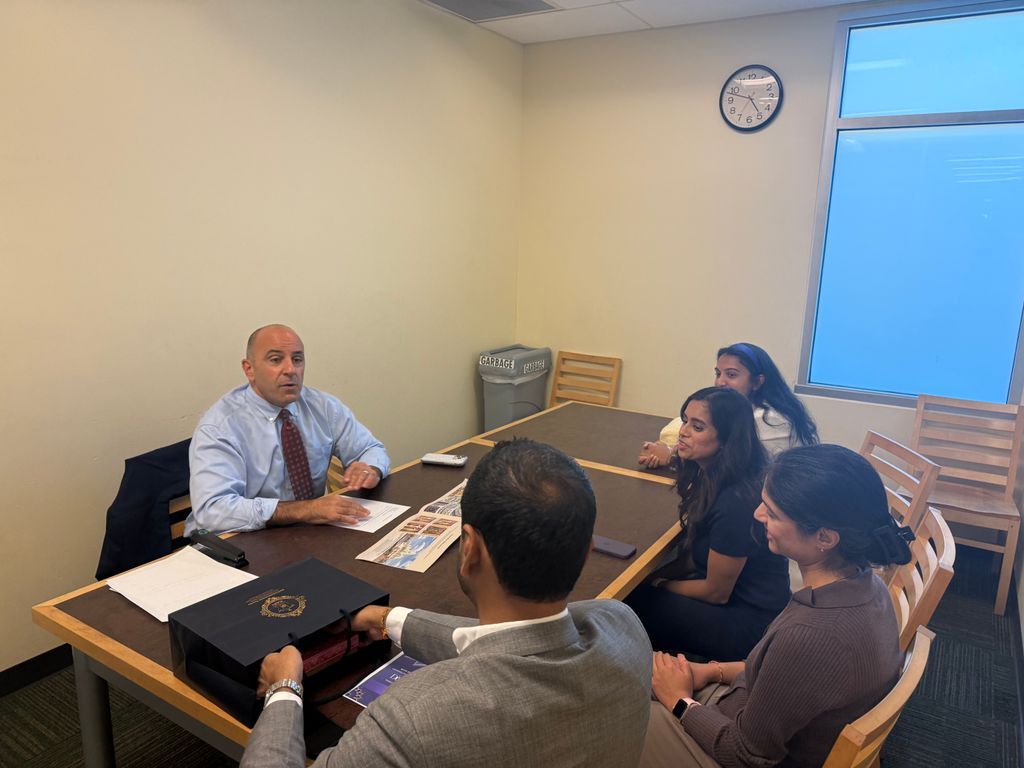
It was great to meet with constituents to discuss the significance of Diwali in our CA-19 community and around the globe. Also impactful to talk about my recent trade delegation trip to India and the importance of relations between the United States and India. As we approach the end of Diwali, we reflect on the values of peace, knowledge, and prosperity that this holiday celebrates and carry those ideals with us into the future.
To safeguard our air, we're prosecuting #crime tied to illegal defeat devices. If you suspect someone is manufacturing, selling or installing illegal defeat devices, or is tampering with #emissions controls, email @EPA at [email protected]. Learn more. https://t.co/e34h0wNmAG