You really don’t want to miss this. An oppertunity to reconnect and foster global collaboration and highlight the standard of cardiovascular care in the region. As well as the potential within KSA for identifying med tech innovation partners and investors
Proud to share that our article, “EP Lab Spotlight: The Rhythm of Innovation”, has been published in the APHRS Newsletter May 2026 edition. Grateful to be part of showcasing our EP lab journey, innovation, teamwork, and growth at Al-Dabbous Cardiac Center. ⚡️📖🫀
@1sinusrhythm@APHRSOfficial
🫀💊 Lipid management after statins: more tools, more complexity, more responsibility
This 2025 JACC Advances expert panel offers a timely, pragmatic appraisal of lipid management in the post-statin era, comparing international guidelines and translating them into real-world, case-based decisions .
📌 Core message
LDL-C remains causal for ASCVD, but the therapeutic landscape has expanded dramatically. Statins are still the foundation, yet non-statin therapies are now essential to reach modern LDL-C targets—especially in high- and very-high-risk patients.
🌍 Guidelines: same evidence, different philosophies
ESC guidelines are the most aggressive (LDL-C <55 mg/dL, and <40 mg/dL after recurrent events).
ACC/AHA remain more conservative, prioritizing randomized trial evidence.
Canadian guidelines sit in between.The result? Different thresholds, same patients, increasing clinical ambiguity.
🧠 Key advances highlighted
Combination therapy beats dose escalation: doubling statins yields ~6% LDL-C reduction, while adding ezetimibe, PCSK9 inhibitors, bempedoic acid or inclisiran achieves 20–60%.
Therapeutic inertia is a major problem—many high-risk patients remain far above target.
Imaging matters: CAC ≥300 AU confers a risk similar to secondary prevention and should trigger aggressive LDL-C lowering.
Lp(a) and ApoB deserve broader screening, even if outcome-driven targets are still evolving.
👩⚕️ Why the case-based approach matters
Real patients rarely fit guideline boxes: young adults, women planning pregnancy, South Asian populations, HIV patients, severe hypertriglyceridemia. The paper shows how rigid guideline application fails without clinical judgment.
🔮 Bottom line
We are no longer in a “statin-only” world. Modern lipid management requires earlier risk detection, imaging-guided stratification, combination therapy, and individualized targets. Guidelines inform decisions—but expertise personalizes them 🚀
Great pleasure to join today’s LBBAP webinar and share practical insights on optimal tools and real-world implantation techniques.
Honored to be part of an excellent faculty and thankful to the organizers for this valuable educational program.
Always happy to contribute to advancing conduction system pacing.
@curilakarol@DFahadAlmehmadi@1sinusrhythm@Medtronic
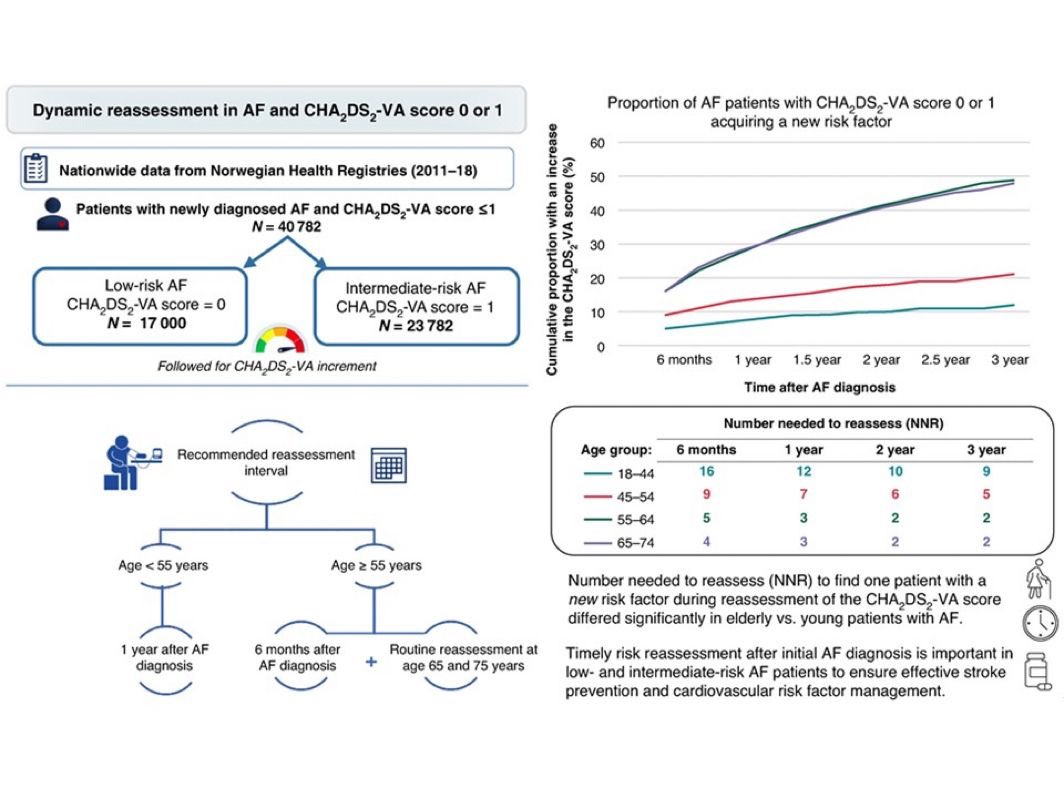
Timing of stroke risk reassessment in atrial fibrillation patients with a CHA2DS2-VA score of 0 or 1: the Norwegian AFNOR study
New risk factors emerged in half of AF patients within 1.7 years. Age-specific differences underscore the need for tailored reassessment, suggesting a shorter interval of 6 months for patients ≥55 years and 1 year for those <55 years and routinely at age 65 and 75 years.
#Cardiology #MedTwitter #CardioTwitter #HeartHealth #Healthcare
@DrMarthaGulati@hvanspall@Hragy@biljana_parapid@AnastasiaSMihai@ESC_Journals@escardio
https://t.co/flvs2A9yoV
#EHRAtopicweek on Sustainability in EP
✅ Reusing pacemakers and catheters is:
🩺 Safe — The recent Europace #EHRA_ESC Young EP survey found that over two-thirds (67.8%) of EPs have used reprocessed materials, most viewing them as safe and cost-effective. Published studies show complication rates below 1% when reuse follows validated protocols
⚖️ Ethical — Reprocessing helps make EP procedures available to more patients, especially in regions with limited access
♻️ Sustainable — Reuse reduces costs and environmental impact by cutting waste and conserving high-value materials
🔗 https://t.co/ORY3Bu5Nds
Spot the Clue: What do you see in the ECG? Challenge your colleague! https://t.co/RPX8jYROzy
A. Sinus rhythm with bigeminy premature ventricular complexes (PVC)
B. Sinus rhythm, high grade atrioventricular (AV) block with PVC
C. Sinus rhythm, premature atrial complex (PAC) with aberrant ventricular conduction
D. Sinus pause following PVC
E. Sinus bradycardia, second degree Mobitz 1 AV block, interpolated bigeminy PVCs
#EHJCaseReports @Phiso_de@TJ_Yeo@aayshacader@BoldiKovacsMD@sukritibanthiya@ANazmiCalik@O_Azizy_MD@saramoscatelli7@EHJCREiC #CardioX #EPeeps
#UseHeart to take action and demand our leaders make heart health a priority this #WorldHeartDay. ❤️ Say YES to healthier hearts everywhere: https://t.co/QxfPrBOVW8. #HeartYes https://t.co/CBmFwv6OQ9