Both patients and physicians are waiting for the heart failure polypill to become a reality.
Our survey shows strong support from both groups for the development of a HF-polypill.
Read more in our ESC Heart Failure https://t.co/EYn3E9t4X0
The biology and physiology of Na in HF are far more complex than simple, one-size-fits-all answers suggest. The role of Na in HF is nuanced, and many common assumptions deserve closer scrutiny.
Read our Viewpoint in JAMA Cardiology.https://t.co/SOTg9VVX0r
Just published in JACC @JACCJournals!🫀
Acute HF care is evolving:
📍Rapid diagnosis
📍Early decongestion
📍Timely GDMT initiation
📍Structured follow-up
📍Focus on long-term outcomes, not just symptom relief
Grateful to have contributed to this international collaboration & learned so much from the exceptional experts involved in this work. Congratulations to @Jolie_Bruno_ and @AlexMebazaa for the leadership & to all co-authors on this important publication🫀
Read the full paper🔗: https://t.co/408QmNOznr
#HeartFailure #AcuteHeartFailure #JACC @jozinetm@BiykemB@GianluSava@pmyhre
Just published in JACC @JACCJournals!🫀
Acute HF care is evolving:
📍Rapid diagnosis
📍Early decongestion
📍Timely GDMT initiation
📍Structured follow-up
📍Focus on long-term outcomes, not just symptom relief
Grateful to have contributed to this international collaboration & learned so much from the exceptional experts involved in this work. Congratulations to @Jolie_Bruno_ and @AlexMebazaa for the leadership & to all co-authors on this important publication🫀
#HeartFailure #AcuteHeartFailure #JACC @jozinetm@BiykemB@GianluSava@pmyhre
Fluid Management of Acute Heart Failure With the Reprieve System: The Randomized Controlled FASTR Trial
In this pilot trial, the Reprieve System safely produced significantly faster decongestion compared with ODT. Confirmation of these findings in the ongoing pivotal trial is required.
@JACCJournals@ACCinTouch@gcfmd@SJGreene_md@ShelleyZieroth
https://t.co/ZIbVIp9UJX
Contemporary heart failure evidence in 2025: a joint summary of key trials from the European Journal of Heart Failure and ESC Heart Failure Journal
Despite an expanding therapeutic armamentarium, delayed diagnosis, underuse of evidence-based therapies, and organizational barriers continue to limit clinical impact. Bridging this implementation gap through earlier prevention, precision phenotyping, and integrated multidisciplinary care is essential to improving outcomes for HF patients
@JanBiegus@K_smala@PMarkwirth@HFA_President@hfcollaboratory@GianluSava@GMCRosano@AmrAbdin10@HSkouri
https://t.co/VYPRN1INpM
Interesting perspective @JAMA_current on sodium and decompensated 🫀failure.
🧂 Can Na+ supplementation facilitate decongestion in HF?
No clear answer yet—but it’s a hypothesis worth challenging
Take a few minutes to question your assumptions 💡
🔗 https://t.co/OQGGhBngYn
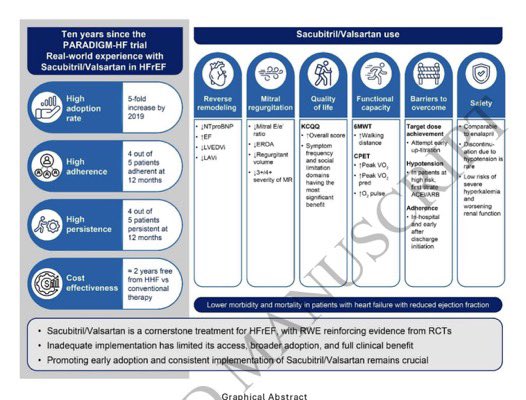
💊 10 years post-PARADIGM-HF: Real-world data on Sacubitril/Valsartan in HFrEF tells a promising — but incomplete — story.
✅ 5-fold adoption increase by 2019
✅ 4/5 patients adherent & persistent at 12 months
✅ ~2 years free from hospitalization vs conventional therapy
Yet inadequate implementation is still limiting its full clinical benefit.
Benefits are clear across the board:
↓ Reverse remodeling (NT-proBNP, EF, LVEDVI)
↓ Mitral regurgitation
↑ Quality of life & functional capacity
⚠️ Barriers remain: target dosing, hypotension, hyperkalemia
Early adoption + consistent implementation = lives saved.
#HFrEF #HeartFailure #Cardiology #Sacubitril #Valsartan #RealWorldEvidence
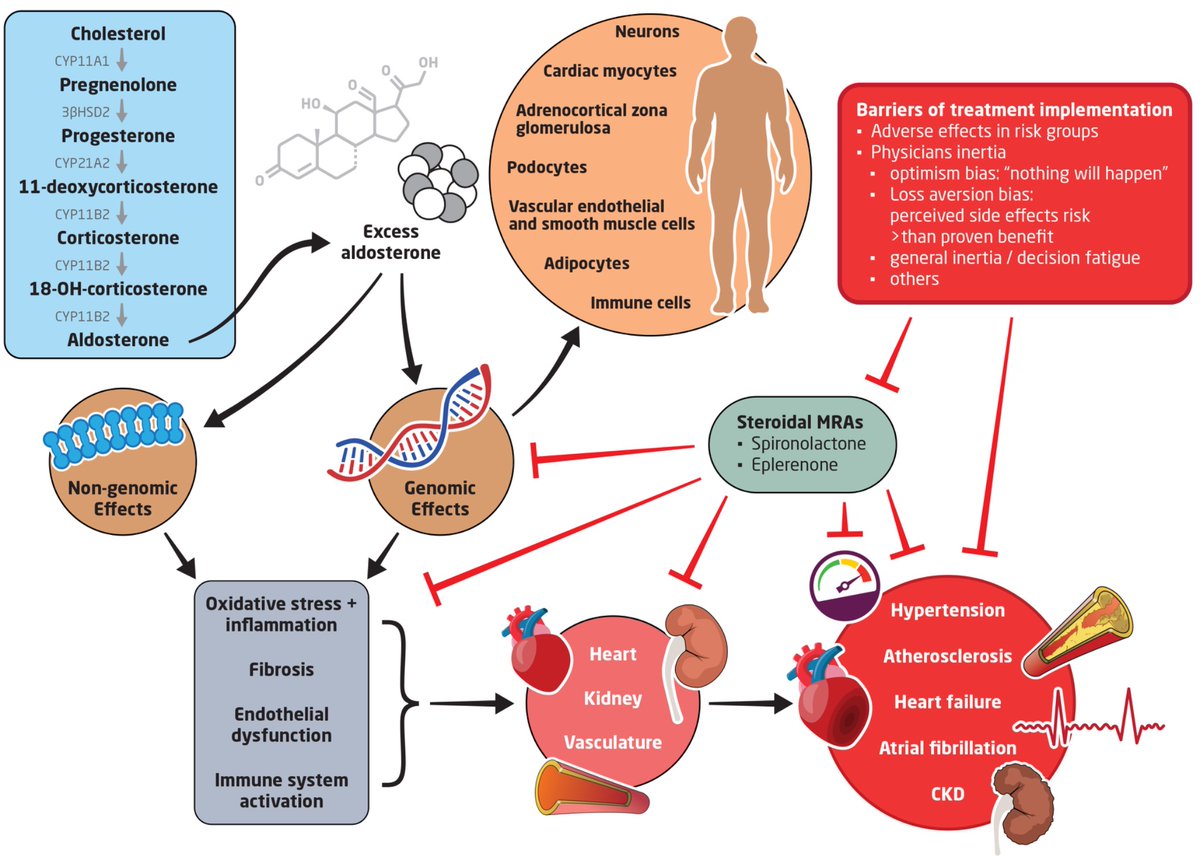
European Journal of Heart Failure International Expert Position Paper Utilisation, Optimisation, and Clinical Benefits of Steroidal #MRA in Heart Failure with a Reduced Ejection Fraction
https://t.co/uNQx6mixMh
#EJHF@ESC_Journals@HanCardiomd@GiuseppeGalati_@AmrAbdin10
European Journal of Heart Failure International Expert Position Paper Utilisation, Optimisation, and Clinical Benefits of Steroidal #MRA in Heart Failure with a Reduced Ejection Fraction
https://t.co/uNQx6mixMh
#EJHF@ESC_Journals@HanCardiomd@GiuseppeGalati_@AmrAbdin10
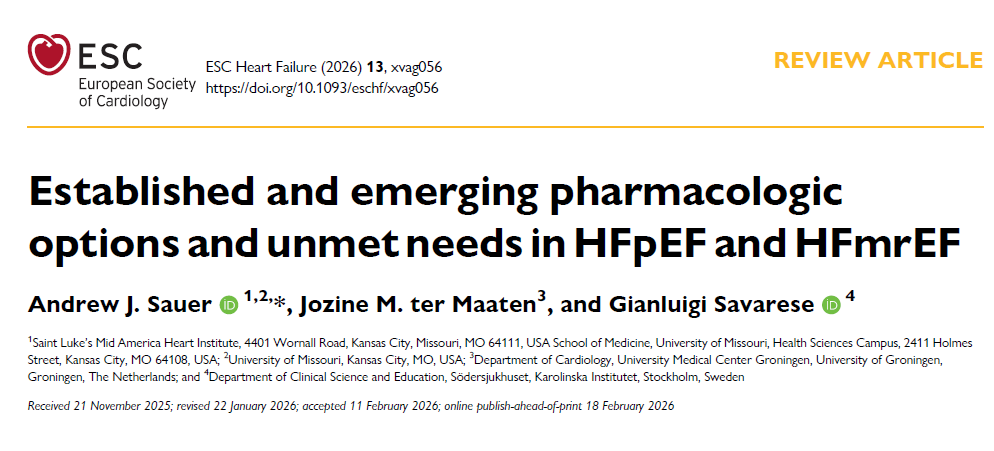
Heart failure with mildly reduced and preserved ejection fraction remains one of the biggest areas of unmet need in cardiovascular medicine.
In our recently published review (co-authored by @jozinetm and @GianluSava) in ESC Heart Failure, we examine the established and emerging pharmacologic options for HFmrEF and HFpEF,
The larger message is clear: the therapeutic landscape is finally becoming more actionable, but treatment still needs to be more deliberate, phenotype-aware, and evidence-driven.
A few key takeaways:
SGLT2 inhibitors now have the strongest and most consistent evidence base across EF ≥40%.
Finerenone has added important momentum as a promising option for HFmrEF/HFpEF, especially as we think more seriously about cardio-kidney-metabolic biology.
Phenotype-specific treatment matters. Obesity, CKD, diabetes, atrial fibrillation, and other comorbidities are not side notes in HFpEF. They are central to the disease.
The obesity-HFpEF space is evolving quickly, with incretins like semaglutide and tirzepatide helping push the field toward more targeted therapeutic strategies.
And importantly, there is still substantial room for progress. Ongoing studies of newer approaches, including selective MR modulation and aldosterone synthase inhibition, may help address some of the major gaps that remain.
HFpEF and HFmrEF are not therapeutic dead ends like they used to feel like just 5 years ago. But they do require us to think beyond a one-size-fits-all model.
https://t.co/6g4LHdSfq5