Meet Mistral Large 4, aka Le Chonk.
• 1T parameters, natively multimodal. 49B active.
It is the best open weights model from US or Europe on aggregated benchmarks.
• State-of-the-art on critical workloads, including cyber defense, manufacturing and finance and it surpasses closed frontier models on visual grounding.
• Forged in Europe end-to-end and is deployable from Europe via our own Mistral Cloud infrastructure.
• Available to all via API today. Working with cybersecurity partners privately.
Open weights release end of October.
This is my thesis: no one uses AI. I repeat, absolutely no one. We live in a bubble.
Even among my friends who pay for it, when I ask them to open ChatGPT and show me their queries, it’s the same handful of basic things.
Most don’t even know they can upload a photo and ask questions about it. Connecting Gmail so an agent can read and send emails blows their minds. An agent opening a browser and checking them into a flight? They’ve never even heard of it.
The massive challenge right now is adoption, and then getting people who already signed up to actually use what they’re paying for. Most have absolutely zero clue what’s possible.
Imagine the compute shortage when everyone starts using AI like the top 1% of users do today.
Back in December 2022, Yuma was the first company to put AI agents into production for ecommerce customer support.
Almost 4 years later, we have had a pretty great run pushing that idea to its limits. But after 4 years building on top of a technology evolving this fast, something had to change.
We call that change Yuma 2.0.
(We got GPT astra to run for 3 days to come up with the name btw)
📍One AI agent. One set of rules. Every customer. Every channel. Inbound and outbound.
That is really the idea: a single, unified platform to run your entire CX operation.
When we started Yuma, the challenge was getting an AI to reliably solve a customer support ticket.
We had to do all kinds of gymnastics to get the models to behave, stay within the right boundaries and reliably take actions.
Today, models are dramatically more capable. It has also never been easier to spin up a basic AI support agent. Give someone Claude or ChatGPT and they can probably get a convincing demo running in a few days.
But a demo is one thing. Building something a company can trust to run at scale is another.
More importantly, our customers are asking us for much more now. As I keep telling the team, bringing the most value to our customers is paramount.
Today, CX teams are still spread across too many tools. One for support. One for voice. One for social. Another for outbound marketing.
Different rules. Different context. Different levels of trust.
I think that era is over.
Our customers increasingly want to consolidate their customer experience around a single core system they can trust. So after almost 4 years of building Yuma, it was time to make another big leap.
Part technological leap, part leap of faith, part founder instinct ;)
Because I still deeply believe we are only seeing the very early glimpse of what AI will let us achieve.
So with Yuma 2.0:
• A single, unified set of rules ✅
• Inbound support across email, chat, social, reviews and voice ✅
• Outbound campaigns, from proactive service notifications to marketing and re-engagement ✅
• A deep understanding of every customer across every interaction ✅
• Public social engagement across Facebook and Instagram ✅
• Pre-sales conversations that help customers buy and increase conversion ✅
All powered by the same underlying AI agent.
And that last detail matters:
• Not a voice product bolted onto support.
• Not a separate agent doing outreach.
• Not 5 systems trying to understand the same customer.
👉 One agent, operating across the entire customer experience.
We have baked almost 4 years of work, mistakes, customer feedback and learnings into this new version of Yuma.
It is more powerful, more accurate, and lets our customers do things that simply were not possible when we started.
I think this is where CX is going. And just like we did back in 2022, we want to be early in showing what that future can look like.
That is Yuma 2.0.
Come talk to us and see the mind-blowing things you can build today.
Cheers to the next 4 years 🥂
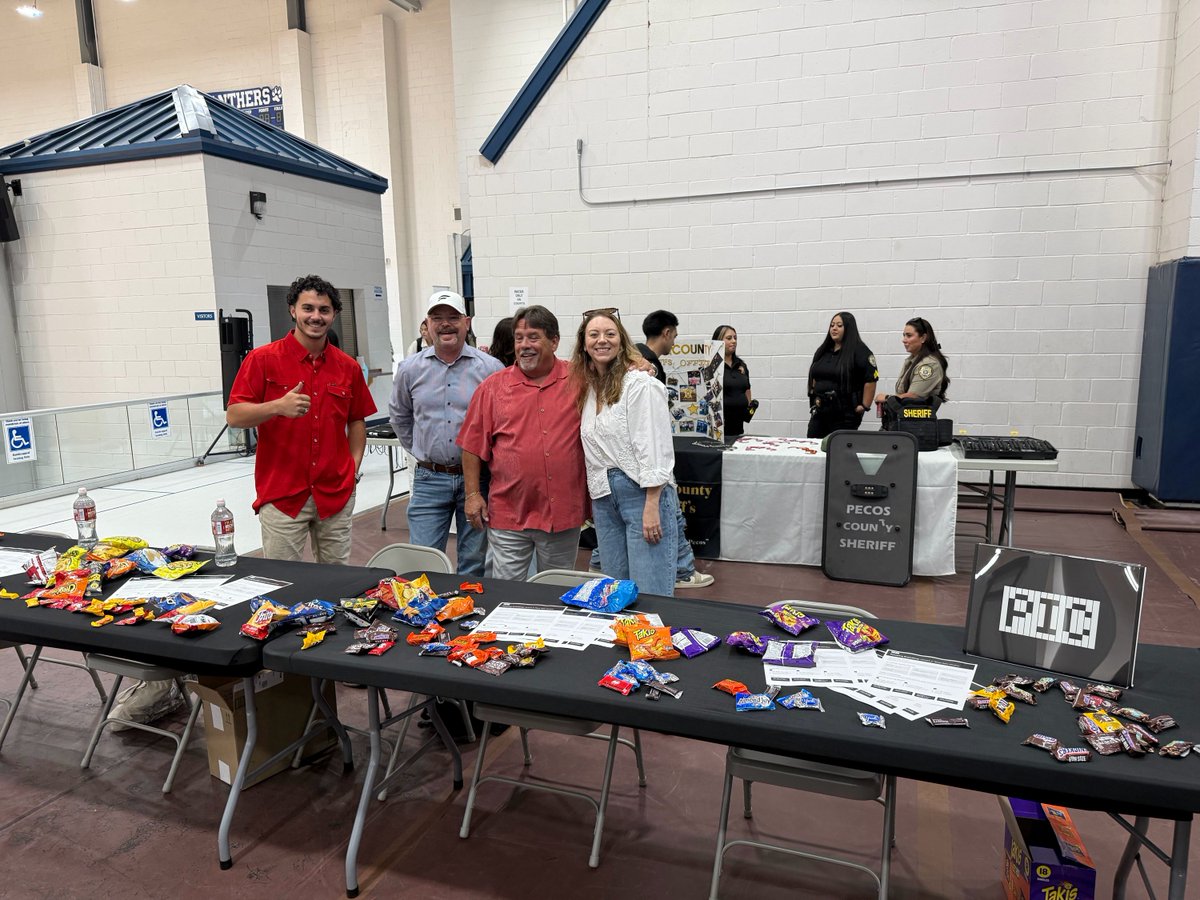
Our team at PIC is at the Ft. Stockton high school career fair, with the insight that "the way to a high schoolers heart is through snacks" 😂
We've also launched our website yesterday: https://t.co/by7dFrERJK with a very cool rendering of our first campus that is being built.
Today we're launching Inbox Cleanup, by Upstream
50K+ → 20 EMAILS (in <10 minutes)
An agent that goes through your old email, archives the clutter, and helps you unsubscribe from the newsletters you never read. It cleans up your Gmail the way you would while keeping your data private
Free for any Gmail user → https://t.co/t5FrYELAZd
We raised $11M to make video editors obsolete.
Not the humans, the tools.
Think about the hours you lose searching for assets, moving clips frame by frame, fixing animations, checking exports, and redoing the same edits over and over.
Poolday handles the entire video production process, start to finish, in one prompt.
It learns your style.
Uses your assets.
Makes the video.
QAs its own work.
100% on-brand videos.
100M+ video edits made for businesses all over the world.
And today, anyone can use it.
Tell us what video you'd like the agent to produce. The agent will build it for the first 50 people.
I just realized something. 10 years ago, 22-year-old me called @eisokant and @julien_c to ask for advice on my first AI startup @Doctrine. AI in Paris in 2016 was still a pretty weird thing to bet your life on.
Eiso was already all-in on AI + coding with Sourced years before coding agents became obvious. Julien had already understood how deeply AI would reshape entire industries, including legal, and how important data and open ecosystems would become.
What I find even more inspiring is that both of them went through different companies, pivots, products and chapters over the last decade, but they never lost the AI thread!
10 years later their respective startups @poolsideai and @huggingface are part of Nvidia and will 100% shape the future of AI.
There’s something beautiful about that kind of compounding. You can start from a relatively small ecosystem in Europe, meet people through the internet, share ideas, help each other, move across countries, end up in San Francisco, and ten years later realize you’ve all been following the same technological wave the whole time.
Very grateful to both of them for taking the time to help a random 22-year-old founder back then, and for being part of my own journey!
It's easier to build for utility than whimsy. But I think more of us should try.
My love letter to whimsy and products from @CashApp, @bumpbyamo, @pollenrobotics, and @tacobell.
https://t.co/fPRUbOLNAw
Super happy to share our intention to join forces with NVIDIA in a $12,930,300,000 acquisition 💛💚
10 years after starting Hugging Face, open-source AI is at an inflection point. Thanks to the community, we’ve shown that it can be a complement, and even an alternative, to closed-source APIs. But for it to happen at larger scale, it needs more compute, more support, more collaboration and more visibility. That’s why we went to talk to Jensen, who offered to do exactly that with us.
In addition to doubling down on NVIDIA’s massive contributions to open-source AI (I called them the “King of American open-source AI” earlier this year), they’ve committed to strongly supporting Hugging Face and our mission while keeping the platform open, independent and compute agnostic. The founders and the team are all staying to keep pushing this mission forward.
Together, we think we can make open source the default way to build AI, with the goal of empowering 100 million AI builders to own their intelligence rather than rent it.
Excited about the next 10 years! 🤗🤗🤗
Hiring: Chief of Staff / Executive Operations Lead
I’m looking for someone to work directly with me across a portfolio of fast-growing e-commerce brands.
This is not a traditional Executive Assistant role.
I move fast, work across multiple companies at the same time, and spend most of my time on growth strategy: acquisition, creative, CRO, offers, retention, data, hiring and finding the right people to solve problems.
My strength is spotting what needs to change and making decisions quickly.
My weakness is that there are too many moving pieces.
A meeting can get forgotten. An email can sit unanswered. I can identify an important initiative, explain exactly what needs to happen, and three weeks later realize nobody actually pushed it all the way to completion.
I want someone whose job is to make sure that never happens.
You will essentially become the operating layer between my brain and execution.
What you'll own
My calendar and important meetings
Keeping track of commitments I make
Important email and communication follow-up
Turning conversations and strategic decisions into clear action plans
Assigning owners, deadlines and next steps
Following up relentlessly until initiatives are actually completed
Coordinating agencies, freelancers, employees and external partners
Preparing me for meetings with the context and decisions I need
Identifying when something is stuck and escalating it
Maintaining a clear view of what is happening across every company
Making sure nothing important falls through the cracks
If I say:
“We need to rebuild the creative testing system.”
I don't want you to write it down.
I want you to make sure someone owns it, there is a deadline, the right people are involved, the first iteration ships, results are reviewed, problems are fixed, and the project eventually gets marked done.
That's the job.
Who I'm looking for
You are extremely organized, but you're not bureaucratic.
You have unusually high agency.
You don't wait for people.
You follow up.
You ask questions.
You chase answers.
You notice when something doesn't make sense.
You can understand a business problem quickly even if you've never seen it before.
You are comfortable telling me:
“You said you would do this yesterday. I need it today.”
And you're equally comfortable telling an agency or senior operator:
“We've discussed this three times. What exactly is preventing it from being completed?”
You don't need to be the world's best e-commerce operator.
But you need to be smart enough to understand strategy, absorb how I think, and gradually make decisions without needing me involved in everything.
Experience in e-commerce, startups, growth, consulting, operations or working directly with a founder is a strong advantage.
What success looks like
Within a few months, I should no longer need to remember everything.
I should be able to look at the businesses we're involved with and immediately know:
what's working
what's broken
who's responsible
what's late
what's being tested
what decision is needed from me
My job should increasingly become:
diagnose → prioritize → decide
Your job is to make sure the organization gets from:
decision → execution → completion.
I'm looking for someone exceptional, not someone who simply wants another job.
If you're the kind of person who gets satisfaction from turning chaos into an operating machine, I want to talk to you.
Send me a DM with:
A short introduction
What you're doing today
One example of a messy situation you took ownership of and drove to completion
Why you think you'd be unusually good at this role
Remote.
this is what my ai ad factory looks like at 2am
while everyone sleeps, it keeps finding and rebuilding winning ads
it watches new videos and tracks product momentum in real time
then it extracts the hook, angle, format and selling mechanism
the strongest ideas move directly into production
scripts get rewritten
avatars get selected
scenes get generated
voiceovers get added
captions get synced
final ads get exported
nothing waits for a creator, editor or filming schedule
by morning, fresh creatives are already waiting inside the dashboard
the advantage isn’t simply producing more content
it’s reacting to winning patterns before everyone starts copying them
i’m sharing the complete system behind it
how the factory identifies ads worth rebuilding
how one winner becomes multiple original concepts
the scoring system used before generating anything
how scripts, scenes and avatars get matched automatically
how finished ads get produced without touching a timeline
how to keep the entire factory running every day
rt + comment "factory" and i’ll send it
(follow for dm)
@sapiom just raised a $35 million Series A from @dragonflyvc , @Accel , @AnthropicAI and others to help unlock the next trillion agents.
The first thing we’re tackling is cost.
To make that happen, we are launching three new products today at https://t.co/6TTK1QT8Py