Dear @realDonaldTrump & @dojphofficial:
State of MA is defying federal law by institutionalizing #ElectionFraud: AUTO-deleting #BallotImages violating 52 USC 20701.
I filed a lawsuit to ensure this stops in 2026.
They said they’ll continue deleting.
DO something!
-Dr.SHIVA
On the various ways Trump might try to fudge the issue of unfreezing Iranian assets:
"One possibility is a credit line from Qatar, collateralized by the Iranian revenue sitting in the country."
"Another option for the Trump administration would be to provide sanctions waivers for the oil that Iran sells to China." https://t.co/sSOEd8Hqmd
Basically, that's the correct map.
Interestingly, though, Greek cities beyond the Mediterranean and Black Sea regions are usually left out...because, apparently, God forbid the Greeks reached farther than the Roman Empire ever did.
Every Cargo Has Its Own Ship🚢🌍
Global trade does not move on one kind of vessel.
It moves through a specialized fleet.
Bulk carriers move coal, grain, and minerals.
Oil tankers move crude and refined products.
LNG ships move gas at extreme cold temperatures.
Container ships move manufactured goods.
RoRo ships move cars and trucks.
Heavy-lift vessels move oversized equipment.
That is the hidden architecture of globalization.
Energy, food, minerals, vehicles, chemicals, and infrastructure all depend on the right ship showing up at the right port.
Shipping is not just transport.
It is the operating system of global trade.
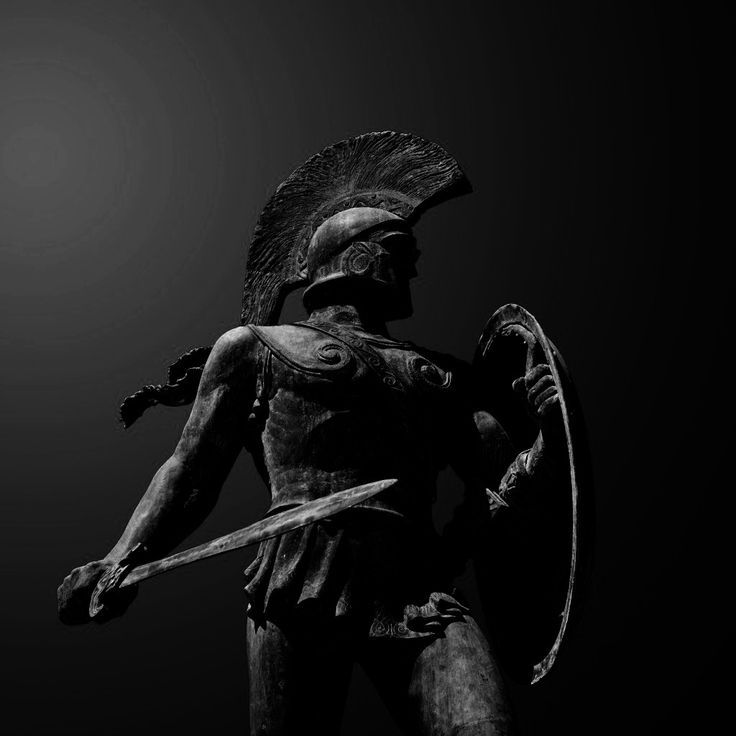
Sparta’s political system was remarkably long-lived and one of the most enduring among the Greek cities. Lycurgan constitution (the mixed system of dual kings, Gerousia, Ephors, and Apella) remained largely unchanged for at least 500 years (or even 700 years). Most Greek poleis (city-states) frequently changed governments, shifting between tyranny, oligarchy, democracy, and back, often due to internal revolutions, coups, or external conquests. But not Sparta, the city that most philosophers were admiring.
One of the many reforms of Lycurgus in Sparta was the requirement for the city to have two kings. These two kings came from two different royal families, the Agiads (House of the Agiads) and the Eurypontids (House of the Eurypontids), two lineages that descended from the twin descendants of Heracles, Eurysthenes and Procles respectively (through Hyllus). The kings mainly held military and religious duties, and their power was limited by other political bodies of the city.
1. House of the Agiads is considered the older of the two. The founder of the dynasty was Agis, hence the name "Agiads." The kings of this dynasty had a higher rank in the hierarchy and mainly exercised military command.
2. House of the Eurypontids, was the second house descended from Eurypontes, who is considered the founder of the dynasty. The kings of this house also held military and religious roles, but their authority was always slightly lesser than that of the Agiads.
To understand how the Spartans treated their kings, here is an example from Plutarch:
When someone made a sacrifice ("aparchai"), which involved offering a portion of what one first acquired, such as food obtained through hunting, fishing, harvesting, or farming, the first part of the food, and was one of the oldest forms of religious sacrifice in human history, especially in Crete and the Peloponnese, they would send a portion of it to the common messes. Whoever made such a sacrifice or returned late from a hunt was allowed to dine at home; everyone else was required to attend the public mess. This custom was so strictly observed that King Agis, when he returned from a campaign where he crushed the Athenians and wanted to dine with his wife, requested his food portions be sent to his home, but the polemarchs refused. And when the next day, angered, he did not perform a sacrifice he was obliged to, he was punished.
-Parallel Lives, Lycurgus, chapter 12
Unthinkable by today’s standards, isn’t it?
But the kings were not the only political authority in Sparta (and as already mentioned, their powers were limited). Aside from the kings, the political structure included:
1) Gerousia: A council of 28 elders over the age of 60, chosen for life. The two kings also sat in this body, making a total of 30 members. The Gerousia had significant powers, including proposing laws and functioning as a high court.
2) Apella: The popular assembly of Spartan citizens. It had the power to vote on laws and important decisions, though discussion and law proposals were made by the Gerousia.
3) Ephors: Five ephors were officials elected annually by the citizens with broad authority. They acted as supreme judges, oversaw public order, and even had the power to summon kings for accountability. According to Xenophon (Hellenica 3.3.2), the Spartan kingship was hereditary, and both kings always came from the two aforementioned royal houses, the Agiads and the Eurypontids. Succession generally followed primogeniture, the eldest son of the king would succeed him.
Sparta’s political system was one of the most successful examples of constitutional continuity.
Many Greek authors were Laconophiles. Plato, Aristotle, Xenophon, Plutarch and Herodotus praised Sparta.
Plato’s Republic for the ideal City shows clear, though indirect, influence from Sparta.
A City (Kallipolis) ruled by Philosopher Kings, an improved Sparta as Plutarch called it. With militarism balanced between anger and reason. In Book VIII, Plato describes "timocracy" (τιμοκρατία). In 545B - 550B, five regimes are described, four of which are unjust. Timocracy is the first unjust regime. It emerges when aristocracy declines because the ruling class produces inferior guardians and auxiliaries. Timocracy favors high-spirited, simple-minded leaders suited for war. Sparta was Plato’s primary real-world model for this militaristic system. Plato considered only aristocracy just; the other four regimes, including timocracy, are unjust and eventually lead to chaos and corruption. Plato was a Laconophile (admirer of Sparta), like many Athenian intellectuals. The whole description of his ideal city is a veiled reference to Sparta itself (which Plutarch unveiled) but with some improvements. We have many more similarities of Plato's ideal city compared to Sparta.
> Class structure and hierarchy
> Communal living and property
> Paideia and Agoge
> Role of women
> Eugenics and family
Plato and Aristotle both criticized Sparta but they weren't against. They viewed Sparta as the best existing system, yet still far below the philosophical ideal.
1/3 🧵Alexander the Great is remembered as the greatest Greek because he united military genius, Greek culture, and a global vision. He united the Greek world, defeated the Persian Empire against the odds, and carried Hellenism from Greece to India, changing world history forever
That water clarity is an engineering decision, and the math behind it is wilder than the video.
Roman aqueducts ran on gravity alone. No pumps, no pressure systems. Engineers carved channels with a gradient so shallow it borders on absurd. The Pont du Gard in southern France drops 2.5 centimeters over 275 meters. That's roughly the thickness of a coin over the length of three football fields. They surveyed that accuracy with plumb lines and wooden leveling instruments.
The clarity you're seeing is a direct product of flow velocity. Too steep and the water erodes the channel walls, picks up sediment, turns brown. Too flat and it stagnates. Roman engineers targeted a slope of about 20 centimeters per kilometer, which kept the water moving fast enough to stay fresh but slow enough to stay clear. Before the water reached the city, it passed through multi-chamber settling tanks where velocity dropped near zero. Suspended particles sank. Clean water flowed out the top into the next chamber. Repeat three or four times.
Pliny specified the minimum slope in writing. Vitruvius published the exact mortar ratio for hydraulic cement: one part lime to two parts volcanic ash for underwater work. The pozzolana from Pozzuoli reacted with water to form a calcium-aluminum-silicate compound that actually gets stronger the longer it sits submerged. Modern concrete degrades in water. Roman concrete bonds with it.
Scale the whole system and it gets harder to process. Eleven aqueducts fed Rome at its peak. Combined output: roughly 1 million cubic meters of water per day. That works out to about 250 gallons per person for a city of one million. Modern New York delivers about 125 gallons per person per day. Ancient Rome had access to double the per capita water supply of the largest city in the United States, running entirely on slope and stone.
The Trevi Fountain in Rome is still fed by one of them. Two thousand years, same source, same gravity, same water.