🔍 Can a single image hijack your AI’s behavior?
Yes & without changing the application.
Meet VISOR: a new method that steers GenAI models using images alone.
It’s a new class of AI vulnerability and a new opportunity for AI alignment.
🔗https://t.co/Mv8ENWQR72
So this one has been a while coming. If you've seen any of the talks or workshops I've done recently you'll have heard me talking about the way we are thinking about attacks on generative AI. Well, it's finally here.
https://t.co/7LCM2JQQ8R
🔐 Not all prompt injections are the same.
We just released a taxonomy of adversarial prompt engineering, mapping the why, how, and what behind LLM prompt attacks.
Built for red teamers, defenders & researchers. Open to the community.
🔗 https://t.co/LOmXs1sZfo
HiddenLayer researchers have found a way to bypass text classification models by targeting tokenizers. TokenBreak gets past protection models, leaving end targets exposed.
🔗 https://t.co/JdWLwW2rN9
#AISecurity#AI#LLMSecurity
New on the AI Engineering Podcast: HiddenLayer’s Kasimir Schulz breaks down how to secure ML models from shadow logic & model ancestry to scanning for threats.
-Scan models
-Trace neural subgraphs
-Know your attack surface
Listen here: https://t.co/BTZiysM6ee
#AIsec#MLSec#AI
Critical AI Security Guidelines by SANS Institute
🔐 Access: Use least privilege + zero trust. Lock down models, vector DBs, and APIs.
📦 Data: Protect training + augmentation data. No sensitive info in prompts. Sanitize everything.
🚀 Deployment: Avoid hardcoding rules into LLMs. Use RAG + ACLs. Vet public models for backdoors.
🧠 Inference: Validate inputs and outputs. Guardrails help, but can't be your only defense.
📊 Monitoring: Log prompts, watch for drift, detect abuse. Monitor API usage closely.
⚖️ GRC: Track AI usage, align with evolving regs (EU AI Act, EO 14110, etc). Build AIBOMs + model registries.
Authors: Ahmed AbuGharbia (Fortinet), Sarthak Agrawal (U.S. Congress), Brett D. Arion, CISSP, (Binary Defense), Matt Bromiley (Prophet Security), Ron F. Del Rosario (SAP), Mick Douglas (InfoSec Innovations), David Hoelzer (Occulumen), Ken Huang, CISSP (https://t.co/r9AyVkowT4), Bhavin P. Kapadia (Stablecoins), Rob T. Lee (SANS), Seth Misenar (Context Security Consulting), Helen Oakley (SAP), Jorge Orchilles (Verizon), Jason Ross (OWASP AI), Rakshith Shetty (Palo Alto Networks), Jim Simpson (HiddenLayer), Jochen Staengler (BSI), Rob van der Veer (Software Improvement Group), Jason Vest (Binary Defense), Eoin Wickens (HiddenLayer), Sounil Yu (Knostic).
@aagsec, @sarthak777, @barion, @_bromiley, @SAP, @bettersafetynet, @it_audit, @kenhuangus, @robtlee, @sethmisenar, @e2hln, @jorgeorchilles, @OWASP, @PaloAltoNtwks, @4a696d, @BSI_Bund, @robvanderveer, @Binary_Defense , @enwckns, @sounilyu, @SANSInstitute
More info: https://t.co/YspiEje1Mm
#AIsecurity #Cybersecurity #LLMs #GenAI #AIgovernance #AIethics #Infosec #SecureAI #AISafety #SANSInstitute
New Research: New Gemini for Workspace Vulnerability Enabling Phishing and Content Manipulation. Our latest blog examines vulnerabilities in Google’s Gemini for Workspace, a versatile AI assistant.
🔗 Read more: https://t.co/dq9IYsAFEx
Microsoft identified a North Korean threat actor exploiting a zero-day vulnerability in Chromium (CVE-2024-7971) to gain remote code execution. Our assessment of ongoing analysis and observed infrastructure attributes this activity to Citrine Sleet. https://t.co/ITqOQpWn2v
Apeman is a tool designed to simplify the understanding of permissions and potential attack paths within an AWS environment for both attackers and defenders. Join @hotnops' Arsenal session at #BHUSA to see this tool in action.
Learn more 👉 https://t.co/B2ZSsrQ7dW
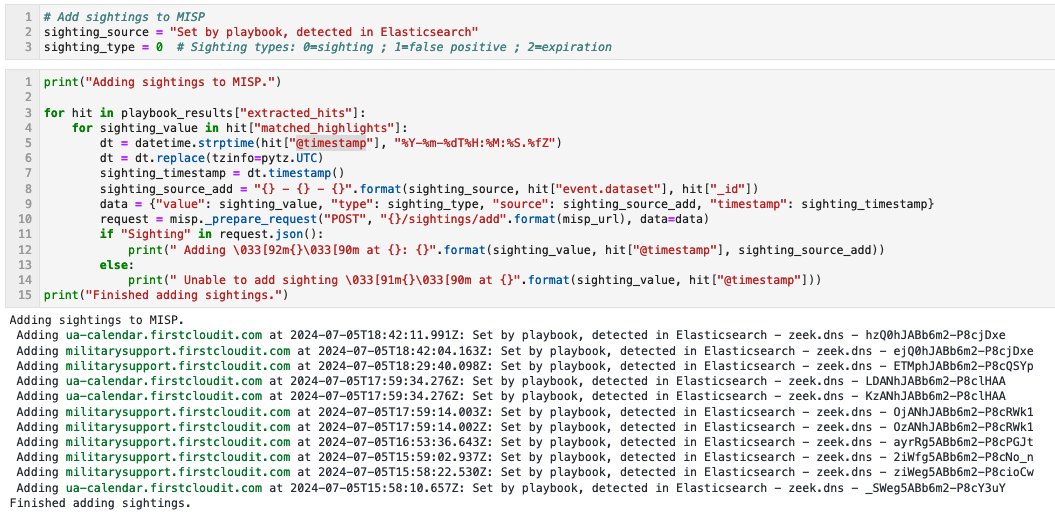
Kick off the week with a new @MISPProject playbook! Query Elasticsearch @elastic for threat intelligence from custom MISP searches, plot the results in a graph, report sightings in MISP, and send a summary to Mattermost. #cti#automation#playbooks https://t.co/NzaCjO7mWz
Most (if not all) #Linux Distros have moved to the Journal with their latest versions. This is a LinkedIn article on key points for DFIR.
If you'd like to know more, check out FOR577 from SANS (https://t.co/UTqxJjd59M) - attend in-person or live online!
https://t.co/PJGUDLHlal
If you enjoyed my first #GettingStartedInDFIR workshop last week, make sure you’re also signed up for the second workshop on July 2 where we’ll explore file extensions, signatures & different types of file metadata
#DFIR@sansforensics
If you haven’t yet signed up to the first of my #GettingStartedinDFIR workshops, do it now!
Friday 21 June 13:00 EDT / 17:00 UTC
Join live or get the recording to watch & play along later
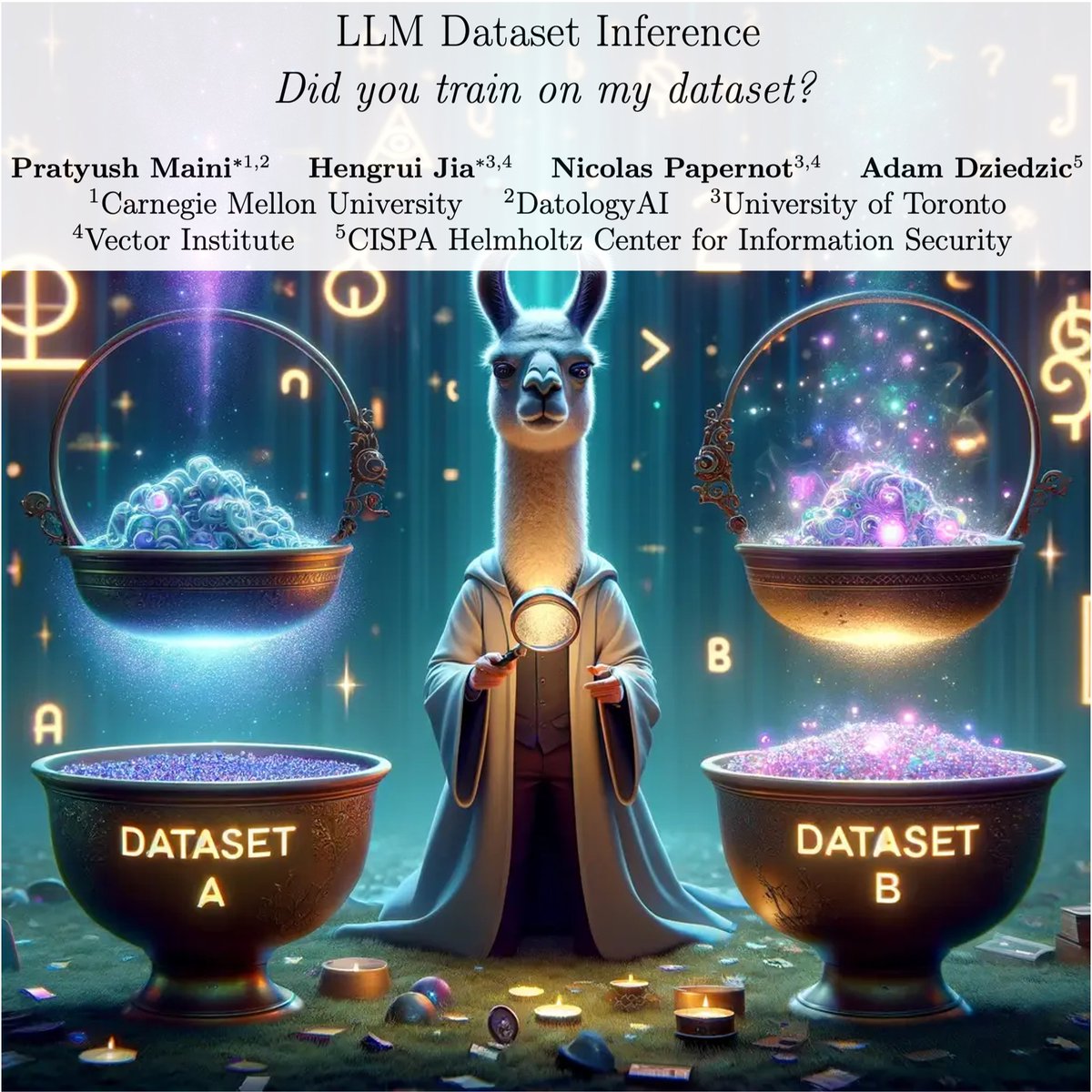
1/We've nailed a framework to reliably detect if an LLM was trained on your dataset: LLM Dataset Inference.
After over a year of thinking of writing about how hard this is, we had a breakthrough that made me quite literally jump from my seat!
📝: https://t.co/B9jvMsoNGW Long🧵