Why I’m bullish on $CBRS: The architectural shift and the business moat.
1️⃣ The Architectural Advantage
When Deep Learning first took off, CPUs were the incumbent. GPUs won because their thousands of cores perfectly matched the massively parallel nature of neural nets. Fast forward to today: AI inference is the dominant workload, and it's splitting into two distinct phases: Prefill and Decode.
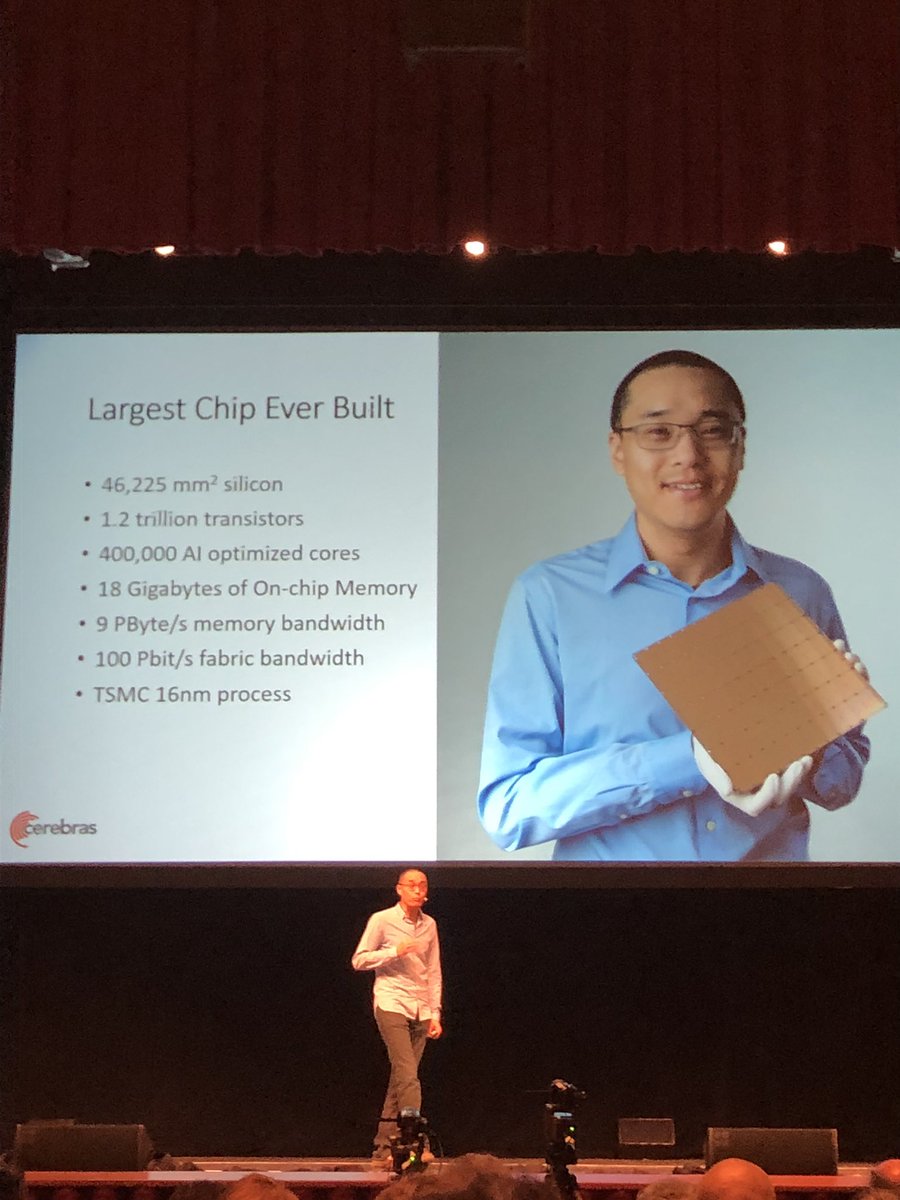
The GPU is now the incumbent, but while it handles the compute-heavy prefill well, the decode stage has become the ultimate bottleneck because it is strictly memory-bandwidth bound. Enter Cerebras and its Wafer-Scale Engine. By keeping massive memory directly on-chip, it dramatically reduces latency during decode and solves the memory wall. It’s the new architecture purpose-built for the hardest part of inference, and it scales flawlessly.
2️⃣ The Vertical Integration Moat
Before the AI boom, Jensen Huang spent years searching for outlets for Nvidia GPUs (like Tegra for phones or game consoles) so they wouldn't just rely on PCs. It was a tough grind to find that ubiquitous hardware-software fit.
Cerebras is starting from a radically different position. They aren't just trying to sell chips to server builders; they’ve built the Cerebras Cloud and provide inference APIs directly to developers. This gives them native, direct access to the software ecosystem from day one. As AI inference scales to reach billions of users across endless applications, this direct-to-developer channel is a massive structural advantage - arguably a much better starting position than Nvidia had when fighting Intel.
The hardware solves the biggest technical bottleneck. The cloud API solves the distribution bottleneck. That’s the thesis.
@RealestDanielK AI is already a big part of how we live and work, so yes, I used it heavily for research and drafting. I reviewed the sources, challenged the claims, and formed my own view. If anything in the article is actually wrong, I’d genuinely love to hear it.
The real Cerebras vs. NVIDIA battle may not be GPU vs. wafer-scale compute.
It may be which company builds the better memory hierarchy.
I dug into CS-5, CS-6, Vera Rubin, and Groq 3 LPX — and the roadmap is getting very interesting. https://t.co/OHjg6t6ewH
7/7
So the metric that ultimately matters isn’t peak FLOPS - or even raw tok/s.
It’s:
$/token at the SAME latency SLA
plus:
• tokens/MW
• memory-tier bandwidth
• KV-cache economics
• scale-out efficiency
• utilization
The two CS-6 specs I care about most:
- DRAM capacity per WSE
- Sustained DRAM↔SRAM bandwidth
Those may determine whether CS-6 is just an upgrade -or a genuinely new architecture.
Full breakdown here ↓
https://t.co/BXMjoVhLi8
The real Cerebras vs. NVIDIA battle may not be GPU vs. wafer-scale compute.
It may be which company builds the better memory hierarchy.
I dug into CS-5, CS-6, Vera Rubin, and Groq 3 LPX — and the roadmap is getting very interesting. https://t.co/OHjg6t6ewH
6/7
The difference is how they build it.
Cerebras:
one enormous processor
- SRAM
- future tightly integrated 3D DRAM
- minimize off-chip communication
NVIDIA:
Rubin GPUs + HBM
- LPUs + SRAM
- DDR5
- NVLink
- Dynamo orchestration
Cerebras is basically saying:
Make communication unnecessary.
NVIDIA is saying:
Make communication cheap enough that it doesn’t matter.
Great minds have a way of making complex things feel simple. Excellent summary of the evolution of AI chip architectures and where the industry is heading. Really appreciate this!
Ten years ago, we started @cerebras around an approach many believed was impossible.
As a computer architect, it is hard for me to imagine a more exciting time. Model releases are accelerating, and hardware tapeout is compressing from multi-year roadmaps to annual launches.
Hot Chips is my favorite conference, and it’s where I launched Cerebras 7 years ago. This year’s conference was especially exciting, and so much innovation was shared. I am watching the industry recreate itself: SRAM is mainstream, DRAM is moving into the third dimension, networks are being fundamentally redesigned, and AI is helping design and program the chips themselves.
The industry has never moved faster and some of the hardest architectural questions are still wide open.
@anni_sen@SVTrivo More niche? You know how many developers want their Claude Code or Codex 15x faster? Once Cerebras has the capacity, it will be one of the most in-demand products on the market. Intelligence is converging ; the real bottleneck in productivity is speed.
Meta planning to open-weight Muse Spark 1.2 could be a major tailwind for $CBRS. Already powering GPT-5.6-sol, they are theoretically positioned perfectly to host Meta’s upcoming release. If they pull it off, delivering a top-tier US frontier model via their cloud at incredible speeds would be a game changer.
Intelligence is becoming a commodity; speed is the new moat. As AI shifts from training to massive-scale inference, fast inference becomes increasingly valuable.
$CBRS could be the new gold.
Powered by @Cerebras, Ultrafast generates up to 750 tokens per second, bringing our most intelligent model to products and workflows where every second counts.
Ultrafast is designed for businesses where faster frontier intelligence creates a measurable advantage, including real-time voice and customer support, commerce, coding and design, financial research, and security response.
https://t.co/QLBhmodeI4
A Good Q2 for @cerebras.
Cloud revenue nearly quadrupled.
Core revenue more than doubled.
Beat guidance on every core business metric - revenue, gross margins, operating margins.
Raised full-year guidance across the board.
$25.4 billion in remaining backlog.
And 600MW+ of data center capacity now up or under contract for delivery by Q4 2027 to serve it.
Behind the numbers:
Manufacturing capacity scaling more than 10x in 2026. We partnered with @OpenAI and are serving their frontier model, GPT-5.6 Sol.
Partnerships with @AMD and @awscloud establish Cerebras as the leader in disaggregated inference.
Fast inference is winning across many markets: coding, agentic flows and increasingly cybersecurity.
Why I’m bullish on $CBRS: The architectural shift and the business moat.
1️⃣ The Architectural Advantage
When Deep Learning first took off, CPUs were the incumbent. GPUs won because their thousands of cores perfectly matched the massively parallel nature of neural nets. Fast forward to today: AI inference is the dominant workload, and it's splitting into two distinct phases: Prefill and Decode.
The GPU is now the incumbent, but while it handles the compute-heavy prefill well, the decode stage has become the ultimate bottleneck because it is strictly memory-bandwidth bound. Enter Cerebras and its Wafer-Scale Engine. By keeping massive memory directly on-chip, it dramatically reduces latency during decode and solves the memory wall. It’s the new architecture purpose-built for the hardest part of inference, and it scales flawlessly.
2️⃣ The Vertical Integration Moat
Before the AI boom, Jensen Huang spent years searching for outlets for Nvidia GPUs (like Tegra for phones or game consoles) so they wouldn't just rely on PCs. It was a tough grind to find that ubiquitous hardware-software fit.
Cerebras is starting from a radically different position. They aren't just trying to sell chips to server builders; they’ve built the Cerebras Cloud and provide inference APIs directly to developers. This gives them native, direct access to the software ecosystem from day one. As AI inference scales to reach billions of users across endless applications, this direct-to-developer channel is a massive structural advantage - arguably a much better starting position than Nvidia had when fighting Intel.
The hardware solves the biggest technical bottleneck. The cloud API solves the distribution bottleneck. That’s the thesis.