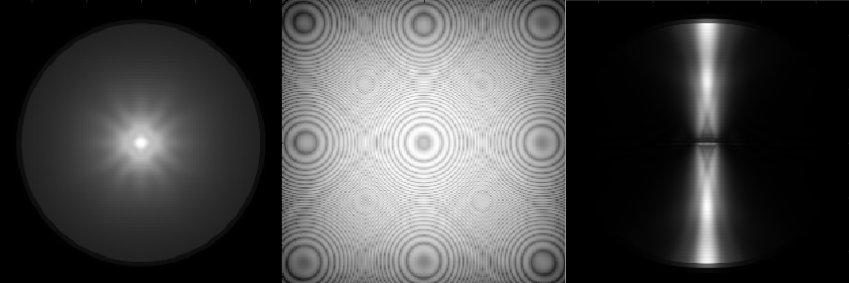
Vision sees shapes explicitly. Echoes don’t. Yet AI can still infer shape from sound. How?
Our @Advintellsyst work uses interpretable shallow CNNs to uncover acoustic signatures behind decisions - relevant to #robotic#perception and animal #echolocation. https://t.co/LR3kO30E04
A new echolocation system developed by researchers at the University of Michigan could help drones and robots “see” in darkness without cameras, laser-based sensors, or GPS🦇
https://t.co/Hsr5rXolK9
Our work, published in Journal of Sound and VIbration, keeps getting attention: Bat-Inspired Sensor Could Help Drones Navigate Without Cameras https://t.co/Vsux3TEnqu via @nextgen_defense
Full article link: https://t.co/qzs8ulwjmg
Exciting to see our research on machine echolocation featured here. Our focus: training AI with simulated echoes to recognize shapes in the dark from real measurements.
The Army envisions echolocation technology’s use in aerial drones, autonomous ground vehicles, and underwater vehicles—but non-military applications abound as well. https://t.co/xHVsAhCCCu
Bats do it. Dolphins do it. Now, our neural net framework, published in @AcousticalSci, perceives 3D shape from ultrasound echoes.
Trained only on simulations, tested on the real world.
Like echolocating brains… but digital.
https://t.co/qzs8ulvLwI
Can we see through sound? YES! Come to my presentation today at #ASME#IMECE 2024, where I will talk about my postdoc work on using ultrasound and #neural networks to recognize shapes of 3D objects.
Excited to have won the 1st place (joint) in the USNC/TAM 5-minute PhD Thesis in Mechanics Competition! If you're curious, check out finalists presentation here: https://t.co/qpZbXB9fV6. I present at 59.50 in the video.
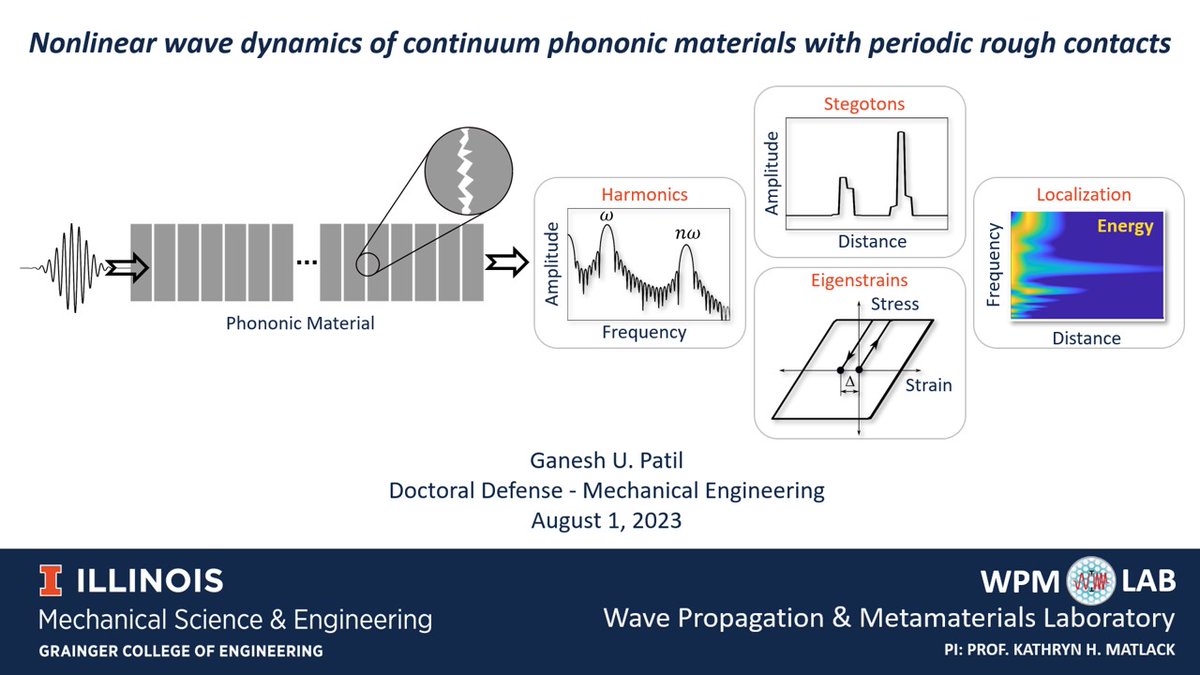
Why let papers have all the fun? My #PhD#dissertation on nonlinear #phononic materials is now available online. Hope fellow researchers and graduate students find it useful. https://t.co/YflnXMDjT0
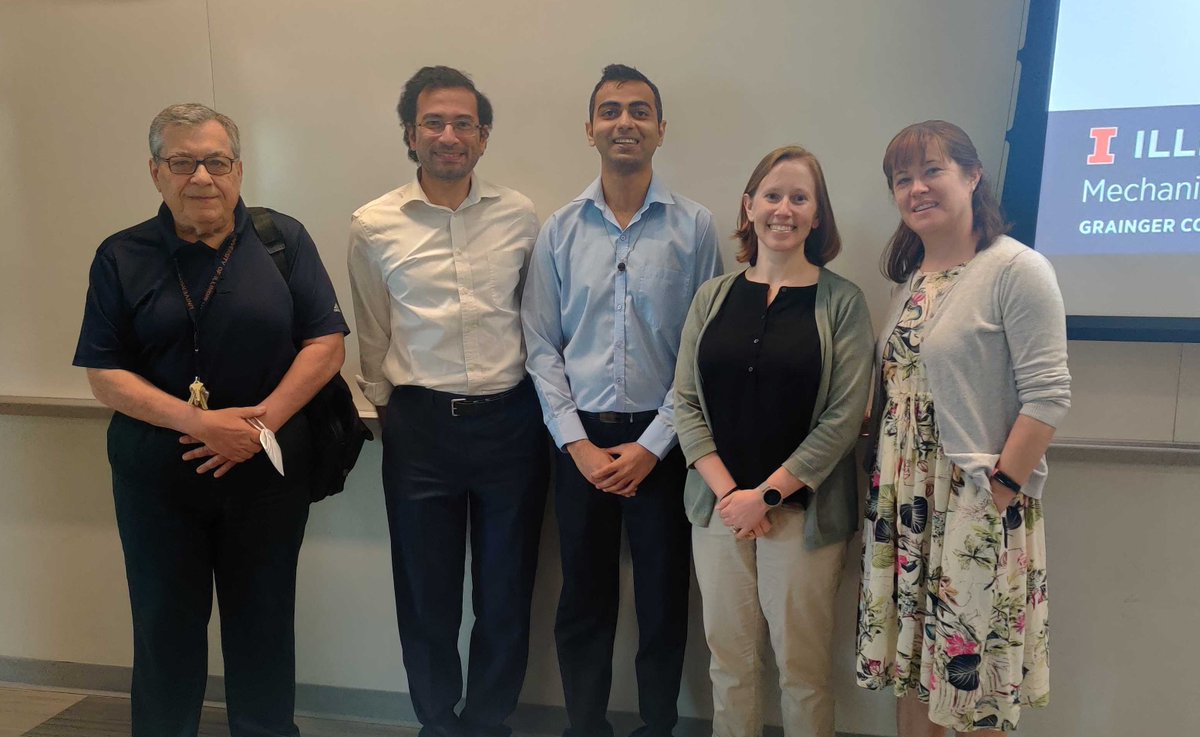
Proclaimed 'Doctor' today! Special thanks to advisor extraordinaire @KathrynMatlack and the committee (@MCSlab_uiuc, @tribo_tweets, and Prof. Vakakis) for their thought-provoking discussions. Excited for what lies ahead!
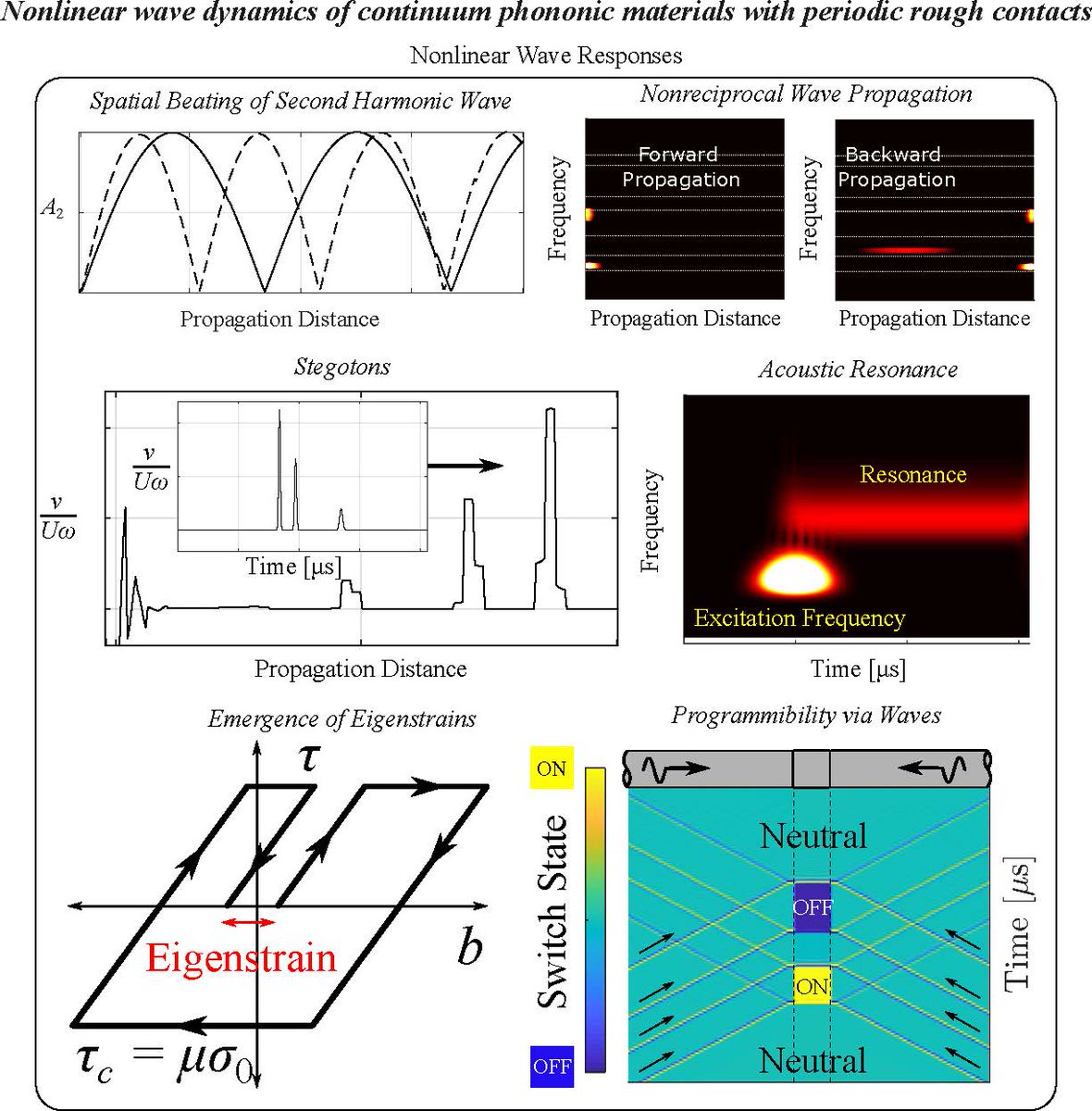
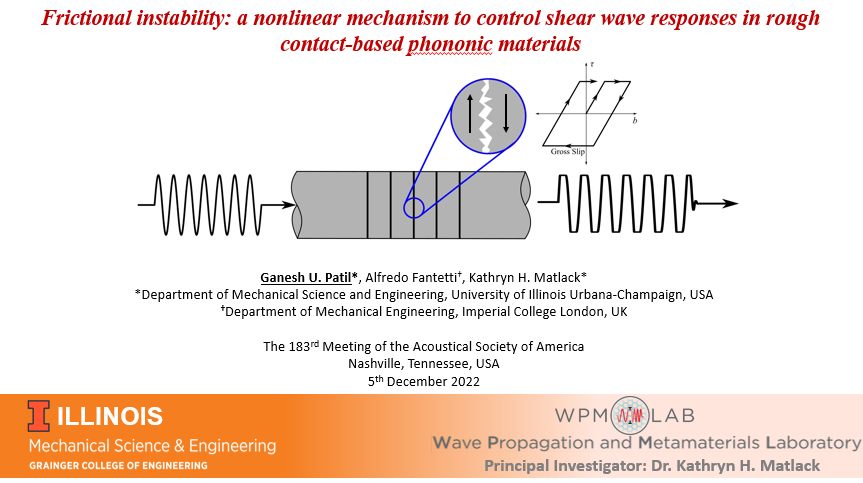
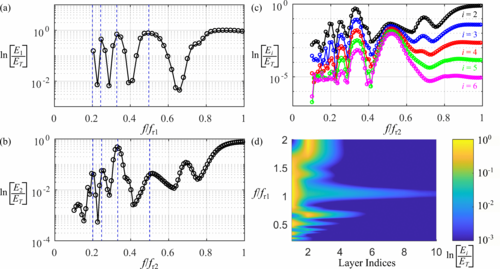
Interested in learning about how friction affects elastic waves in phononic materials? Check out my presentation tomorrow (Monday) at the #ASA183 meeting of @acousticsorg. @KathrynMatlack@ASAStudents
Check out our paper published in Extreme Mechanics Letters, where we discuss how wave mixing combined with nonlinear phononic materials enables and allows tunability of nonreciprocal waves: https://t.co/ACzxj5eI5W @KathrynMatlack
Strongly nonlinear wave dynamics of continuum phononic materials with periodic rough contacts, Ganesh U. Patil and Kathryn H. Matlack #nonlineardynamics https://t.co/vEFhcUCv1h