In case anyone doubted we would get real science from the Falcon 9 lunar impact:
A new paper estimated the impactor was 4,000 kg at 2.43 km/s, kinetic energy equiv to 2.8 tonnes TNT. The resulting crater is 18 m across and <3 m deep.
Here is the interesting science: natural crater impact scaling predicts it should have been a 46–57 m crater, 3x larger than actually occurred. Comparing it to other rocket impacts did better.
Conclusion: It is incorrect to treat spacecraft impacts like meteoroid impacts of equal mass. For a hollow, elongated rocket stage, the geometry and mass distribution determine the crater size.
See?! Real science came from this event.
https://t.co/7I12EsjYW4
A happy goodbye is still a goodbye 🥹
Mission accomplished, MTM! 🫡 Thank you for the ride!
Thanks to its solar-powered electric thrusters, MTM carried @ESA's Bepi & @JAXA_en 's Mio to Mercury on the power equivalent of 250 ants! 🐜🐜🐜
1/3
@emilykmay I don't post much, mostly science retweets, but I appreciate your perspective and it made me happy to read your story of meeting your new partner.
The GoPros I placed near the pad delivered some awesome footage of the Falcon Heavy lifting off.
This is one of them I recovered, shot at 120 fps played back at 30fps (1/4 speed).
@LDS_Dems I think if they didn't trust doctors about vaccines then they should not be admitted to the hospital when they are very ill. Why do they suddenly trust doctors at that moment?
I went through the entire archive from the Artemis Il mission to create timelapses of many scenes experienced by the astronauts.
Many of these views are firsts of their kind.
While this was a ton of work, I see it as practice, as one day I plan on capturing these images myself.
@ClimateDad77 They discovered oil and began to call it ‘black gold’.
Their great-grandchildren died out, burning up along with the planet.
They had failed to realise that burning fossil fuels uncontrollably comes at a very, very high price,
the real price of the ‘black gold’.
#ClimateChange
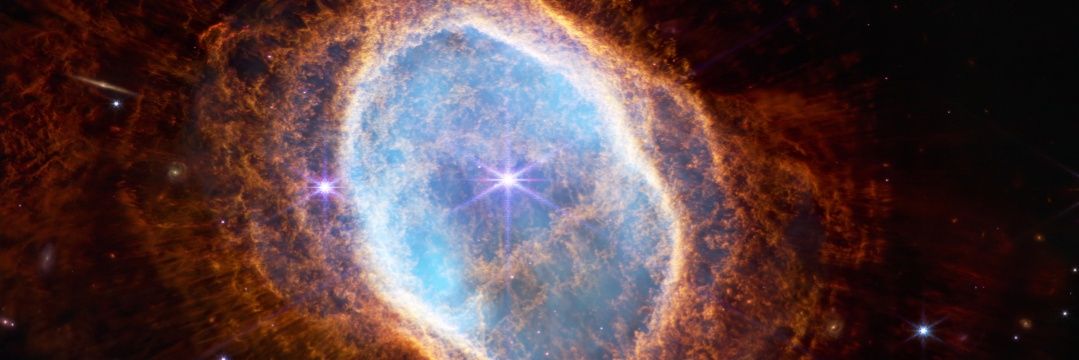
This old star is running out of fuel. The Lion Nebula.
All that's left is a hot white dwarf, cooking the outer dust from inside, blasting it with bubbling ionised gas.
At enormous, beautiful scale.
New image from @NASAWebb@esa
More info: https://t.co/lZFawObEaP
Using data from @NASAHubble, researchers mapped two-thirds of the disk of Andromeda in ultra-sharp detail and found that star formation in the galaxy has undergone a 500-million-year decline.
READ MORE: https://t.co/x5C91AmspX
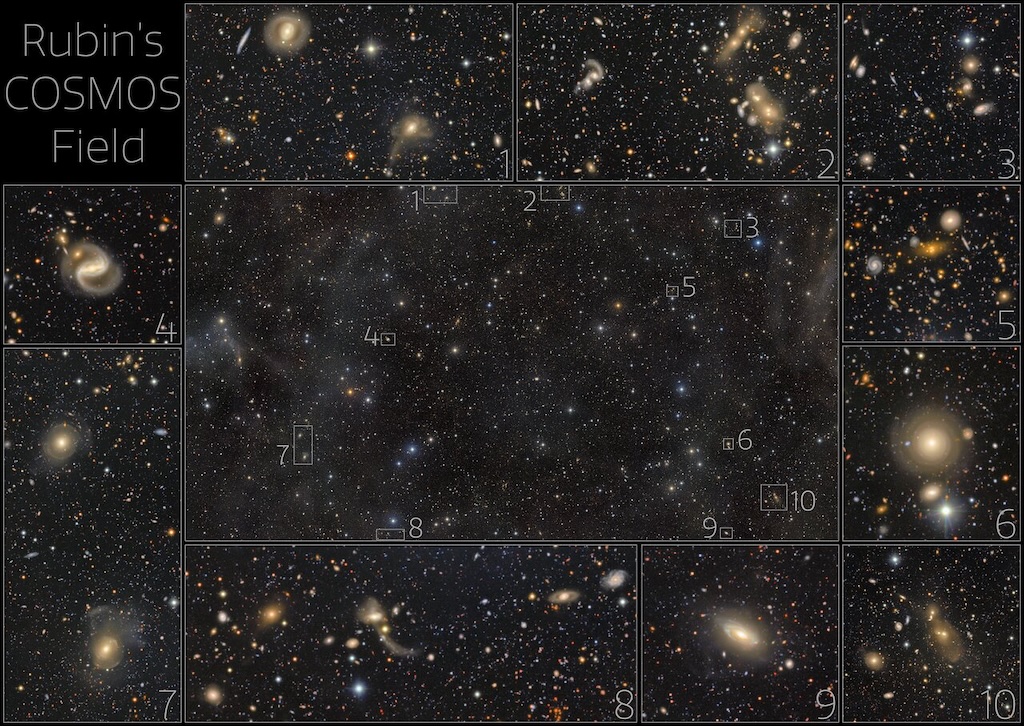
There are more than half a million galaxies in the central panel of this image from the NSF-DOE Vera C.
Rubin Observatory in Chile. This is the COSMOS field, a patch of sky several times larger than the full moon, first observed by Hubble.
It has also been observed by Webb and other telescopes because it contains comparatively few bright stars from our own galaxy, offering a relatively unimpeded view of other galaxies outside the Milky Way.
The outer panels, numbered 1-10, show zoomed-in views of the corresponding small regions highlighted in the central panel.
The variety of galaxy shapes and sizes is astonishing. Some of them are so far away that their light has traveled for billions of years before reaching Earth.
Rubin will come back every couple of days to the COSMOS field as part of its ten-year Legacy Survey of Space and Time.
It will allow a dynamic view of the COSMOS field and how the sky changes over time.
Image Credit & Copyright: NSF–DOE Vera C. Rubin Observatory/NOIRLab/SLAC/AURA Text: Cecilia Chirenti (NASA GSFC, UMCP, CRESST II)
I've been saying this for a long time (even though you didn't want to hear it)
But now the chorus of experts (and even Elon!) is growing louder with the admission that we are hitting the limit of what you can accomplish with 50-year-old tile technology
-You can redefine "rapid reuse" and build so many starships that you are fine with a one-month turnaround
-You can increase your safety margin to the point where you don't care if tiles fail (at the cost of payload)
-Maybe you get lucky with a new tile chemistry that is more robust (they are trying) but the same thing that makes the tiles work (lightweight and low conductivity) is why they are so brittle
As the article notes, this hasn't been a basic research priority for 30 years. And we're in a cycle where basic research funding is shrinking. 30 years ago we didn't need better tiles, so we didn't invest. This is what happens when you only put money into the problems of today.
Perhaps SpaceX gets bailed out with a material science hail mary and we speed-run 25 years of basic research into a novel solution in the next few years. Probably not though. It's gonna take a bunch of basic science and some really novel approaches to solve this problem.
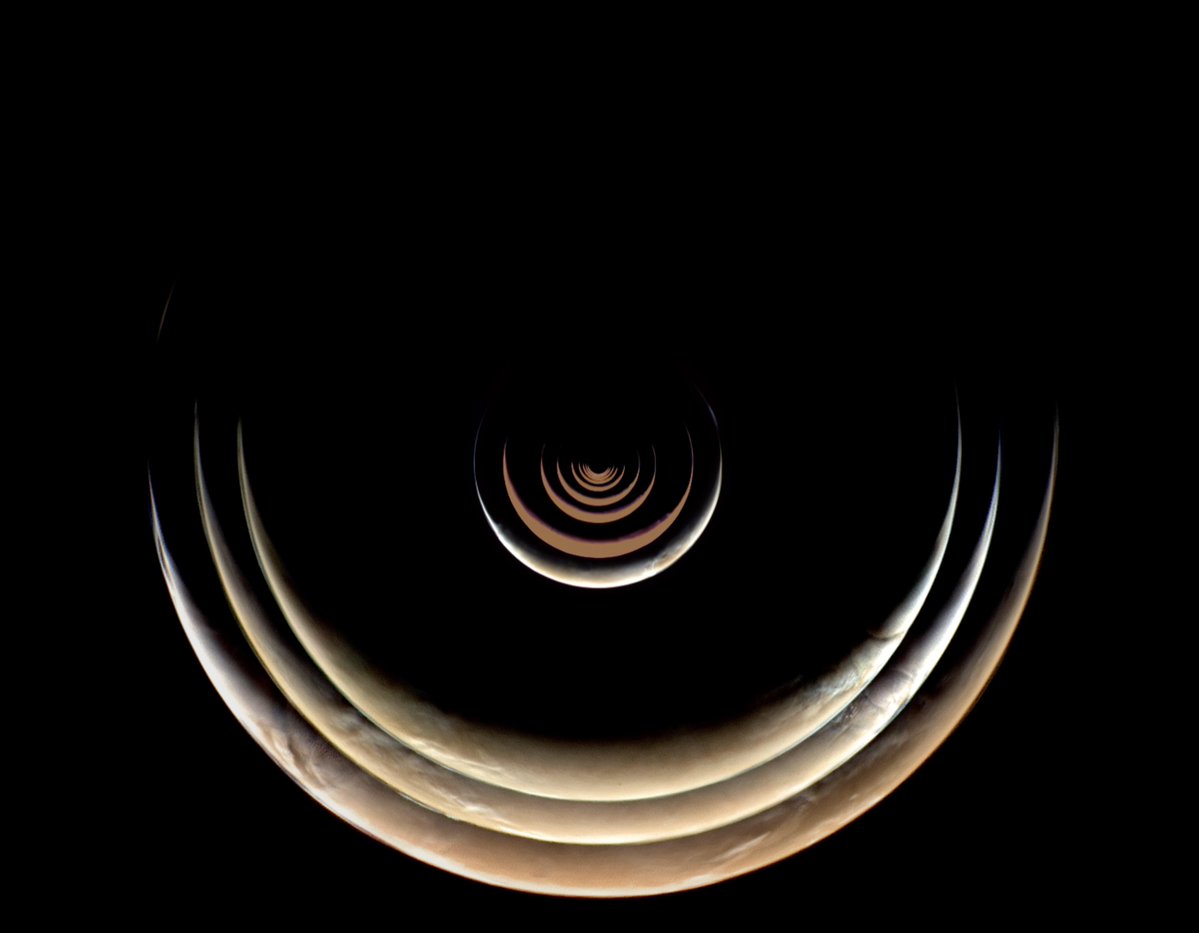
These stunning views of our favorite planet come courtesy of NASA’s Psyche spacecraft, which recently completed a Mars gravity assist on its way to explore a metal-rich asteroid. Psyche captured this series of images throughout the month of May as it sped toward the Red Planet.
Climate change.
Canada’s boreal forest is far north.
Most parts of it only reach 64F (18C) averages in the heat of the summer.
Its density and climate also means it gets very little evaporation compared to its rainfall, and is subject to frost 9 months of the year, and heavy fog the rest of the time.
This kept this biome very humid, kept soil damp, and left most of the low level foliage coated in dew all day long.
Some parts of the forest even had thick levels of permafrost beneath the topsoil that on rare hot days would seep water back into the ecosystem.
Just as many wildfires started by lightning strike in previous decades as now.
The difference is they struggled to catch and spread in this damp environment.
Now extreme dry weather, record breaking heat, northern thaw, erode that protective moisture barrier, leaving the boreal forest vulnerable especially in the more southern parts.
Boreal forests previously went through this process naturally when an over density caused a drier environment you’d get high-intensity crown fires that were cyclical. Every 50-200 years depending on region.
Now we get them annually.
Boreal forest fires are much more severe than others too. The long history of cyclical burns means the soil contains charcoal, the thick multi-layer foliage adds fodder and causes the fire to spread quickly, and pine, spruce, and aspens are all some of the trees with both the most density and the best for wood burning.
It results in towering forest fires of immense heat and rapid spread.
These forests are denser than anything else in North America or Europe, and the current fire in Ontario alone, is the same square mileage as the entire state of Delaware.
From the time it ignited, to covering that size, took less than 20 hours.
While some in the US still think climate change is a hoax, we are all going to deal with the consequences of it, as we’ve turned the largest forest in the world into a tinder box, and fires in less than 0.01% of it drowns the entire continent in smoke.
A sandstorm captured in stone.
Curiosity spotted these rocks that formed after ripples of sand climbed over each other during an ancient Martian storm.
Details and full-size image: https://t.co/fTEYRy0dQU
A heat dome caused soaring temperatures in the U.S. last weekend, breaking records in Montana, Wyoming & Utah.
Heat domes put the brakes on convection and suppress clouds and precipitation. This allows more sunlight to reach Earth’s surface making it even hotter.
The largest digital camera ever built has begun a 10-year southern sky survey, taking hundreds of images a night to spot fainter objects that had escaped detection. https://t.co/patpImIuPW