This account will no longer be active or monitored.
We welcome our community to follow @ACSPublications or sign up for e-Alerts for future updates from ACS Synthetic Biology: https://t.co/em4fiEpzMy
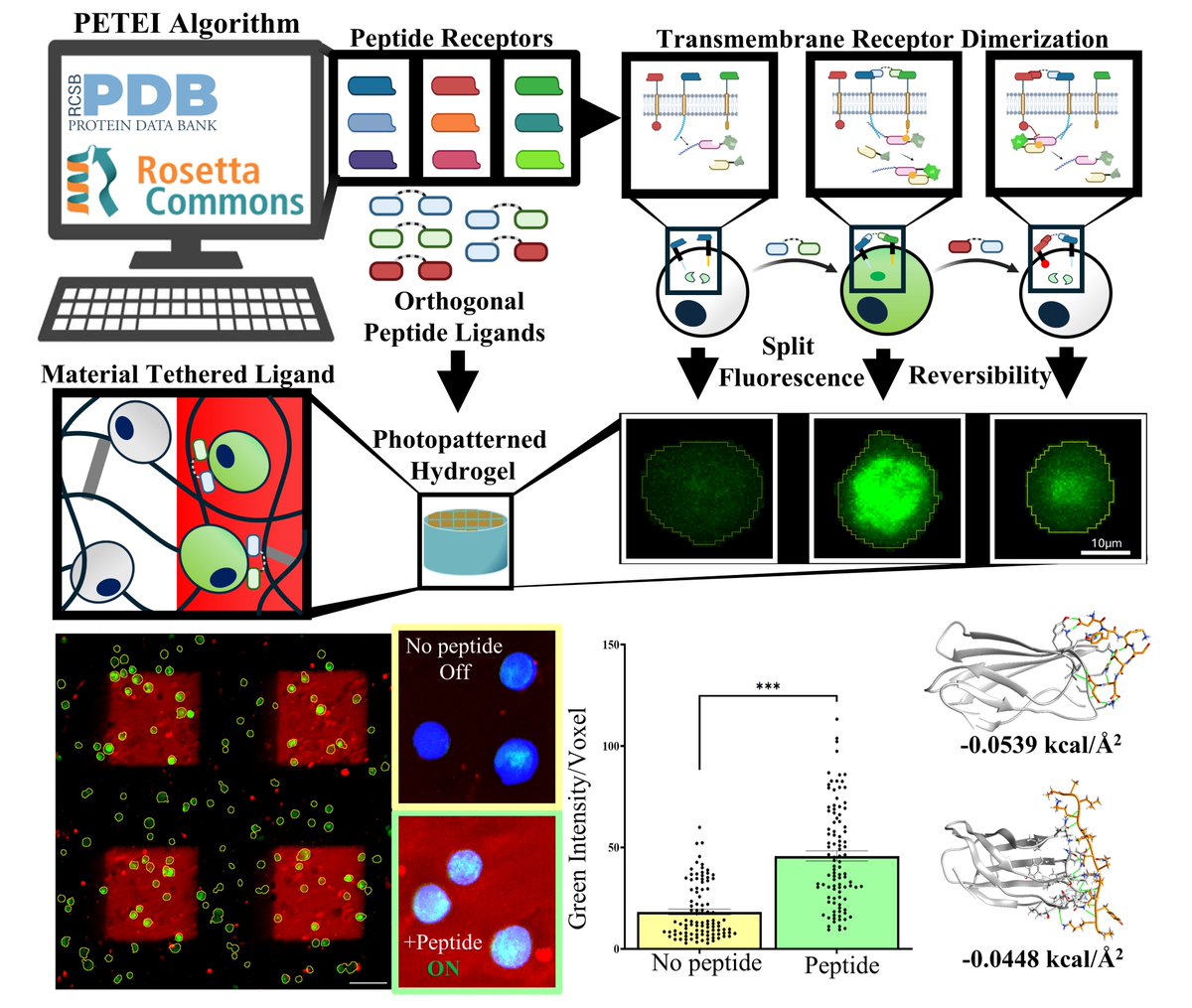
Excited to share our latest publication focused on developing synthetic, peptide-responsive transmembrane receptors to interact with peptide-biomaterials. @ACSSynBio@RowanBME
https://t.co/9fMKV1oRvS
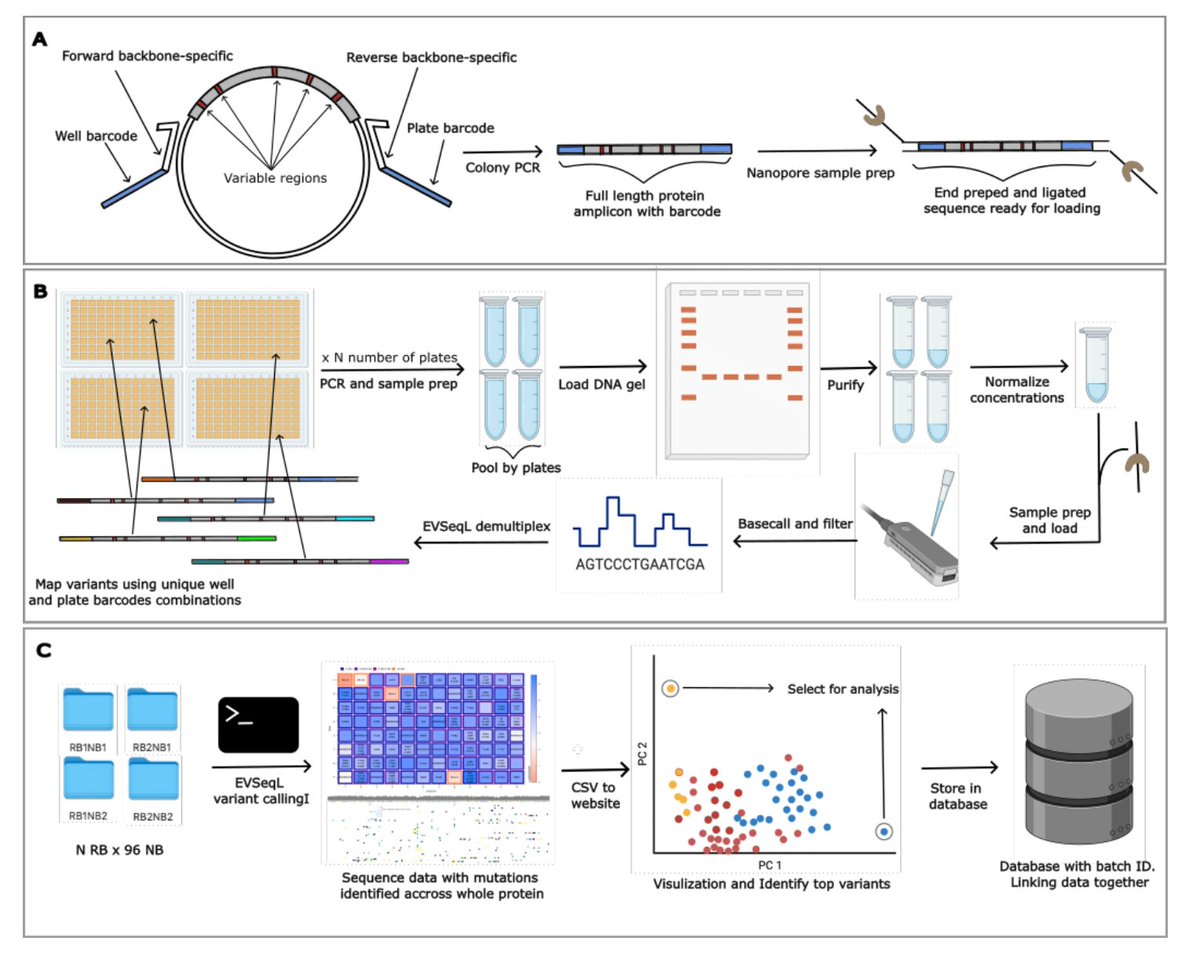
LevSeq: Rapid Generation of Sequence-Function Data for Directed Evolution and Machine Learning
🚀Groundbreaking work from the lab of Nobel laureate Frances H. Arnold, a pioneer in the field of directed evolution @francesarnold 🚀
1. The article introduces LevSeq, a new method combining nanopore sequencing with a dual barcoding strategy, enabling rapid and comprehensive sequence-function data generation, ideal for protein engineering workflows.
2. LevSeq’s integration into directed evolution workflows ensures full-length gene sequencing with minimal cost, optimizing both time and resources while enhancing accuracy in variant detection.
3. The system provides real-time quality control before the screening phase, offering significant reductions in library screening burden by filtering out low-quality sequences early.
4. One of the key innovations is its application in generating machine learning-compatible data, streamlining protein engineering by coupling sequence information with functional data to guide further optimization.
5. LevSeq has been demonstrated on two protein engineering projects, where it accurately detected key mutations and epistatic interactions in enzyme engineering for new-to-nature chemistries.
6. By utilizing long-read nanopore sequencing, LevSeq enhances the ability to explore the protein fitness landscape, providing vital insights that were previously inaccessible with traditional methods.
7. LevSeq is designed with user-friendly, open-source software, enabling researchers to easily analyze mutagenesis libraries and incorporate machine learning for improved directed evolution outcomes.
8. It enables the collection of essential sequence-function data, which serves as a foundation for advanced machine learning models to predict high-performance protein variants, a major leap in data-driven protein design.
9. LevSeq offers a robust tool for protein engineers to explore and optimize vast sequence spaces, with potential applications in industrial, environmental, and pharmaceutical biocatalysis.
💻Code: https://t.co/MQk5BvXBI7
📜Paper: https://t.co/du91WnBYrb
Exciting news! Associate Editor Prof. Magdy Mahfouz tells us his group member, Mohammed Shahid Chaudhary, has passed his PhD Defense 🥳
Congratulations, Dr. Chaudhary! 👏
There’s still time to submit your nominations for our 2025 lectureships and awards in the biological and medicinal chemistry portfolio ⏳
Find out more: https://t.co/4yBy0zs9uT
#ACSAwards#BiologicalChemistry#MedicinalChemistry
#WeekendReading! 📣
"A User’s Guide to Golden Gate Cloning Methods and Standards", by Jasmine E. Bird, Jon Marles-Wright, and Andrea Giachino, was published #OnThisDay in 2022 🎉
It is consistently one of our #MostRead articles! 👏
Why not check it out today?
💖SynBio xoxo
Nominations are open for awards honoring early-career researchers & established investigators in biological and medicinal chemistry! 🧪
Explore past recipients and submit your 2025 nominations: https://t.co/iZkPGeL797
#ACSAwards#BiologicalChemistry#MedicinalChemistry
#ToolkitTuesday 🛠️
Check out this Review from Wouter Demeester, Brecht De Paepe, and Marjan De Mey
Fundamentals and Exceptions of the LysR-type Transcriptional Regulators ➡️ https://t.co/yobEUCDGWE
Anyone for #MicrobeMonday? 🧫🔬
Optimized CRISPR Interference System for Investigating Pseudomonas alloputida Genes Involved in Rhizosphere Microbiome Assembly ➡️ https://t.co/bRZNfzem1Q
#WeekendReading! We've been loving #ChemRevs content this week 💅
Noncanonical amino acids are so hot right now 🔥
Noncanonical Amino Acids: Bringing New-to-Nature Functionalities to Biocatalysis ➡️ https://t.co/S0nMCxeYUR
Cool work from Brouwer et al. 👏
Did you miss our #WeekendReading suggestions?
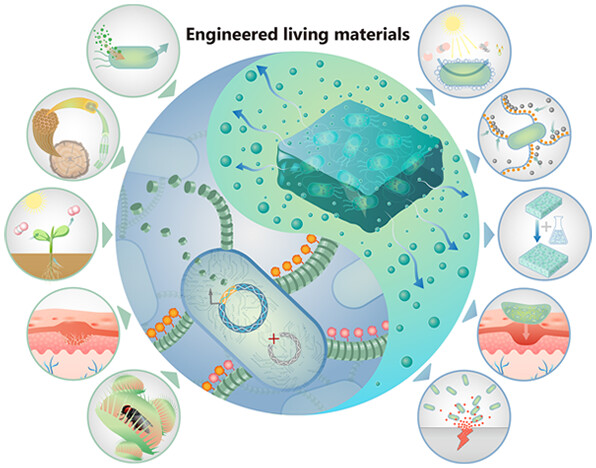
Well make sure you've seen this fascinating Review in #ChemRevs, written by Topic Editor Prof. Chao Zhong and colleagues:
Engineered Living Materials For Sustainability ➡️ https://t.co/hrCrjZScxi
@MacroJrnls_ACS, take a look 👀
📢Submit today! Plant Synthetic Biology 2.0 🌱
This will center on the application of design & engineering principles for constructing genetic circuits to enhance plant yield, quality, and resilience.
More info ➡️ https://t.co/O51yDZdGXh
Budding appreciation for SynBio 💖
📢3 days to go! Plant Synthetic Biology 2.0 🌱
This will center on the application of design & engineering principles for constructing genetic circuits to enhance plant yield, quality, and resilience.
More info ➡️ https://t.co/J44N1e9VEC
Plant SynBio really grows on you 💖
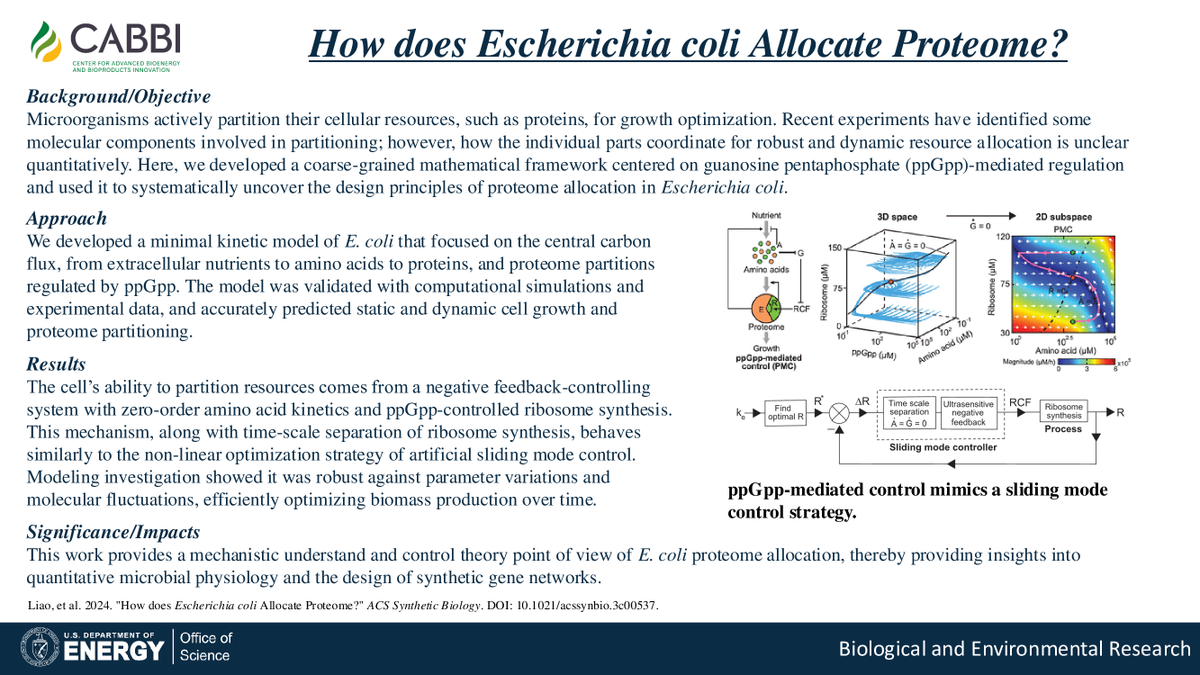
A CABBI #Conversion team at @UofIllinois developed a mathematical framework to explore proteome allocation in E. coli microorganisms, providing insights into quantitative microbial physiology and the design of synthetic gene networks.
📰 @ACSSynBio: https://t.co/eIeZFosqrD
📢Call for Papers Deadline Sept 30: Plant Synthetic Biology 2.0 🌱
Our new Special Issue will center on the application of design and engineering principles for constructing genetic circuits to enhance plant yield, quality, and resilience.
Learn more:
https://t.co/lj74gztsSP