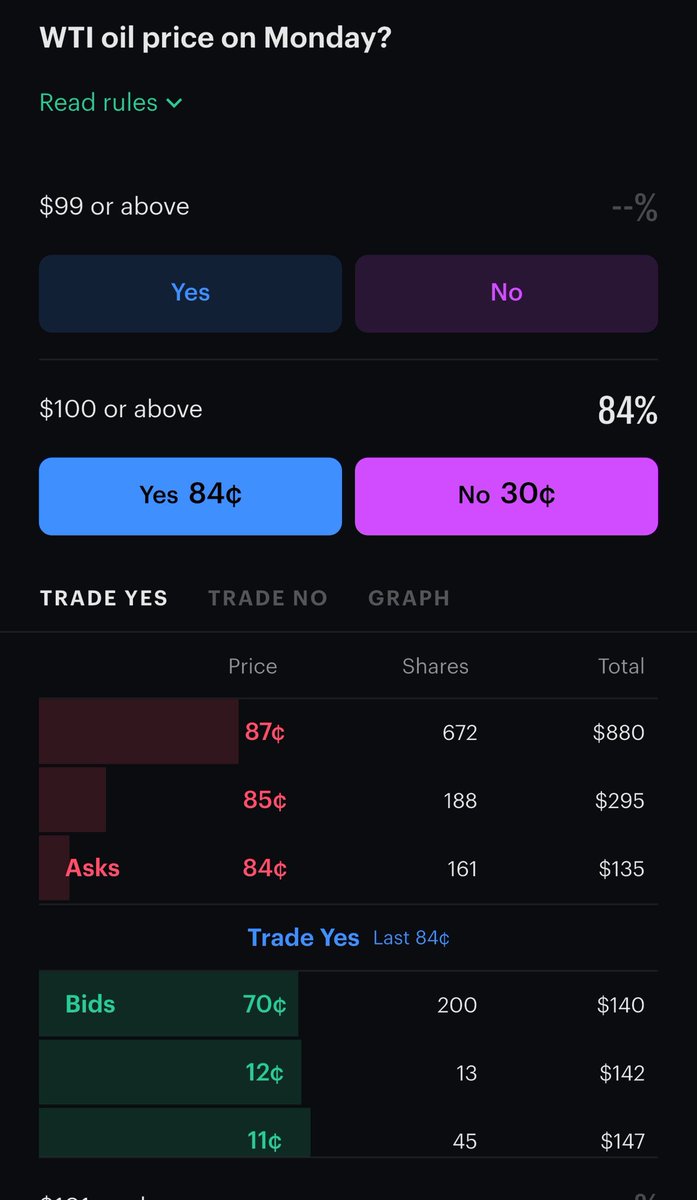
Reminder for everyone: When a candidate priced at 80 cents wins, this means Kalshi was correct and accurate in their pricing. When a candidate priced at 5 cents wins, no this does not mean that Kalshi was wrong. Don’t you understand how probability works? 5% outcomes happen.
Today, a Minnesota federal court put a halt to aggressive state overreach seeking to ban federally regulated derivatives markets. This is the second time a court has granted an injunction in favor of the agency in defense of its jurisdiction over prediction markets. The @CFTC appreciates the court’s careful consideration of the issues.
People are owed more than just 'their basis' here; several markets were moved by people freeing up shares to accumulate a position here. Like Fed Chair would be at 92c without this market; people paid fees there and took losses to bid on that market.
Kalshi has admitted that large corporate market makers are gifted zero fee trading + rebates, while individual customers pay an insane level of fees. How is that exactly a fair and equal playing field?
1: The notion that market makers, which are the backbone of all financial markets, somehow makes exchanges similar to sportsbooks is false even in its most generous interpretation. For those of you not wanting to read an entire thread…
TL;DR: On a sportsbook, there is a single centralized entity (the “house”) setting prices for the entire market. On an exchange, prices are created from an amalgamation of thousands of bids and asks from thousands of entities. Market makers, including KT, compete for flow in an open, transparent and fair marketplace, and set their own prices as to what they are willing to pay for a contract, but are not able to dictate the broader market beyond that. 🧵
Here’s an explanation of market makers and how they work on Kalshi:
2: In financial markets -- the stock market, the bond market -- assets are bought and sold peer to peer. For example, if you want to sell a share of Nike stock, you will need someone else to buy it.
3: There is an obvious problem with this setup: What if nobody wants to buy when you want to sell? What if nobody is selling when you want to buy? If participants could only buy or sell when willing buyers and sellers happened to match up in timing and price, markets simply wouldn't be able to function.
4: This is where market makers come in. Market makers buy and sell from both sides of the market, enabling buyers to have sellers and sellers to have buyers. This creates a liquid market where anyone can enter and exit positions as they please.
5: Liquid markets are incredibly important to platforms like Kalshi, or the New York Stock Exchange. Liquidity is what enables a good user experience -- nobody would use Kalshi or the NYSE if they couldn't buy or sell contracts when they wanted to.
6: Liquid markets are also incredibly important to consumers. On Kalshi, there is a massive ecosystem of market makers, all competing and pricing separately. It's this thriving ecosystem, made up of thousands of market makers, that creates market efficiency -- and market efficiency is why people get better prices on Kalshi.
7: On Kalshi, one of these market makers is KT, who has been a public part of the platform since its launch. KT is a separate corporate entity that is a market maker on Kalshi charged with providing liquidity. They are one of the thousands of market makers that combine to create the Kalshi ecosystem.
8: On a sportsbook, there is a single centralized entity (the "house") setting prices for the entire market. On an exchange, prices are created from an amalgamation of thousands of bids and asks from thousands of entities. Market makers, including KT, set their own prices as to what they are willing to pay for a contract, but are not able to influence the broader market beyond that. The notion that they can is outright false and a complete misunderstanding of how financial markets operate.
9: Given the financial interest at stake in opposing Kalshi's success, we are not surprised to see misinformation circulating about complex topics. The good news: there are a lot of supporters of the space, especially end consumers…so we’ll keep going! Our door is always open if you want to have a fact-based conversation about where the future of markets is heading.
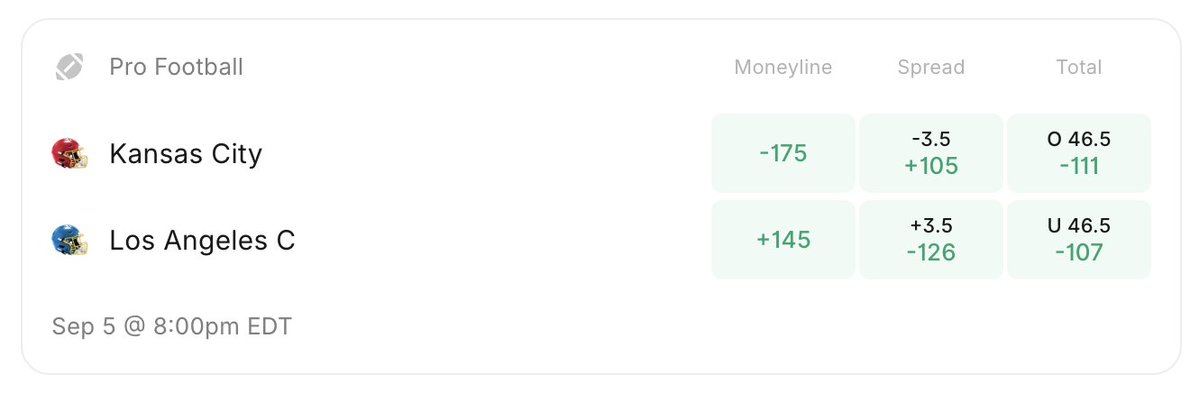
Kalshi release unveils new trading UI for quick access to moneyline, spread, and total trades! I have a feeling a lot of people are going to like this new feature.