Stanford CS lab using & advancing artificial intelligence and reinforcement learning to aid society. Led by Emma Brunskill. Stanford photo from Anirudh Rao.
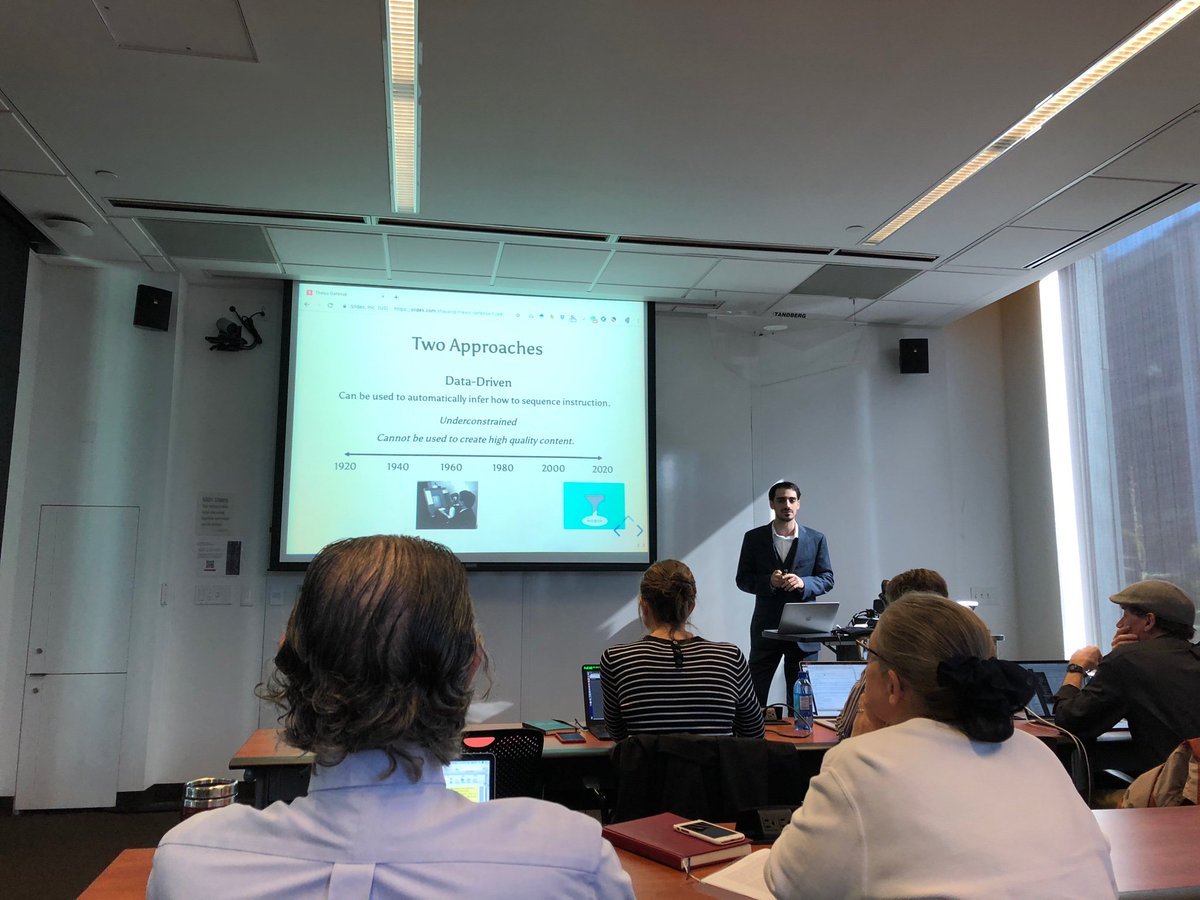
Congratulations to lab member Shayan on his successful thesis defense! Thanks also to his fantastic thesis committee of Ken Koedinger, Vincent Aleven, @chinmay and @erichorvitz
With the great help of @StanfordVPTL, lectures 1-5 of my Stanford Reinforcement Learning class https://t.co/Kn3IqqL51Z are now up on youtube:
https://t.co/lLjDxpnG2D. More to come! #ReinforcementLearning#Learning4All
We're excited about partnering with
@Stanford on an interdisciplinary vision for AI, guided by insights about human intelligence & a careful consideration of the goals & needs of people and society https://t.co/eZx8pE9D1e #StanfordHumanAI @compcomcon @MSFTResearch@MSFTResearch
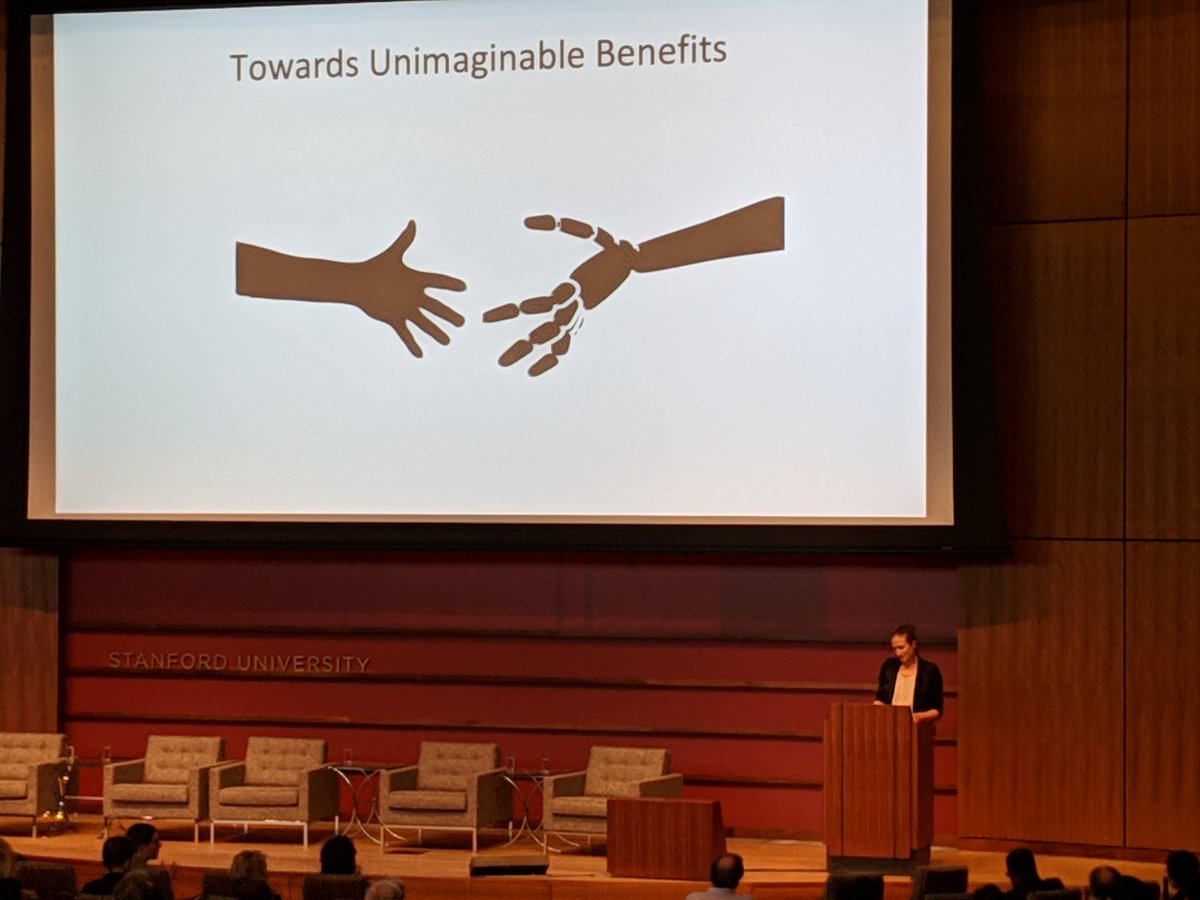
Feeling very inspired after @EmmaBrunskill's talk at the #StanfordHumanAI launch: using rigorously optimal decision-making methods in small-data domains!
.@drfeifei: AI has developed some truly remarkable capabilities in recent years, but it remains light years behind the nuance, subtlety and flexibility of our own intelligence. #StanfordHumanAI
In education, we haven’t even begun to do deep machine learning work in terms of understanding motivation, teaching styles and more to really improve the output of the system: better learning, fewer dropouts. - Bill Gates #StanfordHumanAI
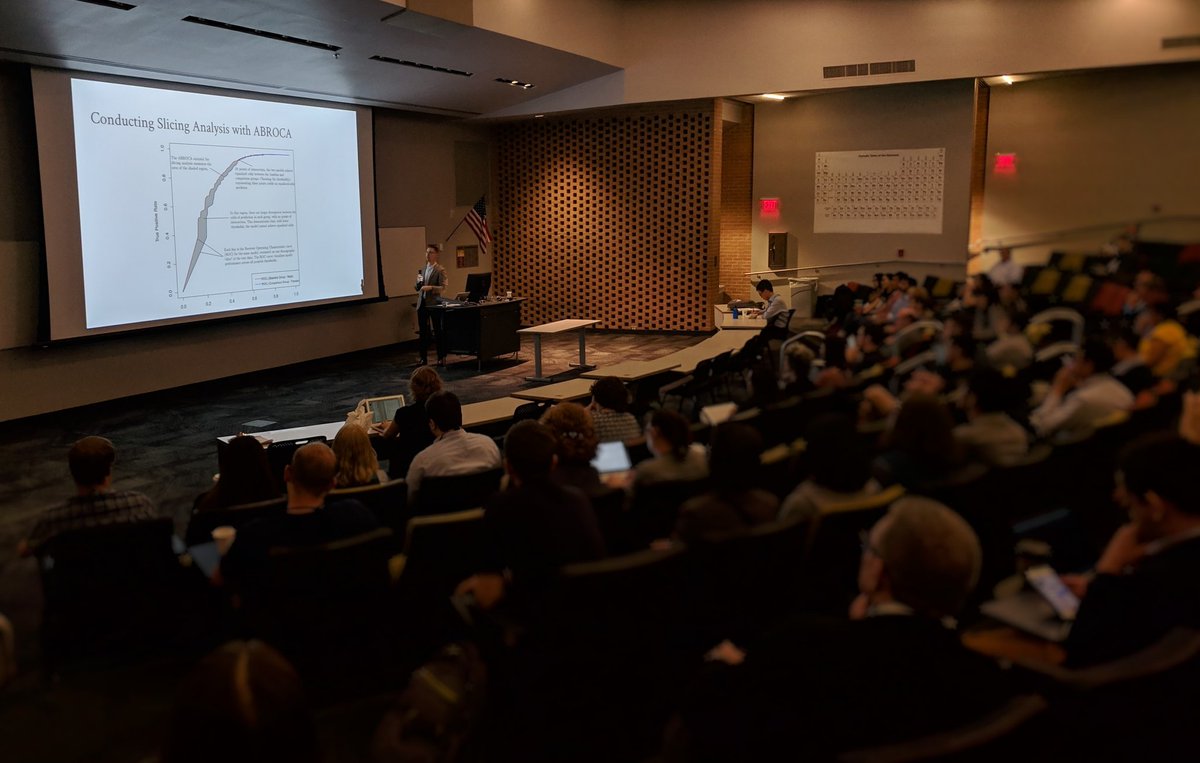
Great to see award winning work on fairness in learning analytics! @jpgard@cab938 @BakerEDMLab There needs to be more work in this area and perhaps more involvement from fair ML researchers @fatconference
If you missed #LAK19's best full paper "Evaluating the fairness of predictive student models through slicing," you can still check out and use Absolute Between-ROC Area (ABROCA): https://t.co/g7h2Sh6Usp
Thanks for open and reproducible work, @jpgard, @cab938, and @BakerEDMLab
An important and timely workshop on "Fairness and Equity in Learning Analytics Systems" - co-chaired by Ken Holstein & Shayan Doroudi #LAK19#FairLAK https://t.co/06sxxY5sdA
Really excited by our work distilling "Guidelines for human-AI Interaction." CHI Paper = https://t.co/x7Yx2rrCSr ;& nice blog post = https://t.co/Wfl5qsRvLE
New #AI#job opportunities available! The Human-Centered Artificial Intelligence (HAI) Institute @Stanford invites applications for fixed-term Assistant Professor (Research) faculty positions. Here are more details: https://t.co/OUQyC3poJi
Bandit blog revived! Yours truly and Tor Lattimore presents everything you wanted to know about "First order bounds for k-armed adversarial bandits"! https://t.co/U4TPGcvw2U
Did you hear about the AI language system that OpenAI wouldn't release over concerns about abuse? The take in this article is closest to my view---it's a good conversation starter (if only the press would stop it with the clickbait headlines). https://t.co/I0RQ18ROeM @BrownHCRI
This week, we're highlighting our Stanford AI4ALL summer program, launched in 2015. After learning about the creativity inherent in AI, alum Ananya launched @girls_creAIte with 2 other Stanford AI4ALL alums.
Learn more about Stanford AI4ALL: https://t.co/cde3mMARgc #AI4ALL19
Pinterest Labs presents a Distinguished Lecture by prof. Emma Brunskill of @Stanford on latest advancements in Reinforcement Learning. Mon 2/25 at 5:15pm @Pinterest. RSVP at https://t.co/7XG7cCjVAW
@pnderthevstnes Hi Sam: That's right, you can't see your own cards, but you can see everyone else's. Check out the paper for a (correct!) description of the game https://t.co/I0UcFdGtBT
Deepmind proposes the card game Hanabi as a new challenging domain for RL, and introduces the Hanabi Learning Environment for easy interface with existing algorithms.
What is Hanabi, and why is it a challenging domain? (1/?)
Hanabi isn't zero sum, has imperfect information, and depends crucially on modelling of teammates' decisions/strategies: very different from Go/Chess/Starcraft. (3/3)
Thanks @DeepMindAI for open-sourcing the framework, more at https://t.co/I0UcFdGtBT
Hanabi is a cooperative team card game, where the players must work together to combine cards from their own hands and the hands of their teammates. However, each player can only see the cards in their own hands, and not anyone else's hands. (2/3)