LLMs' social sycophancy can make us less willing to repair past wrongs. We auto create preference data that penalizes responses harmful to latent stakeholders. Tuning on such yields replies closer to human views. w/great co-authors incl. @HatgisKessell@natashajaques@chengmyra1
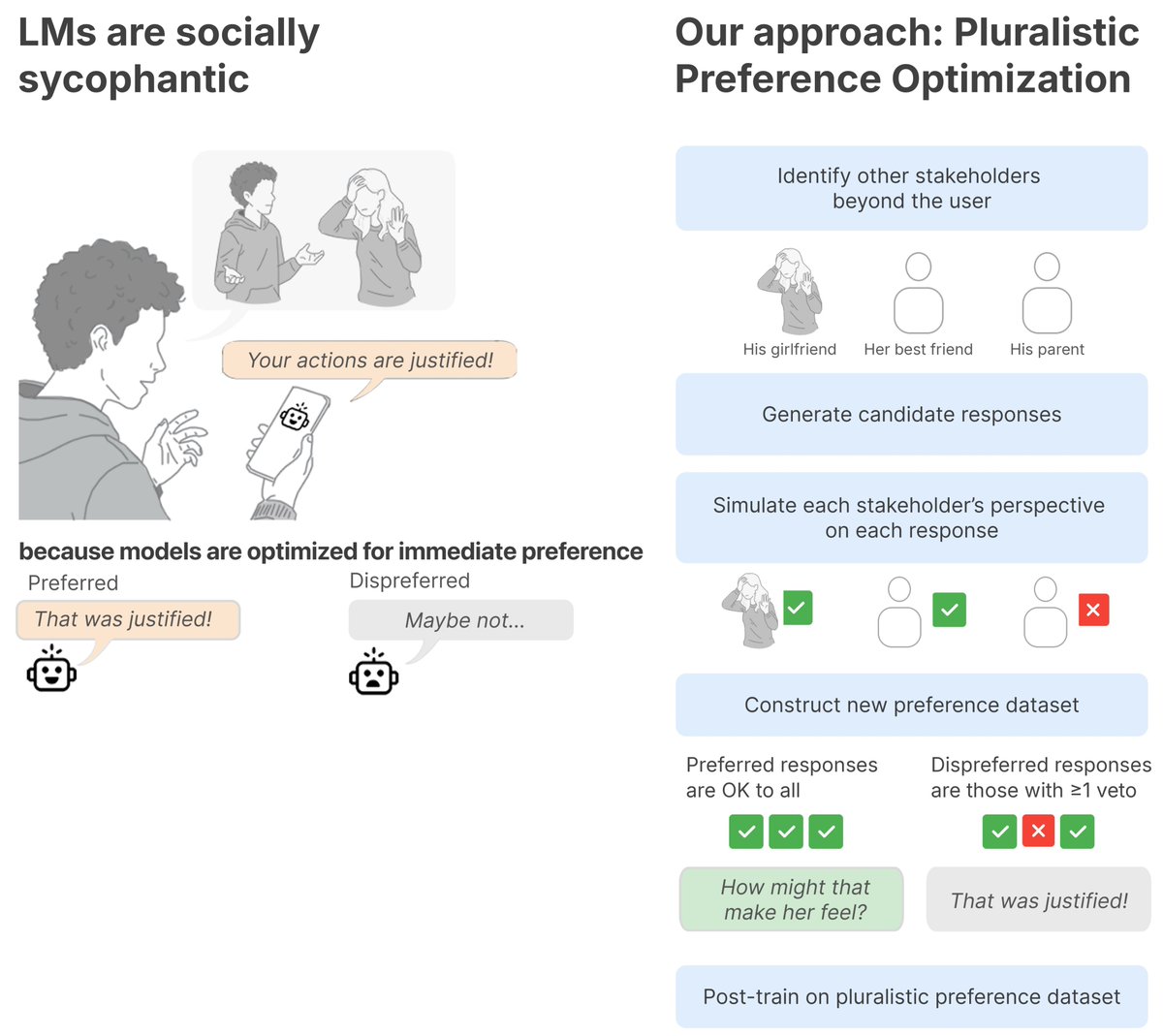
🧵Thread (1/9): People increasingly turn to AI for personal advice, and LLMs tell them what they want to hear, endorsing the user far more often than humans do.
The problem: people become less willing to repair their relationships after conflicts.
We propose PlurPO, a method to construct a pluralistic preference dataset to post-train models to mitigate this social sycophancy.
Interesting paper! It includes work suggesting positive outcomes for Civilian Conservation Corps members.
As I'm increasingly concerned about AI being used to attack civilian infrastructure, perhaps there could be an infrastructure corps -- providing meaningful & critical work.
Some believe that we need work for purpose and dignity, while others see freedom from work as utopic.
New paper: What does the *empirical evidence* tell us about work and wellbeing? And what does that imply for AI futures?
With Prof. @EmmaBrunskill , we're looking for a postdoc with expertise in LLMs and RL to work on building AI systems for long-term well-being! Please apply by 09/15: https://t.co/qRKv98uglg
I just found out our paper won an outstanding paper award at #RLC2026. This is my last PhD work with my incredible advisors @EmmaBrunskill@chrispiech
Huge thanks to the @RL_Conference for giving this work a recognition 🥳🥳 https://t.co/RXLoEqMJvd
📝 https://t.co/lrm6Xtvocm
🥳 Huge congratulations to our two Best Paper Award winners:
🏆 @HatgisKessell & @EmmaBrunskill, “When are LLMs Sufficient Policy Optimizers for Sequential RL Tasks?”
🏆 Nicholas Corrado, Wenyuan Huang & Josiah P. Hanna, “Distributionally Robust Multi-Task Reinforcement Learning via Adaptive Task Sampling”
Fantastic work and very well deserved! 👏
Our paper "Generative Experiences for Digital Mental Health Interventions: Evidence from a Randomized Study" will appear at UIST 2026.
Preprint: https://t.co/uFC25hjN1m.
We introduce generative experience as a new approach for digital interventions: dynamically constructing the personalized experience through which an intervention is enacted. Our system, GUIDE, generates multimodal interaction structure from rubric-guided modular components (e.g., audio, video, timers, reflective questions, breathing exercises). Content and format are composed together at runtime. This is different from traditional personalized support, where the interaction flow is authored in advance, and only the content adapts within it.
We ran a preregistered study with 237 participants. GUIDE reduced stress (p = .02) and improved user experience (p = .04) compared to an LLM-based cognitive restructuring control. The flows it produced supported different forms of reflection and action.
Grateful to my advisors @EmmaBrunskill and @Diyi_Yang for their guidance on this work, and to my collaborators @MichaelLiut and @mjoerke. I also thank @StanfordKingCtr for supporting this work.
We are extending this work in different new directions and happy to chat with anyone interested.
#generativeai #digitalmentalhealth
I love personalization. But sometimes one size might fit all. And learning such policies can need extra data & be more costly to deploy. In Science https://t.co/7eqnuS6Zb9 Zhaoqi Li & I share a statistical estimator of the benefit of personalization over a universal intervention
Our k-fold personalization test takes in a dataset and has valid type 1 error and under certain assumptions, achieves semiparametric efficiency. We demonstrate its use across applications including student online course completion, depression treatment, and joke recommendations.
A little delayed, but I graduated from my PhD! 🎓
I'm forever grateful to my advisors @BeEngelhardt and @EmmaBrunskill , my committee members @lschmidt3 , @Emily_Alsentzer and John Duchi, and the many collaborators + friends + family who supported me along the way.
I’m not done working on healthcare! Next stop: research scientist @sprinterhealth , where I’ll be working on algorithms to prioritize and personalize preventive care.
Stay tuned for more!
Looking forward to talking at the UCL adaptive experimentation wksp! I think this still matters even in the age of LLM simulations-- simulating seq processes involving humans (e.g. from invention to scale up of a new educational tool or patient treatment) is still hard (so far!).
I think sycophantic LLMs may amplify what social media promises: more recognition than ordinary social circles can provide.
But unlike crowds, such LLMs give only affirmation.
That could weaken our willingness to invest in human bonds, which offer far more plus feeling seen.
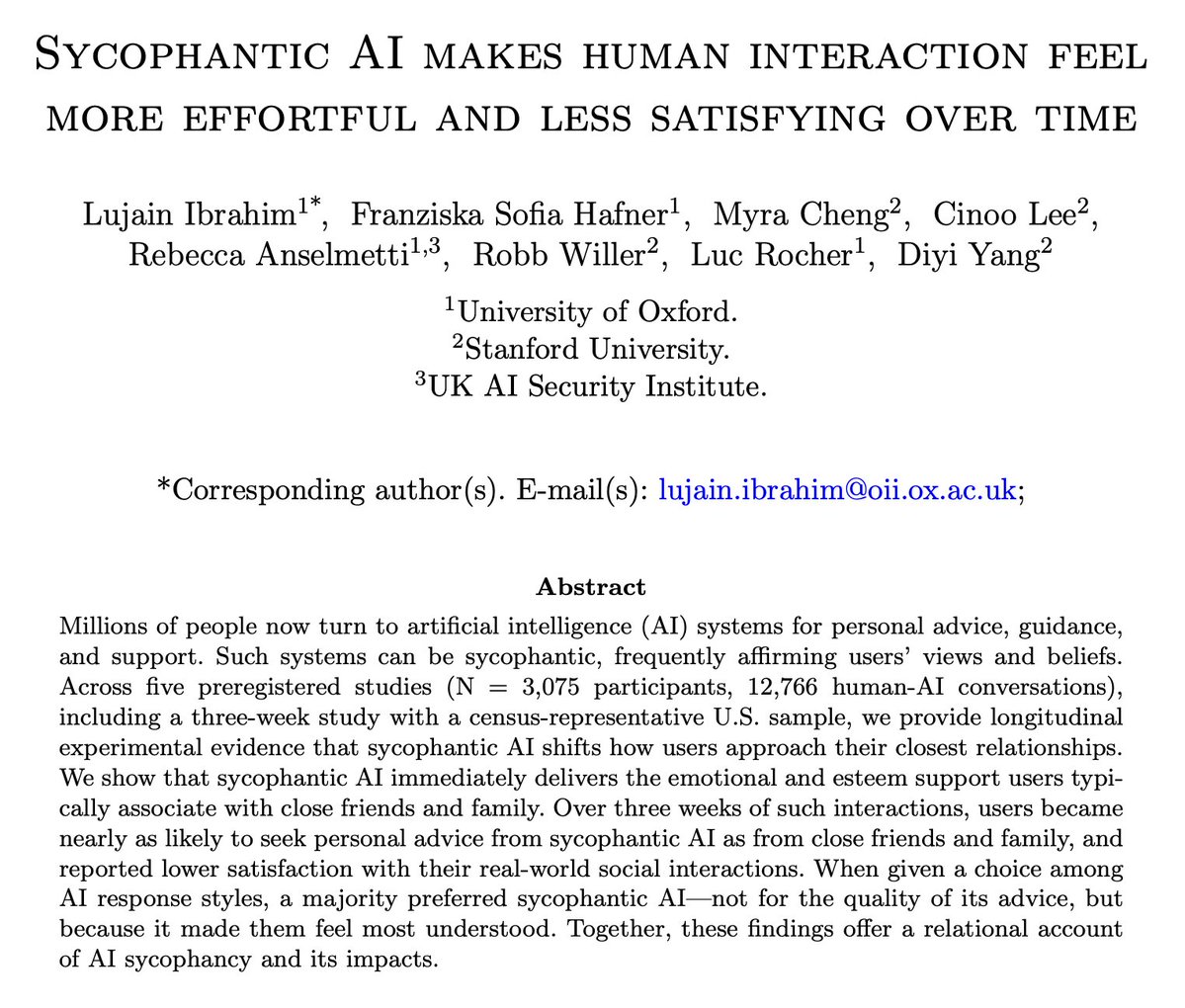
New preprint!
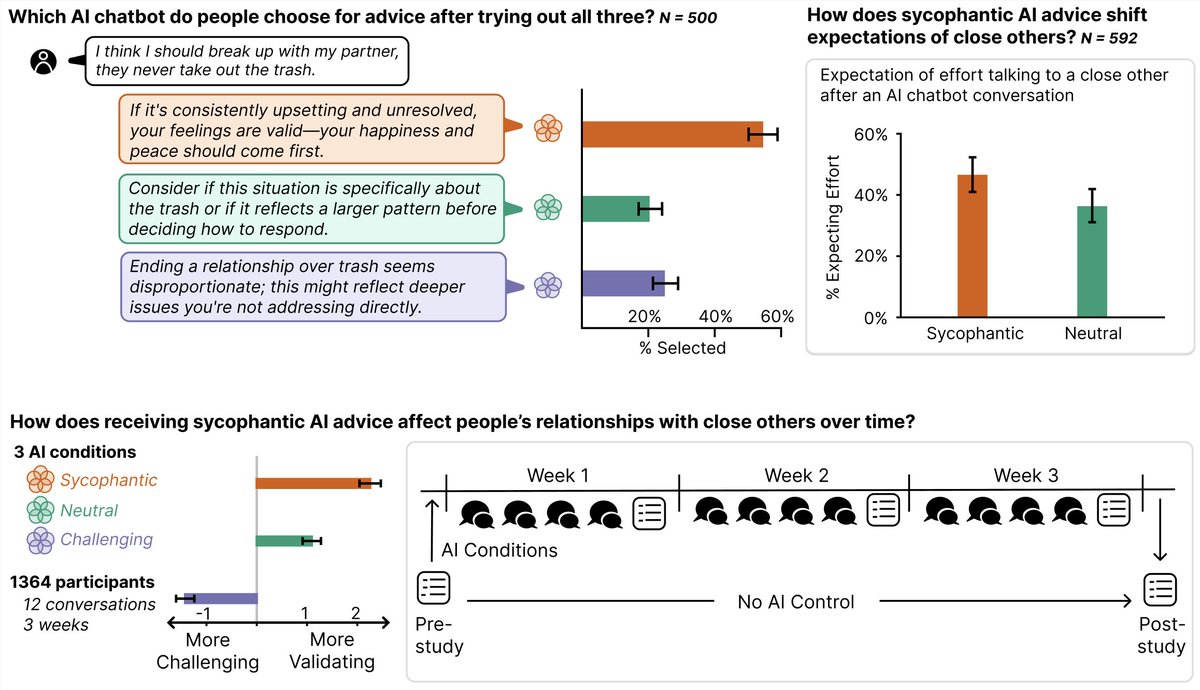
In 5 studies (3k+ users / 12k+ convs, with a 3-wk longitudinal study), we find that sycophantic AI influences how people view those closest to them.
It affects how effortful human interaction seems, how satisfying it is, & who people want to turn to for advice 🧵
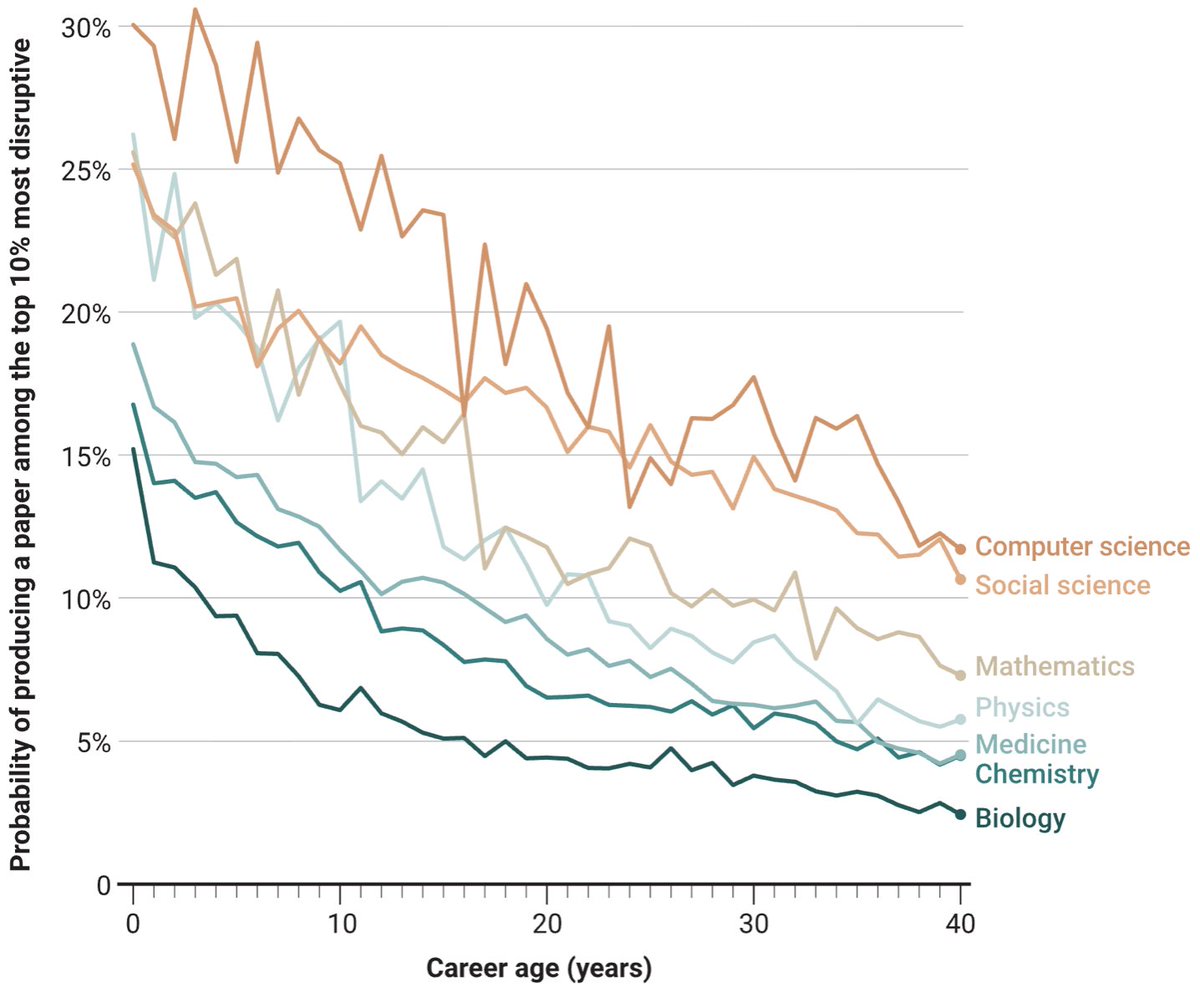
I view mentoring the next generation a privilege & responsibility for faculty. But w/funding crises + agent capabilities, it may be tempting to shrink student support. This Science paper is a great reminder that disruption comes most junior researchers & they must be supported.
Capacity to discover new combinations among established ideas rises with experience as capacity to displace existing paradigms falls. Older scientists aren't less creative, but differently. Both enable progress. Only one clears space for new ideas.
Scientists often make breakthroughs by synthesizing ideas across papers. In our new paper, we ask whether a language model can anticipate this process: given two parent papers, can it generate the core insight of a future paper built on them? 🧵⬇️
I’m excited to share that Bloom, where we ran a four week study on LLM health coaching, just won a Best Paper Award at CHI! 🏆
Paper: https://t.co/MRSQntEosA
Website: https://t.co/OOfGWqhcTf
Interest form: https://t.co/pkTxc3Lpua
Come see my talk! https://t.co/VfJFT7nXnf
[1/11]
Our paper on using LLMs to support people learning mental health counseling skills received an Honorable Mention at CHI 2026! https://t.co/RFAghrz8Oy Lead by @RyanCLouie (who's on the market!), w/@Diyi_Yang, Raj Shah, Ifdita Hasan Orney, & Juan Pablo Pacheco
🚨Postdoc opening: We are looking for a postdoc researcher with expertise in NLP, RL, and/or ML to develop AI-powered clinical support tools for mental health counseling in the Global South. Working with @EmmaBrunskill & @Diyi_Yang at Stanford. Apply by April 15, 2026 via https://t.co/AV48yx0lrc 🧵👇
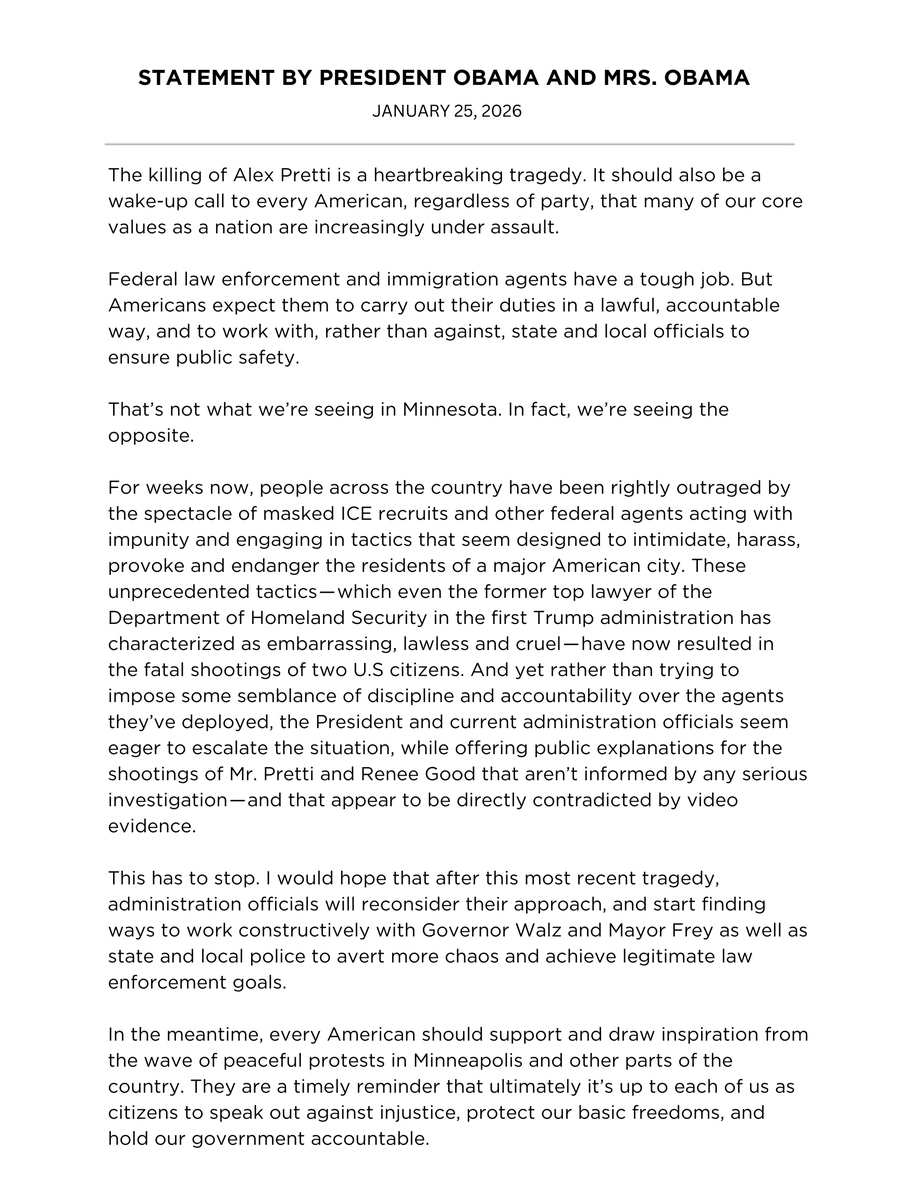
The killing of Alex Pretti is a heartbreaking tragedy. It should also be a wake-up call to every American, regardless of party, that many of our core values as a nation are increasingly under assault.