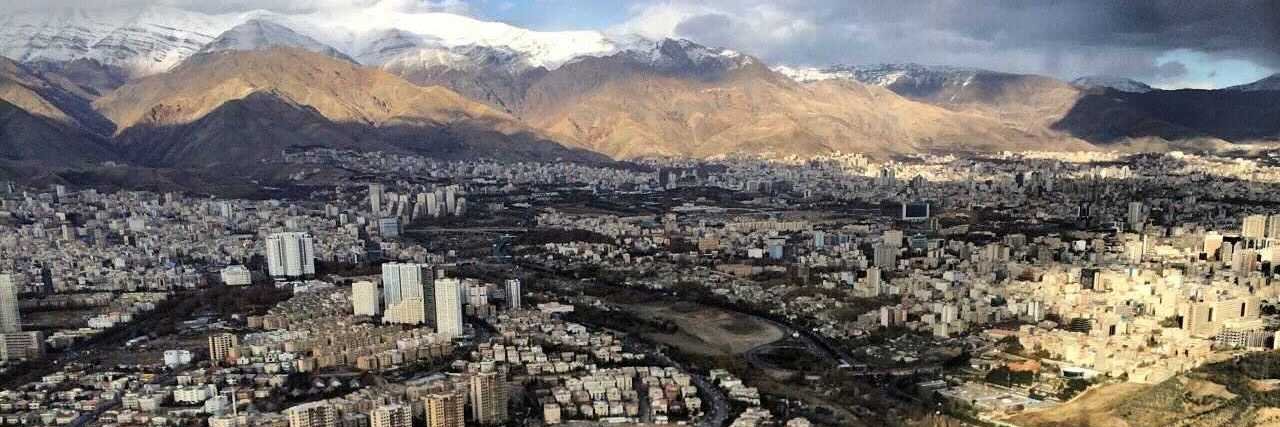
A portrait of life on Iran’s islands in the Strait of Hormuz, where belief in “possessing winds” endures amid a global crisis.
My latest for @CNNStyle:
https://t.co/e9o5ljNQed
The threats voiced by Mohsen Rezaei are part of Tehran’s increasingly confrontational response to what it perceives as U.S. efforts to alter the status quo in the Strait of Hormuz.
These statements reflect a growing understanding within Iran’s leadership that it must establish a direct deterrence equation with the United States rather than relying primarily on its regional proxy network.
Underlying this shift is the collapse of Iran’s longstanding “forward defense” concept. The experience of recent conflicts has demonstrated that, despite years of investment in proxy forces, these actors are no longer capable of shielding Iran from future military strikes in the way Tehran once envisioned. Hezbollah’s reduced ability to impose significant costs on Israel has been particularly influential in shaping this reassessment.
As Iranian decision-makers reconsider the country’s military doctrine, direct deterrence against the United States is becoming a central component. Tehran appears increasingly willing to threaten or even target U.S. military bases and naval assets if necessary, based on the belief that preventing future conflict requires establishing a credible deterrent relationship with Washington itself rather than operating exclusively through intermediaries.
Iran is therefore likely to pursue a strategy that strengthens its direct deterrent capabilities regardless of the continued development of its proxy forces. From Tehran’s perspective, the only sustainable way to reduce the likelihood of future war is to convince American policymakers that the costs of military action against Iran would be substantial and immediate.
In this context, the Strait of Hormuz, investments in conventional military capabilities, and increasingly frequent threats directed at the United States will form key pillars of Iran’s evolving deterrence doctrine. The more consequential question, however, is whether this transition toward a stronger and more direct deterrence posture will eventually incorporate a nuclear dimension. The critical issue is not merely whether Iran remains a threshold nuclear state, but whether Tehran ultimately concludes that an operational nuclear deterrent is necessary to compensate for the declining effectiveness of its regional proxy architecture and the need to deterthe US.
#IranWar
In this article Narges Bajoghli and I argue that the war has brought about a generational change in Iran’s leadership, bringing to the fore men with different experiences and outlook on state, society and foreign policy. This new generation is now confident that it ways has won significant strategic wins which it intends to translate not only into a new regional order but also a new domestic order and social contract with the population.
The scale of the war and it took for Iran to survive it and fore the U.S. into a stalemate has also changed Iranian society in profound way. Social grievances remain but will express themselves in this new context. We explain why pre-war ways of understanding Iran don't explain it anymore.
“The emergent Islamic Republic will remain highly authoritarian. But the categories that Western analysts have often used to describe the Islamic Republic’s various factions—hard-liner versus moderates, ideologues versus reformists—will be less accurate than ever. The new Islamic Republic’s priorities, and how it pursues them, will be shaped by the specific experiences of its two wars with the United States and Israel: the losses Iran sustained, the confidence its leadership gained, and the new social contract the fighting has made necessary and possible.”
https://t.co/RATaDcKLBK
Having forced a retreat on Israel and the United States in Lebanon, Iran now moves to manage two battles that Washington itself initiated:
1. The Blockade: Any violation of Iranian ships will be met with an equal or harsher response. The goal is to prevent the imposition of a fait accompli.
2. Hormuz: Iran is responsible for security in the Strait. Any targeting of its administrative structures there or any attempt to destabilize it will be met with a swift and costly response. The goal is to consolidate the outcomes and gains of the war.
In the same context, Iran is shifting from a policy of tit-for-tat retaliation to a new phase defined by a stronger, broader response aimed at achieving deterrence.
Tehran provides Washington with two options only: either accept the outcomes of military failure peacefully, or move towards a new war. There won’t be a third option in between.
The Trump administration is likely headed for a deal with Iran that closely resembles the JCPOA, says former Obama adviser @brhodes. But, he adds, “Trump's incapacity to kind of stay quiet through this diplomacy, I think, is part of the reason that we're not at a deal yet.”
In Pakistan's mostly rural Chakwal district, more than 100 Shi'ite Muslims say they were deported from UAE without their luggage or access to the savings they spent years building https://t.co/t184eGHaCy
Trump is approaching a decision point: either a principles-based agreement that enables the reopening of the Strait of Hormuz in exchange for lifting the siege, ending the war, and postponing nuclear negotiations for a month or a return to war, which may achieve certain tactical goals but is highly unlikely to shift the current Iranian leadership from its position.
Every threat and every reference by Trump to the destruction of Iran only reinforces the conviction in Tehran that discussing the nuclear issue before receiving hard guarantees on ending the war and reopening Hormuz would be a strategic mistake.
In the past, the Iranian leadership’s red line centered on limits to the nuclear program. Today, after what Iran views as proof of resilience during the war, the priority has changed: first stabilize the Strait of Hormuz and secure meaningful economic guarantees. Only then would Tehran even consider entering serious nuclear talks.
This is the outcome of a failed war strategy: instead of forcing concessions on the nuclear file, the conflict elevated Iran’s leverage and pushed the nuclear issue further down the negotiating agenda.
#IranWar
A clear divide within the GCC on Iran:
Saudi Arabia remains diplomatically engaged with the Islamic Republic, now with 6 calls since the war started. Along with:
Oman: 5 calls & 2 meetings
Qatar: 5 calls
Practically no engagement:
UAE: 1 call (VP-Ghalibaf)
Kuwait: 0
Bahrain: 0
As negotiations between the US and Iran enter a critical stage, a small but influential Iranian hardline faction has intensified efforts to sabotage a potential deal with Washington, fuelling President Donald Trump’s claims of divisions within the Islamic Republic.
Iran’s new leaders have projected unity in the face of the gravest existential threat the regime has faced, yet the ultra-hardline group has ramped up efforts across the media, in parliament and on the streets to advocate against an agreement with the US, arguing that only by defeating Washington can Iran secure a favorable deal.
An “unprecedented” crisis is unfolding for 20,000 seafarers stranded in the Persian Gulf, a UN body has warned, as the Strait of Hormuz closure leaves crews trapped on ships with no clear way out.
My latest for CNN:
https://t.co/hUBSQxJ3YA
Trump thought the blockade of the Persian Gulf would be a silver bullet that would bring Iran to its knees. Instead, it erased the desperately needed pressure release that Trump secured through the ceasefire. Thanks to the blockade, oil prices now exceed the levels seen during the war itself.
In essence, through the blockade, Trump snatched defeat from the jaws of victory.
But the incessant search for an escalatory silver bullet that forces Iran to surrender is not unique to Trump. It's a pathology of US foreign policy toward Iran.
https://t.co/wz6M1SaLNO
Iran offers new 14-point proposal to break diplomatic deadlock with Washington which hints at some compromise. Tehran eyes possibility of new talks early next week. Our latest. https://t.co/fpnhfFSe53
A growing view holds that constrained oil exports will soon force shutdowns and enough pain to compel Tehran to compromise. In my latest for @MiddleEastInst, I explain why that countdown-clock argument is far too simplistic.
https://t.co/beftMdSaZh
Key Takeaways:
1. No breakthrough: None of the core issues have been resolved. Iran is unlikely to enter negotiations as long as the naval blockade remains in place, nor is it expected to concede to the administration’s demands under current pressure.
2. Limited U.S. appetite for escalation: At the same time, Trump appears reluctant to return to active military confrontation. Notably, there is currently no clear deadline for the ultimatum, unlike in previous phases.
3. Pressure without payoff: The naval blockade is more likely to drive escalation than capitulation. It neither creates conditions for Iranian surrender nor advances a diplomatic resolution.
4. Strategic signaling: Above all, it appears that Trump may be preparing the ground for a unilateral de-escalation without formally relaunching the conflict. Faced with a choice between escalation and compromise, he has opted for now for delay.
5. The open question is how long the blockade can be sustained, given the underlying assumption that Iran will not back down.
The strain on the international system will only grow. Iran increasingly believes it can outlast the pressure, turning time into a strategic asset.
Bottom line: This is not a solution, it is a path toward deeper instability.
This is a strategy of delaying the inevitable rather than resolving the conflict.
For now, atleast this is still better than escalation without a clear endgame. The mediators have bought time, but without greater U.S. flexibility, diplomacy is unlikely to move forward, especially as Iran shows no willingness to retreat.
#IranWar
The events of the past 24 hours highlight the strategic impass the United States has placed itself in.
While Washington retains the ability to escalate militarily in the near term, the key question is what such escalation would actually achieve, beside significant disruption to the global economy.
At the same time, the administration’s approach has tightened the naval blockade to a degree that leaves Iran with limited room to maneuver domestically, making it politically difficult for Tehran to engage in negotiations.
As a result, the U.S. is left with two unfavorable options: ease pressure to enable diplomacy on terms it prefers, or escalate into a broader confrontation that is unlikely to force Iranian capitulation but will almost certainly exacerbate global energy instability.
#IranWar
The latest we're hearing...Iran's delegation was ready to come to the negotiating table but "everything changed" the moment the United States fired on an Iranian-flagged cargo ship, an Iranian source has told us.
This attack in the Gulf of Oman came just days before a second round of peace talks was expected in Islamabad.
The White House may have thought it would add pressure on Iranians at the negotiating table, but instead neither delegation is in Islamabad and Iran's military has vowed to retaliate.
Even before this episode, weeks of war and brute force did not yield the immediate political and military concessions the United States had expected.
In a social media post, Pakistan's information minister has now acknowledged mediators are still trying to convince Iran to participate in a second round of talks.
After days of wondering whether both delegations will fly to Islamabad, it's now clear the future of peace talks is up in the air. More on our BBC live page.
My take is that there are no divisions within the decision making circles, they all agree that without lifting the blockade they’re not planning to travel to Islamabad
JD Vance had been expected to leave for Pakistan this morning for Iran talks. Now, he's set to take part in White House meetings, with departure unclear, sources tell @alaynatreene. Iran hasn't confirmed it will go to the talks. Follow the latest: https://t.co/7CjHF4e9jq
Most important takeaway from Mohammad Bagher Ghalibaf’s interview with State TV, “We made progress in the Islamabad negotiations, but the gaps are wide and some fundamental points remain.”
MBG covered several topics in what could be described as a message before a turning point, tone was explanatory, less rhetorical, carried both political and strategic messages.
Here are points I found interesting:
📌 It is clear that the enemy was defeated, but this is different from saying that we destroyed their army. When the enemy does not achieve its goals, it means it has been defeated
📌The enemy intended to bring counter-revolutionaries into the country from our western and eastern borders to create chaos inside, but it did not succeed and was defeated.
📌All the enemy's effort was to impose their demands on us, and it is important that we assert our rights; therefore, negotiation is a method of struggle here.
📌Securing the nation's rights must be our main goal, and rest assured that there will be no surrender in the diplomatic arena.
📌I emphasize that we have always sought to normalize transit through the Strait of Hormuz and still do; if it has stopped now, it is because the ceasefire was not fully established in Lebanon.
📌If we were negotiating with the US at the time Trump said so, then why were there so many ultimatums? Why were they threatening to strike our infrastructure?
📌 We did not conduct any negotiations until 48 hours before the ceasefire. Trump is a master of lying and psychological warfare. Yesterday he posted 8 tweets, 7 of which were lies.
📌 Our negotiations began on Saturday when we arrived in Pakistan, and before that, only in the last 48 hours of the war leading to the ceasefire, messages were exchanged through Pakistan.
📌Our approach was that our entry into the 10-point negotiation framework would be when the Lebanon ceasefire was established and Iran's frozen assets were released.
📌Basically, our first meeting with Mr. Asim Munir as a mediator lasted 2 hours and 15 minutes in Islamabad, focusing on the Lebanon ceasefire. His first meeting with the Americans was also on this subject. From there, we saw their efforts to pursue the ceasefire begin, and they implemented the ceasefire incompletely.
📌Currently, we also have disagreements on several issues related to the nuclear matter and the Strait of Hormuz. Of course, the essence of negotiation is for understanding, but we have our principles.
📌The Zionist regime and America have constantly had a cycle of war - ceasefire - peace, and this cycle must be broken, and sustainable peace must be established with guarantees that war will not happen again.
📌We have reached conclusions on some issues, but not on others, and other proposals have been made; we are still far from a final discussion.
📌We insist on some issues which are non-negotiable for us, and their number is one or two, and the other side also has similar points.
📌In summary, we made progress in the Islamabad negotiations, but the gaps are wide and some fundamental points remain.
📌We have tried to follow the experiences of past periods and the distrust towards the U.S., and (in case of agreement) our policy will also be step-by-step action; it should not be that we fulfill our commitments but they do not; in case of agreement, we take one step and they must also take one step.