The new export controls on AI and semiconductors close important gaps, but they do not resolve the threat. The next area where the U.S. is especially exposed is the Gulf. https://t.co/GwGGB7NZp8
"Much like dismantling Hezbollah, reforming the economy should be a top priority for U.S. policy in Lebanon," writes @davidschenker1. https://t.co/qf2D6154xT
For full background & context of RAF Fairford plot, see CTC Sentinel by myself & Crispin Smith: "Iran’s Shift from Soft to Hardened Targets: Preliminary Observations from the RAF Fairford Incident"
https://t.co/XJS1E5ufEB
At a time when every other route to a new Gaza police force is blocked by disputes that may not be resolved anytime soon, moving forward with Moroccan training of Palestinian recruits inside the Yellow Line is a promising alternative, writes Salma Annasse.
Read more: https://t.co/yCdnszBoDn
Was thrilled to join with 350 friends/supporters of @WashInstitute in NYC to to celebrate the spirit of foreign policy bipartisanship by honoring two exemplary public servants w/our #ScholarStatesmanAward - former SecState @HillaryClinton and former national security advisor #StephenHadley.
Honored to attend today’s ceremony awarding the Congressional Gold Medal posthumously to Anwar el-Sadat, who taught us that leadership, courage and imagination are indispensable to making peace. #Egypt#Israel@EgyptForeignMin@SpeakerJohnson
IDF: A short while ago, the Israeli Air Force conducted a strike, guided by precise intelligence, in the Janta area in the Beqaa region of Lebanon, targeting a site that was previously used by the Hezbollah terrorist organization for missile production and the storage of weapons.
The site was struck by the IDF several times during the war. The IDF identified that Hezbollah terrorists had arrived at the site recently and struck the site's entrances in order to prevent its restoration.
Unless Washington makes judicial reform and credible enforcement part of its engagement with Beirut, government decisions to disarm and dismantle Hezbollah will remain vulnerable to obstruction and coercion, writes @haningdr.
Read more: https://t.co/HT1BBQbHMs
After Hamas's October 7th attack and the Gaza war, Palestinians are closely watching whether Israel’s recent elections will produce a government led by Gadi Eisenkot or keep longtime Israeli Prime Minister Binyamin Netanyahu in power. "Decision Points" host @DavidMakovsky sits down with Ibrahim Dalalsha, a leading analyst of Palestinian politics, to discuss what Israel's elections may mean for Palestinian interests and aspirations.
Listen to the full episode: https://t.co/MNMv6eibHt
A disconnect appears to be emerging between President Trump and Israeli PM Netanyahu over the prospect of renewed fighting with Iran.
Trump told Fox News enroute back from summit in China that he would reassess the issue just after January 1. Meanwhile, multiple Israeli media outlets cite US officials suggesting Netanyahu views renewed fighting as serving his political survival. Adding to the picture, Bloomberg reports that the USS George Washington has departed the Persian Gulf region for Japan, leaving two US aircraft carriers in the Middle East. While the departure followed the arrival of a replacement carrier, Washington has not maintained its unusual three-carrier deployment. Three carriers in the region was seen as a sign of US intent to renew fighting. The move to withdraw a carrier is not necessarily a signal of US intentions, but it adds another element to an already ambiguous picture.
By contrast, the New York Times reports that Netanyahu favors a limited military campaign lasting four to seven days.
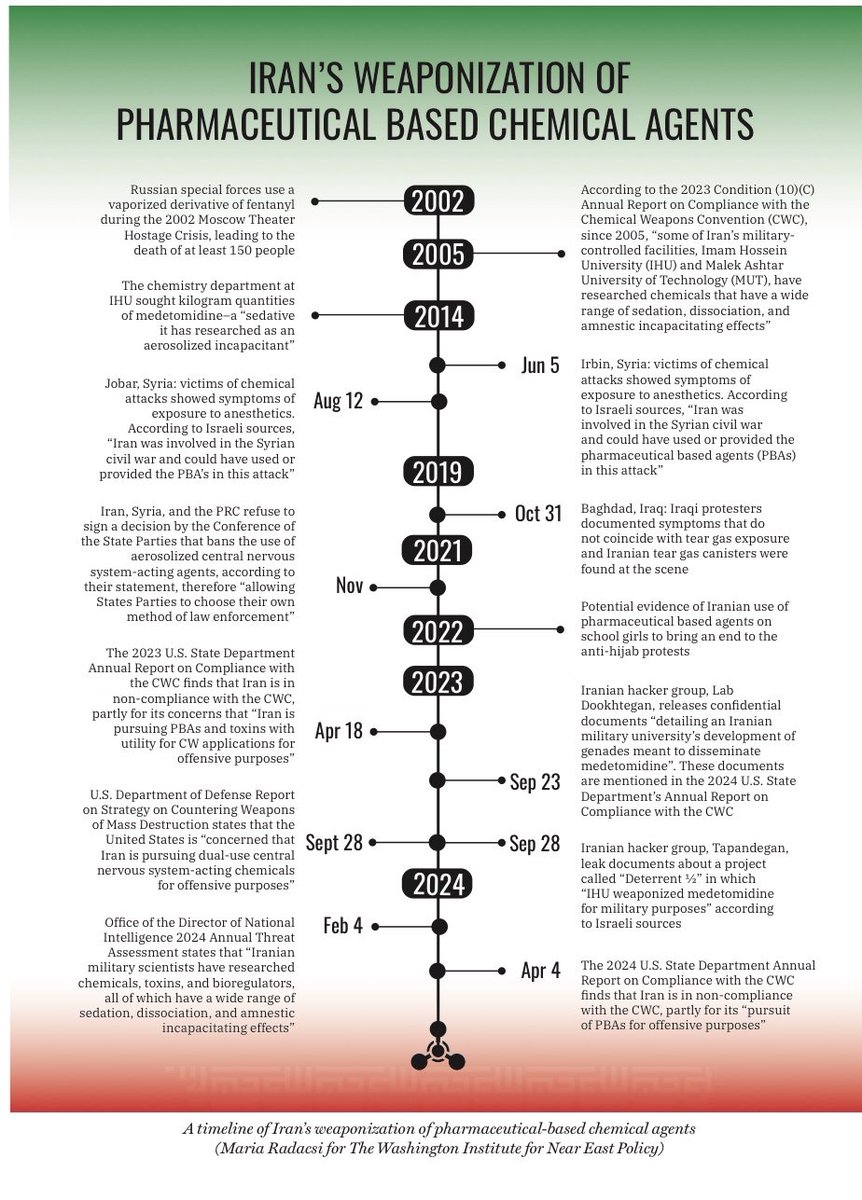
Mossad Director Roman Gofman visited Washington last week amid reports that he sought to focus US attention on Iran's efforts to restore some of its chemical capabilities. Yet when questioned by reporters about these Iranian efforts, Trump did not appear particularly troubled or inclined to treat them as grounds for renewed military action.
To be sure, Trump is famously unpredictable and can change course at a moment's notice. Nevertheless, the emerging picture suggests that, at least for now, Trump and Netanyahu may not be on the same page regarding another round of fighting with Iran.
The onus would seem to be on Netanyahu to demonstrate otherwise. After all, Iran stands to gain if its leaders perceive Netanyahu as out of sync with Trump on issues of such key importance.
The Nvidia scandal "underscores the scope of the Chinese threat to U.S. artificial intelligence technology," writes @LizyDent in @ForeignPolicy. "The new rules close important gaps, but they do not resolve the threat." https://t.co/RAwIxGulPA
"Given the current uncertainty about who the regime’s key policymakers are, it would be a triumph of hope over experience to expect that any one individual has the authority to make commitments to which Tehran will stick," writes Patrick Clawson. https://t.co/BGqCEz1hut
The Nvidia scandal ushered in new U.S. government rules on AI and semiconductors to counter Chinese tech risks, but significant loopholes remain open in the Gulf states, writes @LizyDent in @ForeignPolicy. https://t.co/5cYQQ2ZCvs
Who’s in Charge in Iran?
Unusual public statements on nuclear issues and ceasefire terms may signal that the Islamic Republic’s clerical establishment plans to play a more active political role post-Khamenei @WashInstitute
https://t.co/5UQVbFlZjq
"Recent Iran-linked plots against U.S. military bases in the United Kingdom highlight a consequential expansion of Tehran’s covert campaigns using disposable criminal proxies in Europe," write @Levitt_Matt and Crispin Smith for CTC Sentinel. https://t.co/mN6zzvWErk
The regime in Tehran is driving the country to ruin by prioritizing proxies, nukes, missiles & drones over the Iranian ppl. For the regime its bullets over butter https://t.co/7H3qvw96e1
In my latest, published in @ForeignPolicy, the new US AI export controls rolled out earlier this week help to follow computing power/users but that will be especially tested in Gulf data centers being built with Nvidia's most advanced chips. @WashInstitute
Gift link: https://t.co/5QQgSbsZre
"At a time when every other route to a much-needed Gaza police force is blocked by disputes that may not be resolved anytime soon, moving forward with Moroccan training of Palestinian recruits inside the Yellow Line is the only viable option," writes Salma Annasse. https://t.co/yCdnszBoDn