In a new preprint from my lab @LeibnizFLI we found that polyamines sustain the regeneration of the intestinal epithelium in old mice 👇https://t.co/UfIw7iB5jl
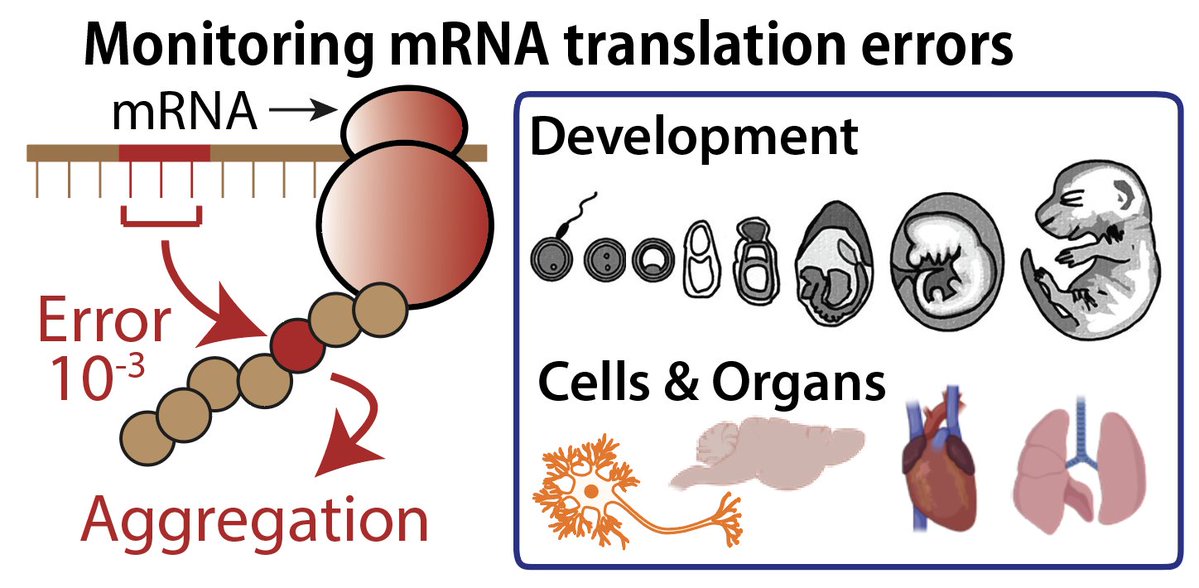
Protein synthesis is not equally accurate across organs.
Excited to share our new preprint:
https://t.co/SKoTVsPspZ
We developed a new mouse model to quantitatively monitor translation errors and uncovered the spatiotemporal dynamics of the “quality” of protein synthesis.
New exciting work from Jae Ho Lee in our lab, in a fantastic collaboration with Alessandro Ori @AOri_lab and Alessandro Cellerino @Alessan82703458 on why and how the brain ages and becomes vulnerable to neurodegenerative diseases https://t.co/sVQRO43tZo
Excited to share a milestone published in @NatureMedicine from our decade-long effort to build The Human Phenotype Project, a unique longitudinal cohort with unmatched depth of clinical and multi-omic profiling, enabling truly predictive, personalized medicine.
Led together with @ericxing, it is a global collaboration between @WeizmannScience, @MBZUAI, and Japanese partners, spanning 30,000+ participants and continuing to grow internationally
By devising AI models trained on individuals deeply profiled with genetics, microbiome, glucose, sleep, bone density, and more, we can now forecast diseases before symptoms appear and simulate treatment or lifestyle outcomes.
Key findings:
• Re-defined metabolic risk thresholds
• Predicted menopause impact via biological aging
• Mapped organ-specific aging trajectories
• Developed models for early detection of diabetes & heart disease
This dataset is a blueprint for digital health twins, AI-driven tools grounded in real-world, longitudinal data
Data access: https://t.co/qRrFPaY4as
Full paper: https://t.co/dayU9YYIlC
Thanks to all the people who led this work: Lee Reicher, Smadar Shilo, Anastasia Godneva, Guy Lutsker, Liron Zahavi, Saar Shoer, David Krongauz, Michal Rein, Sarah Kohn, Tomer Segev, Yishay Schlesinger, Daniel Barak, Zachary Levine, Ayya Keshet, Rotem Shaulitch, Maya Lotan-Pompan, Matan Elkan, Yeela Talmor-Barkan, Yaron Aviv, Maya Dadiani, Yonatan Tsodyks, Einav Nili Gal-Yam, Haim Leibovitzh, Lael Werner, Roie Tzadok, Nitsan Maharshak, Shin Koga, Yulia Glick-Gorman, Chani Stossel, Maria Raitses-Gurevich, Talia Golan, Raja Dhir, Yotam Reisner, Adina Weinberger, Hagai Rossman, and Le Song
And special thanks to all participants of the Human Phenotype Project
Can one become too old for healthy aging? In our recent review, we explore possible age limitations of the current longevity treatments.
https://t.co/ud0clFo9pp
Check out our MS describing the in vivo cycle of chaperonin TRiC/CCT, in a wonderful collaboration with Martin Beck's lab: https://t.co/0d2O9smiMF
1) The study established TRiC's important function in folding newly translated proteins and defines its ATP-driven cycle
We are very excited to share our recent preprint on the nuclear import mechanism of the proteasome, driven by the multivalent adaptor AKIRIN2!
https://t.co/dJdiL7RAK8 🧵 (1/7)
🚨🚨Mark your calendars for G-JAM2025 meeting organised be me and Sandro Cellerino. We will discuss human aging, longevity interventions, molecular and systems aging, comparative biology of aging, sex-specific aspects of aging and more. Looking forward!
https://t.co/emjFWKU1GR
Our new paper from the @FrydmanLab published in @ScienceMagazine identifies 22 TRiC mutations in patients with brain disorders of unknown origin. We characterized these disease-linked mutations in 3 model species and found them to be dominant mutations.
https://t.co/iBjut6QRyZ
1. Check out our MS just out! Amazing Mauricio Aguilar developed a new ML pipeline that identifies ribosome pausing sites as an Anomaly Detection problem to overcome spurious signals that arise when analyzing RiboSeq data. https://t.co/Or8syfc6n6
Thrilled to share the most comprehensive Atlas of Proteome/Phosphoproteome Turnover across mouse tissues and brain regions, thanks to the outstanding @Yanshen73854711 & @JunminPengLab! Proud to contribute to this. Check it out: #Proteomics#ProteinTurnover https://t.co/2iFE2LyIpN
🚨New Paper Alert🚨Explore our latest work on the Lysosomal BrainAtlas, now available on bioRxiv! This comprehensive resource maps lysosomal proteins in specific brain cell types and identifies SLC45A1 as a novel neuron-specific lysosomal sugar transporter https://t.co/NW5i3KMxXW
I am thrilled to announce that our work in collaboration with Alessandro Ori’s lab @AOri_lab, @Blue_ceil is out!
We made a significant breakthrough in understanding the role of lysosomes in the brain with the development of the first cell-type-resolved lysosomal protein atlas. This comprehensive map details the lysosomal proteome across major brain cell types—neurons, astrocytes, microglia, and oligodendrocytes.
@abu_remaileh@Stanford_ChEMH, @ASAP_research, @BrainResilience, @CZI@cziscience
Cell-Type Resolved Protein Atlas of Brain Lysosomes Identifies SLC45A1-Associated Disease as a Lysosomal Disorder https://t.co/LNJxjuR3Vb