The informativeness of a chest X-ray decoded by AI
In this multimodal AI model called Oncoformer of 3.67 million individuals of EHR plus chest X-ray, cancer was predicted at least 1 year before diagnosis: AUROC all cancers 0.869, cervical cancer 0.905, colon cancer 0.896 @CellCellPress open-access
https://t.co/L0dDYxLZ7q
GPT-6 Astra just solved a problem medical students have been facing for decades
Medical students have been working around the same three problems for decades. Someone talked to them, identified all three, and built a service with Astra that solves them in one tool.
The problems are structural. Flat anatomical diagrams strip depth out of organs entirely. CT cross-sections don't connect naturally to the overview diagrams students spend years memorizing. And reading a scan requires holding three mental models simultaneously - patient orientation, cross-section direction, and how every organ shape shifts through each layer.
Astra built a service that handles all three in one place. Not a better textbook. A spatial tool that connects the diagram, the CT view, and the 3D relationship together.
Medical education hasn't changed its core format in over a century. This might be the first tool designed around how anatomy is actually understood - not just displayed.
🌍 Radiology is adapting to a changing workforce and workplace.
This international review examines how AI, teleradiology, and evolving practice models are reshaping radiology, while highlighting challenges in burnout, staffing, and sustainability. 📈🤖
https://t.co/D8PAn5Q6x6
Can AI spot pancreatic cancer earlier on CT? 🔍
A deep learning model detected both direct and indirect imaging signs on contrast and noncontrast CT, matching or outperforming physicians, with especially strong gains for small pancreatic cancers.
https://t.co/mQxX7hItP4
Just published:
A transparent, lightweight AI model for csPCa detection matches PI-RADS and DL models.
With PI-RADS, it maintains 90% sensitivity while significantly reducing unnecessary biopsies—using >100× less compute than DL.
DOI: 10.1111/bju.70203.
@USC_Urology@ALDCAbreu
We've written about AI-induced physician deskilling that has already surfaced
https://t.co/iMy6zyWnhZ @tberzin
AI-induced never-skilling among newly trained doctors, while not yet proven, is a serious concern that needs to be addressed @NatureMedicine@nliulab
https://t.co/yov3YvsGti
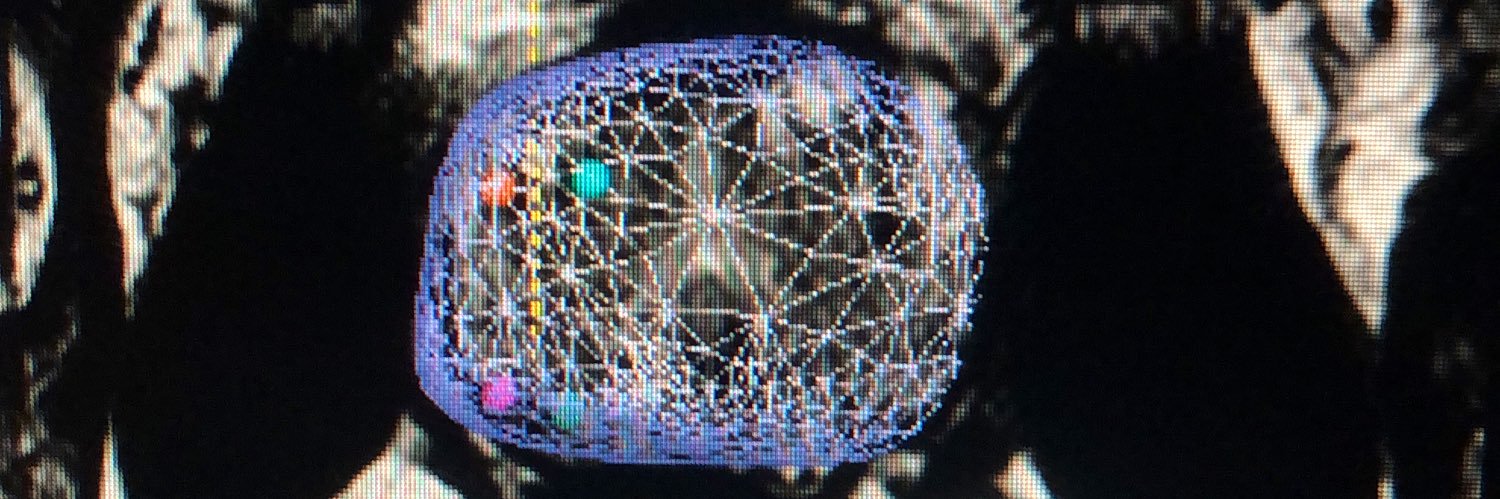
𝗙𝗿𝗼𝗺 𝗖𝗮𝗻𝗱𝗶𝗼𝗹𝗼 𝘁𝗼 𝗟𝗼𝗻𝗱𝗼𝗻, 𝘁𝗵𝗶𝘀 𝗶𝘀 𝘄𝗵𝗮𝘁 𝘁𝗵𝗲 𝗳𝘂𝘁𝘂𝗿𝗲 𝗼𝗳 𝘀𝘂𝗿𝗴𝗲𝗿𝘆 𝗹𝗼𝗼𝗸𝘀 𝗹𝗶𝗸𝗲.
A live robotic procedure performed by Prof. 𝗙𝗿𝗮𝗻𝗰𝗲𝘀𝗰𝗼 𝗣𝗼𝗿𝗽𝗶𝗴𝗹𝗶𝗮 and shared during @EAU26 becomes more than a surgical session: it becomes a demonstration of how digital medicine is transforming both practice and education.
Enabled by Medics’ 𝗛𝗔𝟯𝗗 patient-specific model, the procedure highlights how advanced visualization can be integrated directly into the surgical workflow.
Beyond the technique, what stands out is the ability to leverage 𝗛𝗔𝟯𝗗 anatomy, including detailed reconstruction of prostatic nerve pathways supporting truly personalized and precision-driven decisions.
This is not just innovation. this is the Evolution and Revolutionof how we see, plan and perform surgery.
The attached video showcases the surgical planning, highlighting all its most innovative aspects.
European Association of Urology SIUrO - Società Italiana di Urologia Oncologica
@PorpigliaF@Uroweb@UrowebESU@TechnoUro
#Urology #RoboticSurgery #PrecisionSurgery #DigitalHealth #AugmentedRealit #AIinMedicine #SurgicalPlanning #ProstateCancer
Dr. Giganti and colleagues share key insights on MRI in active surveillance for prostate cancer and how radiologists can maximize its value by clearly documenting interval changes in tumor size and conspicuity over time. @giga_fra@mrsprostate https://t.co/fn6pOWh3eB
1/2 Just published in @JAMAOnc: 15-year outcomes of Active Monitoring, Surgery, and Radiotherapy for cribriform-positive and cribriform-negative prostate cancer in the ProtecT trial. Secondary analysis based on centralised biopsy review🔬 Article: https://t.co/qfCzYTmevN
The protocol paper for the #IP7PACIFIC RCT is now available online! This trial led by our group and funded by @CR_UK will provide definitive evidence for "fast" biparametric MRI and image-fusion biopsy using a novel trial design 🚨 @NikhilMayor
https://t.co/gdXNqWThLb
Viewpoint: Prostate cancer screening is shifting toward a more beneficial and less harmful approach by using MRI-targeted strategies, which reduce unnecessary biopsies and overdiagnosis. https://t.co/FsfSs3xmkG @IvoSchootsNL
Review – Prostate Cancer : VISION: An Individual Patient Data Meta-analysis of Randomised Trials Comparing Magnetic Resonance Imaging Targeted Biopsy with Standard Transrectal Ultrasound Guided Biopsy in the Detection of Prostate Cancer by Veeru Kasivisvanathan et al
Read the full article here: https://t.co/exQfIsa9QA
Come back later to read the editorial by John W. Davis
#UroSoMe #MedTwitter #Review #ProstateCancer #PCa #EurUrol
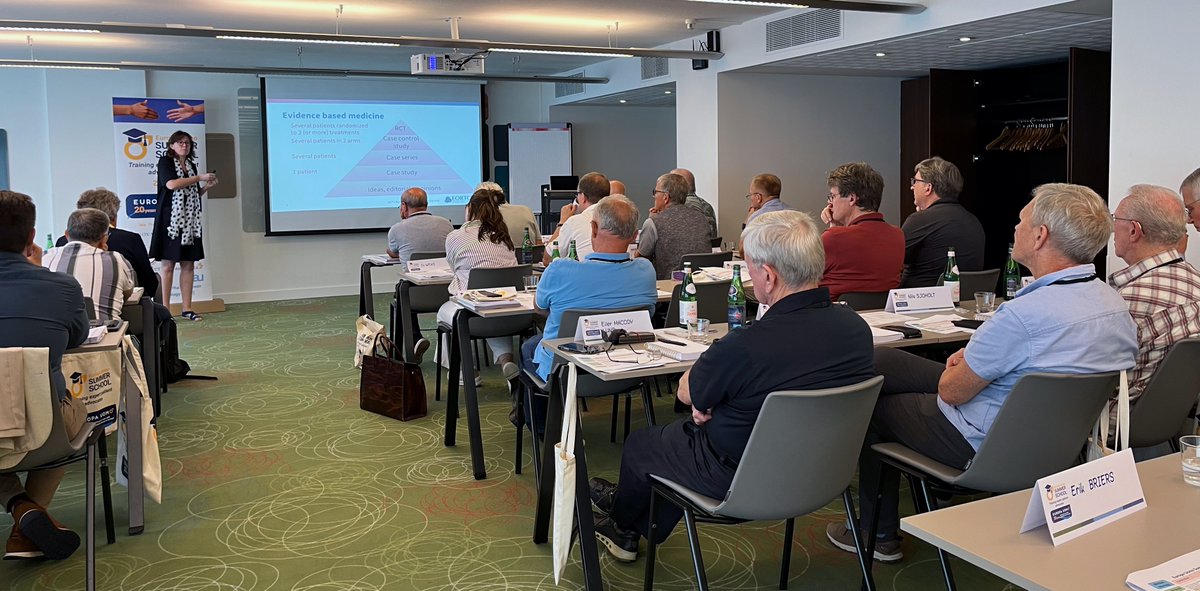
A new programme to help men with experience of #prostatecancer become expert and effective #patientadvocates has been launched by Europa Uomo. Read more about the Europa Uomo Academy https://t.co/uXA3cSrvrs
AI-powered prostate cancer detection: a multi-centre, multi-scanner validation study
https://t.co/0rubPYg4zL
This study aimed to validate the effectiveness of an artificial intelligence (AI) software, Pi, in detecting clinically significant #ProstateCancer (Gleason Grade Group ≥ 2) using multiparametric MRI, across multiple UK hospitals and scanner vendors. The AI tool was tested on data from 252 patients, scanned on six machines from two manufacturers, and compared to radiologist interpretations supported by a multidisciplinary team (MDT).
The results showed that Pi had an area under the curve (AUC) of 0.91, closely matching the radiologists' AUC of 0.95. With 95% sensitivity and 67% specificity, Pi was non-inferior to the radiologists (99% sensitivity, 73% specificity) in detecting significant prostate cancer. The AI's performance remained strong across sites and machine models, suggesting it could effectively support prostate MRI in clinical settings, although further prospective studies are recommended for validation.
@giga_fra@NikiSushentsev@IztokCaglic@jobiebudd@jonathananing@nikhilvasdevuro@RamonaWoitek@Tristan_Radiol@ProfPadhani@AWRix@LucidaMedical@EvisSala