China-linked VLCCs clear Bab el-Mandeb
Two China-linked VLCCs carrying a combined 4 million barrels of Saudi crude have crossed the Bab el-Mandeb Strait. According to #MarineTraffic data, the Singapore-flagged Xin Long Yang reversed course and paused in the central Red Sea on Tuesday before resuming her southbound voyage late on Wednesday. She crossed Bab el-Mandeb at 07:13 UTC on 23 July, followed by the Hong Kong-flagged Cosnew Lake at 10:40 UTC. Both 333-metre tankers departed Yanbu Industrial Port on 20 July and are sailing laden, each with a reported draught of 19.6 metres.
Before the transit, both vessels updated their AIS destination fields to “CHINA CREW & OWNER”, replacing previously listed Chinese discharge ports. They are now sailing east through the Gulf of Aden, with Xin Long Yang underway at around 13.3 knots and Cosnew Lake at 12 knots.
“Third world dumps are only in their condition because the West colonized them and bombed them into the Stone Age!!”
Here’s Singapore being bombed into the Stone Age by Japan. Before that it was colonized by the British. Now it’s one of the safest and richest nations on Earth.
Who Supplies Every FIFA World Cup 2026 Kit? 👕
This graphic by Harris Saleem is one of the many incredible data-driven charts and stories from creators featured on our @VoronoiApp. ✅
https://t.co/lB85XDj9y9
For the “boom boom Tel Aviv” idiots:
The biggest mistake people make when looking at war is assuming the objective is to hit the enemy’s capital as quickly as possible. That’s political theater, not military strategy.
If you look at the strike map, Iran isn’t behaving like a country trying to maximize headlines but like a military attempting to shape the battlespace.
The targets are not random or insignificant. Iran is dismantling the entire American military ecosystem in the region:
Early warning radar sites.
Air defense systems.
Aviation facilities and hangars.
Logistics hubs.
Fuel and ammunition storage.
Forward operating bases.
CENTCOM support infrastructure.
Bases supporting operations in Syria and Iraq.
Naval and maritime surveillance assets.
Intelligence collection and communications nodes.
Look at jordan as an example. Most people couldn’t point to Tower 22 or Muwaffaq Salti Air Base on a map, yet they’re arguably more important militarily than firing a few missiles at downtown Tel Aviv.
Tower 22 supports operations at Al-Tanf. Muwaffaq Salti hosts American aircraft and coalition operations. Erbil supports intelligence and special operations. Bahrain hosts the U.S. Navy’s Fifth Fleet headquarters. Kuwait is a massive logistics and staging area. Qatar hosts the forward headquarters of CENTCOM and the largest U.S. air base in the Middle East. These are the eyes, ears, and connective tissue of American power projection in the region.
From a military perspective, you don’t begin by punching the strongest part of your opponent. You isolate him.
There are several principles of warfare being applied here:
1. Suppression of enemy support infrastructure.
2. Degradation of intelligence, surveillance, and reconnaissance capabilities.
3. Attrition of air defense and interceptor inventories.
4. Disruption of logistics and sustainment.
5. Political pressure on host nations.
6. Shaping the operational environment before attempting anything larger.
The United States does not fight Middle Eastern wars from Washington or even from aircraft carriers alone. It fights them from an interconnected network of bases stretching from Jordan to Qatar to Kuwait to Bahrain. If that network becomes degraded, every sortie, every intelligence feed, every resupply mission, and every interceptor launch becomes more difficult and more expensive.
People screaming “just bomb Tel Aviv” fundamentally misunderstand what modern warfare looks like. Destroying a radar site that enables coalition air operations can be militarily more valuable than causing superficial damage to a symbolic target.
There’s another aspect people are missing: INTERCEPTOR ECONOMICS.
Every Patriot interceptor fired costs millions of dollars. Air defense inventories are finite. Sustained operational tempo places enormous strain on maintenance crews, missile stockpiles, and logistics chains. If an adversary can force you to defend a dozen locations simultaneously, you’ve already begun winning the resource allocation battle.
Historically, successful military campaigns begin with degrading command-and-control, communications, air defenses, and logistics before moving to decisive operations.
Whether one agrees with Iran politically is irrelevant to the military analysis. What we’re witnessing is not random retaliation, it is a deliberate campaign aimed at systematically degrading the regional architecture that allows the United States and its allies to project military power across the Middle East.
Wars are won by destroying capabilities, not by chasing viral videos of missiles landing in capital cities and gay techno songs. The boring targets on a map are often the most important ones
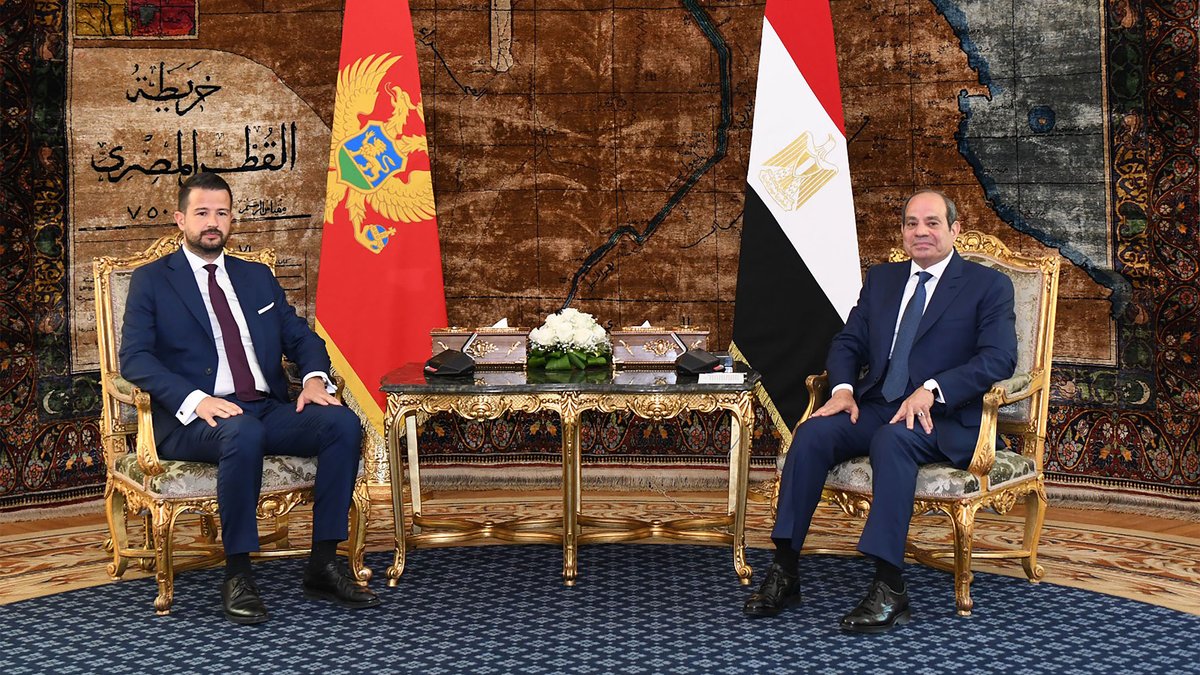
في زيارة حصلت النهاردة ماخدتش تركيز كبير علشان الناس مش عارفة اوي ايه ممكن يبقى مهم بين مصر وجمهورية الجبل الأسود "مونتينجرو".. لكن الحقيقة إن اللي حصل النهاردة هو ضربة معلم وشغل لما بعد ٢٠٣٠..
الجبل الأسود موجودة في منطقة البلقان، دولة مساحتها ١٣ ألف كيلو متر مربع، عدد سكانها حوالي ٦٠٠ ألف.. لكنها في نفس الوقت عضو في الناتو وممكن قريب تبقى عضو في الاتحاد الأوروبي، والأهم، إنها مطلة على البحر الأدرياتيكي..
في تطور في العلاقات السياسية بقاله حوالي سنة بين مصر والجبل الأسود، لكن النهاردة كمان تم توقيع مذكرة تفاهم بين الهيئة العامة لميناء الإسكندرية وهيئة موانئ مونتينجرو، ودي خطوة أولى ممكن تفتح الباب لإنشاء خط ملاحي مباشر بين الميناءين.. ولو ده حصل، هيبقى فيه مسار بحري جديد يربط مصر بمنطقة البلقان وجنوب أوروبا، ويفتح فرص أكبر للتجارة والترانزيت..
بس خلي بالك، موقع مصر يترجم أخبار زي دي لمكاسب ضخمة من تجارة الترانزيت.. اللي رايح من الشرق للغرب والعكس بيعدي عليك، فكل ما تفتح مسارات ميسرة للنقل البحري كل ما تزود فرص انك تكسب من بضايع ماحطتش فيها مسمار، وده كان من أهم أهداف المليارات اللي اتصرفت على تطوير المواني..
ده التطبيق العملي لكل اللي درسناه عن الموقع الجغرافي العبقري لمصر، لكن كمان في دولة عبقرية بتربط الجغرافيا بالسياسة بالاقتصاد بالبنية التحتية اللي طورناها زي "المواني" وبتفكر بذكاء شديد مين ممكن العلاقات معاه تبقى مفيدة؟
ده كمان تجهيز لمرحلة ما بعد ٢٠٣٠، المرحلة اللي دول كتير هتجري فيها زي الجرية اللي حصلت في الخمسينات والستينات لما انتهت الحرب العالمية التانية، بس ماحدش هيعرف يجري إلا لو كان واقف على رجليه، ومستعد بأدوات يجري بيها، وده اللي مصر بدأته من ١٢ سنة.. اه بالظبط المشروعات اللي مالهاش لازمة وكان المفروض نعمل بدالها سندوتشات حلاوة بالقشطة.. ما علينا مساءك فل
🇺🇸🇮🇷 A Sky News investigation found the evidence points overwhelmingly to a U.S. Tomahawk strike killing 120 children at a primary school in Minab.
Working with Forensic Architecture, it reconstructed the attack and placed the impact crater inside the assembly hall, surrounded by classrooms.
The missile appears to have hit exactly where it was aimed. The question is why anyone aimed it there.
Source: @SkyNews, @Chesh / Writer: Julie
A Few Words on #Iran’s “Strategy”
🔹Iran’s military response to the U.S. campaign over the past two days has escalated both in intensity and in the range of targets. Even so, its approach continues to exhibit two defining characteristics. First, it remains essentially reactive. Second, it remains proportionate – at least according to Iran’s own understanding of proportionality. These two features, however, also mean that Iran’s actions remain insufficient to wrest the initiative away from the United States.
🔹The core of Iran’s “strategy” remains its effort to preserve control over the Strait of Hormuz for as long as necessary, in the expectation that rising oil prices and declining energy reserves will eventually compel President Trump either to back down or to accept a weaker deal. In other words, what we are witnessing is a tactical adaptation designed to sustain the Strait of Hormuz as a strategic stronghold, rather than the emergence of a genuinely new military strategy.
🔹The underlying reason lies in the asymmetry between Iran and the United States in two key areas: military capability and pain threshold. Despite the continued targeting of U.S. military bases, Washington retains the capacity to deploy additional forces and escalate the conflict further. Of course, this does not mean that such escalation would necessarily succeed – it most likely would not – but the capability nevertheless exists.
🔹The asymmetry is even more pronounced when it comes to pain thresholds. The United States is striking Iranian territory, whereas Tehran lacks the ability to target the U.S. homeland. As a result, military escalation, regardless of its operational success, is inherently more costly for Iran because it exacerbates the country’s economic difficulties and domestic social pressures. Compare this with the war in Ukraine, for example, where Ukraine is able to inflict pain directly on enemy territory. This helps explain why Iran has continued to avoid full-scale escalation and has instead maintained a fundamentally reactive posture.
🔹Iran’s calculation is that rising energy prices will eventually impose sufficient costs on the United States to force it to withdraw from the conflict. That said, this approach should not be viewed as fixed or permanent. If Tehran concludes that Washington has decided to return to an all-out war – that is, if it once again perceives an existential threat – it is likely to abandon its current approach and seek to cash in its Strait of Hormuz card sooner by targeting regional energy infrastructure.
🔹In any case, the conflict has now become a contest against time and a war of endurance. The decisive question will be whether Iran’s deteriorating economic and infrastructural conditions outpace the rise in energy prices driven by instability in the Strait of Hormuz, or vice versa.
🔹To reiterate, neither side appears to possess a comprehensive strategy for achieving victory – or for managing the post-victory phase. Beyond relying on the passage of time and pursuing gradual escalation to preserve their respective positions, both sides remain strategically constrained.
As much as I consider it unmitigated madness, the US appears to be attempting to isolate Bandar Abbas from its interior lines of communication, strongly suggesting the Pentagon is entertaining serious plans to insert a sacrificial ground force to "seize" the Strait of Hormuz.
👤 لويس دي لا فوينتي:
سأخبركم بشيء مضحك بالحديث عن ميسي
لقد عرفت ليونيل عندما كنت أدرب إشبيلية للشباب ولعبنا ضد برشلونة
فرضنا عليه رقابة فردية في البداية
في الدقيقة 70، قمت بتبديل من يراقبه
في غضون 15 دقيقة سجل في مرمانا أربعة أهداف