Arm’s foundational technology is defining the future of computing. A future built by the greatest technology ecosystem in the world. A future built on Arm.
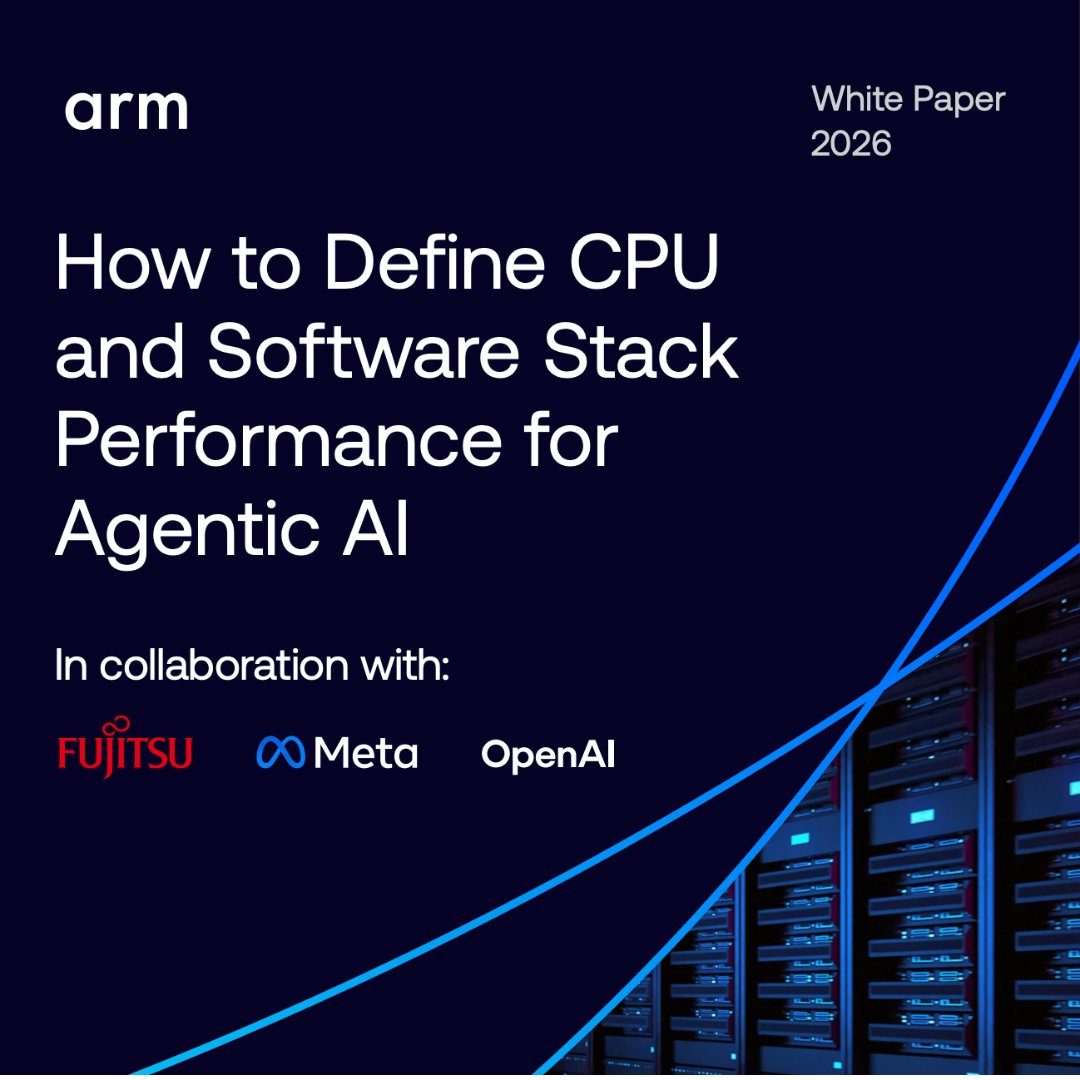
What does it take to accurately benchmark CPU performance for agentic AI?
Our white paper, developed in collaboration with @Meta, @fujitsulabs, and @OpenAI, explores a framework for measuring CPU performance across representative agentic AI workloads and the broader software stack.
🔗: https://t.co/r9U3B5g8VO
F1 pit stops 🤝 Safer patient handovers. Who would've thought?
@GreatOrmondSt took inspiration from pit crews to improve patient handovers.
As Arm technology helps @AstonMartinF1 deliver their fastest pit stops, it gets us thinking: where else could advances in physical AI make a life-changing difference? https://t.co/LVxKNdZGUn
From server-level performance to rack-level impact.
Independent testing from @Signal_65 highlights how Arm AGI CPU performs across key agentic AI workloads, demonstrating the importance of CPU performance as AI infrastructure scales.
Take a closer look: https://t.co/TFCEPsHz1W
Agentic AI is redefining what CPUs need to deliver.
@modal's early benchmarks show @NVIDIA Vera, built on Arm, delivering up to 2x the throughput of comparable x86 systems under heavy concurrency.
It's a powerful validation of Arm's role in scaling the next generation of AI infrastructure. 💪
https://t.co/BBMFJi5fWg
Goodbye to the #OCPGlobalSummit2026 👋
One thing was clear throughout the week: building infrastructure for the agentic AI era requires innovation across the entire system, from silicon to rack.
It was great to see the OCP community come together to advance this vision, with Arm technology playing a growing role in enabling the next generation of open AI infrastructure.
https://t.co/pe0WKq2aOs
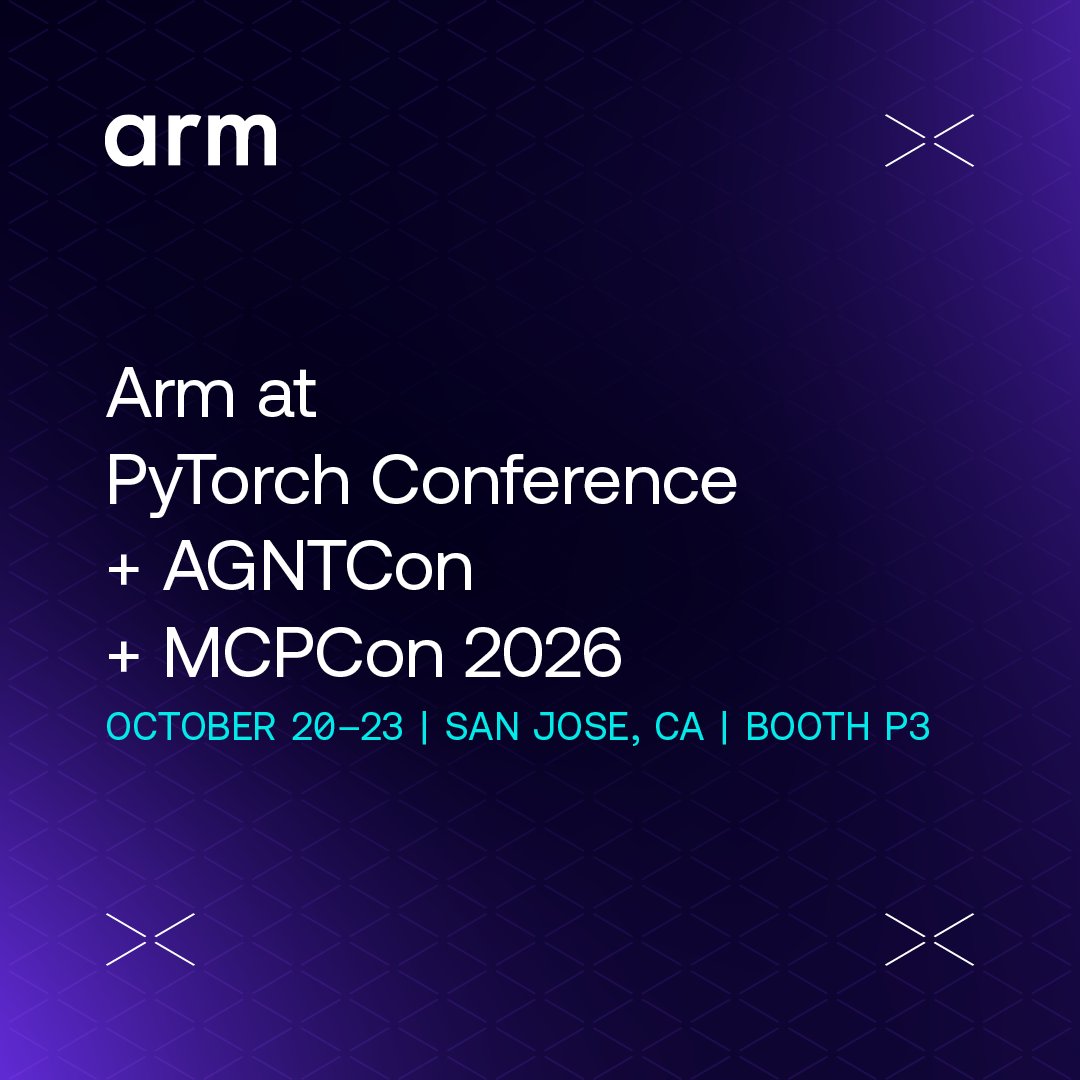
We're headed to #PyTorchCon (Oct 20-21) and AGNTCon + MCPCon (Oct 22-23) in San Jose! 👋
Explore PyTorch, ExecuTorch, Arm Device Connect, and AI agents interacting with real-world devices through technical sessions and demos.
📍 Booth P3 at both events | https://t.co/R9AKuc0Sj2
See our agenda 👇
Different companies. Different terminology. One increasingly complex robotics ecosystem.
A Robotics Capability Framework creates a shared language to help reduce fragmentation, simplify integration and accelerate adoption.
Hear from @AnaxiLabs, @McKinsey and @Lenovo on why industry alignment matters. https://t.co/PzHEOtxX7a
From first lines of code to millions of young creators! 💻
From Arm technology in the original device to collaborations with @UNICEFinnovate supporting digital and AI skills, swipe through to see what our partnership with micro:bit has made possible. 👇https://t.co/zhatR1UaSm
Embedding AI into robots and vehicles so they operate safely and dependably is one of the most complicated systems engineering challenges we face. Its also essential to unlocking massive productivity gains across the physical industries that together account annually for $75T of global GDP.
This is what the teams designing compute platforms @Arm think about every day. Consider something as seemingly simple as moving a robotic finger. A tiny microcontroller driving an actuator needs to coordinate with sensors measuring motion and force. That finger needs to coordinate with the other fingers, the hand, the arm, and ultimately the entire robot. And all of this needs to happen safely, predictably, and in real time. This is truly fun to work on!
Solving challenges like these is where the Arm ecosystem shines.
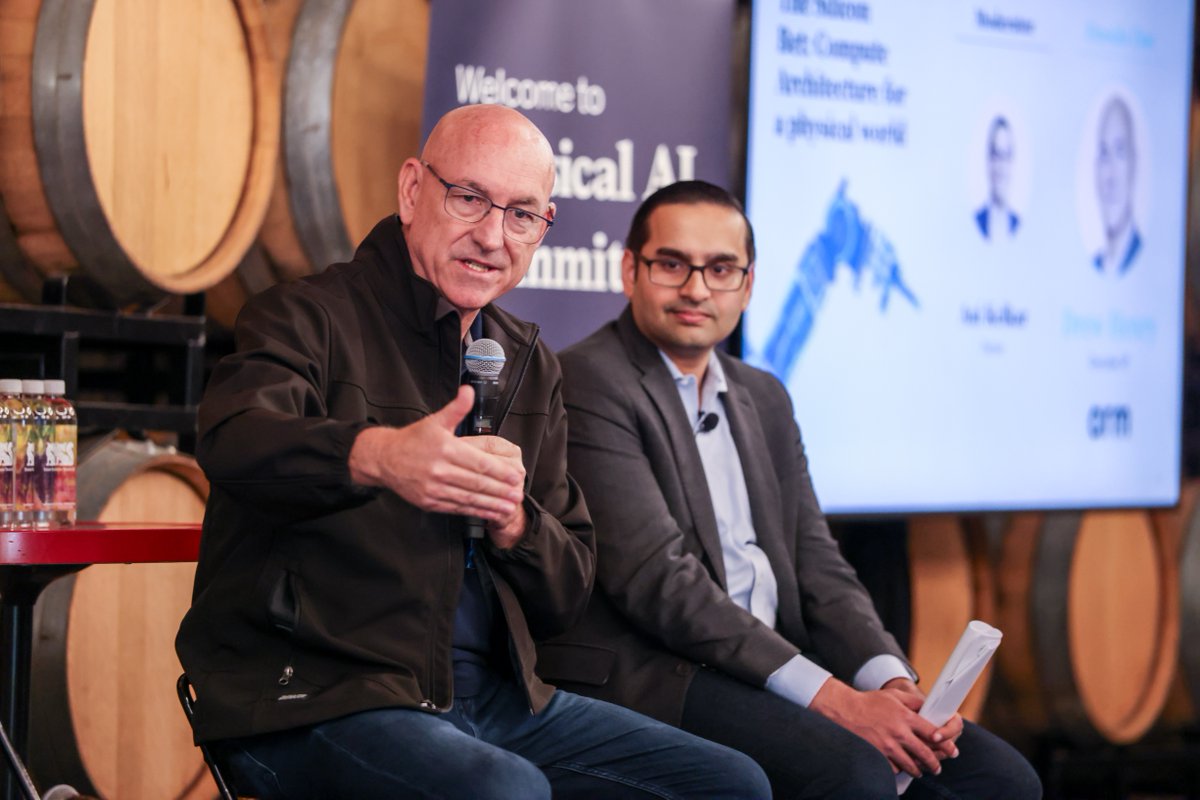
I thoroughly enjoyed discussing this with Ani Kelkar at @McKinsey's Physical AI Summit. We covered everything from building SoCs that enable autonomous action to how our Arm Total Design for Physical AI program is helping make this easier. We also discussed our call to action for the industry to come together and establish better ways to describe robotic capabilities by joining the the Robotics Capability Framework working group.
But what I enjoyed even more was hearing from others tackling different parts of this enormous challenge. Carolina Parada at @GoogleDeepMind shared perspectives on building foundation models for robotic intelligence, while Stefan Nusser @IntrinsicAI discussed advances in intelligent automation. Amit Goel discussed the impressive work @NVIDIARobotics is doing in robotics and Quinn Li gave some interesting insights to how @QualcommVenture is thinking about how they invest for PAI.
It's an exciting time to be working across this industry, and there's an extraordinary amount of engineering ahead of us.
More on the Robotics Capability Framework working group: https://t.co/0LQjWTnx9a
More on Arm Total Design for Physical AI:
https://t.co/W4DvZP8K9h
@AlibabaGroup has launched its new Qwen Glasses N1 series, built on Arm! 👓
Featuring 50MP cameras, 4K video recording, AI assistance and hands-free payments, the new glasses bring AI-powered experiences to everyday eyewear.
Arm CEO @Renehaas237 sat down with Jodi Shelton on the @ABitPersonalPod to discuss his career journey, leadership lessons, and the role Arm is playing in today's evolving technology landscape.
🎧👀: https://t.co/cfrua9yRWF
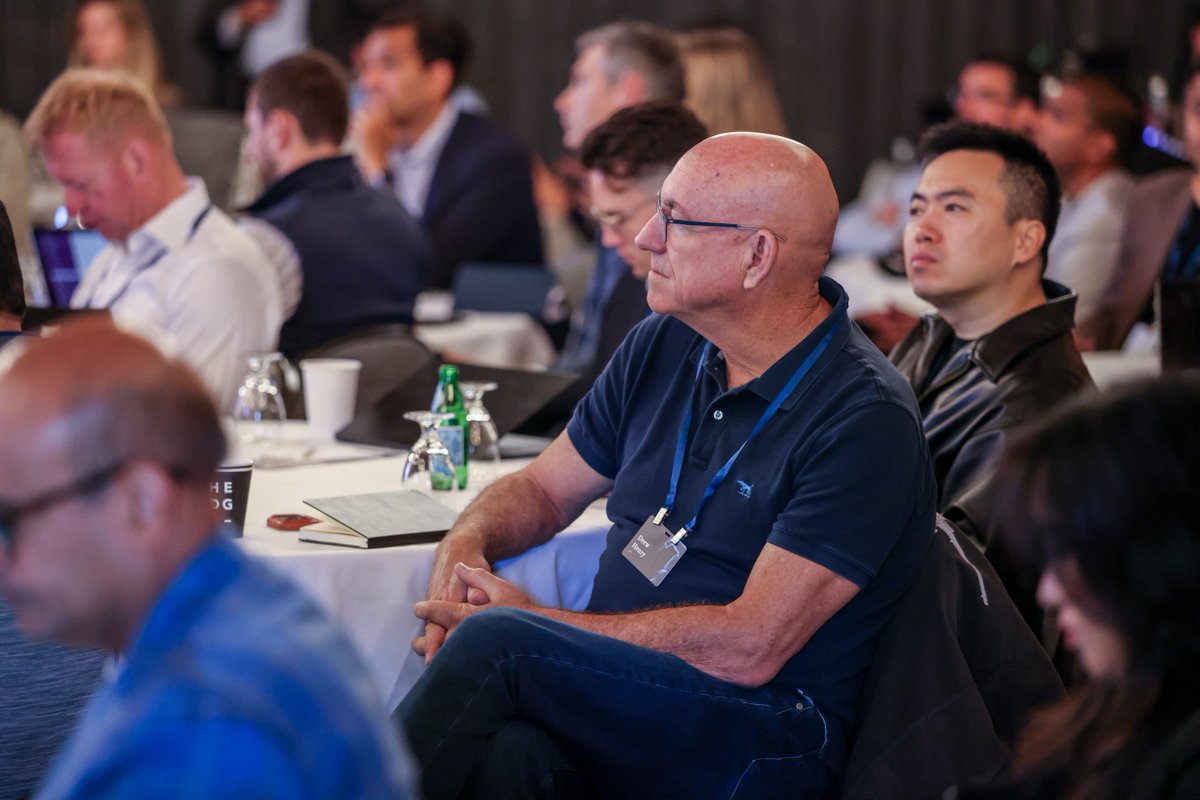
At the @McKinsey's Physical AI Summit, @drewhenry discussed the compute challenges of scaling physical AI.
From real-time performance to safety and efficiency, he shared how Arm's flexible compute platform supports the next generation of intelligent systems.
Great discussion on advancing physical AI! 👏
✅ @Supermicro 10U 4-node liquid cooled rack
✅ Arm AGI CPU @OpenComputePrj reference server
✅ Hands-on demonstrations
✅ Access to Arm experts
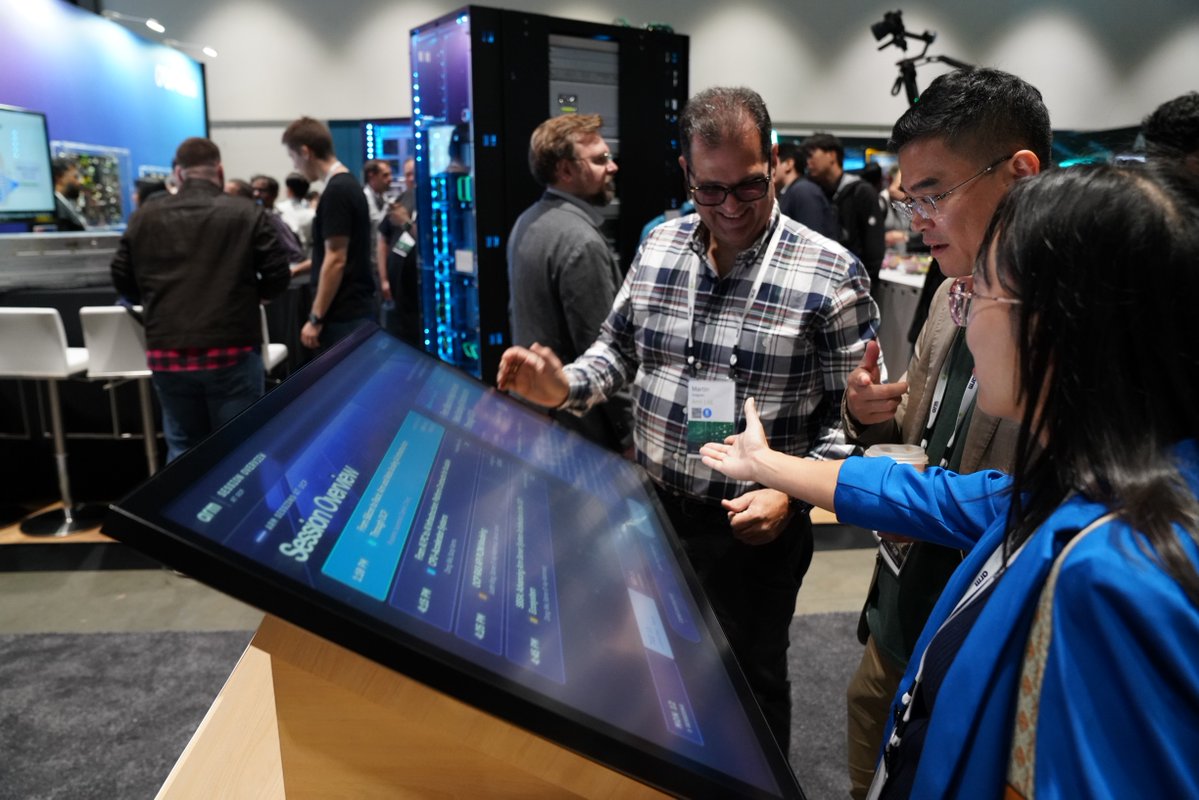
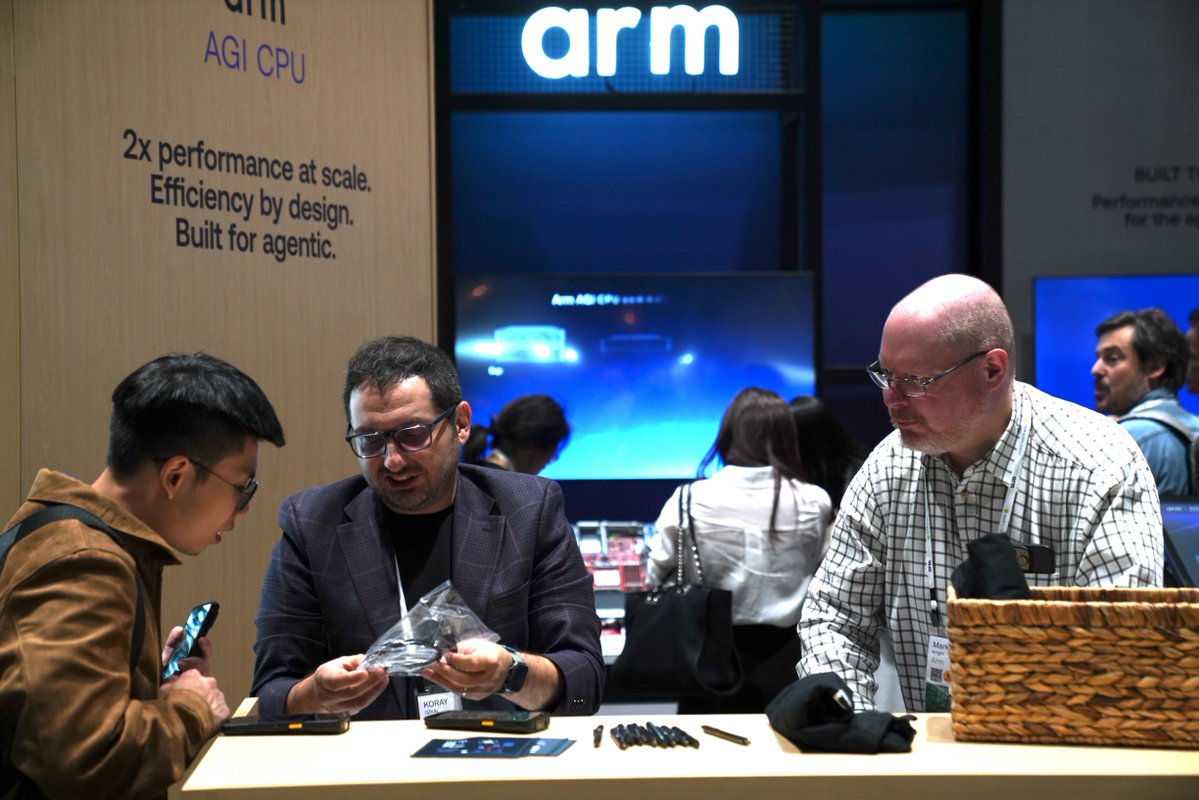
The show's not over yet - make sure to swing by booth C72 at the #OCPGlobalSummit2026 for a closer look at how we're building for the future of AI.
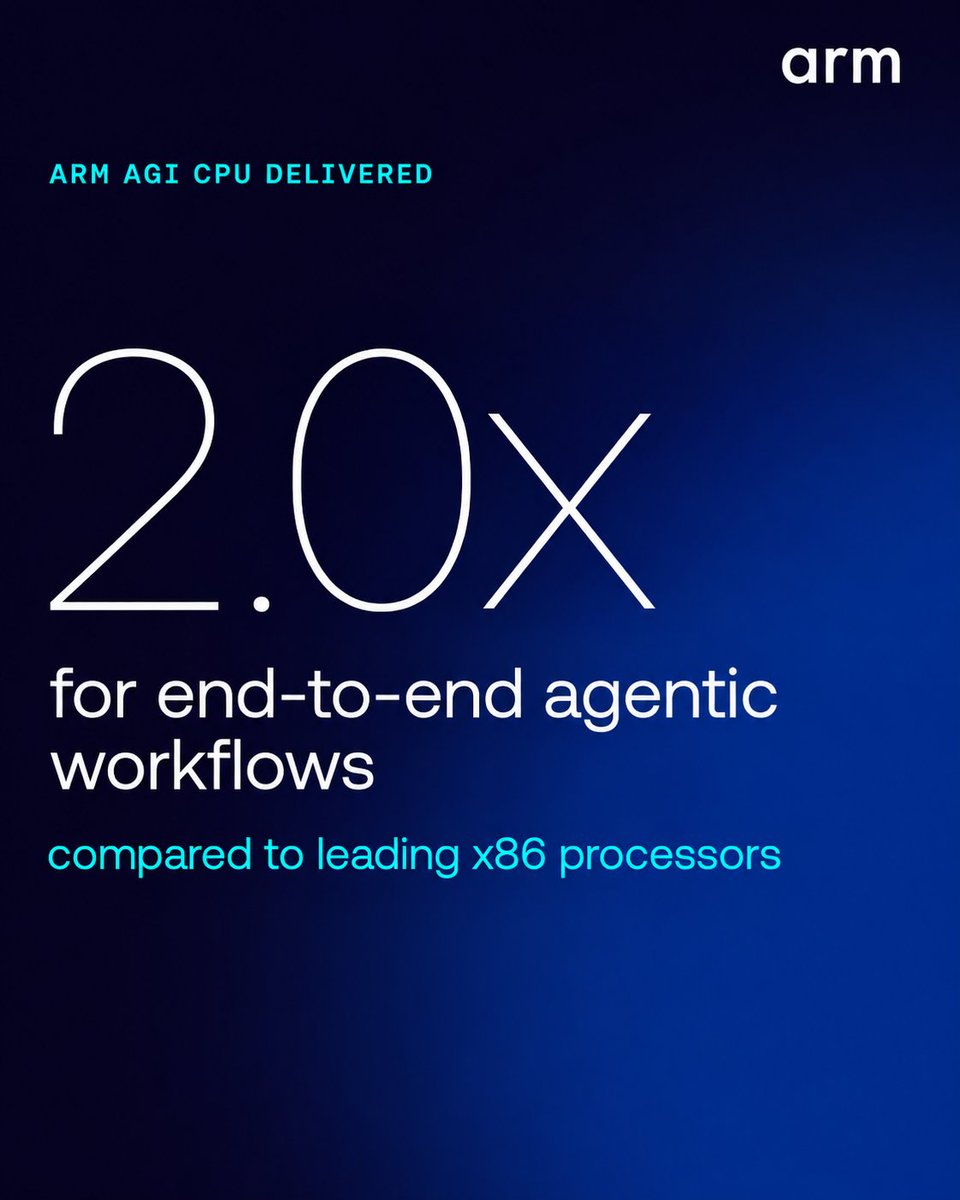
Enterprises scaling agentic AI can get about twice the CPU work out of the same rack power with the @Arm AGI CPU, based on @Signal_65 modeled rack analysis.
Full report: https://t.co/w8syF9woiR
That matters because power and floor space now cap how far AI infrastructure can grow. We compared the AGI CPU against the leading x86 processor across seven agentic and enterprise workloads.
Key findings from our analysis:
➡️ 1.99x average modeled performance per 24 kW rack, ranging from 1.43x to 3.19x by workload
➡️ 21 to 23 AGI CPU servers fit in a rack, against 13 x86 servers, based on rated server power of 950 to 1,050 W vs. 1,700 W
➡️ Higher per-chip performance on five of seven workloads, averaging 1.20x
➡️ About half the racks for the same work on web serving, agent replay and model-serving overhead
At #OCPGlobalSummit2026 yesterday, @awadmo highlighted the new reality for AI infrastructure: as agents move from human-paced requests to machine-paced workloads, the CPU is more critical than ever.
From orchestration to secure agentic compute, the next era of AI demands a new approach to CPU performance, scale, and efficiency. 💡
🏠 Your home just got a whole lot smarter.
From connected living with Apple HomeView to smarter assistance with HomePod mini 2 and immersive entertainment with Apple TV 4K, Apple's latest innovations bring more possibilities under one roof.
As connected homes evolve, the Arm compute platform is helping enable what's next. Congrats, Apple! https://t.co/EFbRuZqOzB