This is it.
Everything learned spending millions on longevity.
From: Your Immortal Unc and Auntie.
To: Our Immortal nieces and nephews.
0. Sleep is the world's most powerful drug.
1. Be in your bed for 8 hours
2. Same bedtime every night, any time before midnight
3. Don’t eat right before bed
4. Calm foods for dinner
5. No screens 1 hour before bed
6. Avoid added sugar (be aware it’s in everything)
7. Avoid all things in an American convenience store
8. Avoid fried foods
9. Shoes off at the door
10. Eat whole foods, particularly veggies fruits nuts legumes berries
11. Walk a little after meals or air squats
12. Get your heart rate high routinely
13. Lift heavy things
14. Stretch daily
15. Water pik, floss, brush, tongue scrape, morning and night
16. Make an effort to drink water
17. Get sunlight when you wake up (UV is low)
18. Protect skin in midday sun
19. Stand up straight
20. See at least one friend once a week
21. Avoid plastic where you can (in all things)
22. Circulate air in rooms
23. When stressed, breathe, learn to calm your body
24. Go to the dentist
25. Avoid sitting for long times
26. Protect your hearing, the world is too loud
27. Alcohol is bad for you
28. Finish coffee before noon
29. Avoid bright lights after sunset
30. If obese, look into a GLP
31. Sleep in a cold room
32. Texting while driving is dangerous
33. Turn off all notifications
34. Limit social media use
35. Don’t smoke anything
36. If you struggle to sleep, read a physical book before bed
37. 1 hour before bed have a calm wind down routine: bath, read, light walk, listen to music
38. The body is a clock and loves routine. Have a daily morning and evening schedule.
39. Avoid long distance travel where you can
40. Baby steps first: incorporate new things slowly
41. Do less… most things don’t work.
Bonus points if you get your blood checked.
Start here, it will change your life.
@ChatGPTapp@OpenAI
After using Agent mode, the options “Branch,” “Share,” and “Regenerate” disappeared, and “Schedule” appeared instead.
Is this expected behavior or a UI bug?
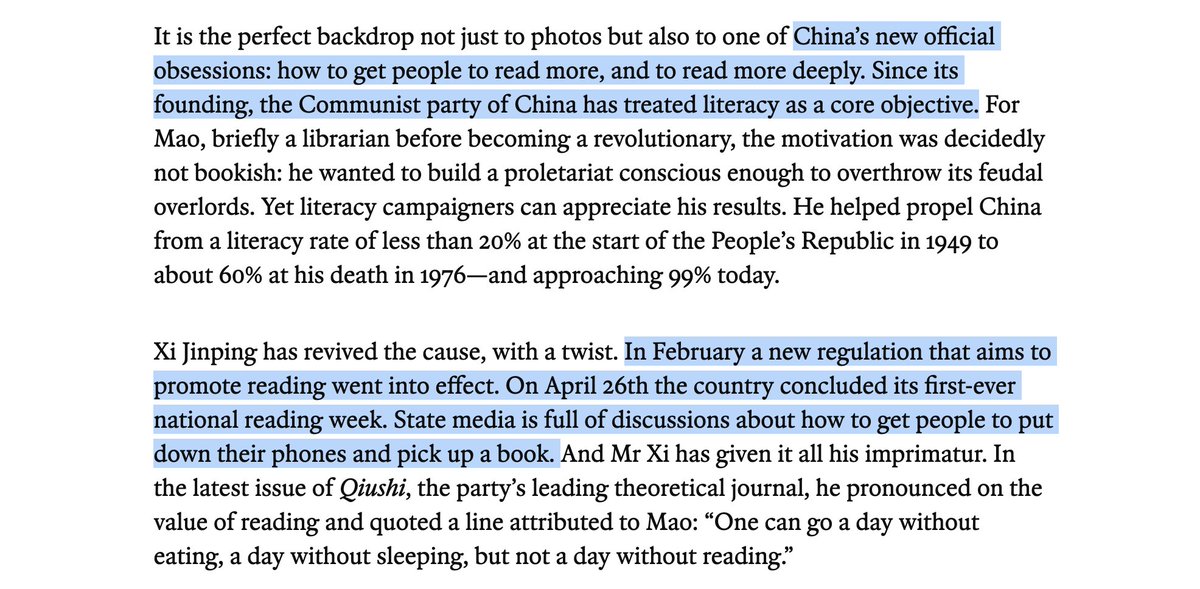
China’s new official obsession: Getting people to read more books.
In February, China passed a new regulation to build more public reading facilities and spaces.
In April, China had its first-ever national reading week.
State media encourages people to put down their phones and pick up a book.
President Xi wants China to become a “cultural powerhouse” by 2035, and says the revival of reading is one of its pillars.
Xi quotes Mao saying, “One can go a day without eating, a day without sleeping, but not a day without reading.”
In 1949, less than 20% of China's population was literate. Today it's approaching 99%.
When one of the most tech-focused countries in the world says that a population of book readers is vital to their future, we should all take note.
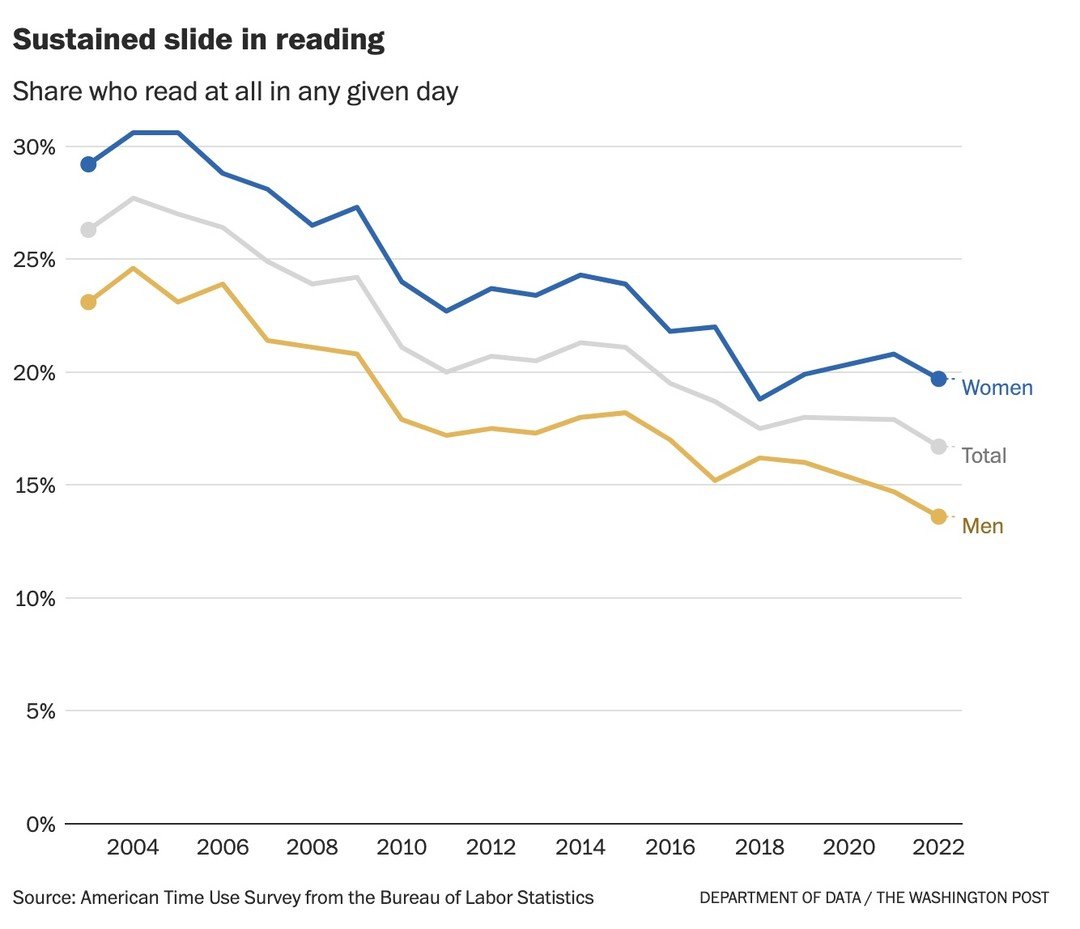
We are in a reading crisis.
People have access to more books than any point in history, but are reading less than ever.
Here are 10 concerning charts about the state of reading:
1) The number of people who read on any given day has been falling since 2004
🦞 BIG NEWS: We've molted!
Clawdbot → Moltbot
Clawd → Molty
Same lobster soul, new shell. Anthropic asked us to change our name (trademark stuff), and honestly? "Molt" fits perfectly - it's what lobsters do to grow.
New handle: @openclaw
Same mission: AI that actually does things.
🚨 Lenny's Newsletter paid subscribers now get a free year of 7 incredible products:
1. @ManusAI
2. @FactoryAI
3. @AmpCode
4. @Railway
5. @elevenlabs
6. @Canva
7. @Framer
This is on top of 15+ products subscribers already get, including @Lovable@Replit@n8n_io@GammaApp@Linear@WisprFlow.
It sounds too good to be true, but it's not.
→ Already a paid subscriber? Grab your free products here: https://t.co/i5xk56axIV
→ Not yet a subscriber? Subscribe at https://t.co/R2KxWfAfdw and then grab your free products at the link above.
My goal with this Product Pass is to get you to stop scrolling and to start building. To actually experience the most important, cutting-edge, beautifully crafted products for yourself.
Grab your codes and learn more: https://t.co/srWNke0lZz
23 premium tools, over $25,000 in value. The most epic bundle in history just keeps getting better.
If you'd like to see another product join this bundle, let us know in the comments.
Habits that have a high rate of return in life:
- sleeping 8+ hours each day
- lifting weights 3x week
- going for a walk each day
- saving at least 10 percent of your income
- reading every day
- drinking more water and less of everything else
- leaving your phone in another room while you work
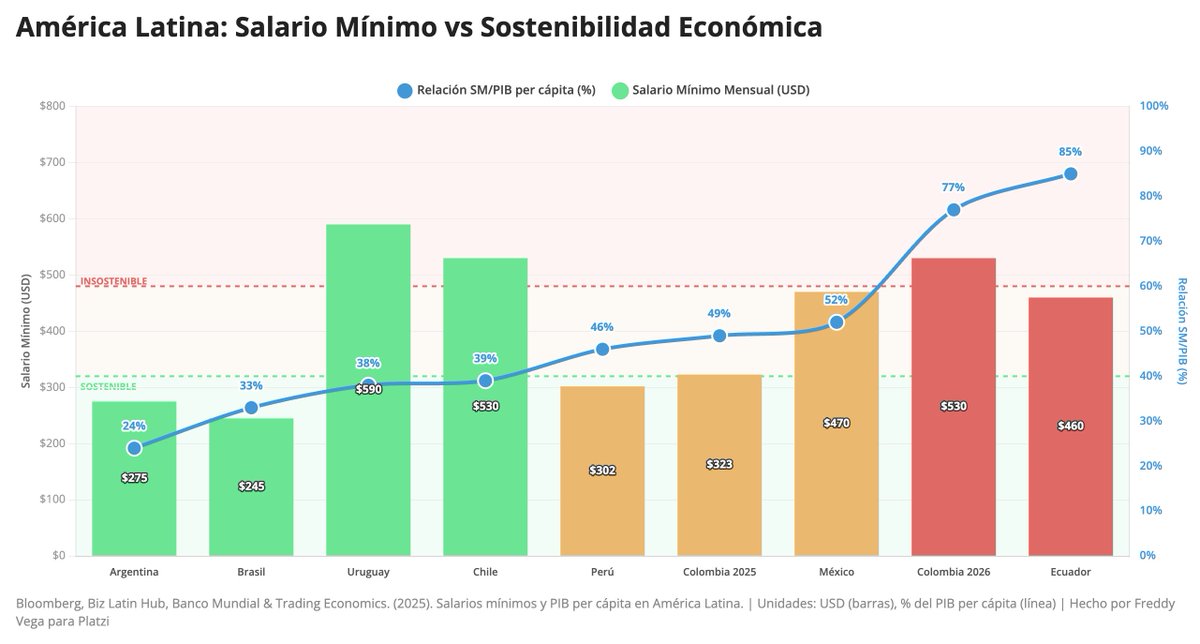
🇨🇴 Colombia aumentó el salario mínimo un 23% para 2026, 2x el record anterior.
Multiplicando sueldos de todo empleado de gobierno (se miden en salarios mínimos) entre otras consecuencias.
🇲🇽 México 🇧🇷 Brazil y 🇹🇷 Turquía lo hicieron, comparemos los resultados 👇
Guys, in @YouTube, when chatting with the video (♦️asking questions) it would be great if you can see the conversation you had without replaying the video (i.g. in history when showings the video options, also another like "See you conversation") @Google@googleespanol@GeminiApp
La soledad es un riesgo de mortalidad más fuerte que tomar alcohol, la obesidad o el sedentarismo. Sólo superado por fumar.
Pensé en Carol Sturka de PLUR1BUS.
Is there an AI bubble? With the massive number of dollars going into AI infrastructure such as OpenAI’s $1.4 trillion plan and Nvidia briefly reaching a $5 trillion market cap, many have asked if speculation and hype have driven the values of AI investments above sustainable values. However, AI isn’t monolithic, and different areas look bubbly to different degrees.
- AI application layer: There is underinvestment. The potential is still much greater than most realize.
- AI infrastructure for inference: This still needs significant investment.
- AI infrastructure for model training: I’m still cautiously optimistic about this sector, but there could also be a bubble.
Caveat: I am absolutely not giving investment advice!
AI application layer. There are many applications yet to be built over the coming decade using new AI technology. Almost by definition, applications that are built on top of AI infrastructure/technology (such as LLM APIs) have to be more valuable than the infrastructure, since we need them to be able to pay the infrastructure and technology providers.
I am seeing many green shoots across many businesses that are applying agentic workflows, and am confident this will grow. I have also spoken with many Venture Capital investors who hesitate to invest in AI applications because they feel they don’t know how to pick winners, whereas the recipe for deploying $1B to build AI infrastructure is better understood. Some have also bought into the hype that almost all AI applications will be wiped out merely by frontier LLM companies improving their foundation models. Overall, I believe there is significant underinvestment in AI applications. This area remains a huge focus for my venture studio, AI Fund.
AI infrastructure for inference. Despite AI’s low penetration today, infrastructure providers are already struggling to fulfill demand for processing power to generate tokens. Several of my teams are worried about whether we can get enough inference capacity, and both cost and inference throughput are limiting our ability to use even more. It is a good problem to have that businesses are supply-constrained rather than demand-constrained. The latter is a much more common problem, when not enough people want your product. But insufficient supply is nonetheless a problem, which is why I am glad our industry is investing significantly in scaling up inference capacity.
As one concrete example of high demand for token generation, highly agentic coders are progressing rapidly. I’ve long been a fan of Claude Code; OpenAI Codex also improved dramatically with the release of GPT-5; and Gemini 3 has made Google CLI very competitive. As these tools improve, their adoption will grow. At the same time, overall market penetration is still low, and many developers are still using older generations of coding tools (and some aren’t even using any agentic coding tools). As market penetration grows — I’m confident it will, given how useful these tools are — aggregate demand for token generation will grow.
I predicted early last year that we’d need more inference capacity, partly because of agentic workflows. Since then, the need has become more acute. As a society, we need more capacity for AI inference.
Having said that, I’m not saying it’s impossible to lose money investing in this sector. If we end up overbuilding — and I don’t currently know if we will — then providers may end up having to sell capacity at a loss or at low returns. I hope investors in this space do well financially. The good news, however, is that even if we overbuild, this capacity will get used, and it will be good for application builders!
AI infrastructure for model training. I am happy to see the investments going into training bigger models. But, of the three buckets of investments, this seems the riskiest. If open-source/open-weight models continue to grow in market share, then some companies that are pouring billions into training models might not see an attractive financial return on their investment.
Additionally, algorithmic and hardware improvements are making it cheaper each year to train models of a given level of capability, so the “technology moat” for training frontier models is weak. (That said, ChatGPT has become a strong consumer brand, and so it enjoys a strong brand moat, while Gemini, assisted by Google's massive distribution advantage, is also making a strong showing.)
I remain bullish about AI investments broadly. But what is the downside scenario — that is, is there a bubble that will pop? One scenario that worries me: If part of the AI stack (perhaps in training infra) suffers from overinvestment and collapses, it could lead to negative market sentiment around AI more broadly and an irrational outflow of interest away from investing in AI, despite the field overall having strong fundamentals. I don’t think this will happen, but if it does, it would be unfortunate since there’s still a lot of work in AI that I consider highly deserving of much more investment.
Warren Buffett popularized Benjamin Graham’s quote, “In the short run, the market is a voting machine, but in the long run, it is a weighing machine.” He meant that in the short term, stock prices are driven by investor sentiment and speculation; but in the long term, they are driven by fundamental, intrinsic value. I find it hard to forecast sentiment and speculation, but am very confident about the long-term health of AI’s fundamentals. So my plan is just to keep building!
[Original text: https://t.co/psPlIFRJsi ]
Google ha lanzado su propia Wikipedia de Código!
→ Una documentación que se actualiza automáticamente con cada cambio
→ Con diagramas y vídeos explicativos
→ Incluye todos los proyectos open source
→ Y un chat con Gemini para interactuar con los docs
https://t.co/9AEmEBgdD1
Introducing Stitch’s Redesign Agent powered by the newly announced Nano Banana Pro. 🍌
It takes a screenshot or URL and lets you edit and redesign your product with natural language.
We threw 🍌 Pro at real-world design challenges:
- "Redesign this page for a younger audience"
- "Create the page that most likely comes next"
- "Increase the number of users who add to cart"
- “Move the button down 10 pixels”
More info and demos in 🧵