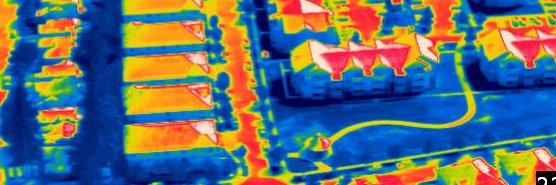
The Urban Climate Research Center (directed by Matei Georgescu) at Arizona State University focuses on interdisciplinary analysis of urban environments.
Do you have questions about Urban Sustainability in your region? Contact the Urban Climate Research Center - @ASUrbanclimate - and let us move toward increasing Urban Resilience Together!
Contact Us: [email protected]
In today's edition of Fantastic Friday, we readily acknowledge the critical importance of atmospheric boundary layer (ABL) measurements.
We look to @simoneKotthaus and colleague's recent overview on the retrieval methods developed for ABL detection.
https://t.co/tqOfLSsv3X
Saildrone and @NOAA_AOML kicked off the 2024 Atlantic Hurricane Mission early this year, with Saildrone Explorer SD-1041 intercepting the northern edge of the then category 5 Hurricane Beryl about 100 nm south of Puerto Rico.
@NOAAResearch
An insightful treatise successfully making "The Case for the Science Popularizer", penned by @DrShepherd2013 and appearing in @theNASEM.
https://t.co/tyOIb4F7B6
The value and significance was in the application of remote sensing to this critical topic (which even today is not receiving as much research attention as it should).
In today's Fantastic Friday edition, we revisit the theme of urban-induced precipitation modification (UIPM). ⛈️
Appearing in @AMSJAMC, @DrShepherd2013 and colleagues provide the 1st demonstration of spaceborne radar measurements to identify UIPM:
https://t.co/Qsf5jey7jR
The collaboration between @ASUrbanClimate and @SRPconnect is driving significant advancements in climate dynamics, enhancing our understanding of seasonal precipitation prediction across the higher elevation watersheds of Arizona.
@ASUResearch@asugreen#Resilience
An @SRPconnect team of meteorologists and hydrologists are working with ASU on climate research that will provide information and knowledge for long-term water supply planning in Arizona. @ASU_SGSUP@ASUrbanClimate https://t.co/zAvtMJH93e
In today's edition of Fantastic Friday, we assess the urban-rainfall relationship.
Led by #LongYang (@NanjingUnivers1) and @niyogidev (@txgeosciences) and published in @NatureComms, rainfall impact dependency on urban expansion pattern is quantified:
https://t.co/eBaVh47q0c
The last time the Summer Solstice occurred this early in the calendar, John Adams was the President of the United States.
Happens Today at: ⬇️
Thursday at 4:51 p.m. ET.
It seems a lot of people thought that the longest day was always the 21st but it can vary from 20th to 22nd. This year it is 20th at 9:50pm. Next year it is 21st at 3:41am.
The solstice today is the earliest summer solstice since 1796. Sunrise this morning in video.
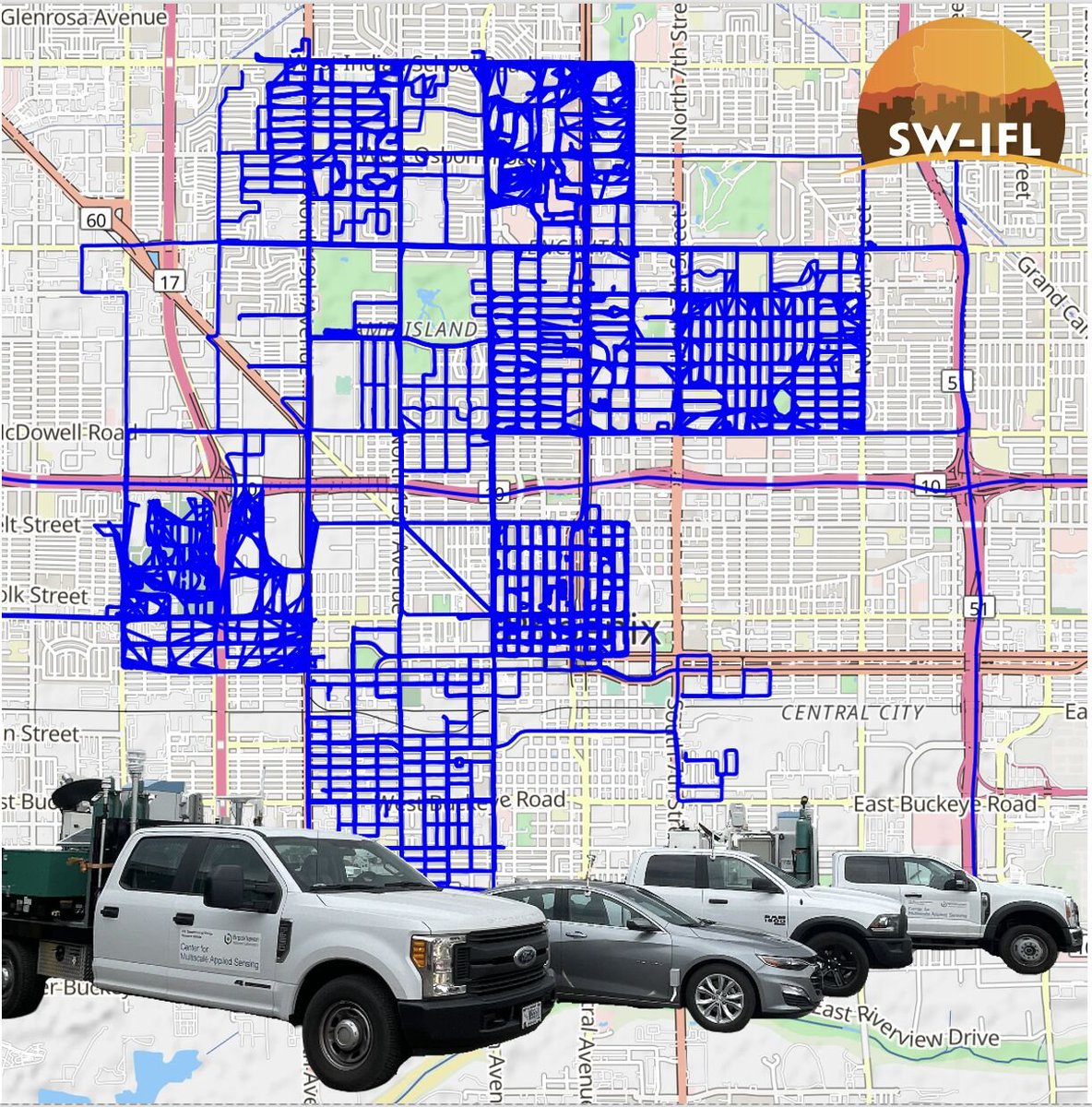
@BrookhavenLab@doescience@SW_IFL@ASU How does air quality and temperature vary across your neighborhood?
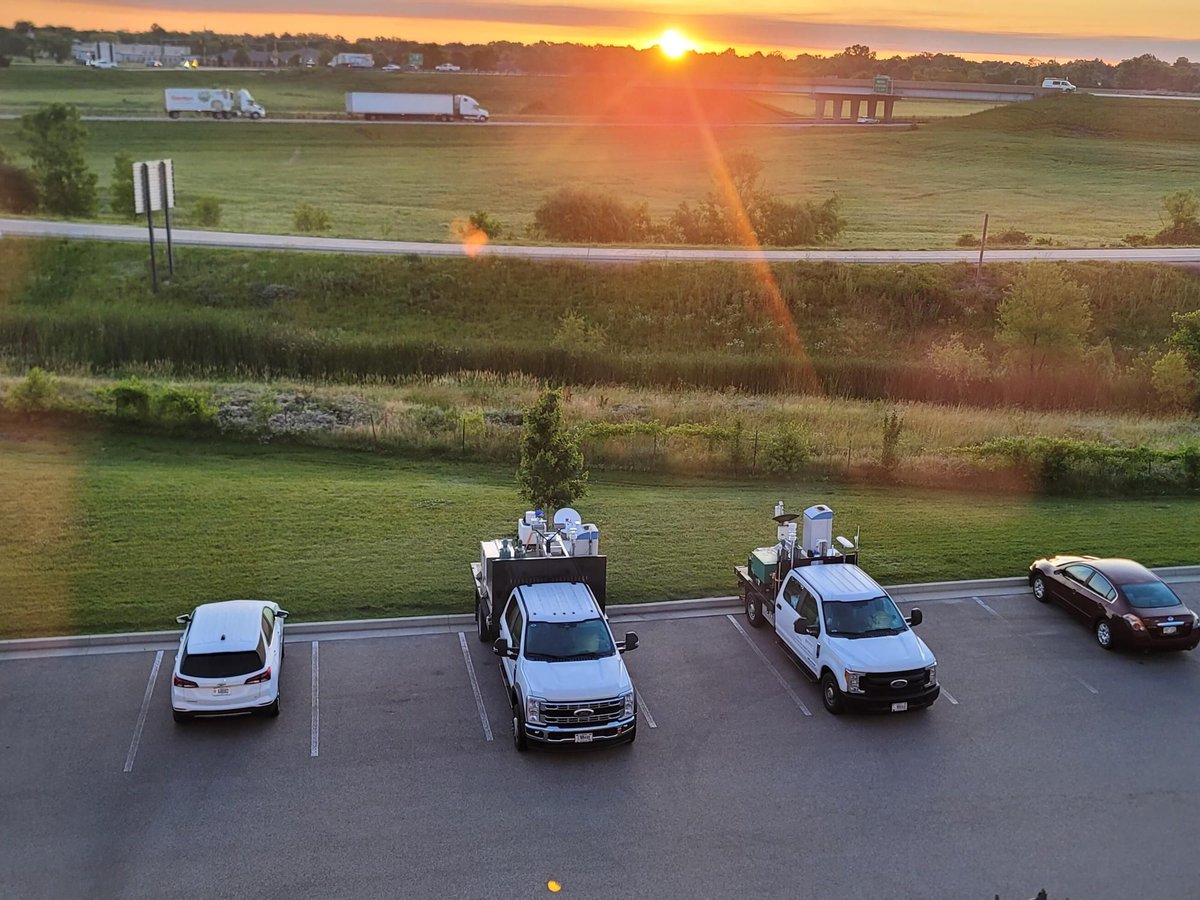
Using a fleet of mobile sensors, @BrookhavenLab 's Center for Multiscale Applied Sensing (#cmas) is collecting data to quantify air quality and temperature equity as part of @doescience-funded @SW_IFL project.
@BrookhavenLab@doescience@SW_IFL Observations conducted by The Center for Multiscale Applied Sensing (CMAS) team and @ASU will empower local Arizona governments and communities with loads of data.
Stay tuned for opportunities to meet the team during this exciting intensive observation period!
#CMAS#SWIFL
A #HeatDome is not a scientific term. The term is meant for the everyday public to illustrate:
"jet stream behavior that produces ... stagnant high pressure systems" (as communicated by @MichaelEMann in @latimes), resulting in extreme heat:
https://t.co/UOwJwZdMYB
@A_Sharma007@rkotamarthi Description Cont'd: ... evaluating the models, and models and observations of mitigation strategies.
Abstracts are due by 15 August 2024 at 5:00 PM ET
👇https://t.co/6JtpX8UAYu
Attn. Urban Climate researchers.
Mark Your Calendars 🗓️for the 105th Annual Meeting of the @ametsoc, set for Jan. 12-16, 2025 in #NewOrleans.
Joint with the 29th Conference of Applied Climatology: 👇
We invite you to Submit your Abstracts to the following session: 👇👇👇👇👇
@A_Sharma007@rkotamarthi Description Cont'd: strategies is of interest. In this session we will explore these issues both from the aspect of developing appropriate physical models that scale to neighborhood and street scales, measurements within the urban canopy developing appropriate datasets for ...
Welcome to today's edition of Fantastic Friday!
Today we look at a review led by @kristie_ebi and colleagues (e.g. @ollie_jay13, @JenniVanos), appearing in @TheLancet, that summarized physiological factors affecting heat strain, illnesses, and death.
https://t.co/BIff6e5R8X
The @doescience funded @SW_IFL is excited to host its 1st #CommunityNight:
When: ⬇️👇
Saturday, June 22, from 5 p.m. to 8 p.m.
Where: 👇⬇️
Desert Botanical Garden's "Flashlight Nights"
All welcome to Join: ⬇️👇
https://t.co/eCGKbWAk7Q…
#SW_IFL#dbgphx#Urbanresilience
In May of 1974 @NOAA recorded their first atmospheric measurements of #CO2 at the Mauna Loa Observatory in Hawaii (red contour below).
This complemented independent observations taken by @Scripps_Ocean, which initiated sampling at Mauna Loa in 1958 (blue contour below).
In today's edition of Fantastic Friday we revisit the expanding objectives of the urban climate field, as outlined by Alexander Baklanov of the @WMO, @SueGrimmond, and colleagues, who highlight the ever-growing need for urban meteorological services.
https://t.co/iRCkJ3bSgQ