L'AVFIN s'adresse aux victimes du finastéride et à leur famille. Nous sommes en relation avec les autorités de santé pour que leur état soit pris en charge.
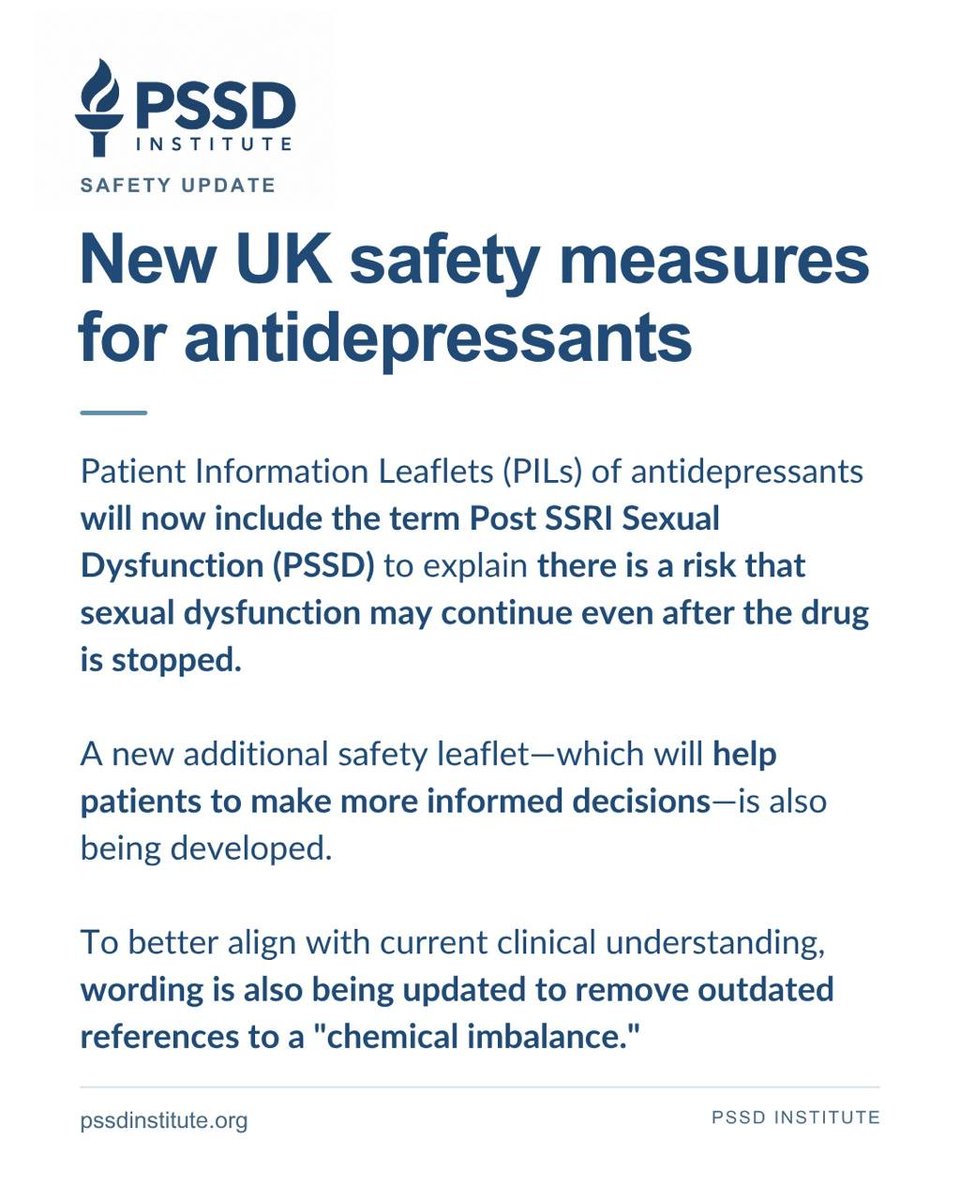
@PaulaMc007 SSRIs can permanently destroy a patient’s sexual function. The @MHRAgovuk recently updated the warnings for Post-SSRI Sexual Dysfunction (PSSD). The @NHS should consider taking additional steps to curb prescriptions to children. An SSRI did this to an 11-year-old girl.
THE EMOTIONAL LOBOTOMY & SEXUAL CASTRATION OF SO CALLED "ANTI-DEPRESSANTS"
In July of 2007 I was prescribed Fluoxetine and Mirtazapine. They have permanently damaged me by leaving me with #PSSD (Sexual Dysfunction), emotional numbness, verbal fluency issues and primary insomnia.
https://t.co/FySqC985yE
He Was Prescribed Finasteride at 16. It Cost Him the Life He Wanted.
Another warrior has stepped forward to share his experience of being severely harmed by finasteride, a medication he was prescribed for hair loss at just 16 years old.
In this interview, Kevin describes developing significant facial changes, sexual dysfunction, cognitive difficulties, and persistent sleep disturbances after starting finasteride as a teenager. Despite discontinuing the medication at 25, his symptoms persisted. Years later, an attempt to treat his condition with testosterone replacement therapy (TRT) resulted in further deterioration in his sexual health.
Now 40 years old, Kevin has spent more than two decades living with Post-Finasteride Syndrome (PFS). Perhaps most heartbreaking, he describes never being able to maintain a long-term relationship, marry, or have children. He believes finasteride cost him the future he once envisioned.
Kevin also discusses the frustration of being misunderstood by family members, his difficulties seeking treatment, and the importance of informed consent, particularly when prescribing medications to adolescents.
After years of hesitation, he finally decided to come forward publicly, hoping his testimony will encourage others to speak out and help advance awareness and research.
Thank you, Kevin, for having the courage to share such a deeply personal experience. The more people willing to tell their stories, the harder these injuries become to overlook.
Please watch, comment, and share to help raise awareness of PFS.
📩 Share your story: [email protected]
https://t.co/MRwcFMu8Li
From Healthy to Hospice After Just Three Doses of Ciprofloxacin | Fluoroquinolone Toxicity (Floxed)
For the first time on Moral Medicine, we're sharing the testimony of a patient severely harmed by fluoroquinolone antibiotics, a condition commonly referred to as fluoroquinolone toxicity or being "floxed."
In April 2021, Talia Smith was prescribed ciprofloxacin (Cipro) for a simple, uncomplicated urinary tract infection. After just three doses, her health began to deteriorate catastrophically. Within five months, she had entered hospice care, weighing just 60 pounds, where she remained for nine months.
More than five years later, Talia remains severely disabled, receiving palliative care and requiring around-the-clock assistance. She continues to experience a wide range of debilitating neurological, musculoskeletal, gastrointestinal, and systemic symptoms. She describes losing her career, financial security, independence, and much of the life she once knew.
She also discusses the devastating experience of medical dismissal, the lack of recognition and support for patients harmed by fluoroquinolones, and her determination to advocate for others despite her circumstances.
Fluoroquinolone antibiotics carry FDA boxed warnings concerning serious, potentially disabling, and irreversible adverse effects. Yet patients like Talia continue to face enormous challenges obtaining recognition, appropriate care, and support.
Although this is the first floxed patient testimony featured on Moral Medicine, the themes are unfortunately familiar to those affected by PFS, PSSD, and other persistent adverse drug reactions: inadequate informed consent, devastating long-term consequences, and a medical system that often struggles to recognize or adequately address the harm.
Despite everything she has endured, Talia has dedicated herself to raising awareness and helping others make informed healthcare decisions.
Thank you, Talia, for your courage, your advocacy, and your willingness to share such a deeply personal and devastating experience.
Please watch, comment, and share to help raise awareness of fluoroquinolone toxicity and the patients whose lives have been profoundly affected.
📩 Share your story: [email protected]
https://t.co/hsC8E19DMS
Three and a Half Years Living With Post-SSRI Sexual Dysfunction (PSSD).
Another warrior has stepped forward to share her experience with persistent and life-altering side effects following antidepressant use.
In this short testimonial, she describes developing significantly reduced genital sensation and muted orgasms while taking citalopram. After discontinuing the medication, her symptoms worsened, eventually progressing to a complete loss of genital sensation and pleasureless orgasms. Three and a half years later, she continues to struggle with the devastating impact PSSD has had on her sexuality, relationships, and quality of life.
She also discusses the importance of informed consent and the recent announcement from the UK's Medicines and Healthcare products Regulatory Agency (MHRA) regarding updates to antidepressant patient information leaflets to include PSSD.
This is exactly the kind of short patient testimony we've been encouraging people to submit for years. You don't need to record a lengthy video or share every intimate detail of your experience. Just a few minutes explaining what happened to you, how it has affected your life, and what you want others to understand.
Thank you for having the courage to speak out about something so deeply personal. The more people willing to share their experiences, the harder these conditions become to overlook.
Please watch, comment, and share to help break the silence.
📩 Share your story: [email protected]
PFS Foundation Launches Global Campaign to Improve Reporting of Post-Finasteride Syndrome to Drug Regulators #PostFinasterideSyndrome https://t.co/RRQjTkudCl
We urgently need more people to submit video testimonies to Moral Medicine.
If you’ve been harmed by finasteride, SSRIs, Accutane, or similar medications, please consider sharing your experience on video. Every testimony helps raise awareness and makes these experiences harder to ignore.
Even a short, 2–5 minute video providing an overview of your experience is enough.
We need more voices, and we need them now.
[email protected]
Finasteride linked to shorter lifespan and motor deficits in fly study, according to researchers at China's Southeast University #PostFinasterideSyndrome https://t.co/LmXFsCeex9
Last year, the Medicines and Healthcare products Regulatory Agency (MHRA) announced an expert review into #antidepressants, driven by patient concerns. The review is now concluded.
During the review, patients and their families worked with the MHRA to share their concerns—the outcome was to strengthen existing warnings relating to suicidal thoughts and behaviours, and persistent sexual dysfunction after stopping antidepressants.
Post SSRI Sexual Dysfunction (#PSSD) is acknowledged in the wording.
Dear Minister of Health, @RobbieButlerMLA
Northern Ireland faces a persistent crisis in mental health and suicide.
In 2024, there were 290 registered deaths by suicide, while around 38% of adults responding to the 2024/25 Northern Ireland Health Survey reported concerns about their mental health. At the same time, one in five adults received at least one antidepressant prescription in 2024/25.
Antidepressant prescribing is increasing annually, with disproportionately high rates among women and people living in deprived communities.
Too much responsibility for mental health is placed on individuals. This risks leaving people feeling stigmatised, shamed, and isolated. If people are to have a greater role in their health and wellbeing, they need more than encouragement to make healthy choices.
They need clear information, meaningful options, and control over the support they receive — alongside action by government to address the conditions contributing to distress.
The Give 5: Steps to a Wellbeing Rights Framework, which has cross-party support, provides a blueprint for changing how we understand and respond to mental health. It centres lived experience and rights, addresses the structural conditions causing distress, and calls for government accountability, meaningful options, and wider support.
We are therefore asking you to act first on Step 2 of Give 5 — Be Active: reducing over-prescribing of medication while investing in a wider range of accessible, community-based support.
This is not about removing medication from people who need or value it. Medication should remain an option, but people need clear information about its potential benefits and risks, alongside genuine access to alternatives.
We are calling on you, as Minister of Health, to:
✅Set a two-year target to reduce antidepressant over-prescribing, alongside action to improve prescribing information and practice.
✅Invest in accessible, community-based alternatives, so people have meaningful options around the support available to them.
✅Ensure real participation and choice, with people experiencing distress given clear information and a real say in decisions about medication and alternatives.
With only months remaining in this Assembly mandate, you have an opportunity to turn commitments into action and set a new direction for mental health in Northern Ireland.
We urge you to take it.
@PPR_Org, New Script for Mental Health
𝐘𝐨𝐮 𝐜𝐚𝐧 𝐫𝐞𝐚𝐝 𝐢𝐧 𝐟𝐮𝐥𝐥 𝐚𝐧𝐝 𝐚𝐝𝐝 𝐲𝐨𝐮𝐫 𝐧𝐚𝐦𝐞 𝐭𝐨 ��𝐡𝐢𝐬 𝐨𝐩𝐞𝐧 𝐥𝐞𝐭𝐭𝐞𝐫 by @PPR_Org - 𝐥𝐢𝐧𝐤 𝐢𝐧 𝐜𝐨𝐦𝐦𝐞𝐧𝐭𝐬 𝐛𝐞𝐥𝐨𝐰 👇
#StephensVoice #YourVoice #NewScript
HOW MANY PATIENTS DOES IT TAKE BEFORE WE RECOGNIZE A PATTERN?
One patient reports devastating symptoms after medication.
Another describes a similar experience.
Different doctors. Different circumstances. Sometimes different medications.
Each case deserves individual investigation.
But who is looking at the bigger picture?
Who is collecting these experiences, comparing them, and asking whether something important has been overlooked?
My son Henry experienced profound changes after taking prescribed finasteride. He struggled to recognize himself. Within weeks, we lost him.
I am not asking science to assume an answer.
I am asking science not to overlook the question.
How many voices must speak before we investigate what they may be telling us?
For Henry, for all we have lost, and for every patient still searching for answers. ❤️
#PatientSafety #Finasteride #PFS #Pharmacovigilance #MoralMedicine
Watch the full interview of @ucl psychiatry professor Joanna Moncrieff (@joannamoncrieff) by therapist Piia Tuominen (@TuominenPiia) on an episode of the Astetta Parempi Elämä podcast titled “The Long-Term Effects of Antidepressants."
https://t.co/vzRDPDQrmv
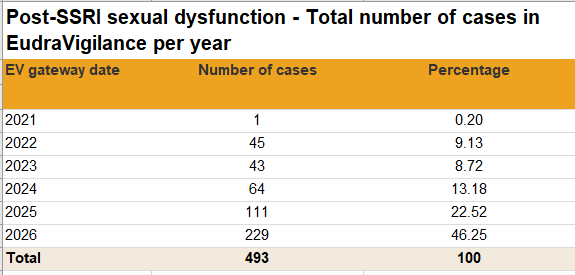
(2/3) The total in the EudraVigilance European Database of Suspected Adverse Drug Reaction Reports, including cases outside the EEA, is even larger. There are 493 cases of ‘post-SSRI sexual dysfunction’ that use the MedDRA code 10086208.
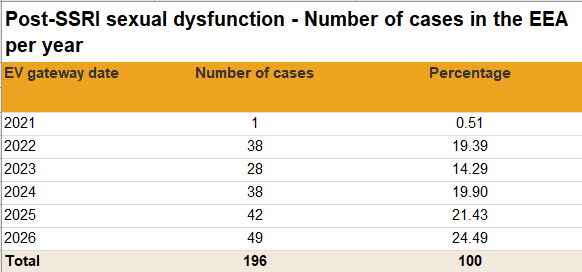
(1/3) We just received a response to a freedom of information request made to the European Medicines Agency (EMA). There are 196 cases in the European Economic Area (EEA) of ‘post-SSRI sexual dysfunction’ that use the MedDRA code 10086208.
"Mr Frith added: “The MHRA logs all Prevention of Future Deaths reports it receives and can confirm that since 2020, four reports concerning the prescribing of antidepressants, or their safety information have been sent to the MHRA.” https://t.co/6Bpiu2i0j9
"I think talking about these drugs causing injury is not unreasonable because of the length of time that the symptoms go on."
Finnish therapist @TuominenPiia asks Professor @joannamoncrieff if “injury” is an appropriate term for long-lasting antidepressant harms.
https://t.co/s1xdsIL7Wb
We're a relatively small channel dedicated to sharing the stories of people whose health and lives have been devastated by SSRIs. Many of those we've interviewed have faced dismissal, ridicule, and gaslighting, often from people more interested in defending these medications than listening to those harmed by them.
There are countless spaces where people can discuss their positive experiences with these drugs, and far fewer where those harmed can share their stories without being overshadowed or met with demands for "balance." The imbalance has overwhelmingly favored the former.
The MHRA is strengthening risk warnings. Yet even in response to an announcement acknowledging the need for better risk communication, the conversation is being redirected toward concerns about excessive negativity. That speaks volumes about the very imbalance we're discussing.