Anthropic filed the IPO.
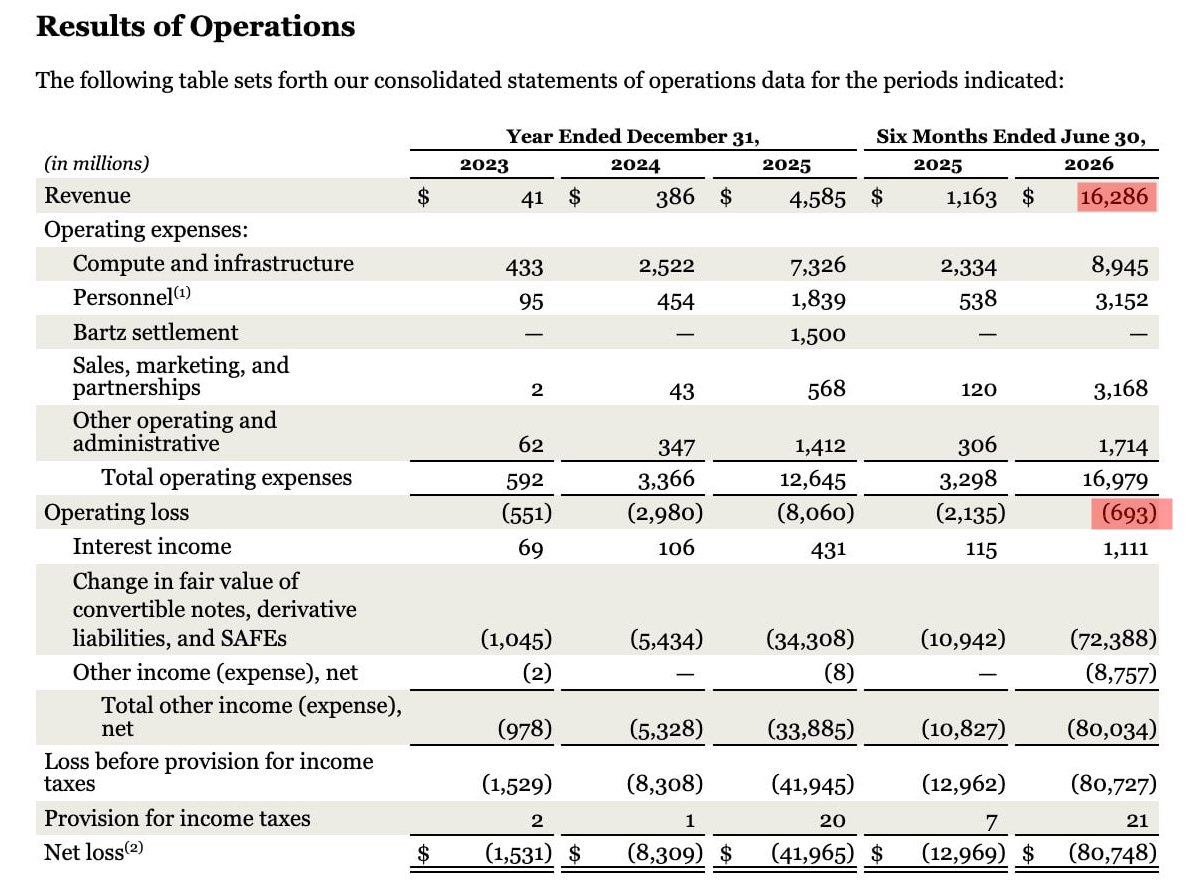
What I care about most is operating cash flow turning positive to $3.929B in the first half.
Weve been asking whether AI applications can actually pay back the infrastructure spend. This filing gives part of the answer.
First half 2026 revenue $16.286B. Same period last year $1.163B. Up about 1,300%, roughly 14x.
Operating cash flow went from a $1.513B outflow to a $3.929B inflow.
That doesnt mean the financing problem is solved. The company explained part of the cash flow improvement came from payment timing. Customers paid first, supplier bills came later. First half still had about $693M operating loss. Future compute spend isnt going away.
The tension I watch is customers pay as they use. Anthropic still has to lock multi-year compute ahead of time.
Commercialization is speeding up. Revenue and cash collection still have to keep up with the purchase commitments. A successful IPO can add funding flexibility.
This matters for the $IREN I hold. Earlier media reports said the two signed a multi-year cloud service agreement. If that gets confirmed, Anthropic running better helps market confidence in the customers ability to pay.
Anthropic is also pushing direct chip leasing with dedicated buildings to try to lower long-term cost. Independent cloud names still have a shot at catching some of the demand.
AI long-term logic hasnt changed. The test for chip stocks may just be starting.
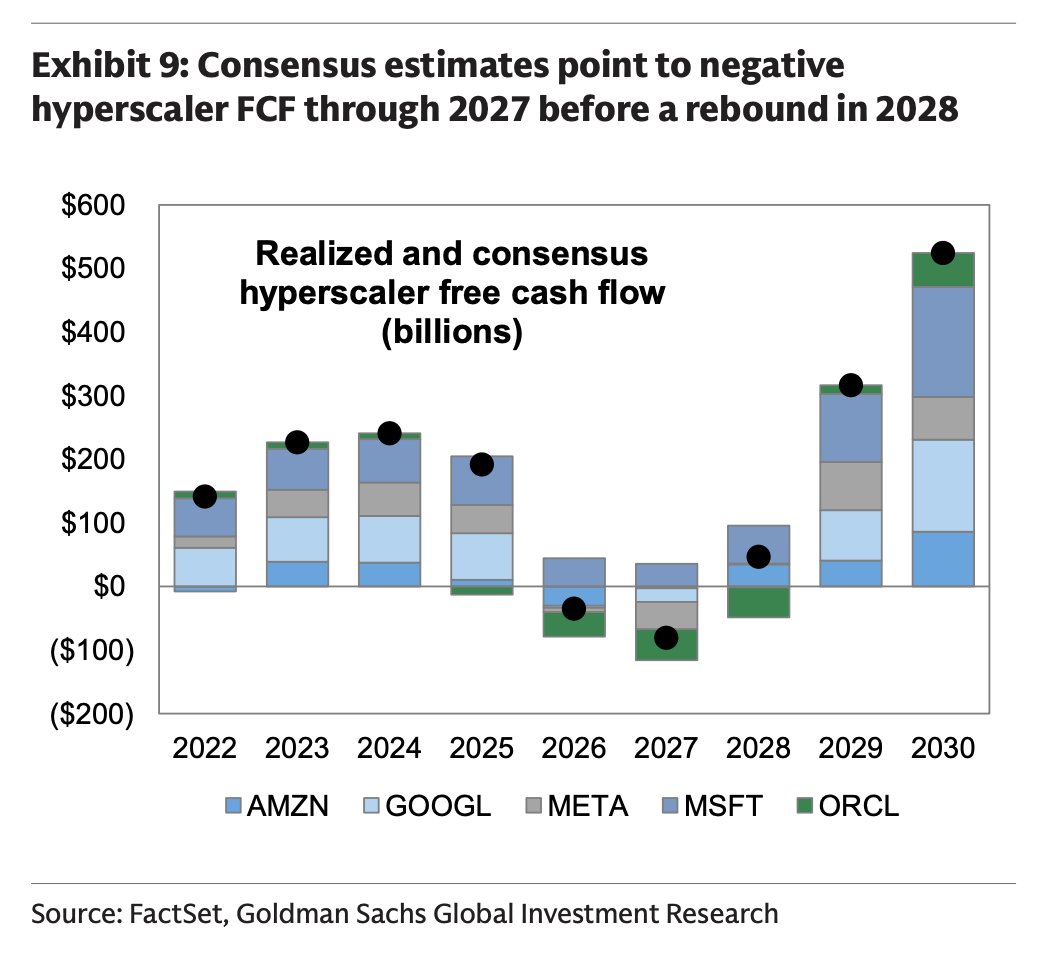
Goldman showed consensus expectations. Big cloud free cash flow turns negative in 2026, pressure peaks in 2027, and could turn positive again in 2028.
Look at $INTC. From the 90s down to around $60. Dropped about a third in a few trading days.
Long-term semiconductor opportunity is still fine.
The market is just starting to care more about cash flow and valuation.
Same for the main cloud names we track.
This could turn into a longer fight. Less leverage, protect capital, then wait for the industry returns to show up.
The process is tough though.
$MSFT: AAA issuer credit rating. Just issued $25B in bonds.
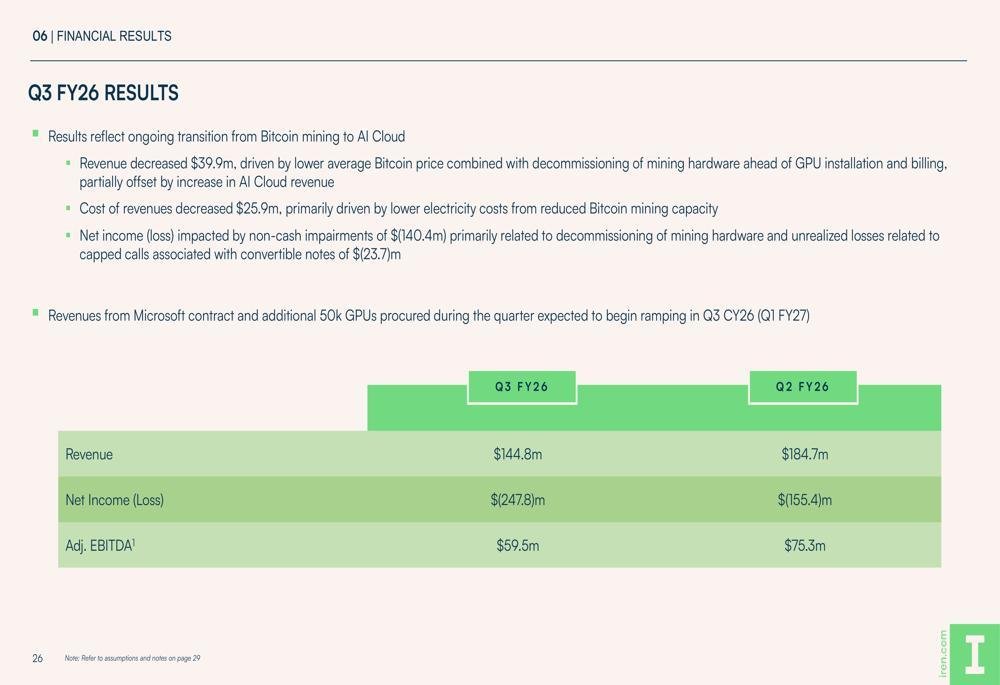
$IREN: Microsoft project financing got Fitch A rating.
$CRWV: Meta project financing got Moody's A3. Issuer rating is S&P B+ (positive outlook), Fitch BB-.
$NBIS: No comparable public credit rating yet.
Note that project A rating isnt the same as company-level A rating.
The AI arms race is pushing financing costs higher. Neoclouds may feel the pressure first. Midterm results matter here.
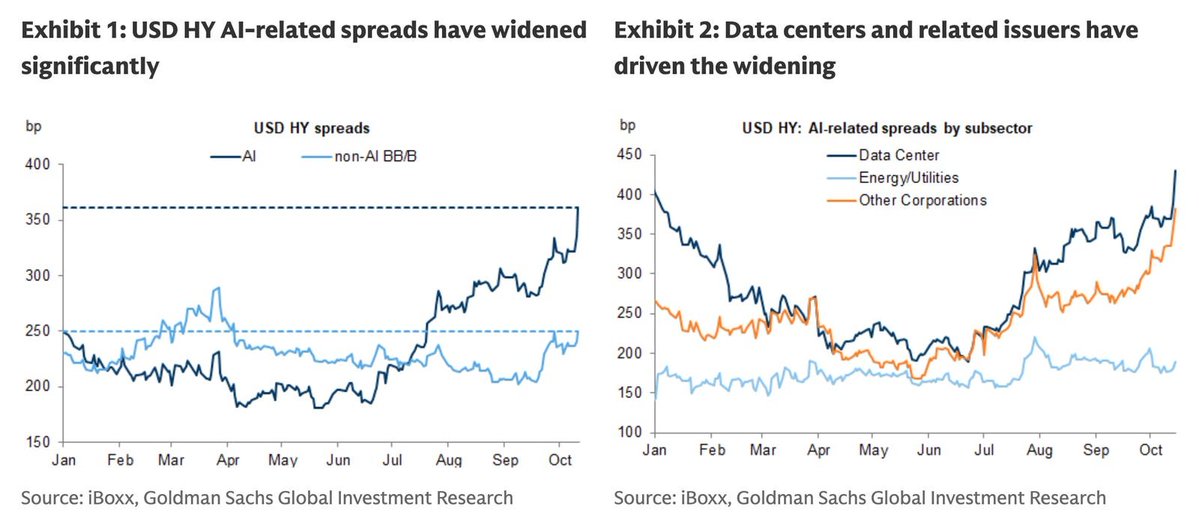
The five big clouds have already issued more than $200B in bonds in 2026. Bond spreads are starting to widen.
Difference between the big clouds and the new ones.
MSFT can finance off mature business cash flow and high credit ratings. IREN leans more on GPU collateral, long-term contracts, and project cash collections, while NBIS leans more on convertible notes. IREN GPU financing backed by the Microsoft contract is at 6%. Another financing hit 9%. Cost of capital is already diverging.
Who wins among neoclouds will come down to borrowing at lower cost and turning compute into cash flow faster. That part looks set.
Palantir isnt a small company anymore. Revenue growth is still accelerating.
Revenue nearly doubled. Adjusted operating margin still hit 62%. US commercial revenue passed US government revenue for the first time. Net revenue retention hit 165%.
Palantir has named $NBIS as its preferred sovereign AI infrastructure partner. Plans to plug its compute and inference services into the enterprise platform. The faster $PLTR commercial customers expand, the more chance NBIS has at new GPU usage and cloud revenue. Key is conversion rate on the partnership.
@anaportfolio cash lag is real 🎯
but q3 rev hit $1.236b, +138% yoy, while customer deposits went from $78m to $661m.
looks more like inventory being built ahead of a growing backlog than demand falling off imo.
sources:
bloom q3 release: https://t.co/F9yTzuJLq7
Barclays upgraded Bloom Energy to Overweight today.
$BE has been strong.
I think theres an industry shift worth watching behind it.
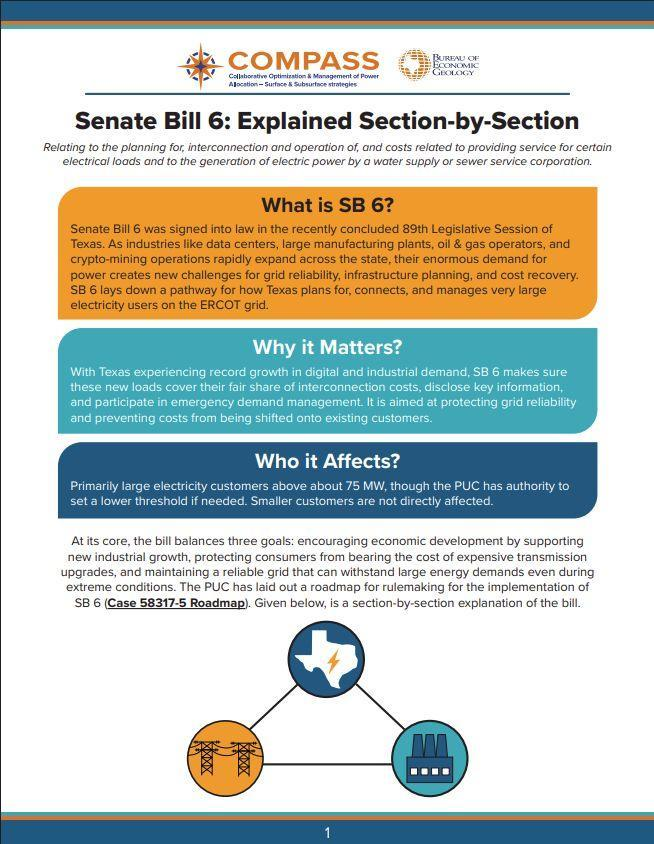
On Oct 22 BE reported Q3 revenue up 138.1% year over year. Put that next to Texas power policy and it gets more interesting. Texas SB 6 took effect on June 20, 2025. It puts tighter grid interconnection and load management requirements on large power users, with a 75MW threshold.
For $IREN that means even with power resources, interconnection cost and delivery timing still matter. For BE this can open new commercial opportunities. Price targets got cut, so short-term valuation and execution risk are still there.
BEs on-site fuel cell generation can help data centers depend less on traditional grid interconnection timelines and get stable power faster.
Goldman put out a risk scenario. Democrats could increase scrutiny on AI development and data centers, and push to remove some tax incentives.
I went and checked $IREN''s 10-K and the related policy.
On taxes, theres already a US proposal looking at removing the extra depreciation benefit for data centers. For IREN, GPUs and servers take a lot of capital. If accelerated tax deductions go away, early cash tax payments go up and project payback can stretch longer.
Assume a 100MW project does $2B annual revenue. A 1% revenue tax is $20M a year. 2% is $40M. These rates are just my sensitivity assumptions for now.
US tax policy doesnt directly apply to IRENs projects in Canada, Australia, and Spain.
IREN disclosed in the FY2026 10-K that power cost is about 27% of full-year revenue.
A 10% rise in overall power cost would cut pre-tax profit by about $19.1M.
For future AI cloud projects, assume 100MW IT capacity, PUE of 1.2, running full load all year.
Every 1 cent per kWh increase in power price adds about $10.51M in annual cost. That can add real burden.
Texas has already added requirements for large power interconnection projects of 75MW and above. On a 50MW IT project at $20M revenue per MW per year, a three-month delay in acceptance and billing means about $250M of planned revenue in that period cant be recognized on time.
Actual impact still depends on grace periods and delay terms.
One set of numbers is worth watching.
Semiconductor index is up 44% this year. Tech hardware is up 36%.
Microsoft, Meta, Amazon, and Alphabet earnings growth is about 27%. Their stocks are only up about 8% on average.
The companies spending to build AI infrastructure are lagging the companies selling the equipment.
I think theres a timing gap. $NVDA can recognize GPU revenue relatively fast.
The big clouds pay for the purchase and build costs, then still have to finish data center power-up, GPU deployment, and customer onboarding before revenue starts coming in.
We talked about AWS and Google Cloud yesterday. Theyre already turning demand into cloud revenue. The big clouds have customer and capital advantages. That makes the challenge more direct for the neoclouds I follow long term.
$IREN has to turn power and planned capacity into actual billing MW.
$NBIS has to raise return per asset through GPU utilization, dynamic pricing, and cloud platform services.
$CRWV has about $104B backlog, but still faces interest, depreciation, and ongoing expansion costs.
When I look at valuation I separate the big clouds from the neoclouds.
For neoclouds I watch revenue per MW, financing cost, and lifetime cash return per GPU.
The biggest contradiction in Neocloud today
Order backlogs keep growing, while credit markets worry about debt repayment.
——$CRWV: Q2 backlog reached ~$104B, with a 59% adjusted EBITDA margin.
Yet in the same quarter, net interest expense hit $640M and net losses reached $626M.
By mid-October, CoreWeave's five-year CDS spread had climbed above 1,100 basis points.
——$NBIS: Its AI Cloud adjusted EBITDA margin approached 50%.
Nebius is working to increase revenue per GPU through dynamic pricing, higher utilization, and managed inference services.
I like this approach.
The difference comes down to capital efficiency.
CoreWeave has built a massive backlog and financing structure. Now it needs to prove that cash flow can cover interest, debt maturities, and GPU replacements.Nebius is expanding its cloud platform, but it still needs to prove that software services and better utilization can deliver stronger returns on invested capital.
At the Berlin event $IREN said the Badajoz site in Spain has the civil works permit. The 300MW European project moved another step. First operations targeted for 2028.
I think European companies have demand for data localization and their own AI infrastructure. IREN plans to combine its own data centers, NVIDIA tech, and Mirantis software to offer AI cloud services.
That means IREN is expanding the business from North America into Europe.
The stock is already cheap. Confidence is right there.
At #NVIDIAGTC Berlin, Gabriel Nebreda, CEO of IREN Spain, shared the latest on IREN’s campus in Badajoz, Spain: the project has been granted its civil works license, confirming it is developing according to plan with the support of the community and local institutions.
The campus anchors IREN’s build-out of sovereign AI in Europe. Hear more from IREN on the ground in Berlin.
$MRVL buying $LITE matters for the big clouds.
For Microsoft, AWS, and Google the deal has two sides. Joint development on DSP, lasers, and modules can lower power use, improve compatibility, and speed up AI cluster builds. Key parts sitting with one supplier can also weaken the clouds bargaining power.
So the big clouds may increase purchases and qualification with independent suppliers like $COHR to keep supply chain competition. Even if MRVL integrates well, it doesnt automatically squeeze every competitor.
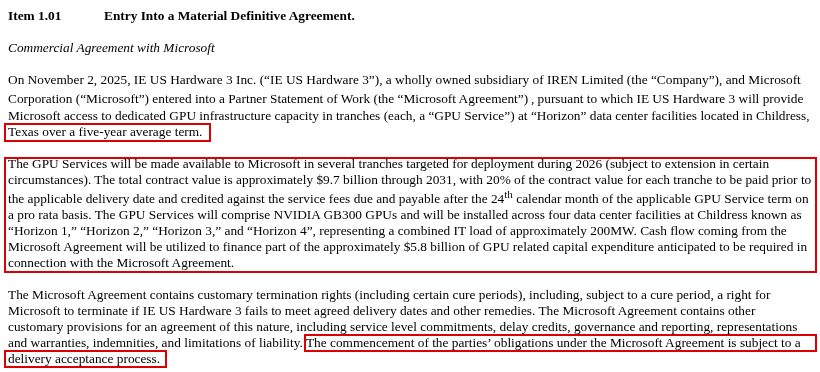
$IREN has a roughly $9.7B five-year contract with Microsoft. Right now I care about actual delivery and when billing starts on the later stages. Optical network supply delays or cost changes only change my IREN valuation if they show up in project timing and cash flow.
A lot of people cant figure out why $LITE dropped hard on the acquisition news.
I think the key is the deal structure.
All-stock deals already carry real risk.
This one has an implied enterprise value of about $115B and wont close until the first half of 2028.
The market is worried $MRVL is paying too much. Also worried about dilution and integration risk later.
Something similar happened before.
In 2020 $AMD announced a $35B all-stock deal for Xilinx.
Each Xilinx share converted into 1.7234 AMD shares. The deal was expected to close by end of 2021. It actually closed in February 2022.
The deal worked. AMD got FPGA and adaptive compute, expanded its data center product set.
Ended up fine.
The $LITE drop reflects market worry about the purchase price, the exchange ratio value, and execution risk.
Those risks dont automatically mean AI optical demand is getting worse.
Short term, watch whether $MRVL can stabilize.
Remember the way this deal is supposed to work is the lower $LITE goes the better deal $MRVL gets and no premium
They just got a 15% discount today alone
Just talked about IREN delivery ability and NBIS operating efficiency. Lets keep going on the numbers.
First $IREN.
Some recent three-year contracts priced above $20M per MW per year.
At that price:
100MW maps to $2B annualized revenue.
600MW maps to $12B.
800MW maps to $16B.
800MW is the cumulative 2027 delivery target. $16B is just the theoretical case if all capacity bills at the same price.
I still have a question.
GPU depreciates over five years. If the customer contract is only three years, what price can it still rent at in year four and five?
IREN expects some new contracts to recover the GPU and related gear investment in about two years. Thats attractive.
But lower rents on older GPUs and customers not renewing still affect lifetime return.
Now $NBIS. Q2 AI cloud revenue $574.9M, up 514% year over year. ARR hit $3B at quarter end.
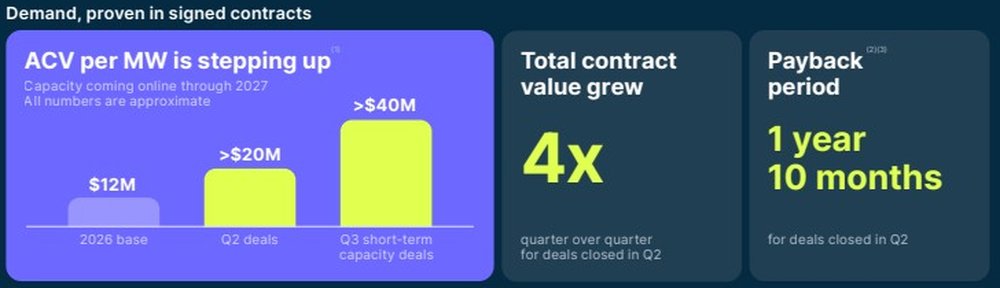
Q2 new contracts averaged over $20M annual contract value per MW.
Some Q3 short-term capacity deals priced above $40M annualized per MW.
Q2 new projects expected to recover investment in about 1 year 10 months. Looks decent.
I think the NBIS opportunity is raising GPU utilization and pricing power.
Spot dynamic pricing and hosted inference services can let the same batch of GPUs generate more revenue.
But short-term high prices dont represent all contract prices. Expected payback periods still need real cash flow to confirm.
Now another calc.
Assume a batch of GPUs and related gear costs $1M.
Years 1-3 produce $600k, $500k, $300k in cash contribution after direct operating costs.
Total $1.4M.
If financing and other capital costs add up to $300k, after the initial investment youre left with $100k.
If year 4 still needs equipment upgrades, the final cash return can be even lower.
So I care about how much value the older GPUs can still create.
Still like both names. What decides per-share value is sustainable cash flow.
Clearly that needs more confidence..
$AMZN earnings gave me a new angle on the long-term value of neoclouds.
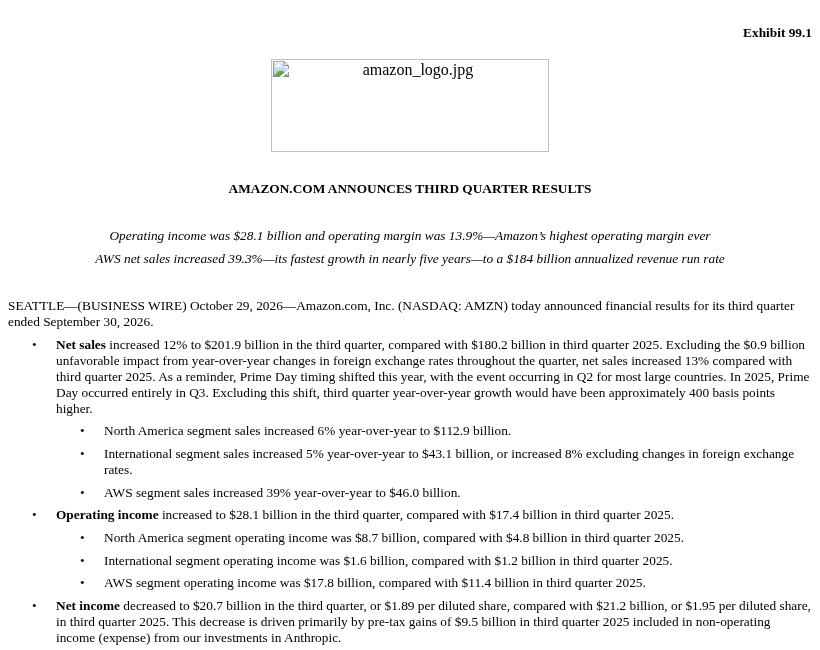
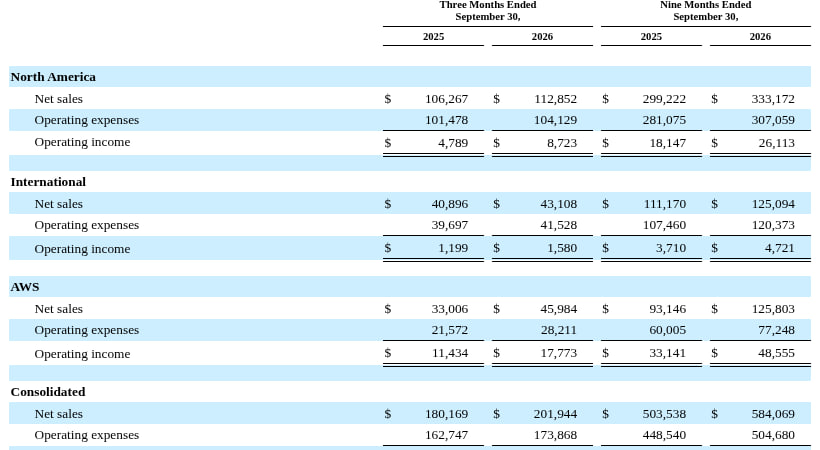
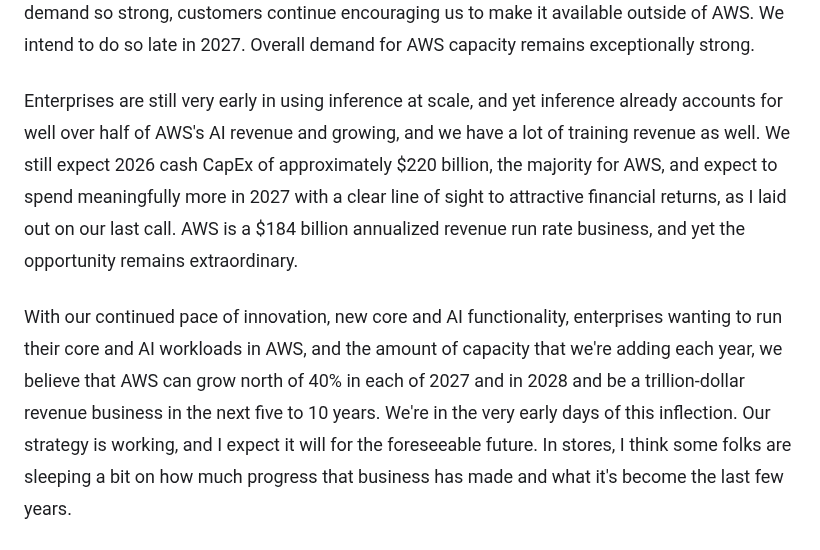
AWS revenue $46B, up 39.3% year over year.
Inference already makes up more than half of AWS AI revenue.
Bedrock token usage up nearly 17x year over year.
That means AI compute demand is moving from concentrated training into inference tasks that run every day.
We really need to study what these things are worth. Especially a 100MW thats already built. How much can it actually make going forward.
That ties directly to whether the stock can keep growing.
Cloud earnings season is coming. Today Im still looking at the incremental value in neoclouds.
First the latest numbers from two big clouds.
AWS Q3
Revenue $46B, up 39.3% year over year.
Inference is more than 50% of AWS AI revenue.
Bedrock token usage up nearly 17x year over year.
Fortune 500 spend on Bedrock up nearly 7x year over year.
Google Cloud Q3
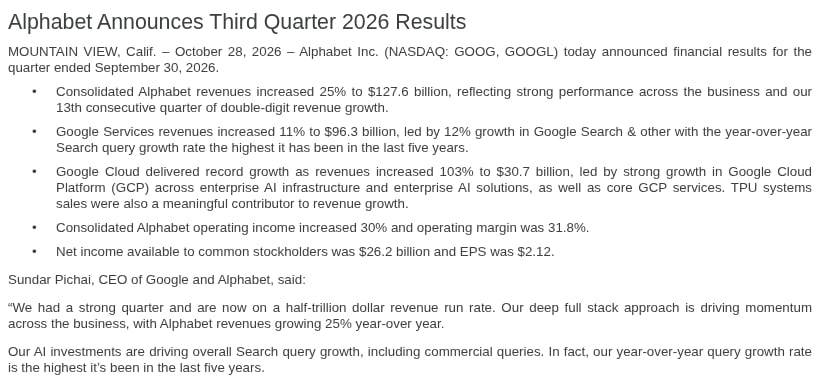
Revenue $30.7B, up 103% year over year.
Growth came from AI infrastructure, enterprise AI solutions, core cloud services, and TPU system sales.
These numbers show AI demand is expanding. Cloud revenue growth doesnt automatically mean profit growth.
Assume token usage goes up 10x and the price per unit drops 90%. Total revenue stays the same.
Thats the tension I care about most right now when looking at neoclouds.
$IREN
More than 5GW of data center development pipeline. Target is cumulative 800MW IT capacity delivered by 2027. 2026 capacity maps to about $4B contracted ARR. Operating ARR was about $1B at the time. These are annualized numbers at different stages. Cant treat them as already realized annual revenue.
I already ran some valuation scenarios for different 2027 delivery outcomes a couple days ago.
Right now Im mainly watching delivery and actual billing on the later Microsoft Horizon projects. If the 800MW target keeps getting delivered and some new projects can hold above $20M revenue per MW per year, IREN still has real room to grow.
For $NBIS, utilization and pricing decide revenue per asset.
Nebius Q2 AI cloud revenue $574.9M, up 514% year over year. ARR hit $3B at quarter end. Growth came from capacity expansion plus better pricing and utilization.
Spot GPU prices can adjust with supply and demand, up to every 15 minutes.
Same batch of GPUs, if they can raise billed utilization and improve realized pricing, they can generate more cash return.
My take is both $IREN and $NBIS still have long-term growth room.
Next post Ill break down three numbers that matter.
Actual billed revenue per MW.
Lifetime cash return per GPU.
Free cash flow after financing and equipment refresh.
If you like it, drop a like.
$NBIS is doing something I think is pretty cool.
Its letting GPU compute start to have a real-time market price.
Spot GPU prices can adjust every 15 minutes. Supply and demand changes across regions and GPU types show up directly in the price. Before, the Spot price cap was always 1 cent below On-demand. Now that cap is gone. When compute is tightest, Spot can even go above On-demand.
Thats interesting.
GPU is starting to work like power. When demand is high, scarce compute gets a higher price. When demand is weak, the price drops and idle GPUs can get sold again.
The company previously disclosed medium-term contracts roughly map to $20M–$25M per MW. Some short-term capacity deals can price at $40M–$50M per MW.
Same capacity, different time, different customer, different supply-demand setup. The value can be completely different. Ive always liked the potential of Nebius moving toward an AI compute trading platform.
If dynamic pricing can actually raise GPU utilization and revenue per capacity, the commercial value of $NBIS has to go up further.