To the Americans:
I've travelled all over the world. I've familiarized myself with many places, and met many people. And I'm a Canadian, although I’m privileged to reside once again in the States.
And here's something I've noticed, and it’s a key element of America's continuing greatness:
You bloody Americans value success, and you believe in its existence.
This is something that doesn't really happen anywhere else in the world. Even in other free democracies—the United Kingdom; Finland, Sweden, and Norway; Australia, New Zealand and Canada; Germany, France, and the Netherlands (great countries all)—a counterproductive cynicism too often reigns.
Success is equated with exploitation.
Ambition is looked upon with contempt.
This happens sometimes in the United States too—particularly among the miserable progressives, who confuse their resentment, ingratitude and unearned skepticism with wisdom.
But in your great country, by and large, striving is admired and success celebrated.
This means that more people strive and succeed in the US than anywhere else. And it's increasingly obvious. You remain stunningly more innovative and productive than any people anywhere else on the planet.
And so I say, as all should who are fortunate enough to live in the western world, let alone America:
Thank God for the United States.
Thank God for the wisdom of its founders.
Thank God for its faith in the free market and in the natural rights of man.
Happy birthday, you damn Yankees and Southerners.
Long may your admirable country dominate the world.
Long may your freedom and hope provide an example to those suffering everywhere at the hands of their malevolent states.
May your two and a half centuries of unparallelled success be just the beginning.
Your country is the light of the world, and the city on the hill.
Thank God for the USA.
Happy 250th.
Dr. Jordan B. Peterson
Who could imagine so great a mercy?
What heart could fathom such boundless grace?
The God of ages stepped down from glory
To wear my sin and bear my shame.
The cross has spoken, I am forgiven
The king of kings calls me His own
Beautiful savior, I'm Yours forever
Jesus Christ, my living hope.
Hallelujah, praise the One who set me free.
Hallelujah, death has lost its grip on me.
You have broken every chain, there’s salvation in Your name
Jesus Christ, my living hope!
Galatians 4:4 looks like a transition verse.
“But when the fullness of time had come, God sent forth His Son.”
If you read it fast, it sounds like a timestamp. But if read slowly, it is the most staggering sentence in the Bible.
‘Fullness of time’. Paul isn't saying God picked a convenient moment. He is saying God declared a moment complete. “The preparation is finished and everything I have been building across centuries is exactly where I need it to be”. God looked at human history and said: now.
Which forces the question. Why then? Why not a thousand years earlier, when Moses was fresh? Why not a thousand years later? What was so perfect about the first century?
I started looking into it and I have not recovered.
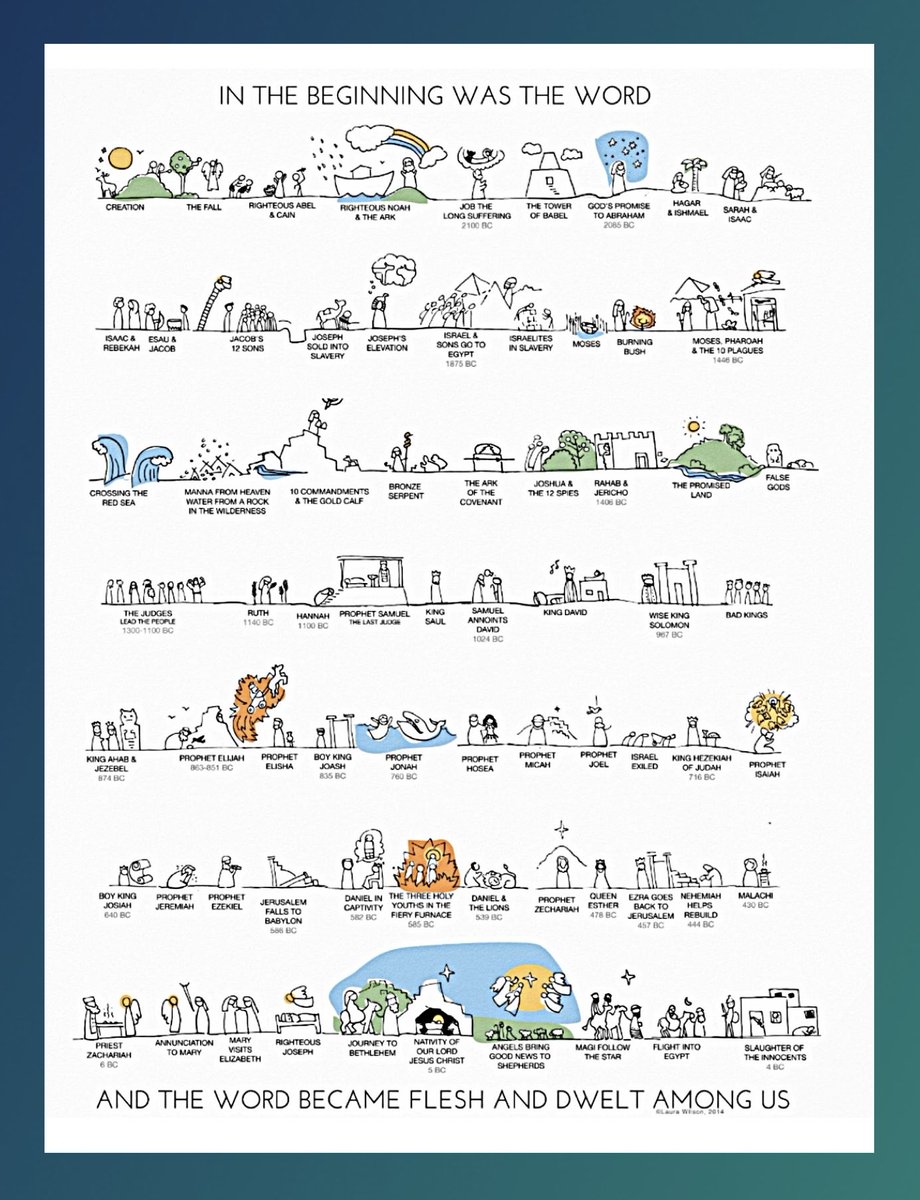
God needed a people with the theology. He spent 2000 years forming Israel; the covenant, the sacrificial system, the prophets, Isaiah 53 written seven centuries before Calvary, the framework of a coming Messiah who would bear the sin of the world. The Jews were shaped by wilderness, exile, and divine discipline, until the theological infrastructure for substitutionary atonement was fully in place.
But theology alone could not travel. God needed a language. Not a tribal dialect, but a universal tongue. So five hundred years before the Gospel, He let the Greek philosophers begin.
Heraclitus sat in Ephesus and concluded the universe was governed by an invisible rational principle. He called it the Logos.
The Stoics built on it. Philo of Alexandria stood at the intersection of Greek thought and Hebrew scripture and said the Logos was the mind of God in creation. For five hundred years, philosophy built a conceptual category it could not fill.
Then God sent a conqueror with no interest in theology. Alexander the Great wanted glory and empire. God let him want it. In satisfying his ego across three continents, Alexander Hellenized the ancient world and forged Koine Greek, the common tongue of the docks, markets, soldiers, and slaves. A language stripped of complexity, simple enough for anyone, universal enough for everyone.
The Hebrew scriptures were translated into it. The Septuagint was born. God used a pagan conqueror’s ambition to translate His own Word.
Then Rome came and paved the road. The Pax Romana. Piracy cleared. Stone highways stretching from Spain to Syria. A framework for movement the ancient world had never seen.
None of them knew they were collaborating.
Heraclitus thought he was doing philosophy. Alexander thought he was building a monument to himself. Rome thought it was building an empire for Rome. Not one of them understood they were stagehands. God was with Heraclitus in his pondering, with Alexander in his conquest, with Roman engineers laying stone, quietly requisitioning their work for a purpose none of them could see.
And then, when the covenant people were in place, the language primed, the roads built, and the category ready, when everything He had been quietly assembling was finally set, God stepped into the room they had unknowingly prepared.
John picked up his pen and wrote: “In the beginning was the Logos.”
Every Greek philosopher in the Mediterranean felt the ground shift. “And the Logos became flesh.” The category they spent five centuries constructing was not a principle. It was a Person.
The ‘fullness of time is not a timestamp’. It is God’s signature on a completed work. And the humbling thing is that this work was not built by saints. It was built by conquerors, philosophers, and emperors who thought they were writing their own story. God let them think that. And used every word. If this is not amazing then I don’t know what is.
Here’s a simple way to get unstuck when you’re worried, overwhelmed, or overthinking a decision.
Ask yourself one question:
What kind of thing am I dealing with?
Most issues fall into one of three categories.
1. Settled Things
These are things that have already been decided.
Your birth family.
Your nation of origin.
Your height.
Your past decisions.
Your upbringing.
Things you did.
Things done to you.
Some of these things were decided by your own past actions. Others were decided by God’s providence. As Paul says in Acts 17:26, God determined our appointed times and the boundaries of our dwelling place.
You can’t go back and change these things.
So the question is not, “How do I undo this?”
The question is, “Does this have any bearing on what I should do now?”
If not, leave it alone. Don’t spend your life fighting settled things.
2. Action Things
These are things you have some real control over.
Your diet.
Your exercise.
Your spending.
Your work ethic.
Your attitude.
Your friendships.
Your theological knowledge.
Your presentability.
Your habits.
Your skills.
These are your controllables.
You may not control everything about your health, finances, relationships, or future. But you usually control more than you think.
So if the issue falls here, don’t overthink it.
Take direct action.
Start small if you have to. Make the call. Go on the walk. Open the Bible. Apologize. Apply for the job. Pay the bill. Clean the room. Do the next faithful thing.
3. Prayer Things
These are things outside your direct control, but not outside God’s control.
The economy.
The weather.
The housing market.
The availability of a suitable spouse.
Other people’s choices.
Timing.
Open doors.
Closed doors.
You can’t force these things. You can’t grab the steering wheel of providence.
But God can act.
So you take indirect action through prayer. You ask. You wait. You prepare. You remain faithful. You do what you can do and trust God with what only He can do.
So ask yourself:
Is this settled?
Then accept it and learn from it.
Is this actionable?
Then do something.
Is this outside my control?
Then pray and trust God.
This is a simple framework, and yes, it’s a little reductionistic. But that’s the point. The goal is not to explain every complexity of life. The goal is to get you unstuck.
Most people waste too much energy trying to change the past, control what belongs to God, or pray about things they simply need to obey.
So categorize the issue.
Then act accordingly.
Accept what is settled.
Act on what is yours.
Pray over what belongs to God.
Was not ready for Eric Church to deliver the best commencement speech I’ve ever heard.
Six guitar strings. Six pillars of a life.
Faith. Family. Spouse. Ambition. Community. You.
Tune them when you’re whole, not just when you’re broken.
Watch the whole thing.
Nearly 200k people follow this account.
I know not all are committed to learning Latin, and most are here out of simple curiosity.
But even that is a victory for me: rekindling the flame of a language many call dead.
To give new life to old things: that is my mission.
Did you know?
An explosion of zinc fireworks occurs when a human egg is activated by a sperm enzyme, and the size of these “sparks” is a direct measure of its ability to develop into an embryo.
In other words, life begins with a flash of light.
I continue this week with deep sense of my helplessness overall. I turned to reading Marcus Aurelius:
“If it is not right, do not do it, if it is not true, do not say it," and "Waste no more time arguing what a good man should be. Be one".