My main takeaway from the episode: the key question in agentic commerce isn’t whether agents will transact — it’s where adoption starts first.
@ChiZhangData’s framing points to the missing primitives: identity, trust, scoped delegation, and session-level authorization.
And @13yearoldvc’s piece is a useful reminder that payment rails alone don’t create demand. UX, distribution, merchant readiness, and coordination still decide where adoption begins.
Maybe the real market isn’t “agents paying agents” first — it’s agents coordinating work, verifying outcomes, and then settling value.
When AI agents do the shopping, your most important customer might not be a human at all.
On @jeffwilser's @AiCuriousHQ podcast, our Co-Founder & CEO @ChiZhangData unpacked where agentic commerce actually stands today, and why it's arriving faster than most people expect.
▷ The shift is structural: when agents buy on your behalf, businesses start selling to agents, not people. If an agent can't discover you, you're invisible.
▷ It's already a one-way ticket: Shopify first blocked agents, then opened its catalog to them. Visa, Mastercard and Google are all moving in.
▷ The hard part isn't the checkout, it's trust and payments. Kite is the layer that lets your agent pay safely, without ever handing over your credit card.
"Agentic commerce is coming sooner than people think."
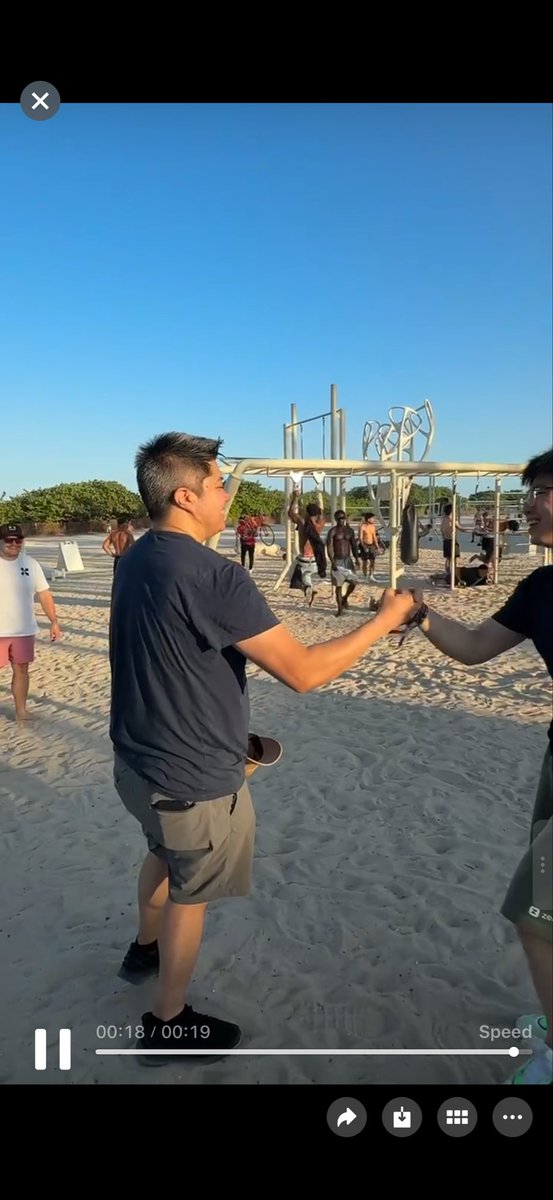
So surprising to run into @keoneHD at the Muscle Beach. He has already finished 20 mins’ squat and deadlift.
It’s impressive especially considering the packed conference agenda.
It’s essential to build projects onchain but also building body offchain, consistently.
Salute to founders with this commitment and long @monad
Could add prediction features based on social networks, too—like whether a friend will show up or be late for an event.
Or even without socials, purely predicting when an event will hit WL, close, or reach total registration numbers.
think @LumaHQ adding social features would go crazy and the use case is obvious:
- follow requests (you approve who sees you)
- friends + mutuals first on the attendee list
- suggested events based on who you follow
- friends feed on 'discover' showing what they're attending
With OpenClaw’s scale and the rise of AI agents, the entry point for attention is converging.
GitHub Stars are becoming a low-friction public signal for auditing a builder’s execution and credibility.
As @justinweb33 pointed out: 5,000+ early users are already using AttentionVC.’s leaderboard to surface high-quality builders.
Both humans and agents minimize decision energy.
Just as stablecoins became the default for payments, agents will gravitate toward the most standardized verification signals.
Past: discovery on X, verification on GitHub.
Future: both converge into high-efficiency signal compressors like @attentionvc
This isn’t just a tool —
It’s a new paradigm for how attention is tracked, verified, and redistributed.
For both human VCs and Agent VCs.
Some great arguments fetched from a private dinner in Palo Alto:
1. In U.S, transmitting $1B in US costs $25, and $100B still costs $25; so crypto rails better think about other compelling use cases for institutions.
2. If we simplify the market, there will be capital and labor. While AI accelerates the labor, blockchain accelerates the capital; and we shall see the less friction crypto rail become the organic agent choices
Leverage from money/power/connections is leverage in a sense— it gets you the ticket to the room, sometimes with extra buffs at the door.
But when it’s time to actually solve problems and ship real results, that leverage doesn’t always carry over.
Especially now, with AI advancing at warp speed, [Results as a Service] is becoming the ultimate benchmark and new paradigm.
People are going to get brutally honest.
Results & delivery will be the only credential that still matters.
权钱托举一定程度也算是上了杠杆,拿到敲门砖时有加持;
但真正要解决问题、拿出结果时,这些杠杆未必能发挥作用。
尤其在AI能力突飞猛进的年代,[Result as Service is becoming the ultimate benchmark and new paradigm]
大家会越来越真实,结果和交付将被视为唯一标准。