Raising awareness on those unjustly imprisoned for defending & promoting fundamental freedoms & equality for all - African Prisoners of Conscience. #AfricanPOC
This is a handle dedicated to giving solidarity to Prisoners of Conscience (PoC). A PoC is a person who has been put in prison for holding political or religious views that are not tolerated in the state in which they live.
#FreePoCs#StopWeaponisingTheLegalSystem#ReleaseAllPoCs
CAN A LAWYER APPOINTED AS AN ACTING JUDGE CONTINUE TO ACT AS DEFENCE COUNSEL?
Good question asked by @Space2013M below in the context of the appointment of Adv Ngcukaitobi as an Acting judge of the Constitutional Court in #southAfrica. The question is important and needs a serious reply rather than an easy yes or no answer.
The appointment of distinguished legal practitioners as acting judges of superior courts is a longstanding feature of many Commonwealth legal systems and, in itself, does not undermine judicial independence. Indeed, such appointments often enrich the judiciary by bringing specialist expertise, practical experience, and additional judicial capacity.
The more pertinent question is the one you ask, that is, whether an acting judge may continue to practise as a lawyer while exercising judicial authority. While legal systems differ in their approach, international standards on judicial conduct emphasise that judges must not only be independent and impartial but must also be seen to be so. Public confidence in the administration of justice depends as much on perceptions of independence as on its actual existence.
Where a practising advocate or attorney serves as an acting judge, careful safeguards are therefore required. These ordinarily include suspension of active legal practice during the period of judicial service, avoidance of matters involving former clients or professional associates, disclosure of potential conflicts of interest, and recusal where appropriate. Such measures protect both the individual judicial officer and the institution of the judiciary.
The central concern is not the appointment itself, but the possibility that overlapping professional and judicial roles may create actual or perceived conflicts of interest. Even in the absence of impropriety, circumstances that give rise to reasonable apprehension of bias may diminish public confidence in the courts.
The principles reflected in the UN Basic Principles on the Independence of the Judiciary and the Bangalore Principles of Judicial Conduct therefore suggest that acting judicial appointments should be accompanied by clear ethical safeguards that preserve impartiality, integrity, and public trust. Properly managed, acting appointments can strengthen the administration of justice; insufficiently regulated, they may raise legitimate questions regarding the appearance of judicial independence.
Ultimately, the test is whether a fair-minded and informed observer would remain confident that the acting judge exercises judicial power free from professional, financial, or external influences. The preservation of that confidence is indispensable to the legitimacy of the judiciary.
Good question you ask.
Congratulations my brother @hakimorara for this deserved appointment. @AmnestyKenya are in a safe pair of hands!
All the best as you carry out this important mandate.
Former South African president Thabo Mbeki has condemned rising anti-migrant sentiment and warned against blaming African migrants for South Africa’s economic and social problems.
Speaking during a public discussion on migration and African integration, Mbeki said many South Africans fail to understand that the continent collectively supported South Africa’s liberation struggle during apartheid. He argued that African countries came to regard the anti-apartheid struggle as an African struggle, not merely a South African one.
Mbeki said this historical connection explains why many Africans continue to move to South Africa and feel a sense of belonging to the country. He warned that unemployment and other economic challenges would not be solved through hostility towards foreign nationals.
The former president also expressed concern over what he described as a decline in the spirit of African solidarity and integration that characterised the post-apartheid era.
“There is a regression that is taking place,” Mbeki said. “That sense of African integration that we had 25 years ago, I think has receded.”
Contributing to Integration of Africa's Legal profession on Shared Values
Very glad to see the growth of the program I coordinate on behalf of the Africa Judges and Jurists Forum achieving notable impact and recognition by key stakeholders in the development of the skills and capacity of young legal professionals in Africa courtesy of support from #NorecExchangeProgram. This program has made it possible for me to meet and interact with outstanding young legal professionals from Africa between the ages of 18 and 35 years with the core approach of learning through exchanges as well as intergenerational mentorship and learning. We are in year number 3 with 2 more years to go.
The Justice Sector Exchange is a pan-African initiative led by premier law-based organisations to advance climate justice, food security and sustainable justice through legal empowerment and rights-based approaches. The Consortium of partners are the @ICJKenya, the @LRFZimbabwe and the @FHRI2 (Uganda). By equipping young lawyers, reforming legal frameworks, and fostering cross-border collaboration, it strengthens inclusive climate adaptation and builds powerful regional and international networks for strategic advocacy.
In this video footage below, #BathandwaHlanjwa, one of the lucky young lawyers from #SouthAfrica to be given a chance to spend a year of exchange and learning in #Uganda, is seen graduating with his Law Degree from the @forthare_Uni (South Africa) that itself has an illustrious history of providing learning opportunities to many leaders who shaped African politics and liberation ideology.
Through this project and the opportunity that AJJF gives me and young legal professionals, I am able to contribute to the aspirations of the African people and African Union and sub-regional economic communities, of intentional integration of African people around shared values
.
#climatejustice
#foodjustice
#foodsecurity
#Ruleoflaw
#justicexchange
#africaintegration
#AUsharedvalues
Long live Zimbabwe! #Zimbabwe@46
Our liberation struggle in Zimbabwe was fought to address structural injustices under colonial rule. The three core reasons that were accepted by all Zimbabweans and made our liberation heroes and heroines take all the sacrifices including facing death were as follows;
1. Land dispossession and economic exclusion of the majority mainly blacks by the minority mainly whites associated with the colonial process.
Loss of land ownership for indigenous people translated to a number of conditions such loss of livelihoods and food security; forced labor migration to settler farms, mines and industries; and structural poverty and economic marginalisation. Consequently land became the central grievance, symbolising both economic injustice and loss of dignity.
2. Political exclusion and denial of majority rule:
Africans were systematically excluded from political participation and governance. The settler regime maintained power through racially discriminatory laws and constitutions that denied the African majority the right to vote or hold meaningful political office.
The compelling liberation war mantra became one man, one vote.
3. Racial discrimination and social injustice
Colonial Zimbabwe operated under a system of institutionalised racial inequality affecting every sphere of life including segregated education, health, and housing systems; job reservation policies favoring whites; differential wages and working conditions; and restrictions on movement and urban residence for Africans
With this pervasive discrimination that reinforced a hierarchy that denied Africans basic human rights and dignity, resistance became imperative and a natural byproduct.
The majority of old enough young black Africans joined the struggle and fought for liberation. A few did not join the struggle and as a random example prominent among these included former Chief Justice Chidyausiku, former government Minister Patrick Chinamasa, prominent businessman Phillip Chiyangwa. Not sure what circumstances prevented them but am sure they have valid reasons. In any case not everyone could go outside the country as many were needed inside Zimbabwe to provide logistical support to the struggle. Everyone’s contribution mattered.
In our family, our eldest brother Charles Tsunga (Chimedza) made us proud joining the struggle. He later represented Zimbabwe in Mozambique and Somalia interventions.
He was so insistent on respect for human rights and protecting the gains of independence underpinned by defending the 3 core reasons for the struggle stated above that must be seen as sacrosanct and foundational in our constitution. We continue doing so unabated.
Long live Zimbabwe! Long live constitutionalism!
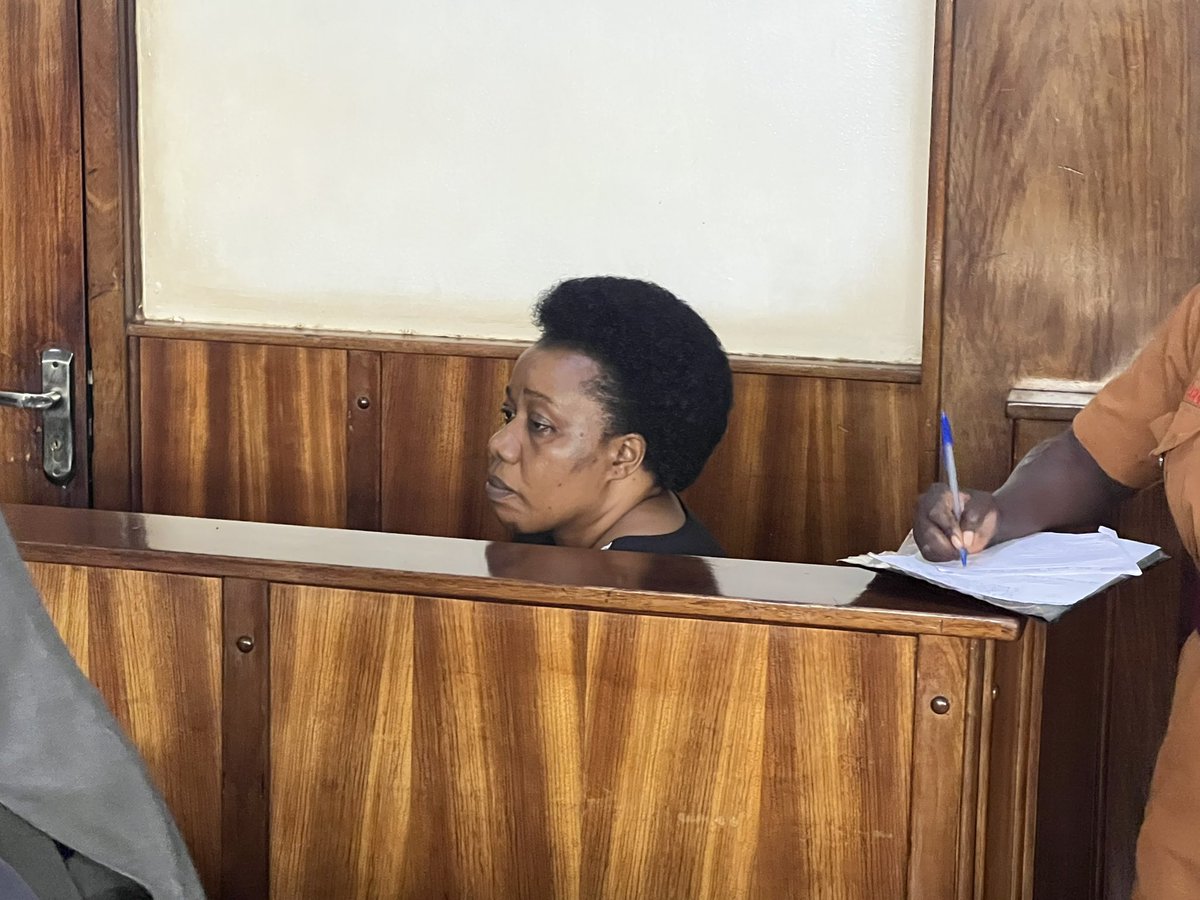
📌Our Executive Director, Dr. @SarahBireete has been granted bail.
-Sureties: Shs. 10M non-cash
-Accused: Shs. 1M Cash
-Passport to be deposited.
#FreeSarahBireete
Political prisoners at Luzira upper prison, remanded by the court martial in 2021 on allegations of murder, aggravated robbery and Treachery.
#FreeAllPoliticalPrisonersUg
And Bobi Young who was detained in 2024.
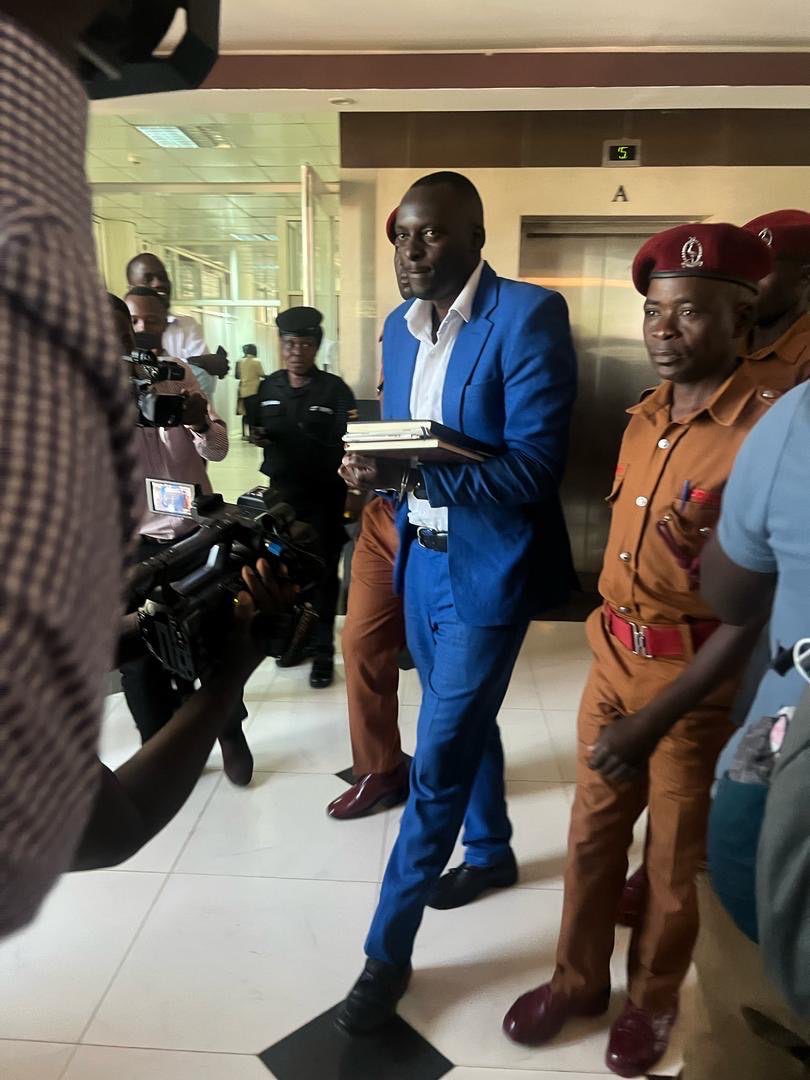
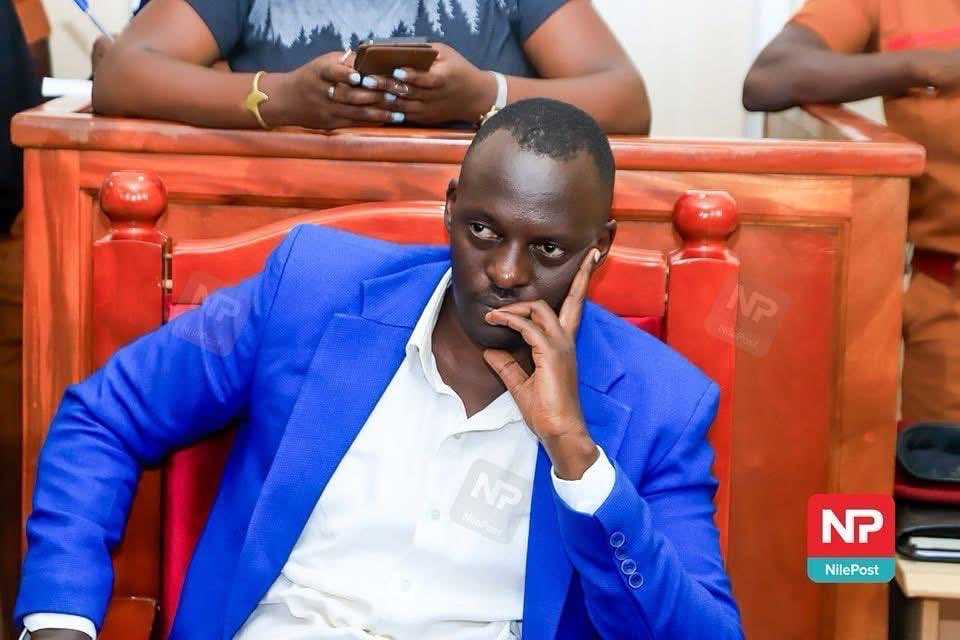
Repression is costly. The number of lawyers, judges, police, soldiers, prison officials employed as #Uganda tried to keep a lawyer @kiizaeron in jail simply because he represented a disliked individual in Dr Kiiza Besigye.
Power corrupts, absolute power corrupts absolutely
A piece of good news from #Uganda is that @kiizaeron a distinguished Advocate of the High Court was granted bail 4/4/2025.
He was unlawfully imprisoned by a Court Martial merely for trying to represent his client
Lawyers must never be associated with their client’s causes
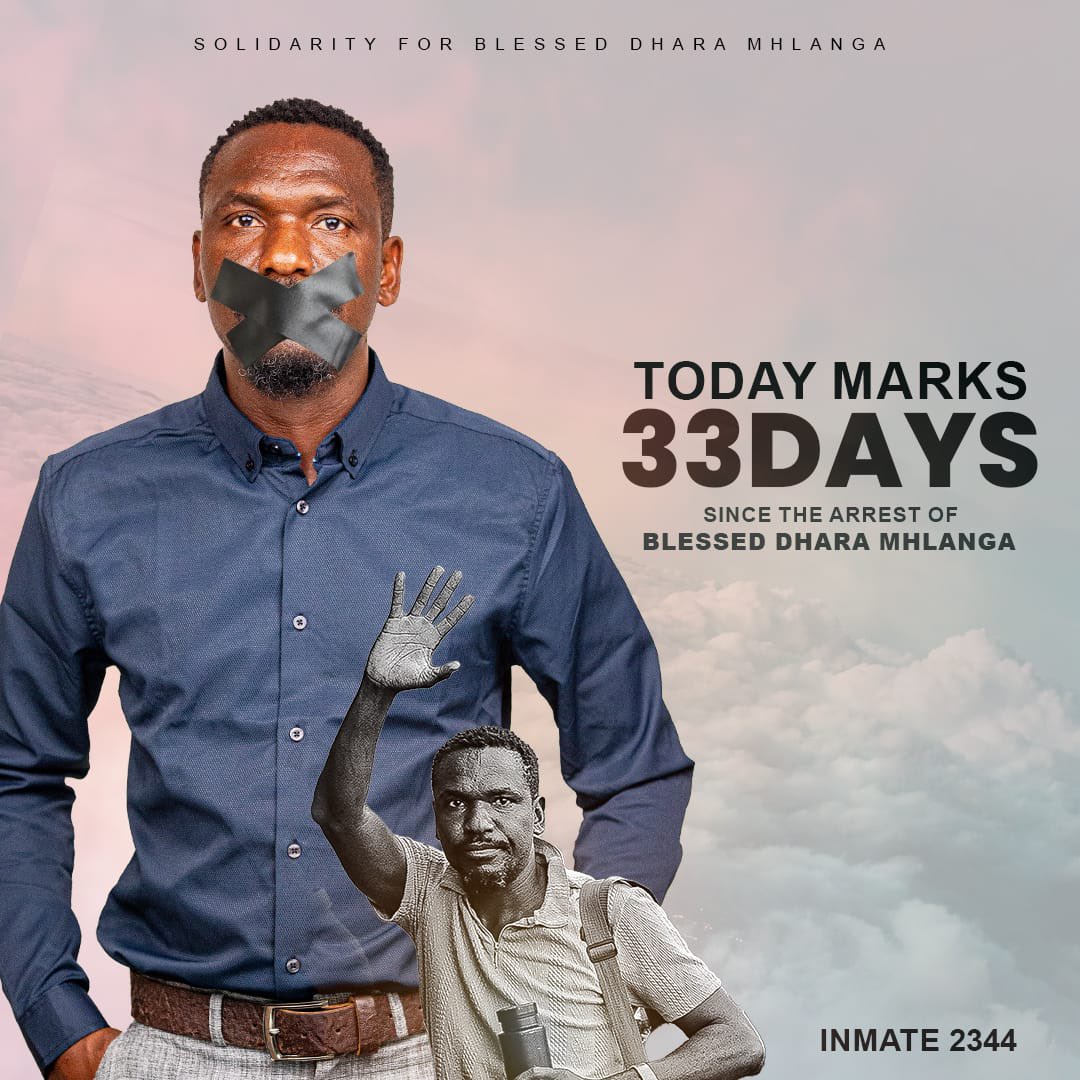
There isn’t a moment that passes without me thinking of Dhara @bbmhlanga and the welfare of his family. Blessed has been denied his freedom for over 33 days for doing his work as a journalist. Blessed is in prison because our judiciary has been absolutely captured by the regime. There is no justice in Zimbabwe. Amos Chibaya and the Budiriro 8 are also victims of this captured judiciary. None of us is safe from this lawfare. Today it is Blessed, Amos Chibaya and the Budiriro 8. Tomorrow it will be you or your relative. #FreeBlessedMhlanga #PressFreedom #JournalismIsNotACrime
It is trite that a lawyer should never ever be associated with the causes of his client.
Why are #Ugandan authorities wasting public resources needlessly keeping @kiizaeron in jail merely for representing his clients in a Court Martial.
#FreeEronKiiza
Desperate public plea by the wife of a detained political prisoner in #Uganda. Military Tribunals have no business trying civilians. There are proper courts of law! Violation of right to fair trial article 7 of ACHPR and art 26 imposing obligations to establish independent courts
A PFF delegation has just returned from Luzira maximum prison, new orders have been given!
Dr @kizzabesigye1 has been given two choices, to either eat prison food or starve. All the food items we carried for him were rejected, we were told that Posho, milk, millet flour, honey, cooking oil, rice, blue band etc are sold at the prison canteen. Dr said he won't eat their canteen food, he doesn't trust it, he remarked and said probably he will starve to death and die before the date set by Muhoozi.
Denying him food from his trusted relatives and comrades isn't the only right they have denied him, we now don't physically meet him when we visit, we talk to him on a prison phone booth🤔
As if that is not enough, Dr @Kizza Besigye isn't allowed to interact with other prisoners, he isn't even allowed to attend prayers, he is in a prison within a prison.
I am now convinced beyond reasonable doubt that Museveni is determined to kill Dr Besigye just like his son told us last night.
Doreen Nyanjura writes