🌬️ Breathing shouldn't be a luxury. 😷
Highlighting the silent crisis of air pollution, from industrial smog to vehicle exhaust. 🏭🚗
Fighting for blue skies🌲
https://t.co/U9jIB33PJS
Thank you Rahul Gandhi for the effort to save pristine rainforests of Nicobar from being swallowed by Adani .Be the voice of the voiceless mother nature. Shame on the mainstream media for hiding these facts @INCIndia
AC auto rickshaws aren't the solution to the heat. They are only a symptom of the problem. We cut trees, create urban heat islands, then sell air conditioning as progress.
Plant trees. Shade streets. Fix the city.
Govts compete over billions of saplings planted, but India’s heat crisis is worsening as natural forests/mangroves/wetlands & urban green spaces disappear. Real climate resilience lies in protecting ecosystems that already exist, not replacing them with themed parks/plantations.
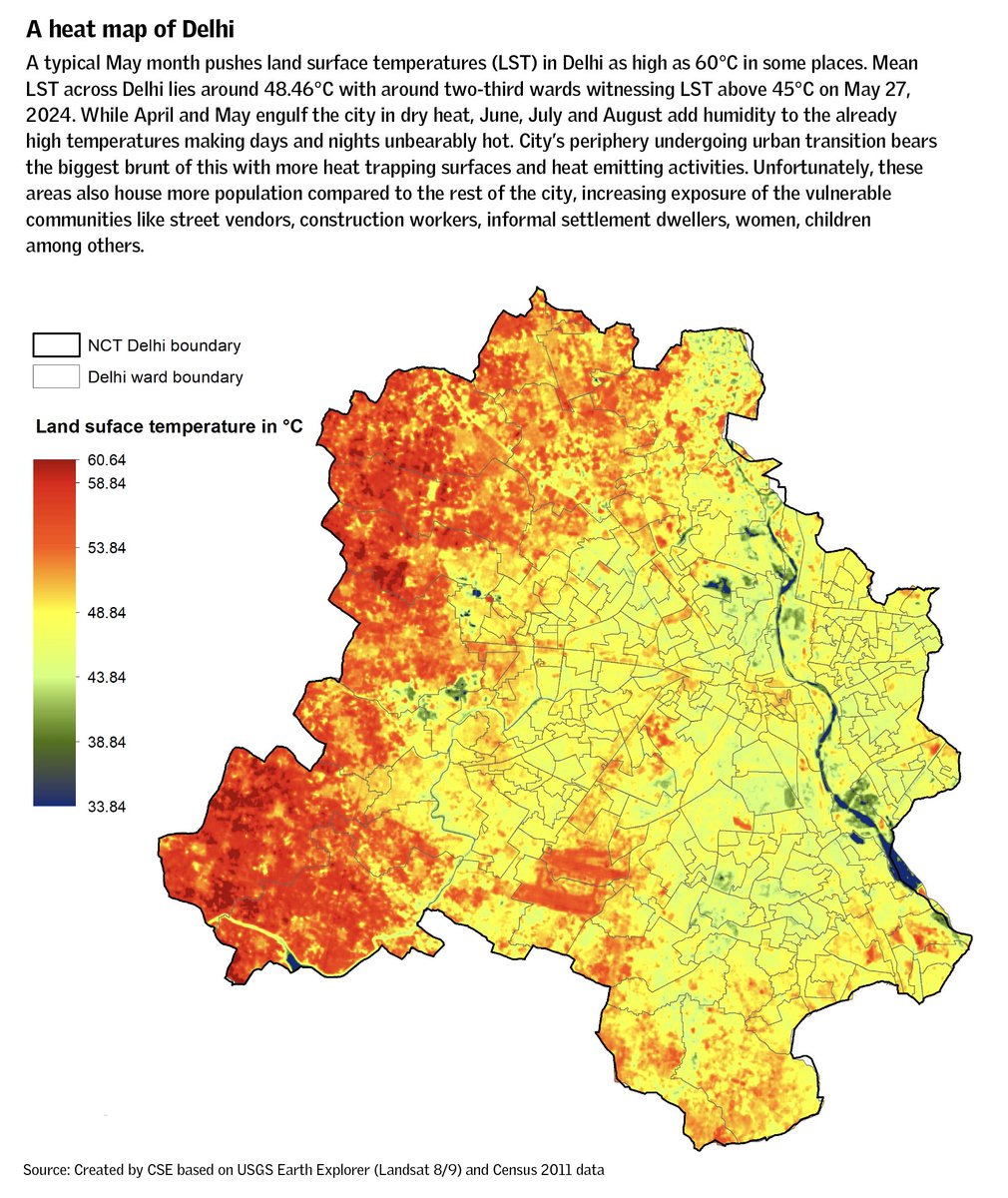
Delhi's heat is not felt equally. This heat map shows land surface temperatures across the city, with some areas touching 60°C during peak summer conditions.
Geospatial analysis finds that 76 per cent of Delhi's area is persistently heat-stressed, worsened by rapid urbanisation, heat-trapping surfaces and heat emitting activities.
The burden falls disproportionately on those who work and live outdoors or in poorly cooled environments, including construction workers, street vendors, sanitation workers and residents of informal settlements.
We are releasing our new report, "Making Delhi Heat-Resilient: A roadmap with the focus on vulnerable groups" on June 2nd. If you would like to join the release, register here: https://t.co/27xLehegLe
Noise pollution isn’t only built through traffic or construction. A large part of it comes from everyday behaviours we’ve stopped noticing, unnecessary honking, loud notifications, high-volume TVs, speakers, and constant background sound.
https://t.co/0mdPMhThui
#QuietIndia
Another massive garbage fire today at an open dumping site near
27/5/2026 2Pm
28.61527° N, 77.48956° E.
Someone “managing” this area appears to believe that setting large open dumps of waste on fire is an acceptable way to get rid of it.
The result: severe air pollution -toxic smoke filled with carcinogens from burning plastic and mixed waste, directly endangering public health. #AirPollution #HealthHazard
@CAQM_Official@CPCB_OFFICIAL
What are citizens supposed to do when this keeps happening repeatedly?
Civil society volunteers are losing sleep and giving their personal time every single day to report these horrific pollution episodes. One such relentless volunteer is @VikalRajeev - keeping vigil, recording live footage, alerting police, pressing authorities into action to curb the smoke and hoping an official enquiry is finally initiated.
We fervently request CAQM to review the repeated waste-burning complaints emerging from Noida, Greater Noida and Dadri, and help fix accountability at the officer level.
We have repeatedly conveyed to the Commission for Air Quality Management that civil society members are willing to sit with district authorities and share ground realities. Someone within the administration needs to take charge and urgently combat rampant waste burning.
Temperatures are already peaking, yet large-scale waste burning continues despite GRAP Stage I measures being in force.
@diprodadri@DadriPolice@noidapolice@dmgbnagar@OfficialGNIDA@moefcc@PrinSciAdvGoI@WestGreno@GrenoNoida@parichowkdotcom@TOINoida@NavbharatTimes
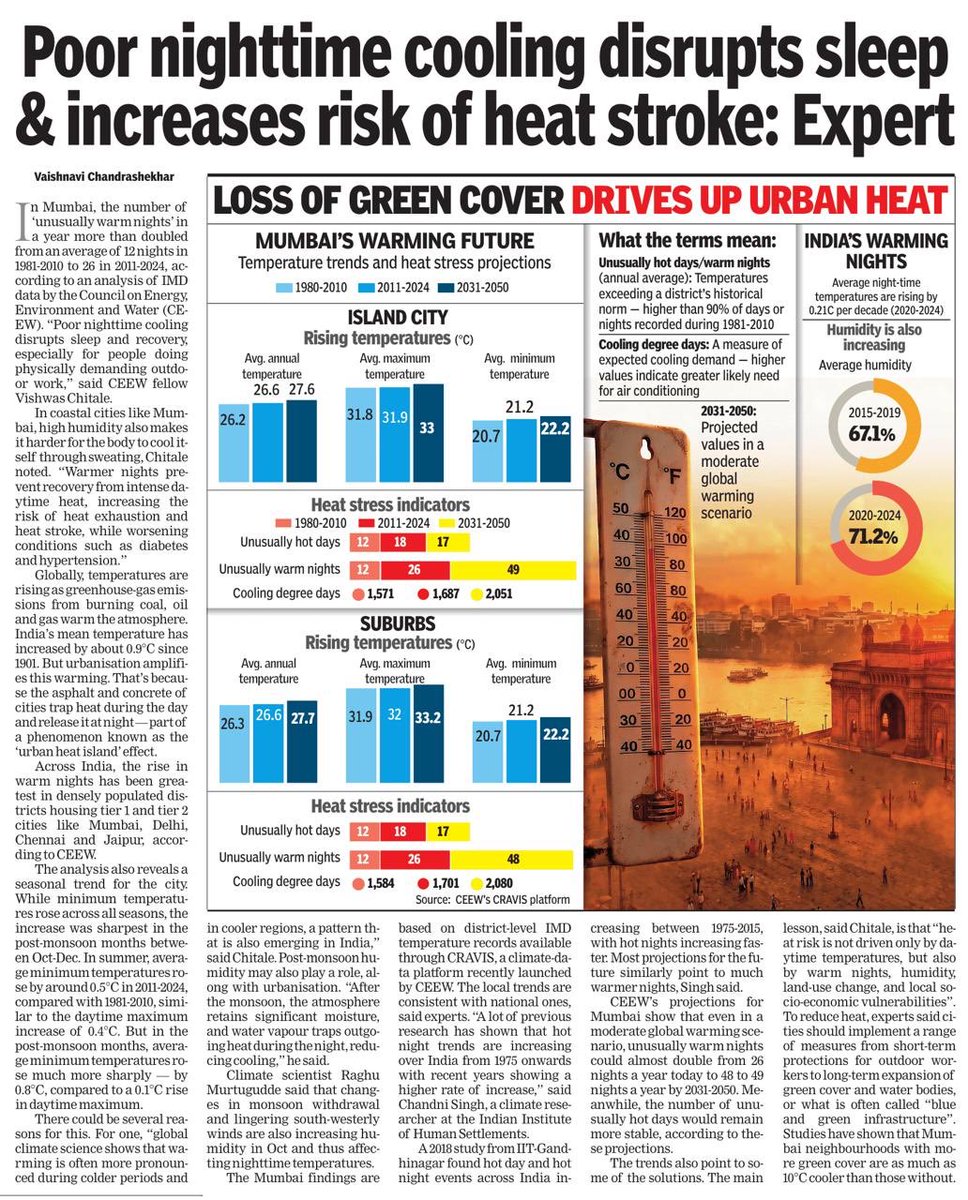
Cities that cut trees for concrete shouldn’t be surprised when nights stop cooling down. Heatwaves are no longer just daytime disasters, they’re becoming 24/7 public health emergencies, especially for the poor/outdoor workers.
Urban planning is climate policy now!!!
@PMOIndia
Sharing this with concern.
It’s a long note…
Manavi, my daughter, is again unwell today -mild chest congestion, difficulty clearing phlegm and vomiting. Doctor has now advised starting nebulisation again.
What worries me is that there seems to be no respite fm pollution even in peak summer. Even conditions that shld normally help dispersion r not translating into relief at ground level in our area. For those of us living in this rapidly urbanising part of Gurugram, the air remains polluted across seasons -winter or summer.
In fact, last winter we had to temporarily move out of Gurugram because after prolonged years of exposure to bad air, her ability to cope has genuinely diminished. She is 24 now and we have been living in Gurgaon since 2008.
She was much better whn we were away earlier this yr. Since returning in Feb, I hv genuinely felt a decline again in her stamina & overall health.
What is also important to say is this: many gated communities with substantial tree cover are often perceived as “green” and relatively protected. But sadly that greenery creates a false sense of protection fm air pollution.
Within and around this residential area- sec 50 -several hundred ongoing redevelopment and builder floor projects, large surrounding commercial developments and fractured infra issues, besides all of this -we hv our own “malba hill” on our boundary.
One drive around the complex &you can visibly see fine dust settling over vehicles,balconies & even inside homes. Residents witness open malba movement, construction dust,
broken roads, sariya &stone cutting & exposed soil daily mostly without even basic dust mitigation norms being followed
What is painful is that this is not new
I had written to CAQM as far back as 2023 asking who exactly was responsible for implementing and monitoring construction dust mitigation norms within these residential urbanising sectors , as well as highlighting the need for a policy review of low-body tractors used for movement of soil, sand &debris. To their credit, CAQM did respond and forwarded directions to MCG for monitoring and action.
But on ground, not one communication from MCG was ever received by me, and more importantly, little visibly changed.
Over the years one has developed a ground-level understanding of these violations -what causes them, how pollution travels thr these sectors and what mitigation measures could reduce exposure if sincerely implemented, inc the waste burning issue across residential sectors.
And then there is the monitoring data.
Last night the Sector 51 CPCB monitor showed AQI worsening from 204 at midnight to 228 at 2 AM. PM2.5 peaked at 376 -severe category.
At the same time:
Vikas Sadan AQI: 97(Satisfactory)
Teri Gram AQI: 99(Satisfactory)
Gwal Pahari: no data
See the contrast …residential versus other areas
As citizens collective @CleanAirBharat, we hv been consistently documenting &highlighting these issues over several years
Beyond the monitors, the real indicator is what your own body feels -the heaviness in the air, visible dust/smoke, throat irritation, cough and recurring congestion in children and elderly.
We had again escalated these issues to CAQM in February and April this yr with evidence &details of local dust sources. Yet even in peak summer of 2026, these pollution levels continue.
As a citizen, as a parent, as a member of Clean Air Bharat, and as someone who has been voluntarily working on these issues since 2013, I sincerely appeal to the concerned authorities to please see the lives behind these numbers and the complaints.
At some point,we residents are left simply documenting lived experiences because the truth must be recorded and inaction documented too.
Just wanted to ask others as well -how are your children or elderly family members coping with the air right now in #Gurugram? Sharing this with some concern
@CAQM_Official@MunCorpGurugram@OfficialGMDA@DC_Gurugram@moefcc@HspcbN@CPCB_OFFICIAL@ulbharyana
Destruction of mangroves at Chena Village, Ghodbunder by politically connected individuals. Action against Encroachment was ordered in Sept 2025, yet no action till date by Mira Bhayandar Commissioner. Forest officials confirmed Mangroves existed till 2018..
Why @CMOMaharashtra?