Top-notch websites that will make your kids smart enough.
https://t.co/thZfsbf7nc
https://t.co/SjuiOqzTaG
https://t.co/L30IUQeRTU
https://t.co/Bcep42Qikx
https://t.co/D8ov3kgJqP
https://t.co/wFJeRSg81L
https://t.co/yEGzaOlJMm
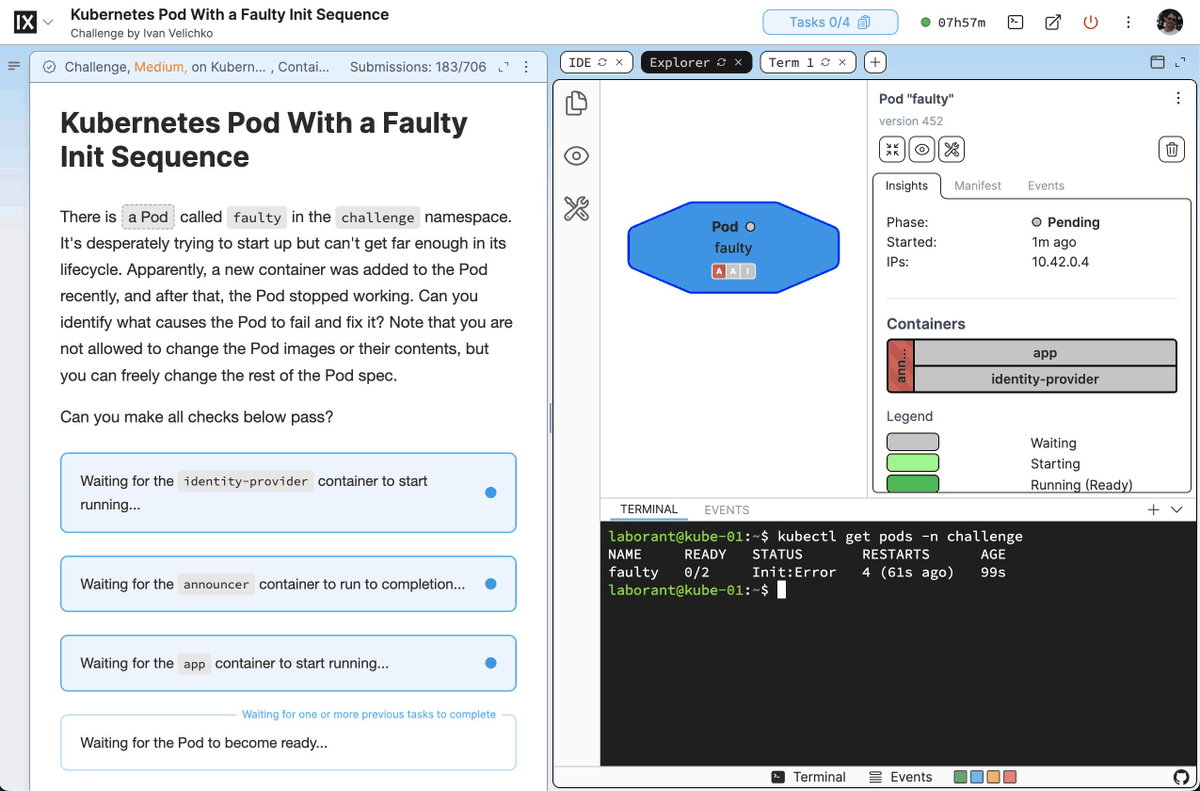
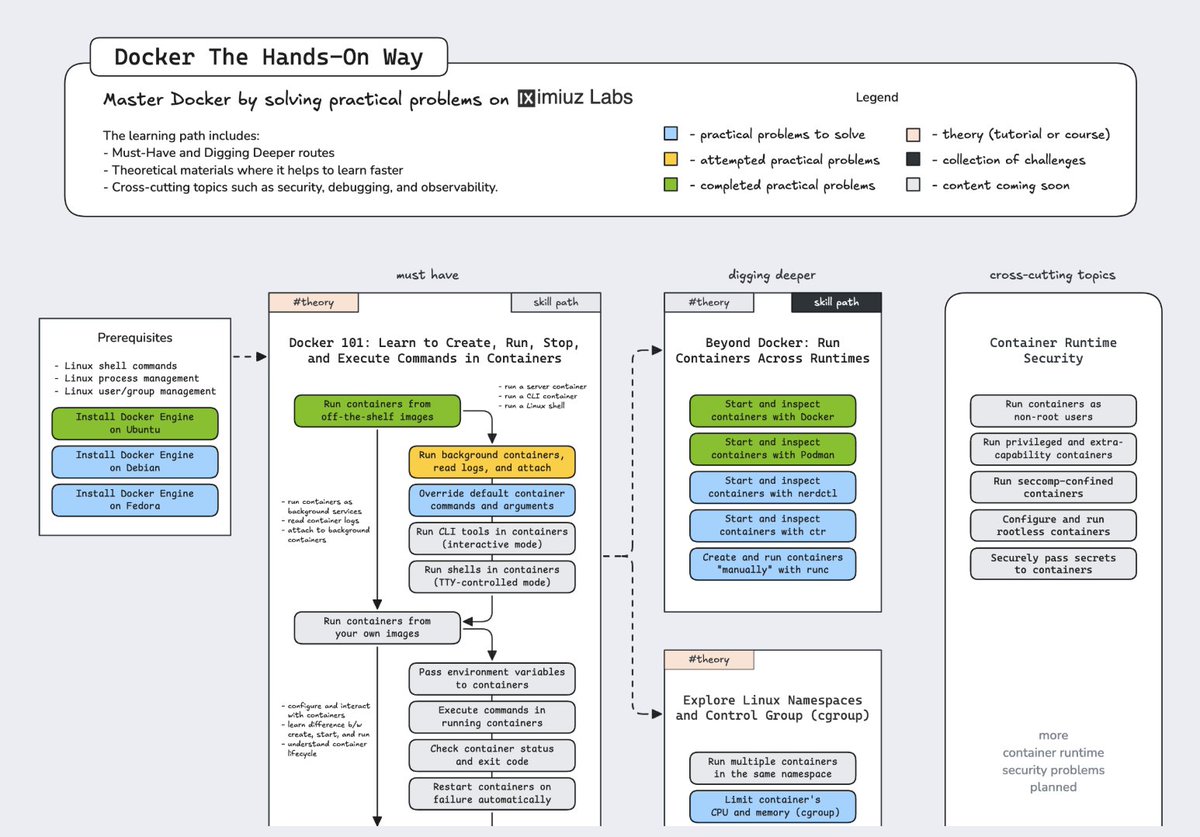
Learn Linux, networking, containers, and Kubernetes by solving hands-on problems 🛠️
A curated collection of over 100 carefully crafted challenges - with interactive checks, clear diagrams, and helpful theoretical references.
Like LeetCode but for DevOps https://t.co/Gm79xSZbfP
My Advice to Those Who Are About to Start Their PhD Program.
Starting a PhD is an exciting milestone, but it can also feel overwhelming. After navigating the highs and lows of research, let me share some practical advice to help you start this journey on the right foot.
A PhD is not just about being smart; it is about staying organized, staying healthy, and staying connected.
1. Treat it Like a 9-to-5 Job
One of the biggest mistakes new students make is waiting for "inspiration" to strike. Do not treat your PhD like a hobby. Instead, treat it like a professional job. Set a schedule and stick to it. If you show up at your desk every morning and put in the hours, you will make steady progress.
Consistency is much more important than occasional bursts of genius.
2. Focus on Your Relationship with Your Supervisor.
Your supervisor is the most important person in your academic life. Build a relationship based on clear communication. Do not hide from them if your experiments fail or if you are feeling stuck. It is better to share your struggles early so they can help you find a solution. Send regular updates and be open to their feedback, even when it is hard to hear.
3. Master Your Technical Tools Early.
Learning technical skills, such as using specialized software or programming languages are a must for you. Do not wait until you are halfway through your program to learn how to manage your data or use a reference manager. Take the time in your first few months to learn the tools of your trade. It will save you hundreds of hours of frustration later on.
4. Keep a Detailed Lab Notebook.
Whether you work in a lab or a library, document everything. Write down why you made certain decisions and how you performed specific tasks. Your "future self" will thank you when it comes time to write your thesis and you can’t remember what you did two years ago.
5. Protect Your Mental Health.
A PhD is a marathon, not a sprint. It is very easy to burn out if you do not take breaks. Make sure you have a life outside of your research. Spend time with friends, exercise, and get enough sleep. If you feel like you are struggling, reach out for support. Always remember: you are a human being, first and a researcher, second.
6. Network and Collaborate
Don’t stay isolated in your office. Talk to other students and attend seminars. Often, the best ideas come from casual conversations over coffee. Building a network will not only help your research but will also open doors for your career after graduation.
Finally, stay curious and be patient with yourself. There will be tough days, but if you stay organized and keep moving forward, you will succeed. Good luck!
My best wishes for you on this journey.
Data Nerds! I just launched a free course on "SQL for Data Engineering!"
This is the course I wish I had when I stopped asking “how do I query this?” and started asking “how do I build this?” 🏗
This YouTube video has over 14 hours of content and walks through building a real data warehouse and production-ready SQL pipeline from scratch.
We go far beyond SELECT statements:
1️⃣ Production SQL — DDL, DML, CTEs, subqueries, window functions, and advanced query patterns
2️⃣ Data Modeling — Designing star schemas and analytics-ready warehouse tables
3️⃣ Data Warehousing — Structuring fact and dimension tables properly
4️⃣ End-to-End Pipelines — Transforming raw data into clean, production-ready outputs
5️⃣ Engineering Workflow — Using Terminal, DuckDB, VS Code, and Git
And because the best way to learn is to build, we complete two real projects:
📊 Project #1 — Exploratory Data Analysis on a live warehouse dataset
🏗 Project #2 — Build a full SQL-based data pipeline
Huge thank you to the team that made this possible:
Kelly Adams - Course Producer
Rikki Singh - Content Developer
Brannon Linder - Video Editor
P.S. If you’re wondering how this compares to my SQL for Data Analytics course:
That course focuses on querying data to answer business questions.
This one focuses on modeling data, designing warehouse schemas, writing production-grade SQL, and building end-to-end pipelines using the Terminal and Git.
🧑💻 Analytics is about extracting insights.
🧑🔧 Engineering is about building the systems that make those insights possible.
Neither course is a prerequisite, but they prepare you for different roles.
You can build a strong DevOps and Cloud career with nothing but a laptop and internet.
No more excuses.
60K+ read my DevOps and Cloud newsletter: https://t.co/V3efGRUAgE
What do we cover:
DevOps, Cloud, Kubernetes, IaC, GitOps, MLOps
🔁 Consider a Repost if this is helpful
Linux Resources 👇🏽
Introduction to Linux : https://t.co/F07NKc5EFr
Linux Command line: https://t.co/pZoDhs1qnF
Managing Users and Groups : https://t.co/pZoDhs1qnF
Retweets, ❤️ and bookmark for future.
I watched a guy on the bus today. 6:45 AM in the morning while jogging, His eyes looked heavy, like he was carrying the weight of an entire lineage on his shoulders. But immediately he sat down, he brought out his phone and started scrolling TikTok.
As a Biomedical Engineer, I wanted to snatch that phone from his hand.
See, let me tell you the bitter truth nobody wants to hear.
Most of you are not lazy or "unlucky." You are chemically sabotaging your own destiny before you even brush your teeth.
The first 60 minutes of your day is a war zone. Your brain is begging for direction. It runs on dopamine, that’s the fuel for your motivation. But what do you do?
You wake up. Your eyes haven't even adjusted to the darkness of your room, and gbam, you pick up your phone.
You check WhatsApp to see who ignored you. You check X to see who is fighting. You check Instagram to see your mates buying cars you can't afford yet.
You think you are just "waking up," but scientifically? You are flooding your brain with cheap, unearned dopamine. You are frying your reward system. By 8 AM, your brain is already tired. It has consumed "content" but produced nothing.
And let me speak to the men for a second.
I write about men a lot because I see what you go through. The pressure is much. You wake up and the first thought is Rent, School fees, the woman you want to impress.
It is terrifying.
So, you grab your phone to escape. The phone is your pacifier. It numbs the panic of the morning. But that comfort is a lie.
When you start your day with cheap dopamine, actual work feels like torture. You have programmed your neurochemistry to be a consumer, not a king.
You are training your brain to be weak in a world that eats weak men for breakfast.
Here is the hard truth (and you can drag me if you like):
Your morning mood doesn’t determine how your day goes. It determines your capacity to suffer for your success.
If you can’t survive the first hour of the day without a screen, how do you want to survive the economy?
Protect your first hour.
Don't touch that phone.
Stare at the ceiling. Pray. Do pushups. Go for a morning jug or walk.
Let your brain starve for a bit so it learns to hunt for the hard things.
Stop feeding your destiny to the algorithm.
SQL - Zero to Hero (Free Course in 50 Days)
Day 1 - https://t.co/HMNwi02u2E
Day 2 - https://t.co/6vm4nw9apa
Day 3 - https://t.co/rqEmrbgT1k
Day 4 - https://t.co/Vat98FjKLw
Day 5 - https://t.co/HlHVkdiUq5
Day 6 - https://t.co/CdV7xjQp7T
Day 7 - https://t.co/GntGCkhABI
Day 8 - https://t.co/QLrUDEbFaD
Day 9 - https://t.co/AbMNdkWqT2
Day 10 - https://t.co/SkuFQ3c980
Day 11 - https://t.co/afBvlcLcwi
Day 12 - https://t.co/t6p4KoY9Vx
Day 13 - https://t.co/z8WiHVlTtd
Day 14 - https://t.co/0w2UkOR7k1
Day 15 - https://t.co/zcNcoW6w0Y
Day 16 - https://t.co/zIYJuhLVvi
Day 17 - https://t.co/HXIVRLBNp6
Day 18 - https://t.co/IeSngyh1VN
Day 19 - https://t.co/4JeMtgmfoF
Day 20 - https://t.co/cgxlKGZJ4l
Day 21 - https://t.co/3uJARIkxlE
Day 22 - https://t.co/QTgG1q9oWY
Day 23 - https://t.co/cJ89tVwGoG
Day 24 - https://t.co/zhbwZ5cr1n
Day 25 - https://t.co/ioDTa9uKFY
Day 26 - https://t.co/wbGm2ToMcG
Day 27 - https://t.co/agSjxyfoPe
Day 28 - https://t.co/F7XTT9sQyx
Day 29 - https://t.co/AjGweQrQtM
Day 30 - https://t.co/6cxDQLBVxo
Day 31 - https://t.co/vdST3lhyAL
Day 32 - https://t.co/CSUFpL1u1y
Day 33 - https://t.co/vEW6SZYdIl
Day 34 - https://t.co/OXvsLERFYb
Day 35 - https://t.co/MPu8jzznzO
Day 36 - https://t.co/2OI6FDmd52
Day 37 - https://t.co/4ETC2SkJzv
Day 38 - https://t.co/fC3CmDJYu0
Day 39 - https://t.co/SvtGdKc2kz
Day 40 - https://t.co/MlNGVBbd5l
Day 41 - https://t.co/7Qd6YVRkMV
Day 42 - https://t.co/d5qmZYhSGp
Day 43 - https://t.co/vQ8ghsPtZq
Day 44 - https://t.co/XVSqDOzxfd
Day 45 - https://t.co/gNqQ9Ssa2M
Day 46 - https://t.co/J2cnl8XHgo
Day 47 - https://t.co/H2nItS5v3L
Day 48 - https://t.co/GaFxixkgll
Day 49 - https://t.co/YNHftvp375
Day 50 - https://t.co/gAWYvBnICy
If you do this you will be in top 1% people who know SQL.
you can clear interview in top product based companies.
Do like & reshare this so that this can help all the people in need.
#sql #database
stop wasting months learning sql
i learnt it thrice because of the wrong learning approach
you just need to master the 12 highly important sql topics
i know it's the toughest tool to learn & it'll haunt you till the end
these topics have high chances of coming in interviews
and you’ll definitely use them every single day in a real job
just focus on these 12 topics:
→ join & their types:
inner, left, right, full, self, cross
if you can't connect tables, how will you work at your first job?
→ window functions:
row_number, rank, dense_rank, lead, lag
use these to compare rows & handle complex rankings
favorite topics for interviewers
→ case when:
the only way to build custom logic & bucket your data on the fly
also helpful to turn the columns into rows (this comes in interviews)
→ group by & aggregations:
if you can’t summarize data, how will you know what is happening
→ common table expressions (ctes):
stop writing unreadable subqueries
instead use ctes to make your code look professional
→ data cleaning:
coalesce, cast, trim, replace
real-world data is disgusting & full of nulls
learn how to fix it before you analyze it
→ date & time functions
business questions are always time-based
master these or your reports will be useless
→ union vs union all:
know when to stack data & when to avoid duplicates at all costs
most probably, this will come in interviews
→ filtering logic (where vs. having):
if you don’t know the difference
your results will always be wrong & you won't know why
→ subqueries:
know when they are necessary & when they are just killing your performance
→ types of sql language:
this comes under the theoretical part
but this might come in interviews
→ logic operators:
and, or, in, between
the bread & butter of every single query you will ever write
this might sound like a lot
but to be honest, if you take 90 days challenge, you can easily master them
stop trying to learn everything at once
master these & get at least eligible for interviews & projects
because these topics will always be going to be in your queries
i'm dropping an entire roadmap for sql
+ list of free resources & platforms to practice ⬇
MASTER DATA ANALYTICS
If you wan to learn Excel, SQL, Python, and Power BI for FREE, check these links:
1. Excel: 12 Days
a) Tutorials: https://t.co/WZ92SaS3sM
b) Projects: https://t.co/tXkGwPI0xn
2. Basic Statistics: 3 Days
a) Tutorials: https://t.co/DbxMCvo68L
3. Power BI: 20 Days
a) Tutorials: https://t.co/fOTguHT0jZ
b) Projects: https://t.co/F0Bf01b5w3
4. SQL: 20 Days
a) Tutorials: https://t.co/mvqughJCMd
b) Projects: https://t.co/QM4jnPJggh
5. Python: 20 Days
a) Tutorials: https://t.co/6lM6ML1VWl
b) Projects: https://t.co/XSw8042ALY
6. Projects Portfolio: 15 Days
a) Portfolio: https://t.co/IYLlqkOMjD
b) Projects: https://t.co/XnA3YW6fCs
Data Analytics and Science Resources
- KPMG Data Analytics: https://t.co/1pjGUVEP4Q
- BCG Data Science: https://t.co/DNnV0lzo9M
- TATA Data Visualization: https://t.co/NYh2OpFkkC
- Accenture Data Analytics: https://t.co/X46SupksQQ
- General Electric Data Analytics: https://t.co/ViOxHcUayD
- PwC Power BI: https://t.co/DO4XmcOExv
- Quantium Data Analytics: https://t.co/vRUrqdWX02
These sites are essential for Data Analysts
1. Mockaroo (https://t.co/ZXBzb025Dt) → generates realistic test data in seconds. I used to spend hours creating fake datasets to practice with. This thing spits out thousands of rows based on whatever parameters you need.
2. SQL Fiddle (https://t.co/oLcpTsDA5S) → test your queries before running them on actual data. Saved me from crashing our database more times than I care to admit.
3. Regex101 (https://t.co/0JIPP9qscM) → makes regular expressions actually make sense. That alone is worth it. I used to copy paste regex patterns and pray they worked.
4. Our World in Data (https://t.co/vu08Mf2n53) → clean, reliable datasets on basically everything. When your boss asks for "industry benchmarks" at 4pm, this is where you go.
5. Datawrapper (https://t.co/doYe0BINms) → creates charts that don't look like they're from 2003. Your stakeholders will think you hired a designer.
6. Mode Analytics (https://t.co/Lhe8yrwInK) → runs SQL, Python, and R in the same place. No more switching between five different tools to finish one analysis.
These tools don't make you a better analyst, they just stop you from wasting time on things that shouldn't take time in the first place.
Thanks to Goodness Nwadibie for sharing, I hope it helps beginners in DA.
A practical guide to writing without plagiarism (and without relying on Turnitin). A must-read for students and researchers.
Plagiarism often occurs for two reasons: students rush or do not yet know how to express their research ideas in their own words. The good news is that you can avoid high similarity with other people's work by improving your reading, note-taking, and writing skills. You do not need a similarity checker if you build good habits from the start.
1) Understand what counts as plagiarism
Plagiarism is not only copying and pasting. It also includes:
- Copying sentence structure and only changing a few words.
- Using another author’s idea without citing the source.
- Reusing your own work (past) without permission or citation (self-plagiarism).
- Paraphrasing too closely to the original text.
If the wording, order of ideas, or unique expression is too close to the source, it can still be plagiarism.
2) Read first, then write from memory
- A strong method is “read, close, write.”
- Read a section you want to use.
- Close the document or look away.
- Write the idea in your own words as if explaining to a classmate.
- Then reopen the source and check that you did not copy the same phrasing.
This reduces the chance of repeating the author’s exact wording.
3) Take “idea notes,” not “sentence notes”
Many students copy sentences into their notes and later forget they copied. Instead, take notes like this:
- Write the main point in a short phrase.
- Add your own explanation in one or two lines.
- Add a citation beside it immediately (author, year, page if needed).
If you must copy an exact sentence (for a definition or a key quote), put quotation marks in your notes and label it clearly as a direct quote. This prevents accidental copying later.
4) Use your own structure.
Similarity often comes from copying how another paper is organised. Before writing, create your own outline:
- What is the problem?
- Why does it matter?
- What is known?
- What is missing?
- What will your work add?
When you follow your own structure, your writing naturally becomes original.
5) Paraphrase properly (not by swapping words).
Good paraphrasing means changing:
- The words,
- The sentence structure,
- And sometimes the order of points,
while keeping the meaning accurate.
After paraphrasing, compare your text with the source. If many words are identical or the sentence “sounds the same,” rewrite again.
6) Cite as you write, not at the end.
Add citations while writing each paragraph. Do not leave citations for later. This habit prevents unintentional idea plagiarism and strengthens academic credibility.
7) Build your own academic voice.
Your voice grows when you do more than repeat sources. After summarising a study, add one or two sentences:
- What it means for your topic,
- How it compares with other studies,
- Or what limitation it has.
This analysis makes your work more personal and less similar to the sources.
8) Give yourself time.
Plagiarism increases when you rush to write the night before submitting your article, report, project chapter, etc. So, Plan time for:
- Reading and note-taking,
- Writing the first draft,
- Editing and rewriting.
Careful rewriting is one of the best ways to reduce similarity.
If you practise these steps consistently, your work will be clear, credible, and naturally low in similarity even without using plagiarism software. I have used this approach for a couple of years, and I tell you, it worked.
I look forward to receiving your feedback.
Note: Plagiarism software (similarity checkers) are tools that compare a document against large databases of published works, web pages, and past student submissions to identify matching or closely similar text. The software/checker generates a similarity report showing overlaps and sources. This report helps reviewers detect potential plagiarism or poor paraphrasing.
Turnitin is a commercial similarity-checking platform used by universities and publishers to screen student assignments and academic manuscripts for textual overlap and citation issues.
February–June 2026 deadlines are already closing. Here are fellowships, prizes, and programs you should not miss. Many are fully funded and career-defining.
International Telecommunication Union AI for Good Award
Website: https://t.co/SGkwsCx8Ej
Deadline: March 15, 2026
Women’s Refugee Commission Humanitarian Futures: Gender, Displacement, and Justice Fellowship
Website: https://t.co/33MeS7CqWO
Deadline: February 9, 2026
McCain Global Leaders Program
Website: https://t.co/SWXFHrVVaq
Deadline: March 15, 2026
AFS Youth Assembly – Sir Cyril Taylor Young African Leaders Program
Website: https://t.co/FsuDtzYTi2
Deadline: February 20, 2026
World Food Prize
Website : https://t.co/34pWN7XziK
Deadline: May 1, 2026
Zayed Sustainability Prize Supporting Global Sustainable Solutions
Website: https://t.co/xON4OttUcl
Deadline: 15 June, 2026
Tony Elumelu Foundation 2026 Entrepreneurship Program
Website: https://t.co/UP3SdEsr4V
Deadline: March 1, 2026
International Children’s Peace Prize
Website: https://t.co/gxdqzhuLcf
Deadline: March 31, 2026
MountainTop Emerging Leaders Fellowship
Website: https://t.co/LYL4cCc9Gy
Deadline: February 8, 2026
World Bank Internship Program
Website: https://t.co/TCkIe7gTmY
Deadline: February 17, 2026
Sakharov Fellowship programme
Website: https://t.co/93Z3tMN9to
Deadline: 15 February 2026
Boston Consulting Group (BCG’s) ASPIRE Women’s Workshop
Website: https://t.co/SyiGYT9hEc
Deadline: Various deadlines across regions
Alexander von Humboldt Foundation International Climate Protection Fellowship
Website: International Climate Protection Fellowship - Alexander von Humboldt-Stiftung
Deadline: 10 February 2026
ACLS Leading Edge Fellowships
Website: https://t.co/Z5LtRsDDwV
Deadline: March 11, 2026
The Heirs Insurance Group Hackathon Competition
Website: https://t.co/q5g2jhhjME
Deadline: February 16, 2026
Iso Lomso Fellowship
Website: https://t.co/327u0s7UwN
Deadline: 15 February 2026
IAS Residential Fellowships at Loughborough University
Website: https://t.co/pZfZ1BtChQ
Elevate Africa Fellowship 2026 (Cohort II) for mid-career professionals.
Eligibility: Minimum 10 years of work experience with measurable impact.
Website: https://t.co/fnZRhd4Fsy
Deadline: February 8, 2026
Ocean Leaders Fellowship
Age: 18 -35
Website: https://t.co/1d21UN35iV
Deadline: February 15, 2026
The Yidan Prize for Education
Deadline: March 3, 2026
Website: https://t.co/W13TlaBRG5
The Smithsonian American Women’s History Museum Summer Internship
Deadline: February 12, 2026 or OR when 200 applications have been received
Website: https://t.co/Abzao5vUx2
O’Shaughnessy Fellowships & Grants
Website: https://t.co/26Z9fiaSXF
Deadline: April 30, 2026
Impact Fellowships Summit
Website: https://t.co/5GlG9U9WvM
Deadline: February 22, 2026
Gratitude Network Fellowship Program
Website: https://t.co/N0CFcbGavS
Deadline: February 6, 2026.
If I were starting SQL again, this is the exact way I’d learn it, with clarity and purpose.
First, download dataset : Online Retail (UCI)
👉 https://t.co/1WSXoDuzgE
Open it in any SQL environment (Postgres, SQLite, BigQuery, DuckDB).
Scenario:
You work at an e-commerce company.
Leadership asks:
“Are repeat customers actually driving our revenue, or are we just selling more to new customers?”
Before writing SQL, study the data:
•One row = one product on an invoice
•One invoice can have many rows
•Revenue = quantity × price
•Some rows are refunds (negative quantity)
Now use SQL the way analysts do:
>>> 1.Understand the business baseline
Use basic aggregations to calculate:
•total revenue
•total customers
•total orders
If these don’t make sense, stop and fix them first.
>>> 2.Define the logic clearly
Decide what “repeat customer” means:
•customer with more than one invoice
This definition matters more than the query itself.
>>> 3.Segment the data
Split revenue into:
•first-time customers
•repeat customers
Now SQL is answering a business question, not showing syntax.
>>> 4.Apply window functions with purpose
Rank customers by revenue to see:
•who drives most of the repeat revenue
•whether revenue is concentrated or spread
This is where SQL becomes powerful for decisions.
>>> 5.Validate your output
Check totals, look for outliers, and confirm refunds aren’t distorting results.
>>> 6.Turn the result into a decision
Example takeaway:
“Repeat customers generate most revenue, driven by a small group. Growth should prioritise retention over acquisition volume.”
Solving a problem using this approach builds real confidence:
•you understand the data
•you trust your numbers
•you can explain the result in plain English
That’s how SQL stops being scary and starts becoming useful.
FINAL INTERVIEW
Interviewer: "Tell me about yourself"
Your mind blanks.
You say “I'm Jane, aged 29 years old, I live in ....”
Interview ends.
No offer.
Here’s what they actually want.
Recruiters don’t want your life story. They want one thing: proof you can do the job.
✅ Use this simple structure (60 - 90 seconds):
PRESENT → PAST → FUTURE
1) PRESENT (who you are now)
- "I’m a [role] with [X years] experience in [industry], focused on [core strengths]"
2) PAST (your credibility + one strong result)
- "In my previous role, I delivered [measurable outcome] by [how you did it]"
3) FUTURE (why this role + why this company)
- "I’m now looking to grow into [next challenge], and this role at [Company] stood out because [specific reason]"
⭐ Example (plug & play)
"I’m a digital marketing specialist with 3 years’ experience helping e-commerce brands grow through SEO and performance content. In my current role, I grew Instagram from 5,000 to 50,000 in 8 months and increased web traffic by 180% by turning data insights into targeted campaigns. Now I’m looking for a role where I can scale data-driven growth, and I’m excited about this opportunity at [Company] because of your focus on [initiative]"
Rules that make it strong:
✅ Keep it under 90 seconds
✅ Use numbers (results = credibility)
✅ Make it role-relevant (not resume replay)
✅ End with alignment (their needs + your direction)
Don’t mention:
❌ Personal background / hobbies
❌ Salary
❌ Why you left
❌ Negative stories
They’ve seen your resume. This is your moment to show: "I’m built for this role".