“Bakteriler, vücudun içindeki bilgiyi dış dünyaya kablosuz iletebilir mi?”
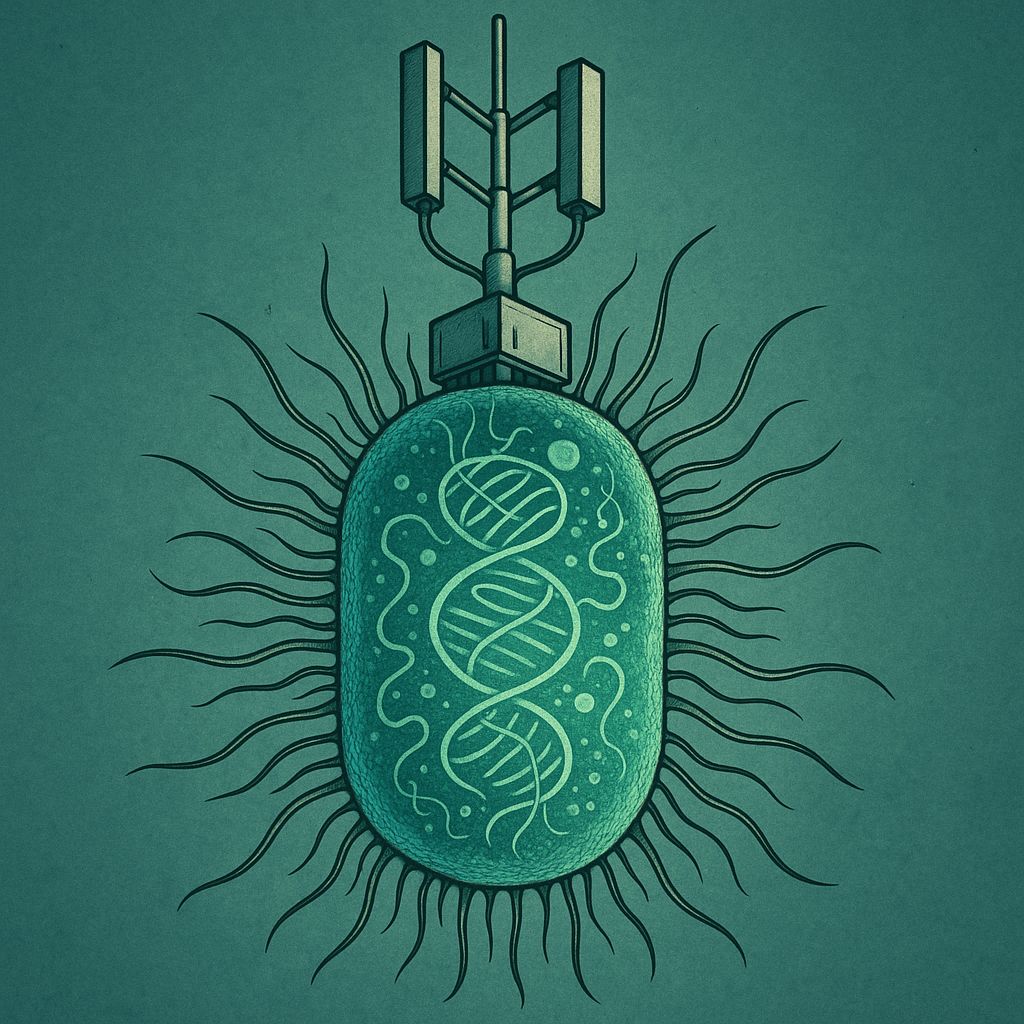
İçinizde olup biten fizyolojik olayları okuyabilen; bu bilgileri sentetik bir gen devresi aracılığıyla bir antene aktararak rapor eden bir bakteri olsa?
Üstelik bunu gerçek zamanlı olarak bir merkeze ileten, hem de kablosuz ve pilesiz çalışan bir bakteri!
Boğaziçi EE’den @SDumanliOktar ile birlikte @SekerLab , onun sorduğu bu sorudan yola çıkarak başladığımız çalışmanın ilk sonuçlarını aldık. Sentetik bir gen devresi taşıyan bir bakterinin bir anten sistemiyle birleştirildiğinde bu potansiyeli gerçekleştirebileceğini gösterdik.
Çalışmamız Nature Communications @NatureComms dergisinde yayınlandı:
https://t.co/2mm5YcrwdX
Değerli öğrencimiz Ahmet Bilir (maalesef artık EPFL'de) ve @tusebgovtr biyoteknoloji enstitüsü çalışanı olan @mymerveyavuzmy un sayesinde bu çalışmayı tamamlayabildik.
By counting single-charge tunneling events through two quantum dots as quantum clock “ticks,” researchers found that the process of counting ticks generates much more entropy than the process of producing them.
Read the paper in @PhysRevLett: https://t.co/c8RdmT22Dq
🔋 Mitochondria run their core power system using bacterial-style DNA.
🧬 But they need your nuclear DNA for support, repair, and growth.
Think of it like a battery with its own mini-engine — it sparks on its own, but the car (your cell) builds and maintains it.
Bottom line: Mitochondria are semi-independent — powered by ancient bacterial genes, guided by your human ones.
Remembering the first woman to be awarded a Nobel Prize, the first individual to be awarded two Nobel Prizes and still today the only individual with two Nobel Prizes in two different scientific categories: Marie Skłodowska Curie.
Curie was born #OnThisDay in 1867.