Q1 earnings season is just about done, and this Q has been great for software. Looking at the YoY growth in quarterly net new ARR added, this was the best quarter (by a long shot) in last ~5 years
@P_Remarks AI lab takes a stake next week.
Sid converts B class to A class. Bill says AI lab co-designed 100x new Agentic platform to be demonstrated.
AWS, GCP, both 20% anthropic shareholders to be at Transcend.
Anthropic also there...
Going to $100 by EOY.
Semiconductor Laser Annealing Gains Broader Adoption… Push Underway for SiC and 400 Layer NAND
Demand for annealing, one of the heat treatment steps in semiconductor manufacturing, is expanding. The process, traditionally used mainly on silicon (Si) wafers, is spreading to silicon carbide (SiC), regarded as a next generation power semiconductor material. Annealing is also expected to see wider use in next generation memory such as NAND with 400 or more layers, as well as in advanced system semiconductors.
According to industry sources on the 3rd, Wolfspeed, the top player in the SiC wafer market, has recently been moving to adopt laser annealing equipment. It is understood to be negotiating a purchase order (PO) with a domestic laser annealing equipment partner. The expectation is that it will start with a small initial volume and then increase the applied quantity.
An industry official said, “Full scale introduction and adoption have now begun in the SiC wafer process, where annealing had seen little use until now,” adding that “the transition of SiC wafer sizes to 8 inches and above is also a positive for the use of annealing equipment.”
Semiconductor annealing is used to apply a set temperature to a wafer in order to repair lattice damage and to activate implanted dopants, thereby enabling the desired electrical characteristics. It is generally classified as a step that follows ion implantation.
While annealing has been widely adopted for silicon, the mainstream wafer material, its use in SiC has been limited. This is because SiC requires higher temperatures (above 1,600 degrees) compared with roughly 1,000 degrees for Si. Interfacial damage at the wafer surface and defect formation were also reasons that made annealing difficult to apply.
More recently, the ability to perform annealing on very narrow, specific regions or within extremely short timeframes using lasers has reduced the thermal burden, raising the feasibility of SiC application. Beyond Wolfspeed, Samsung Electronics, which is preparing a SiC contract manufacturing (foundry) business targeting mass production in 2028, is also known to be reviewing the adoption of laser annealing.
As SiC draws attention amid expanding demand for power semiconductors, the annealing process is expected to spread alongside it. SiC is a compound semiconductor material with superior heat and durability characteristics relative to silicon, and is in the spotlight as a next generation power semiconductor.
Annealing is also expected to expand in next generation memory and advanced system semiconductors. NAND flash with 400 or more layers is a leading example. Raising NAND performance and capacity requires increasing the layer count. Manufacturers then etch the “channel hole,” the signal path between vertically stacked memory cells, and the higher the layer count, the deeper the channel hole becomes, making it harder to secure electrical characteristics and structural stability.
Annealing is drawing attention as a methodology to solve these problems by crystallizing the channel hole region. Some NAND makers are in fact said to be pursuing annealing for the localized crystallization needed to realize NAND with 400 or more layers.
Another industry official said, “There are continuing attempts across the industry to apply localized annealing to advanced system semiconductor manufacturing processes at 2 nanometers (㎚) and below,” adding that “the spread of the annealing process will contribute to growth in the laser solutions market.”
@GoldenLacLLC everyone knows this... no one is buying Gitlab for 2026 acceleration. 15% short, 10% insider ownership, 15% cash... thats a lot of locked up float.
“Yeahh I dumped my $NVDA to go buy the next bottleneck in the supply chain. Ticker symbol is $0028.0006 it trades on the Sri Lankan stock exchange. They make some kind of glue or something man i don’t even know haha, but it’s a big bottleneck i heard”
I wasn’t planning to share this, but it’s such a high-quality explanation of CPO that I have to.
Just watch it. You’ll regret it if you don’t.
https://t.co/Z5M3TvHH2B
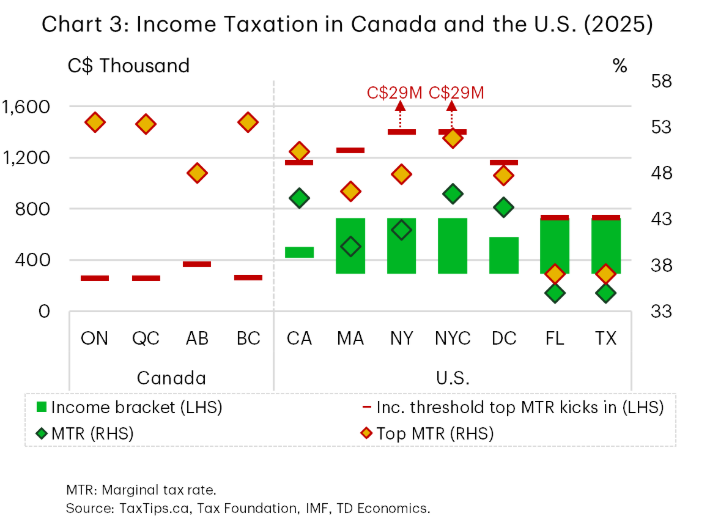
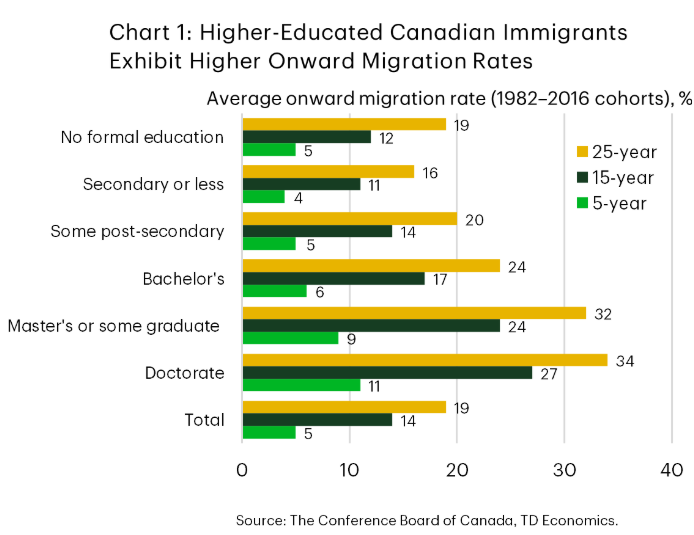
TD report on CANADA's BRAIN DRAIN is really interesting.
Canada is quietly losing its top talent to the United States in what economists call a silent brain drain. While Canada does a strong job educating highly skilled workers in STEM, engineering, and entrepreneurship, it struggles to keep them due to higher taxes that kick in at much lower income levels, limited opportunities to scale companies, weaker commercialization of ideas, and much better pay and growth potential south of the border.
-> Talent leaves mainly through temporary US work visas rather than permanent moves
-> Outflows are heavily concentrated among the highest skilled, especially in tech and advanced degrees
-> Onward migration is worst among immigrants and top university graduates
-> Canada has a missing middle of medium sized firms, relying instead on many tiny businesses and a few large ones
-> Personal tax rates often exceed 50 percent in major provinces and apply at much lower thresholds than in the US
-> Complex corporate tax rules push entrepreneurs toward tax planning instead of growth
All of this weakens productivity, innovation, and domestic returns on education, making Canada a feeder system for the US economy
REPORT: https://t.co/fA0VzaJDSm
"Everyone's making fun of these Koreans for being long memory stocks. But we're talking single-digit P/E multiples. It's probably going to last 2-3 more years. Triple digit growth." — @firstadopter
"Layer that onto the fact that 4 years ago, all these memory companies saw their revenue get cut in half. So they didn't expand capacity. And it takes 3-4 years to expand capacity."
"We're going to see mega pricing power. We haven't seen anything yet. These stocks are going to keep going higher, and their revenue rates are going to be astronomical."