I've said many times mechanical hypertrophy is harmful for our health because it suppresses metabolic adaptation via JNK. You have more muscle at the expense of your health (mitohondria).
https://t.co/TAdQJ4M3uP
https://t.co/4BtvO1hk4D
https://t.co/CIMuJZP530
@MuscleMechsLab Yes, sometimes we can't see the difference between long enough vs. the longest ROM in the studies. But that's because there's enough stretch for this point of training. We'll see it after adaptation. The same as with enough volume for the younger lifter compared with experienced
@MuscleMechsLab More hypertrophy in long-length partials coincides with more distal growth and an increase of Lf, which indicates there's a lot of stretch and more than for full/short ROM. You don't count individual behaviors of myofibrils.
@MuscleMechsLab If there's no stretch, then there's no strain on a sarcomere at long length. If there's no strain, there's no addition of sarcomeres in series. If there's no addition, there's no increasing of Lf. But there's an increase of Lf and sarcomeres, and then there's stretch. Logic!
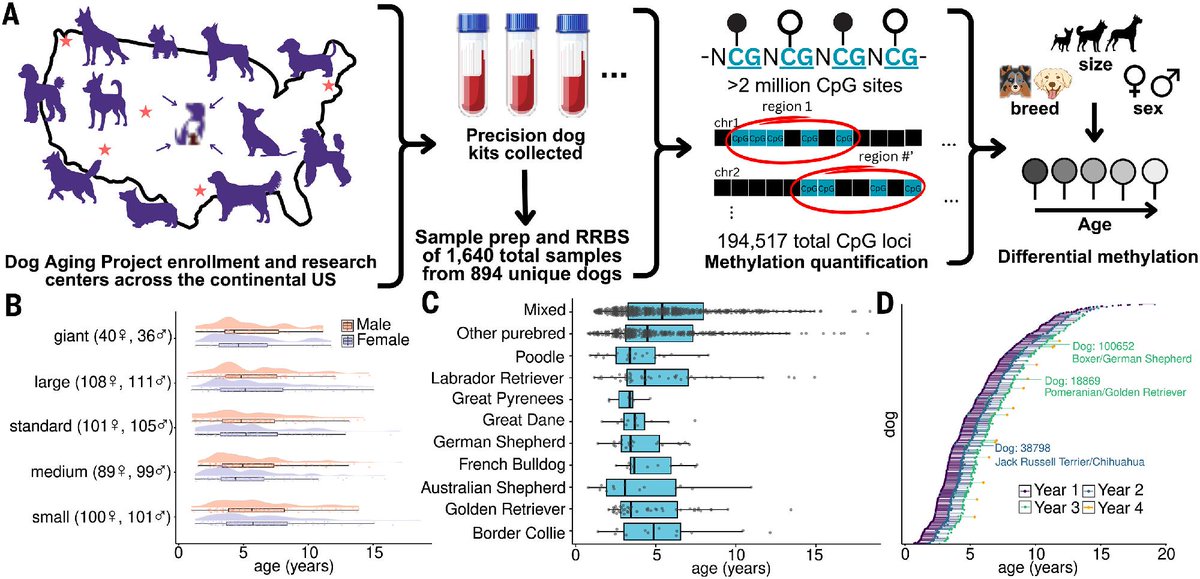
Why do large dogs tend to live shorter lives than their smaller counterparts?
The answer may be written into their epigenome, according to a new study in Science. The findings reveal that larger and male dogs undergo accelerated molecular aging, with pronounced DNA methylation on the X chromosome and at transposable elements.
Learn more: https://t.co/Fedsj5KTQb
More sets ≠ more gains. 💪
A 12-week study in trained women found no significant advantage of increasing training volume every 2 vs. 4 weeks for muscle growth or strength.
Progression doesn’t always require more sets.
https://t.co/zIlCShS7Ov
Longer lipids mark aging and constrain lifespan
👉 “… we identify elongation of lipid acyl chains as a conserved hallmark of aging across mice, Caenorhabditis elegans, Drosophila and humans.
Similar lengthening occurs during the progression of human heart disease, whereas dietary restriction shortens cardiac lipids in mice.
Integrated analyses reveal that aging is characterized by a shift toward longer lipids accompanied by depletion of shorter species, indicating ratiometric remodeling.
Following this, we identify the lipid remodeler Plb1 as a regulator of this process, with expression correlating with lifespan in mice and genetic analyses supporting a causal role in human frailty.
In C. elegans, Plb1 knockdown reverses lipid elongation and extends lifespan in a lipid-length-dependent manner.
Together, these findings establish lipid chain length remodeling as a conserved, actionable hallmark of aging.”
👨🏻⚕️https://t.co/wWfRS8F4L9
@MuscleMechsLab Japanese researchers showed that the most stretched position caused more growth for biarticular muscles. For example, inclined biceps curls increased more muscle growth for the long head than preacher curls. This is true for triceps, calves, humstings, rectus femoris, and so on
@MuscleMechsLab We have 2 types of hypertrophy. So the mechanism is different for each of them. So long partials cross them two; that's why we see more growth by using them. I don't believe we can get extreme stretching (where myosins can't attach to actins) from ordinary exercises.
The Power of Analytical Meditation - His Holiness the Dalai Lama shares how decades of analytical meditation gradually transformed his own emotions, until attachment and anger nearly disappeared. The key, he explains, is not prayer but investigation: examining different, even opposing views and making full use of our intelligence to train the mind. Video originally recorded on February 5, 2017.
Acute Molecular and Chronic Vastus Lateralis Adaptations to Lengthened Partial versus Full Range of Motion Resistance Training in Trained Men https://t.co/fNaHn4itZF
Regional Hypertrophy of the Gluteal Muscles Is Task-Specific: Differential Responses to 10 Weeks of Hip Extension Versus Hip Abduction Training https://t.co/eDwMs5fcRo
Elbow Flexor Adaptations to Failure Versus Repetitions-in-Reserve Training: A Unilateral Within-Participant Study in Resistance-Trained Adults https://t.co/nSYv5gGrlR #mdpimuscles через @MDPIOpenAccess
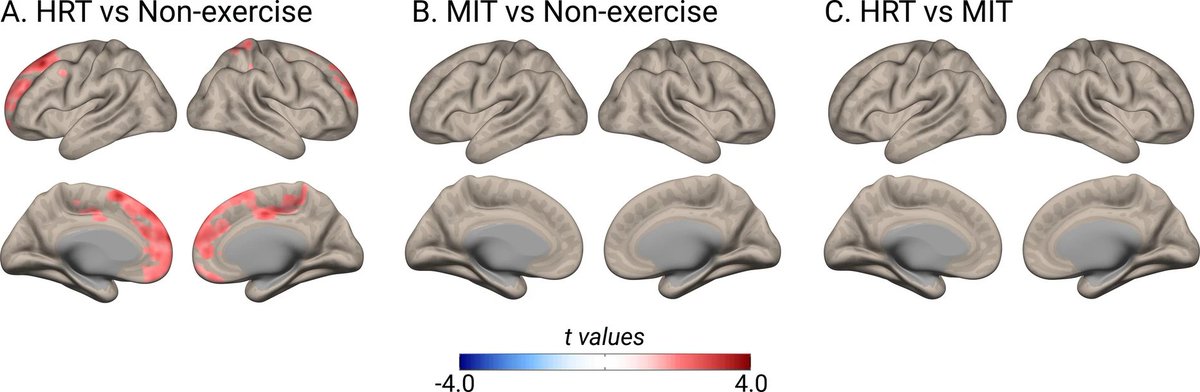
Randomized controlled trial of resistance exercise and brain aging clocks
"Resistance exercise training decelerates brain ageing, as indexed by brain clocks, reinforcing its role as a preventive strategy for brain health."
https://t.co/Ml4nzSQlEJ