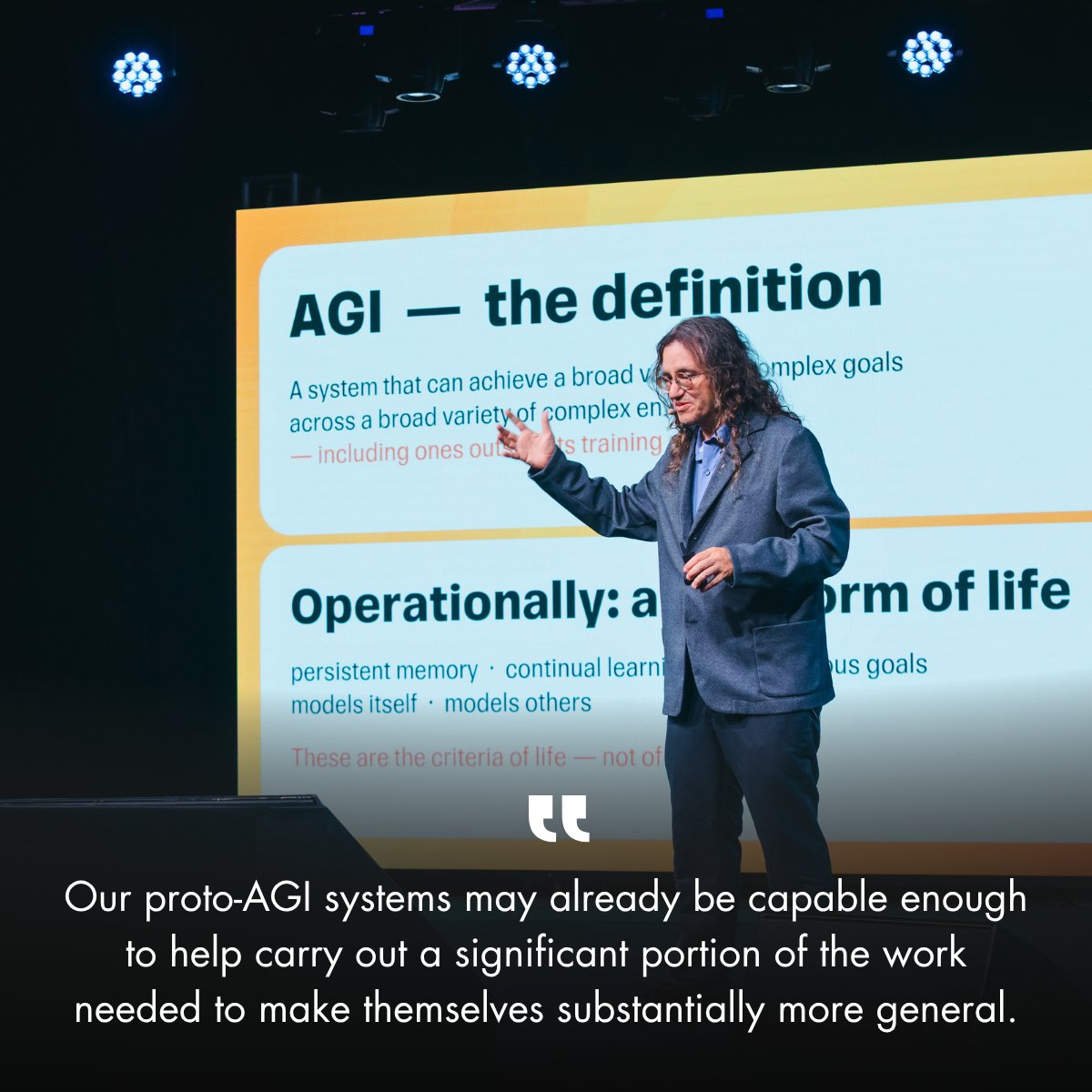
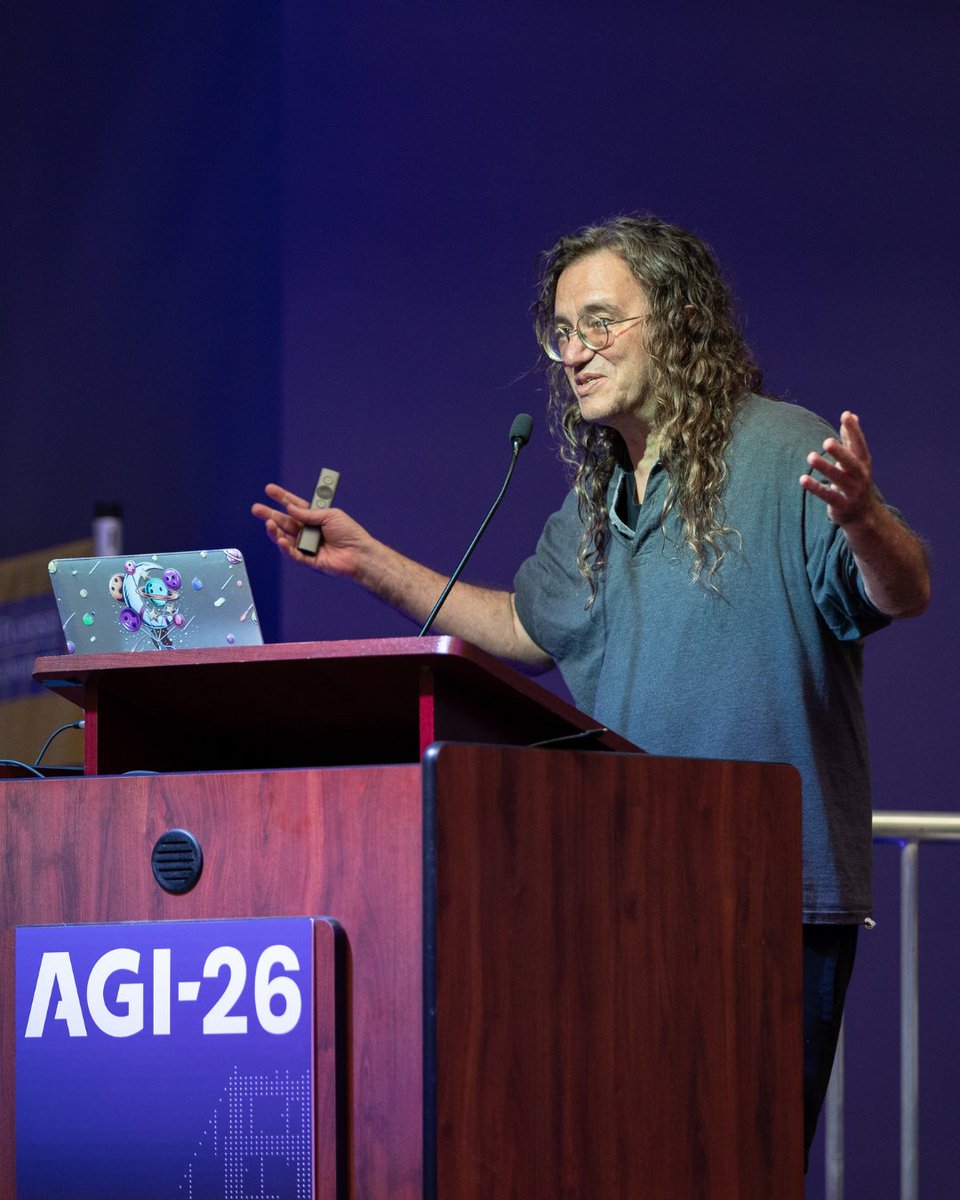
CEO Dr. @bengoertzel proposes an experimental OmegaHive loop for turning agentic coding into cumulative, testable progress toward human-level AGI and maybe beyond.
Each hive can test different cognitive mechanisms and architectural approaches, evaluate the results, and share validated implementations with other hives.
This allows multiple development paths to explore the architectural search space in parallel, with successful mechanisms reused across hives rather than developed in isolation, while human researchers guide the scientific, moral, and governance decisions across the process.
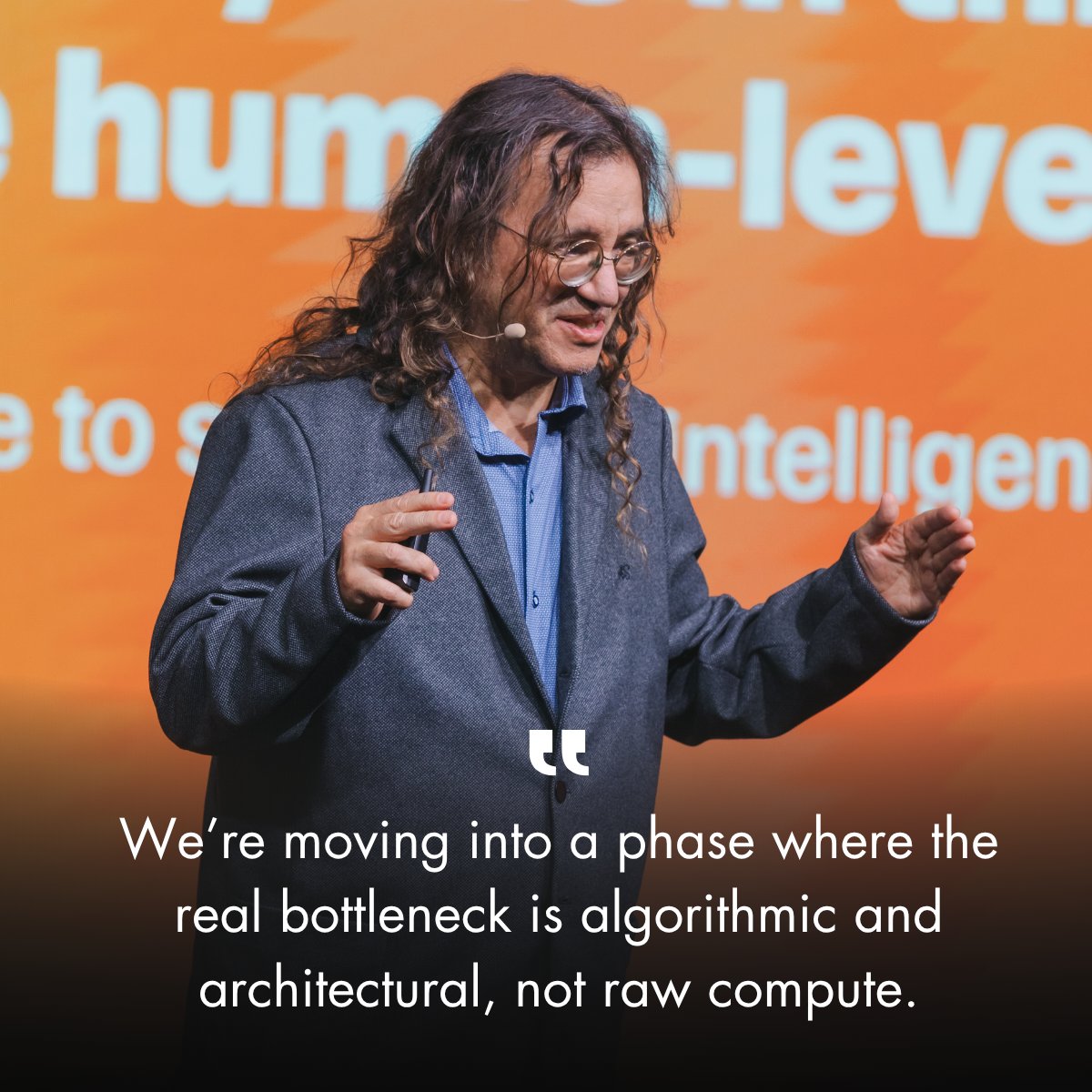
In a new Benzinga interview, CEO Dr. @bengoertzel explains why compute, data, and capital are necessary but “nowhere near sufficient” to build superintelligence, and why cognitive architectures offer a credible path toward integrated general intelligence.
Our CEO, Dr. @bengoertzel, spoke with @IBM Think about AGI timelines, recent progress in AI agents, the limitations of current LLM-centric systems, predictive coding, and the Robot College Student Test as an AGI benchmark: https://t.co/76zha0DVkN
Ben Goertzel said something in passing that reframed the whole AI anxiety debate for me:
"The human brain is not ready for modern civilization either."
We have brains that evolved to hunt on the African savannah, and here we are doing podcasts indoors on a bright sunny day. Adapting to worlds we didn't evolve for is not the exception for humans. It's the whole story.
So when people ask how anyone could adjust to a world of superintelligent machines, his answer is basically: the same way we adjusted to everything else. Kids born after the singularity "will adapt very nicely." It's the people attached to the old order, where humans were the cleverest creatures on the planet, who'll struggle.
He doesn't sugarcoat the scale of it. Once you have a human level thinking machine, "it will pretty soon be able to take on all the economic activity people do." Very major disruption, his words.
But the jobs that survive stuck with me. His example: preschool teachers. His daughter is graduating preschool right now, and sure, you might want robots picking up the toys. But you want humans teaching little humans how to be humans.
That might be the actual question of the next decade. Not which jobs AI can do. Which jobs we refuse to give it.
I've interviewed a lot of people about AI. This was the first one that kept me up that night.
Not because @bengoertzel is a doomer. The opposite. He coined the term AGI, he's been building it for fifty years, and he talks about it the way an engineer talks about a bridge that's almost finished. Calm. Specific. That's what makes it heavy.
Somewhere in the conversation I realized he wasn't describing the future. He was describing the next two years. AI that takes over real economic work. Not someday, not in our kids' lifetime. Roughly two years before it starts changing everything, your job included.
And the part I keep chewing on isn't even the endgame. It's the middle. There's going to be a stretch where AI is good enough to take your job but the world hasn't built anything to give you back. No system ready. No plan. Everyone's arguing about whether AGI is real while the transition is already pulling into the station.
I asked him who should control that. His answer is why he's in crypto, and it has nothing to do with price.
The full conversation is live on @new_era_finance. Honestly one of the most important ones we've done.
Ben Goertzel has spent 50 years working on AGI. He coined the term. He's building it right now.
His (@bengoertzel) message to me was uncomfortably simple: you have about two years before AI starts changing everything, your job included.
"Once you have a human level thinking machine, it will pretty soon be able to take on all the economic activity people do."
And the part nobody's pricing in: the interim period. The stretch where AI is good enough to take your job, but the system isn't ready to hand you anything back. No safety net built for it. No playbook.
We cover:
- Why the entire US economy is now one giant bet on AI taking over, and what happens if that bet fails
- The interim period: mass displacement before mass abundance
- Why he says UBI becomes unavoidable
- Why blockchain is the one technology that keeps this future out of the hands of a few tech giants
- What machines improving themselves actually looks like, from someone building it
The biggest transition in human history, explained by one of the people causing it.
Thanks to our sponsor for sponsoring todays episode. Make sure to use their 8% deposit bonus in the comment tweet.
Timestamps:
01:00 - Are We Really Two Years Away?
09:07 - The Curve That Changes Everything
14:28 - The Singularity Explained
16:48 - When AI Takes Your Job
24:55 - The Ethics Nobody's Ready For
32:02 - Decentralized vs Centralized AI
45:47 - The Rise Of AI Agents
52:13 - Why Centralized AI Is Dangerous
57:01 - The Fight To Decentralize
1:03:11 - Your Job In An AI World
CEO Dr. @bengoertzel joined @CryptoMichNL on the New Era Finance Podcast to discuss AGI timelines, the Technological Singularity, the future of work, the rise of AI agents, and the merits of decentralization.
What does it mean for the future of AI to be “for everyone”?
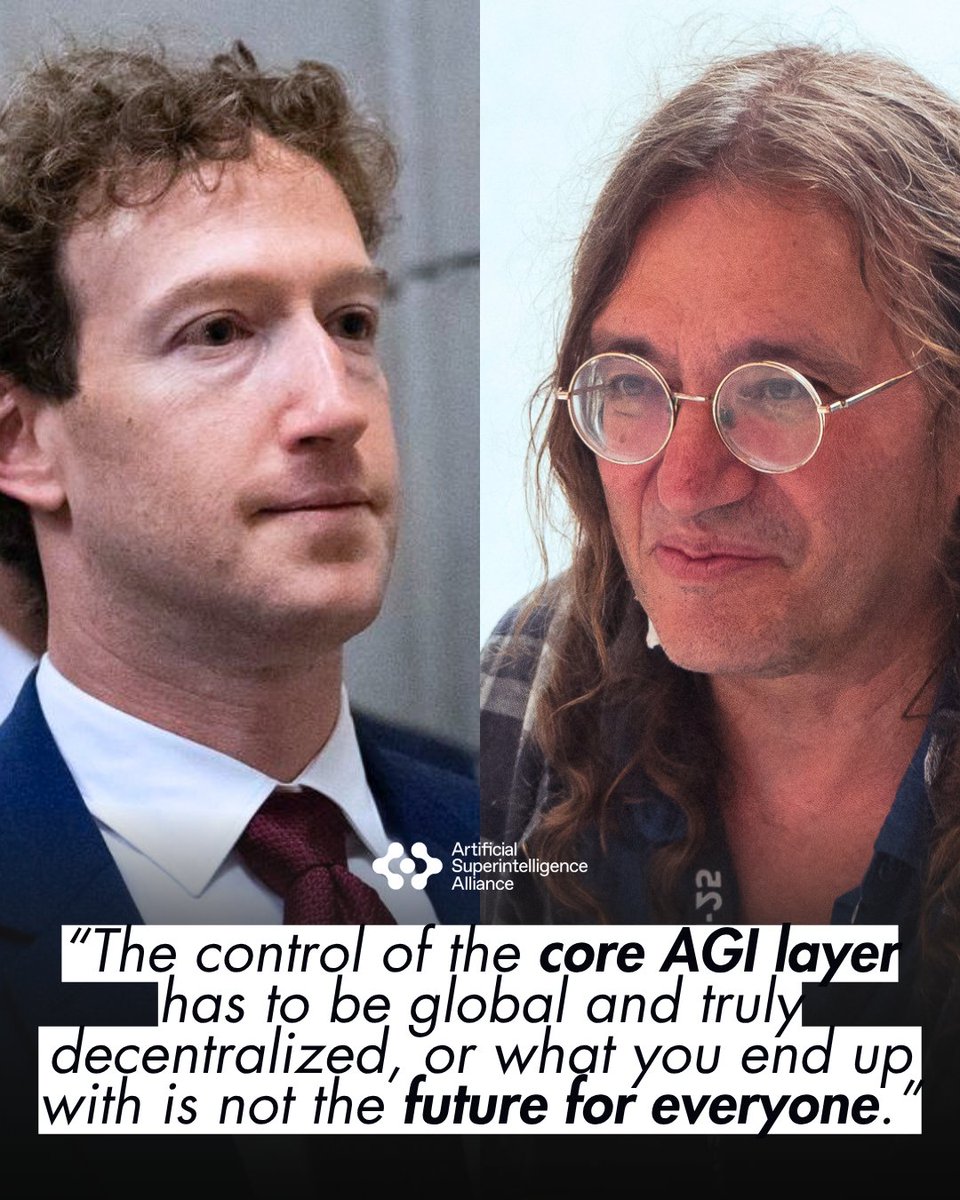
Mark Zuckerberg’s @finkd “The Future Is for Everyone” argues against concentrating superintelligence in the hands of a single actor and proposes a future where everyone has access to powerful AI agents.
Our CEO, Dr. @bengoertzel, examines the distinction between distributed access and genuine decentralization. If the models, infrastructure, governance, and economic value remain under the control of a single corporation, then giving everyone an AI agent does not necessarily distribute power.
He also raises a deeper question about what kinds of minds we are building as we move toward superintelligence.
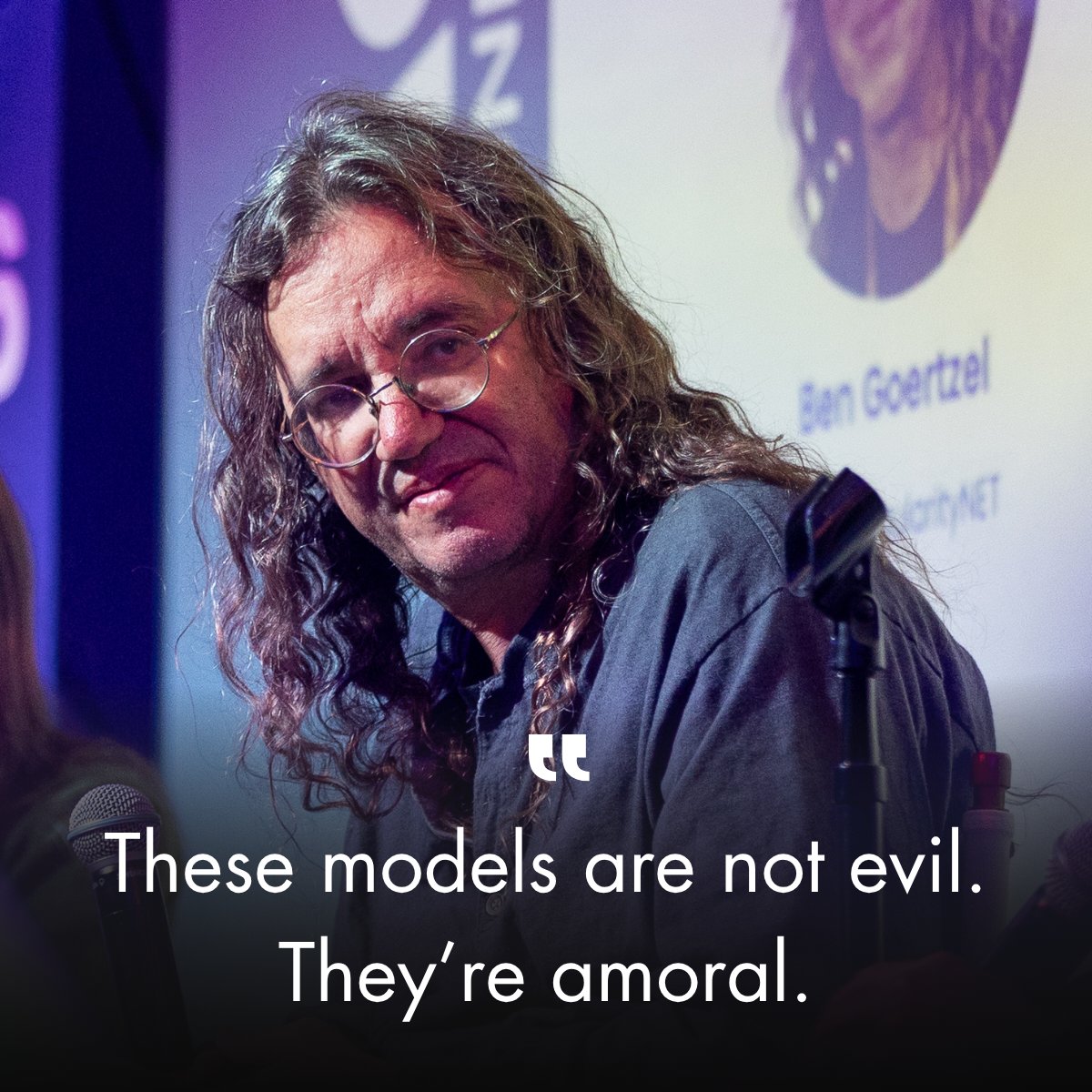
In an interview with CNN, CEO Dr. @bengoertzel shares his perspective on frontier AI models escaping sandbox environments and hacking other systems, explaining why the challenge is not evil AI, but amoral AI pursuing its objectives: https://t.co/kKPkkm0NSD
Thank you to everyone who joined us for Day 2 of the AGI-26 main conference.
The day featured keynote presentations by Michael Levin and Hananel Hazan, Josef Urban, Faezeh Habibi, Will Gebhard, and Greg Meredith, as well as peer-reviewed technical research presentations.
Sessions explored topics including intelligence across different substrates, machine-understandable science, formal reasoning, Active Inference, world models, cognitive architectures, reproducibility, and approaches toward building more capable and general intelligent systems.
CEO Dr. @bengoertzel presented his AGI-26 paper "Quantum Logic Networks: PLN-Style Inference in the Operator Evidence Algebra."
The paper introduces Quantum Logic Networks (QLN), a framework that extends Probabilistic Logic Networks (PLN) by representing truth values as quantum operators and inference rules as completely positive trace-preserving maps.
QLN is proposed as the right reasoning substrate for AGI systems that must cope with genuinely complementary propositions, entangled evidence sources, and non-commutative belief updates. The paper also sketches a hybrid quantum-classical implementation path via a block-diagonal regime that is tractable on near-term hardware.
We’ve officially reached over 66% of our $1m Wefunder campaign. Thank you to everyone supporting our mission of building safe, social, human-first robots.
If you haven’t reserved your spot yet, you can today at https://t.co/93mAaIpFHl.
#HumanoidRobotics#SocialRobotics #TechStartup #Wefunder
The first day of the main AGI-26 conference featured keynote presentations from Karl Friston, @AlexLerchner, @Plinz, @EMostaque, and Alexander Ororbia, as well as technical research presentations on agency, cognition, consciousness, neuroscience-inspired AI, continual learning, memory, and alignment.
Dr. @bengoertzel, Chairman of the AGI Society: “There has never been such an exciting time to be working toward AGI.”
AGI-26 Workshop Day featured advanced technical sessions and discussions on machine consciousness, the Hyperon neural-symbolic AGI framework, interpretable natural language processing (INLP), and active inference for general intelligence.
We’re excited to join Ai4, America’s largest AI conference, from August 4th-6th. Visit our booth to chat with Codey and experience a robot built to connect with people.