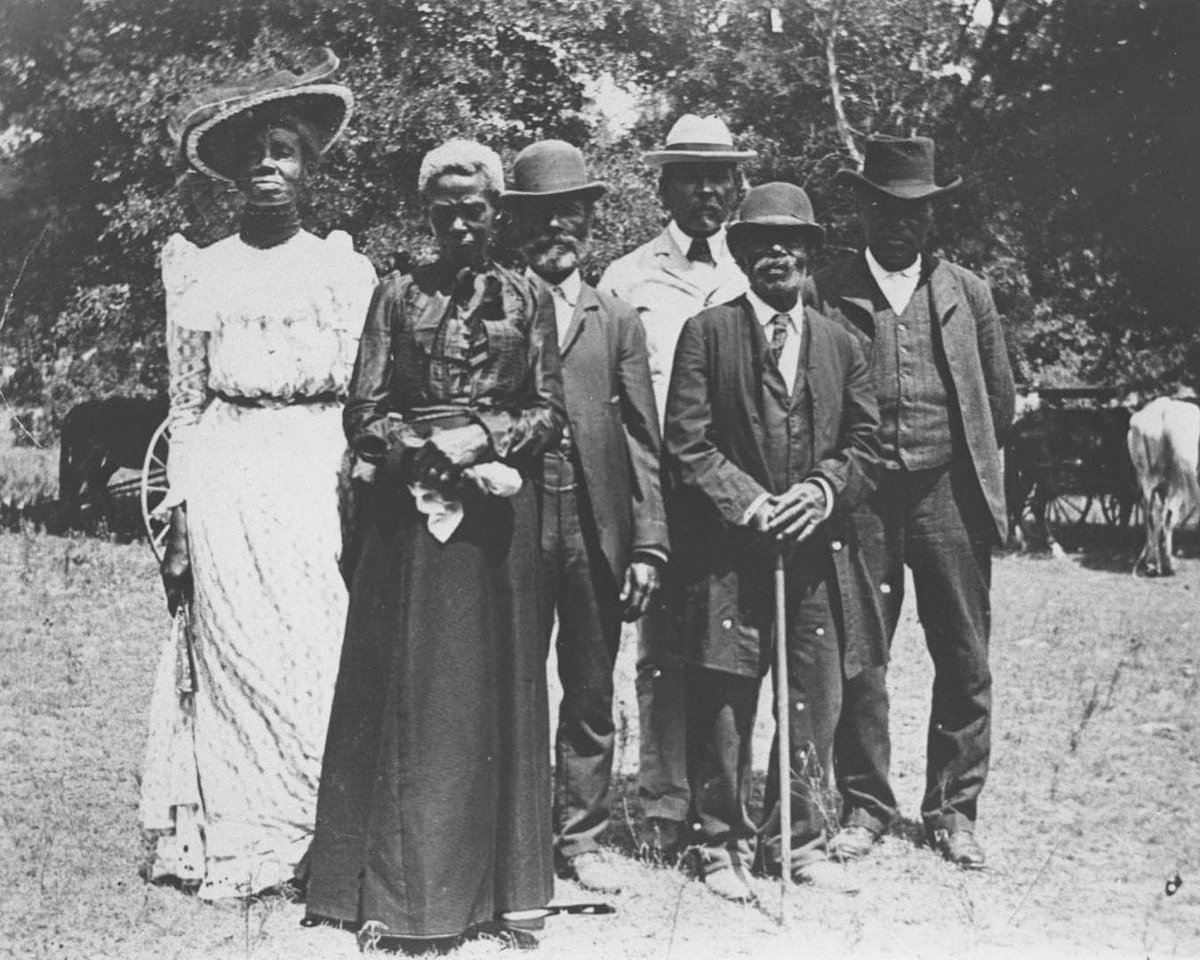
This is a photograph of an Emancipation Day celebration on June 19, 1900 in Eastwoods Park in Austin, Texas. A group of six well-dressed formerly enslaved individuals stand proudly before the photographer Grace Murray Stephenson, a young, white woman who lived nearby. Her photographs and account of the day were later published in the @sfchronicle. Today, these photographs are a record of the kind of early Juneteenth celebrations that inspire today's commemorations of African American freedom.
@carvalho_marino@eudaimoneatery My classes were about 25 students. Unfortunately we didn’t have enough time for everyone to play :( Unless the class is really devoted to exploring the game, it’s difficult to really dig into it.
1/ #MAMG23@eudaimoneatery Post-apocalyptic games are useful to teachers of writing and multimodal textuality for how they tend to explore operations of cultural memory. By thinking through “the end of the world,” students can reconsider relationships to social structures.
@carvalho_marino@eudaimoneatery Since my rhetoric class was themed around nuclear war, we mostly used the game to explore how & why “playing the apocalypse” was so engaging. Also I noticed that playing collectively made the narrative accessible to non-gamers (a big problem with game studies imo)
@carvalho_marino@eudaimoneatery@eudaimoneatery can speak more on assigning games to students as homework, but I used F4 as a teaching tool in the classroom! I used a projector & connected an Xbox controller to my PC. Students passed the controller around so that the game became a shared experience.
@BlairApgar Thank you!!! There’s so much more to say about Fallout & the misremembered past, and the other installments explore the topic is different ways (New Vegas comes to mind)
12/ Using F4, teachers of writing can prime students, through their projective and real identities, to write for the issues that they will encounter beyond the classroom, such as selective nostalgia, created histories, and fraught relationships to the past.