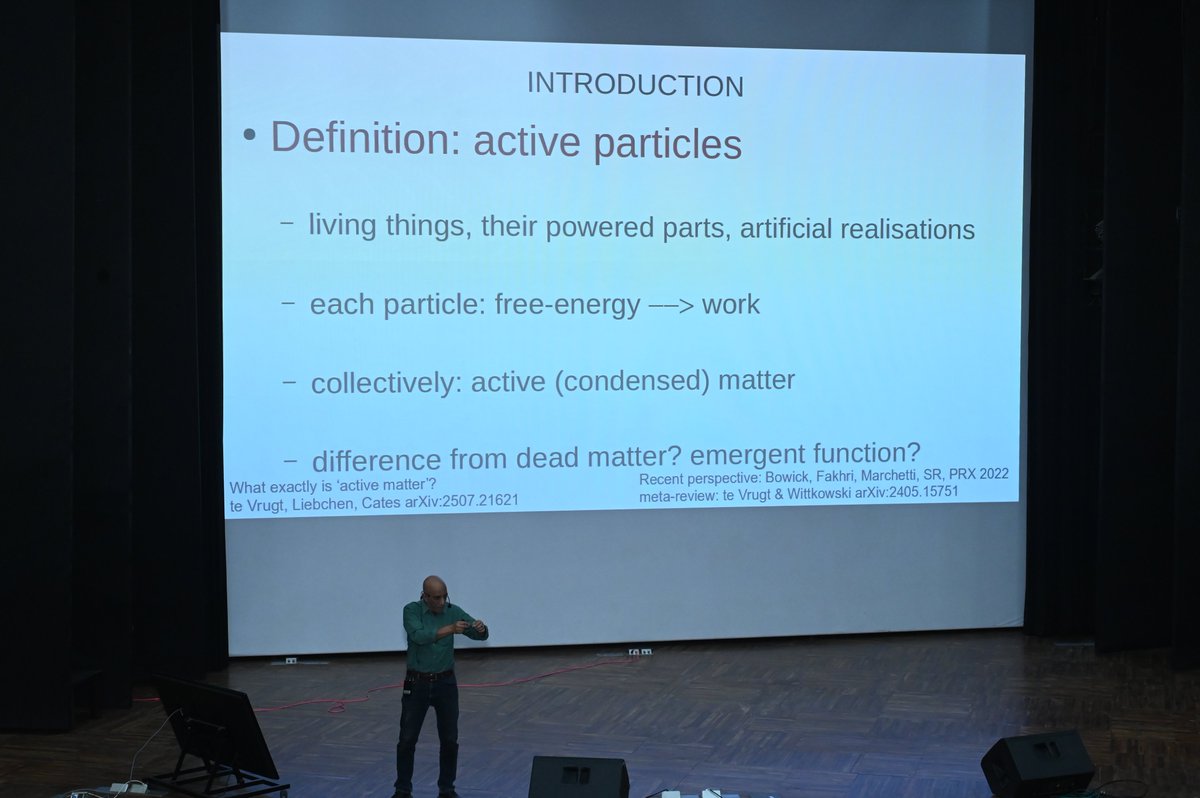
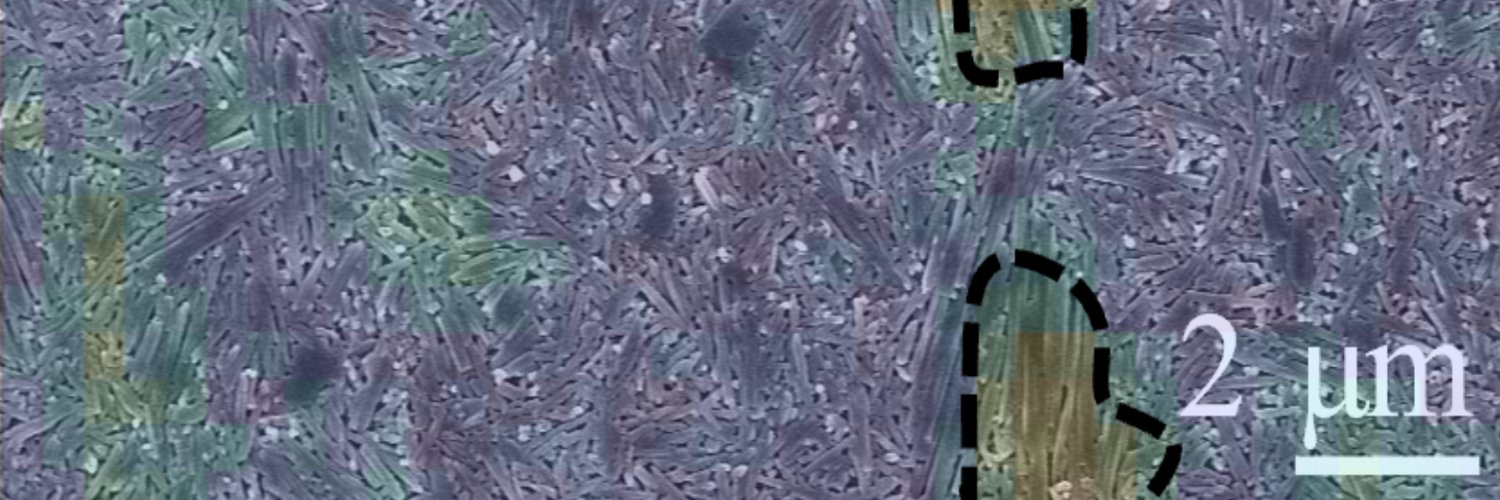
Delighted to share my pedagogical article where I introduce active soft condensed matter and its relevance to the biological sciences in clear, accessible language.
Grateful to the Resonance editorial team for the opportunity. @IAScResonance@IAScBng
https://t.co/FuvIj7oj7R
Thrilled and humbled to receive the C1973 Research Excellence Award at IIT Bombay!
Grateful to my wonderful students and collaborators for their curiosity and dedication, and to @iitbombay and @ANRFIndia for supporting our journey in fundamental research. 🙏
Bigger bird flocks navigate home better. But why? 🐦 Using pigeon GPS data, we find that small flocks are strongly hierarchical, but hierarchy fades as flocks grow, consistent with each bird keeping its entropy production rate constant. https://t.co/MNGykWZeNN
An Indian physicist helped discover the hidden laws governing how millions of living organisms move together. His work has now earned him a place among the world's most distinguished scientists!
Have you ever wondered how thousands of birds fly together without colliding? Or how millions of bacteria coordinate their movements despite having no leader?
These seemingly ordinary phenomena conceal some extraordinary physics.
And Prof. Sriram Ramaswamy, a physicist at the Indian Institute of Science (IISc), Bengaluru, helped establish an entirely new way of understanding them.
The field is called Active Matter Physics.
Unlike ordinary materials, whose particles move in response to external forces or thermal fluctuations, active matter consists of entities that continuously consume energy to propel themselves.
Think swimming bacteria, moving cells or schools of fish.
But here's where things get fascinating.
Ramaswamy and his collaborators developed mathematical theories showing how interactions between self-propelled particles and their surrounding fluids can produce unexpected collective behaviour.
One remarkable prediction was that a sufficiently large, uniformly aligned group of swimming bacteria in a fluid would become unstable!
His research also predicted that swimming microorganisms could dramatically alter a fluid's viscosity, and that groups of active particles could exhibit unusually large fluctuations in their numbers.
Several of these predictions were subsequently supported by experiments.
His pioneering contributions earned him the Shanti Swarup Bhatnagar Prize in 2000 and the Infosys Prize in Physical Sciences in 2011.
In 2016, he was elected a Fellow of the Royal Society.
And in 2025, he was elected an International Member of the US National Academy of Sciences, one of the world's most prestigious scientific institutions.
Today, he is an Honorary Professor at IISc.
From the movements of microscopic bacteria to the extraordinary patterns of living systems, Sriram Ramaswamy has helped reveal that even life's apparent chaos follows remarkable physical laws.
🧵 What if one reason fertility declines with age isn’t just genetic-but mechanical?
Thrilled to share our new paper in @NatureCellBio:
Elevated contractility drives implantation failure in mouse embryos from aged females… here’s what we found 👇
1/11
https://t.co/8yn7aZqUv8
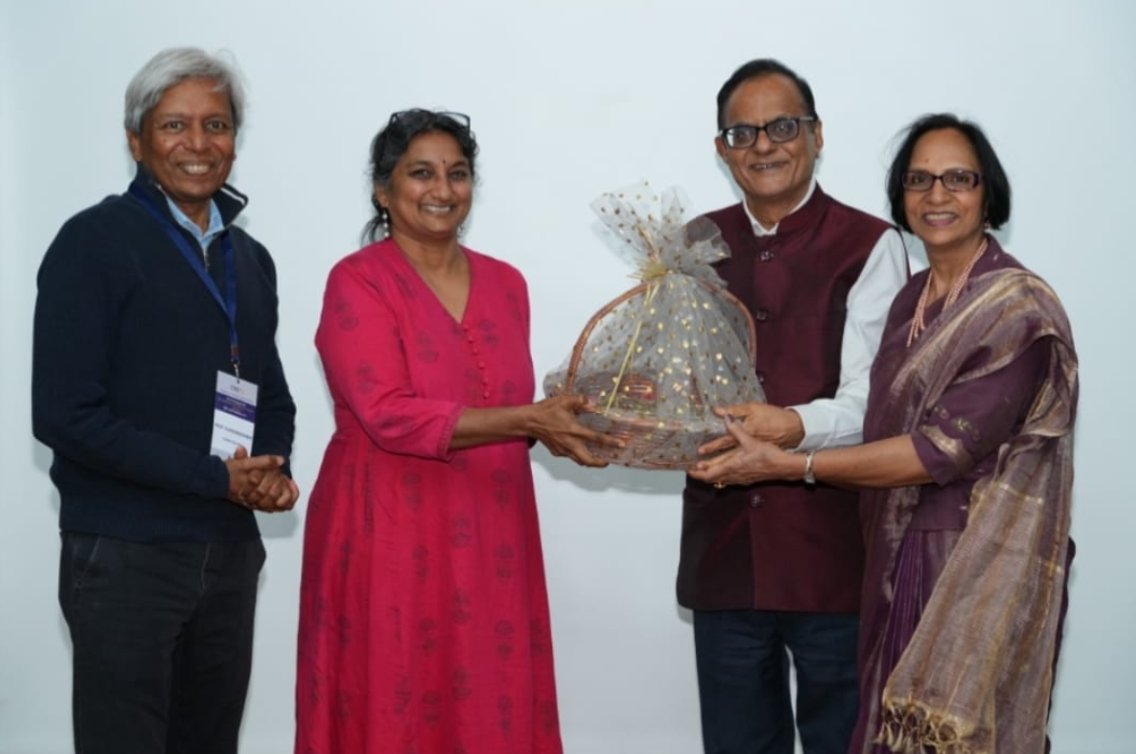
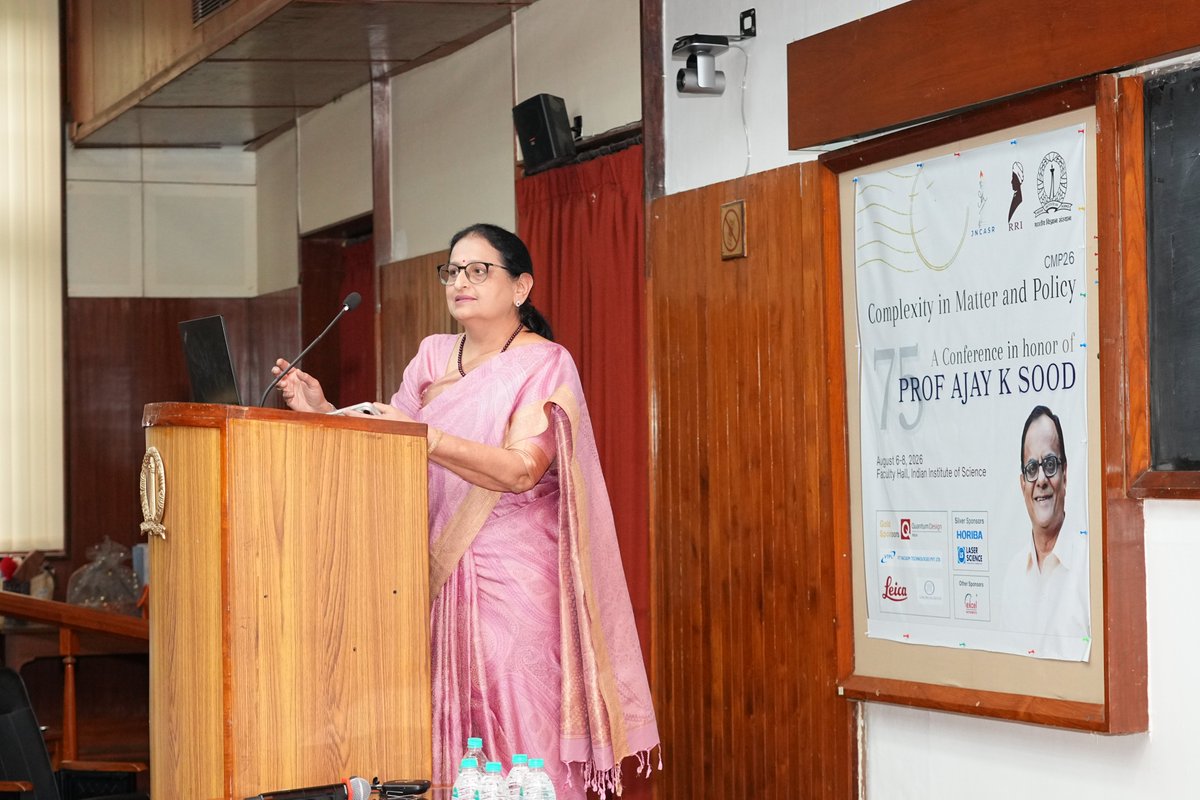
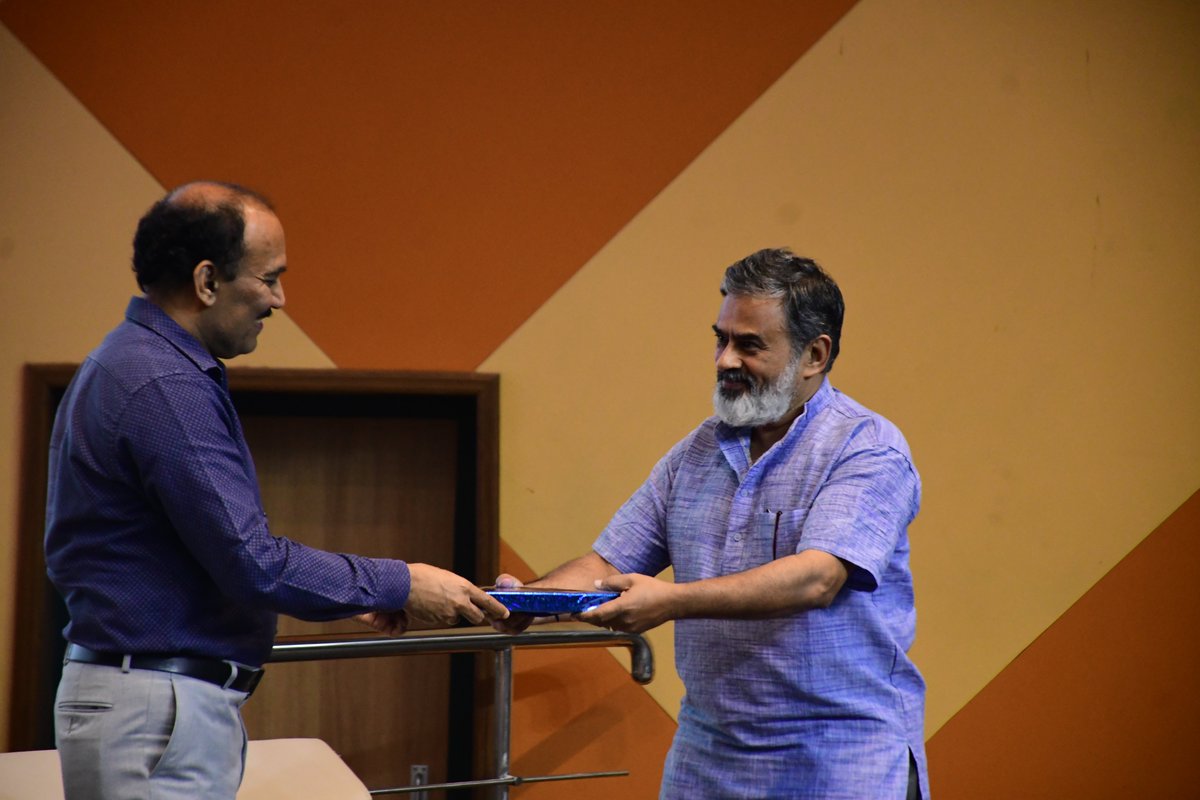
In honour of Prof. @AjaySoodIISc, Principal Scientific Adviser to the Government of India, and in recognition of his lifelong devotion to science and his remarkable 75th year, he was felicitated at the Conference on Complexity in Matter and Policy (CMP26) on 7 August 2026. The conference was hosted by the @iiscbangalore, @RRI_Bangalore, and @jncasr.
Dr Parvinder Maini, Scientific Secretary, Office of the PSA, joined other scientific leaders in sharing their wishes and remarks for Prof. Sood. She was also joined by Prof. @kvijayraghavan, NCBS; Prof. G. Rangarajan, Director, IISc; Prof. @waghmare16, Secretary, DST; Prof. Hulikal Krishnamurthy, Emeritus, IISc; Dr Rahul Pandit, National Science Chair, IISC; Prof. @Ashutos61, IIT Kanpur; Dr @Suman_iitkgp, Director, IIT Kharagpur; Prof. Jacques Prost, Institute Curie-France & NUS; Prof. @TarunSouradeep, Director, RRI; Prof. S M Yusuf, Director, UM-DAE, CEBS; Prof. @rajesh_gokhale, Secretary, DBT; Prof. Dipankar Das Sarma, National Science Chair, IISc; Prof. Arun Grover, Panjab Engineering College and others.
The team at the Office of the PSA, on behalf of the wider scientific community, extends its sincere appreciation and heartfelt tributes to Prof. Ajay Kumar Sood for his exceptional contributions to science and his visionary leadership in advancing India's research and innovation ecosystem.
Dr @Jain_Physics | Dr @NanoJagadish | Prof. @ChandrabhasN
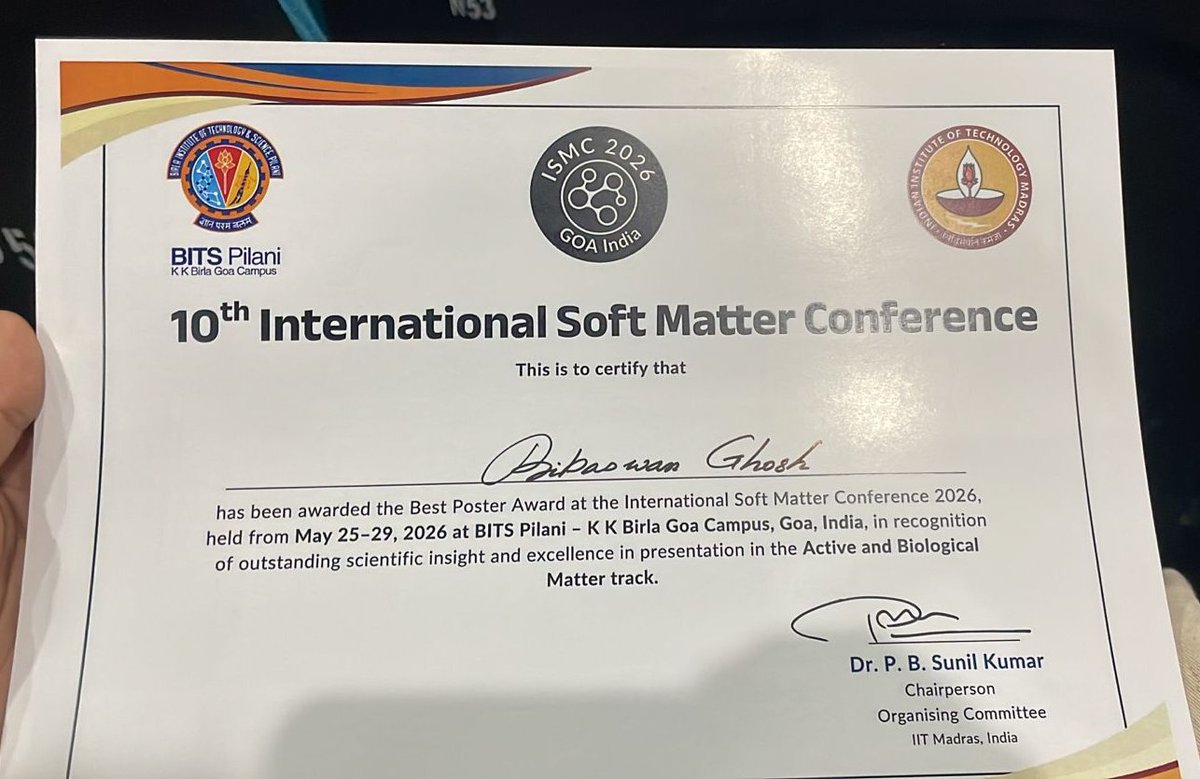
I am excited to share that Bibaswan Ghosh, a PhD student from our research group, won the best poster award at the International Soft Matter Conference held at BITS Pilani, Goa.
His research is focused on elucidating decision-making in navigating groups of living organisms.
I had a wonderful time interacting with all the members, especially the students for asking insightful questions. I am grateful to Prof. Bhatia for hosting me and for the warm hospitality. And spotting a peacock on campus was a delightful bonus
@IiserMohali
Today, Professor Nitin Kumar from IIT Bombay delivered an engaging departmental seminar on "Exploring the Physics of Living Systems Using Programmable Self-Propelled Robots."
@IiserMohali@iitbombay
A brief summary of our recent research work on developing a physical understanding of how motility emerges in a certain class of water-dwelling microorganisms.
Researchers from the Department of Physics, Indian Institute of Technology Bombay and School of Physical Sciences, IIT Mandi designed a pair of coupled robots that, for the first time in an artificial setting, accurately replicated the run-and-tumble (RT) motion exhibited by microswimmers such as the alga Chlamydomonas reinhardtii. Lead authors, Somnath Paramanick (IIT Bombay) and Umashankar Pardhi (IIT Mandi), worked under the guidance of Prof. Nitin Kumar (IIT Bombay) and Prof. Harsh Soni (IIT Mandi) for this study, which could help us better understand one of the most fundamental aspects of life: motility, or the ability to move. Their study was published in the journal Physical Review Letters.
https://t.co/BRM5jW0AkQ
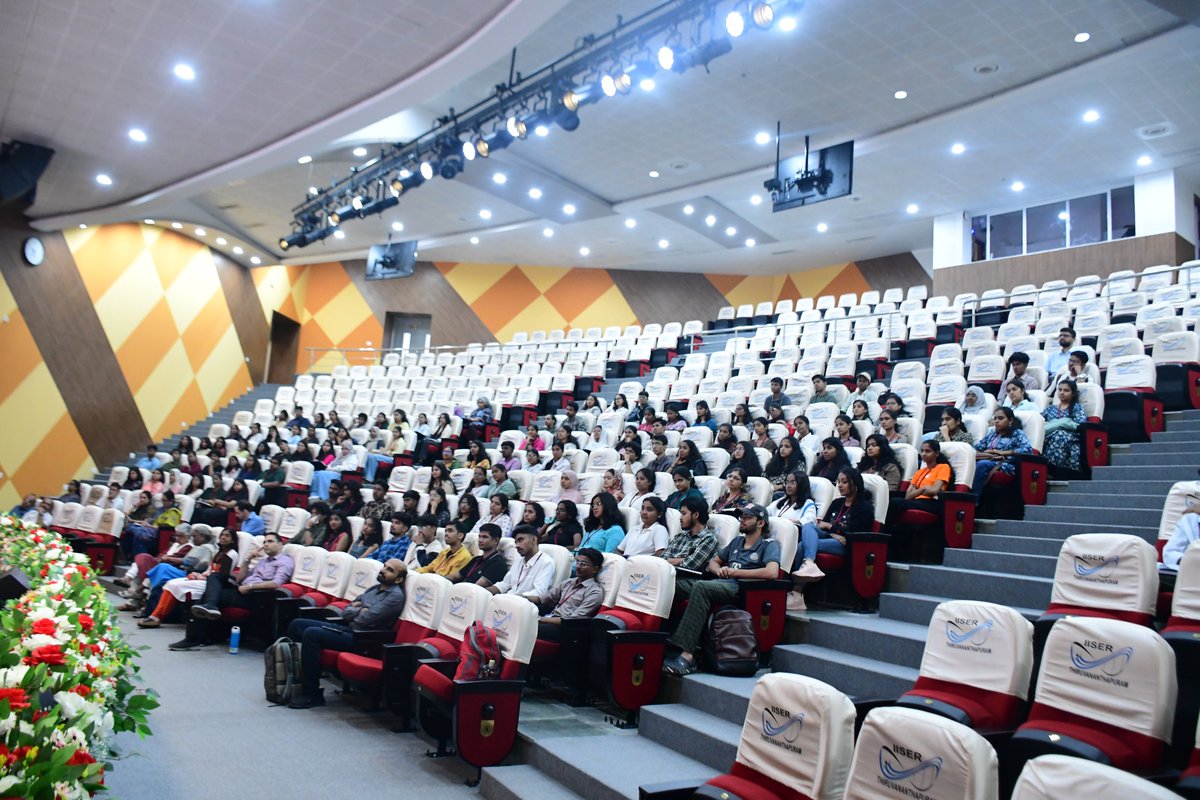
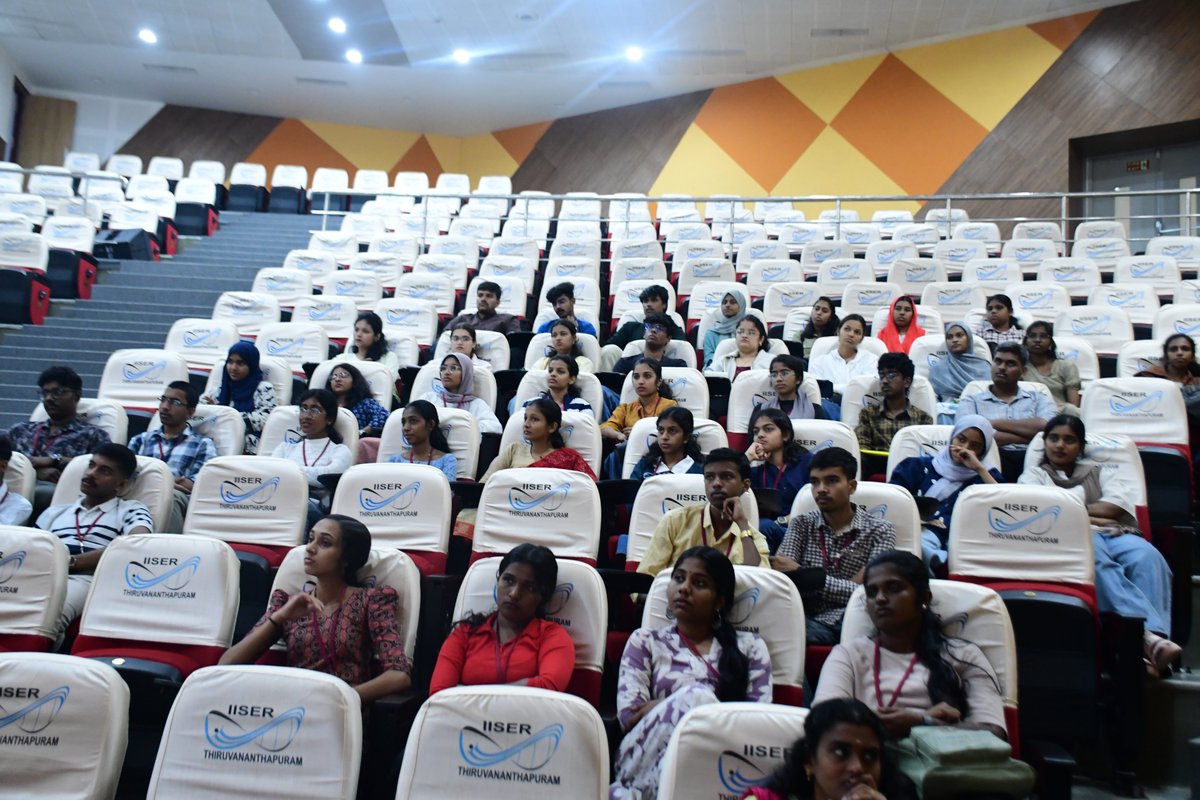
Glimpses from Day 1: Resonance Science Outreach Program at IISER TVM 📸✨
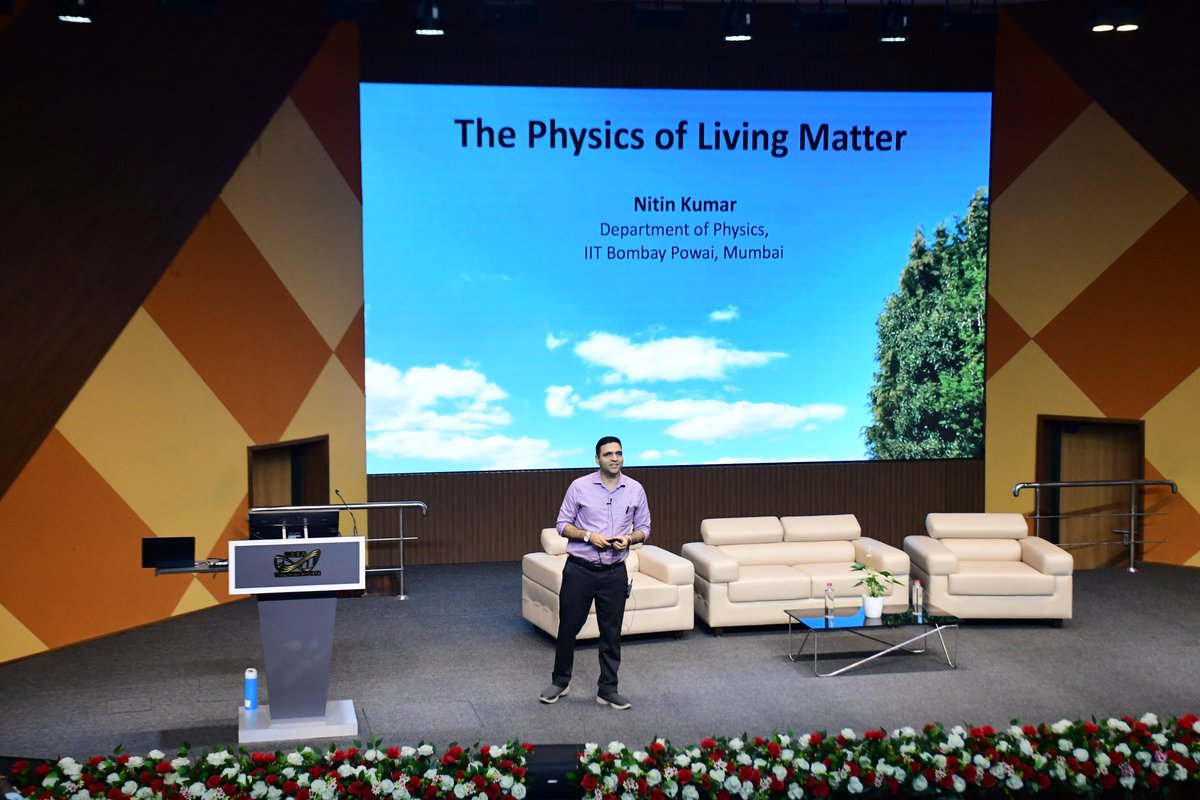
Following the inauguration, the "Science Outreach Program: Connecting the Dots" kicked off with an intellectually stimulating session by Prof. Nitin Kumar from IIT Bombay.
🔬 Topic: "The Physics of Living Matter"
@EduMinOfIndia@IAScResonance@iitbombay
#IISERTVM #IASc #ScienceOutreach #STEM #ConnectingTheDots
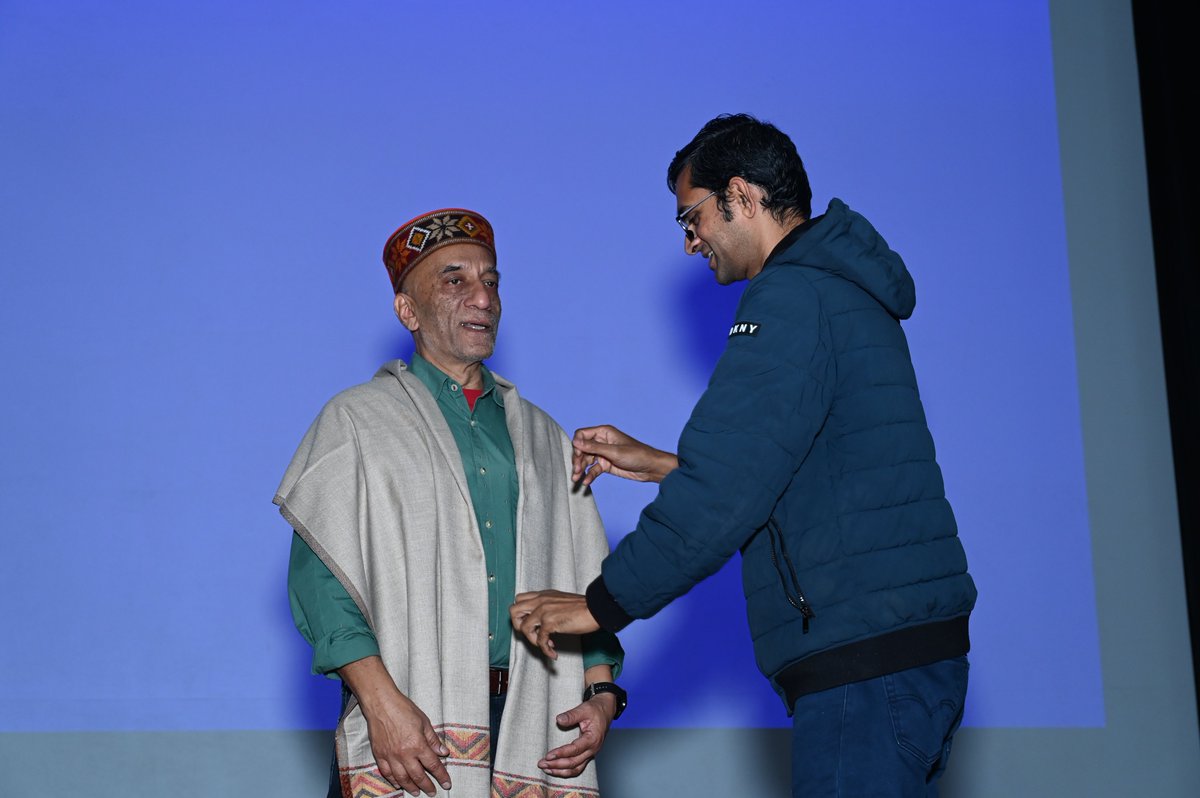
It is indeed a matter of great joy to spend almost two days with your teacher after five years—and an even greater joy when he goes to your whiteboard, discussing physics and inspiring your students.
Heartfelt thanks to Sriram for a wonderful colloquium at
@iit__mandi
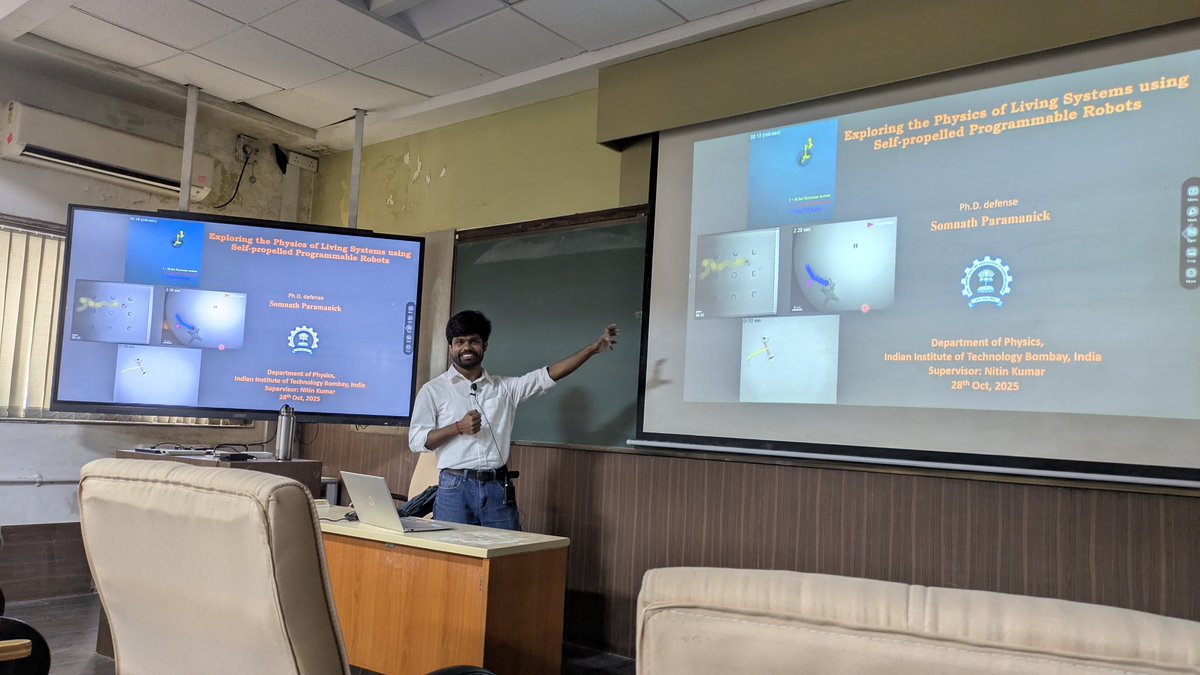
Hearty congratulations to @Somnath73831947, on successfully defending his PhD thesis 🥳🎉! I feel immensely proud to have you as my first student. You will be truly missed in the lab. Wishing you the very best in all your future endeavors 😃
(1/6) 📢Excited to share our latest work in collaboration with @harshIITMandi's group at IIT Mandi on an artificial robotic system 🤖, in experiment and theory, mimicking run-and-tumble (RT) motion seen in microorganisms 🦠. 🧵⏬@Somnath73831947@iitbombay
https://t.co/hVq2b0xBTS