We are a team of passionate readers and supporters of literacy seeking to infect others with the same love of reading for pleasure. #BooksAreBae#AllforBooks
📢 Habari wapenzi wa vitabu 🥳🎉
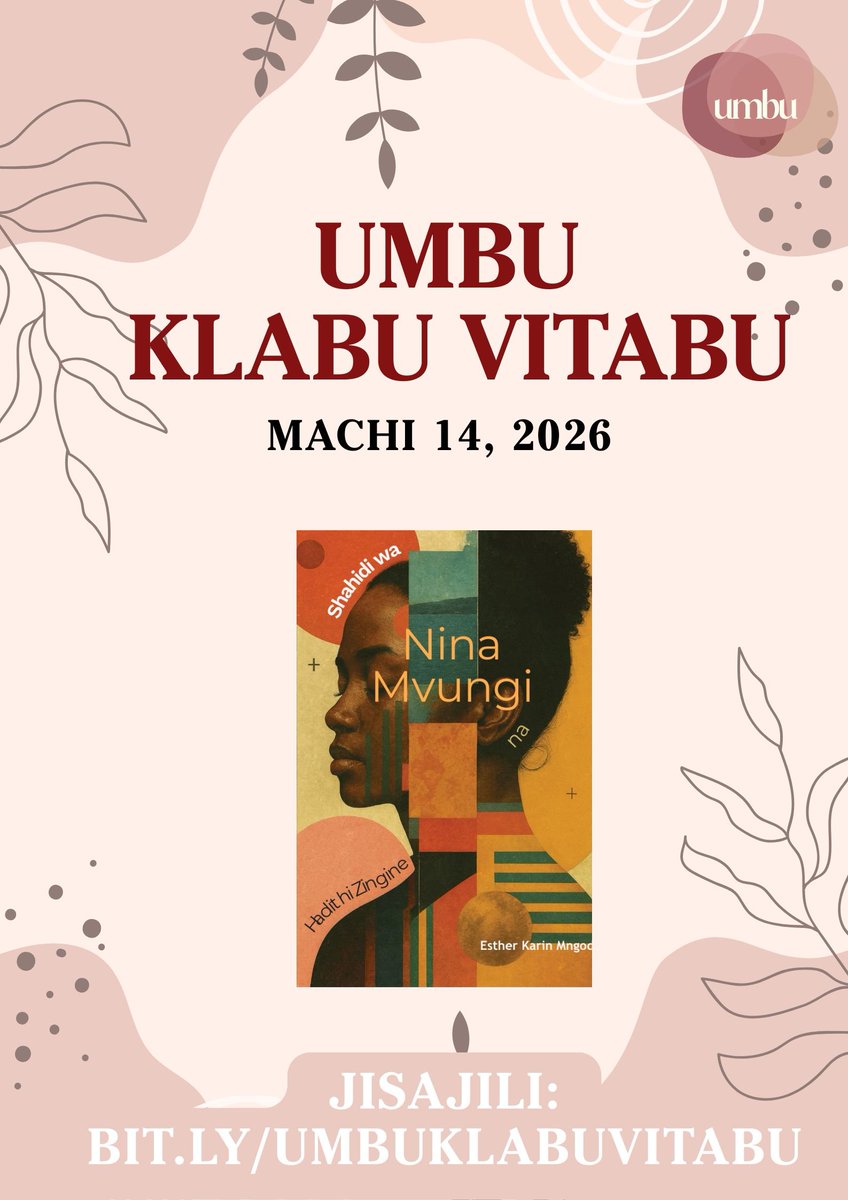
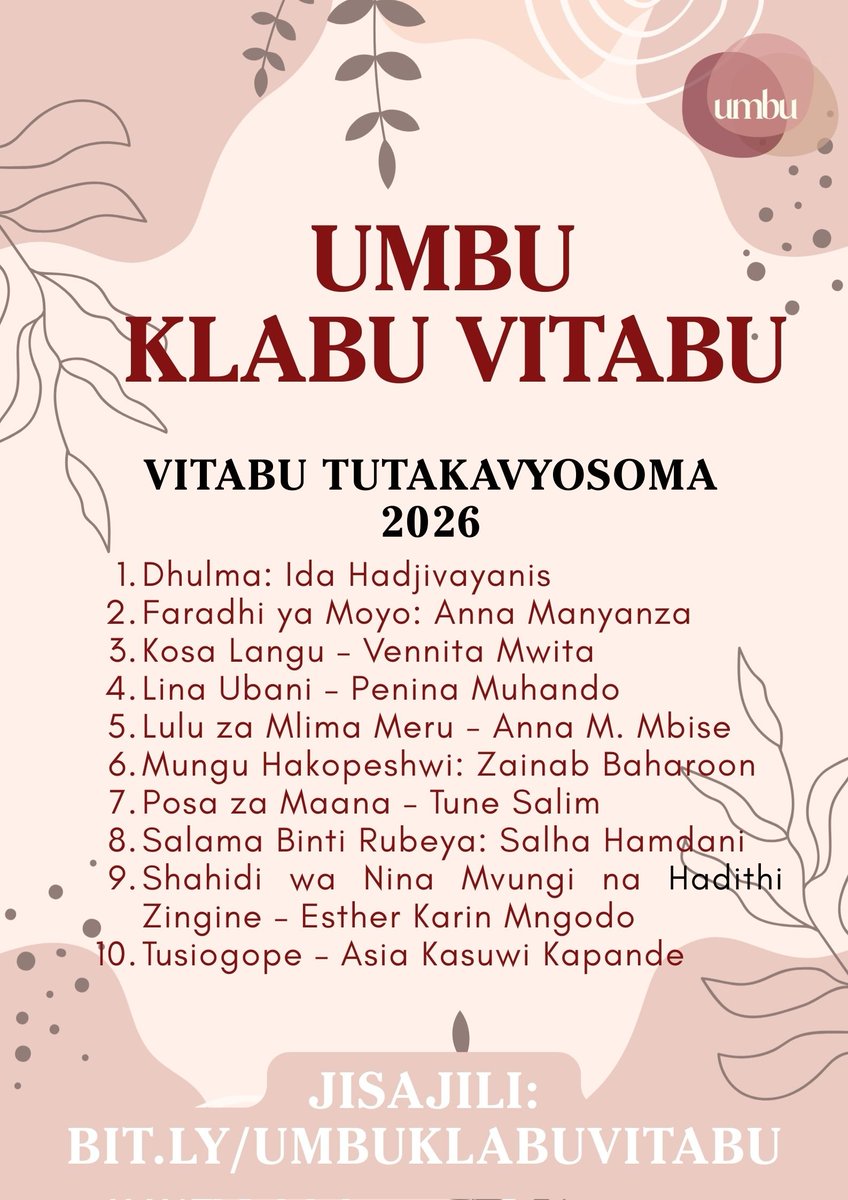
Tunapenda kuwakaribisha kwenye UMBU KLABU VITABU
Klabu hii imefungua milango kwa wanaume na wanawake, wasomaji wanaopenda fasihi ya Kiswahili kukutana na kusoma kazi za wanawake Watanzania.
1
You must read. Read nonfiction. Read fiction. Read history. Read philosophy. Read psychology. Read banned literature. Read poetry. Read about new technology. Read biography. Read memoir. Read on economics. Read on finance. Reread what you have already read. Read. Reflect. Repeat.
Issue 12 is LIVE! Guest editors: Moustapha Mbacké Diop, Aria Deemie, and Israel Campos
Cover: Ammar Abdalla Osman (Mory)
Fiction, poetry, nonfiction and visual art from Zimbabwe, Nigeria, Mauritius, Kenya, Cameroon, Uganda, Namibia, Sierra Leone and more
https://t.co/8DhIodJoJ3
It's the season of giving, and you can do so by joining a worthy cause. Help us keep the #RusingaFestival magic alive & sustain our cultural legacy with a gift of Kshs 500, 1000 or more. Every contribution makes a difference. #SubaHeritage#CulturalHeritageMatters#TuriAlala
You are invited to our book party! 📚🎉
Join us next Saturday, 20th December, at our bookstore for a lively book party filled with great conversations, book swaps, quizzes and all-round bookish fun!
✨ Special Offer: Enjoy 10% off all titles in-store on the day of the event.
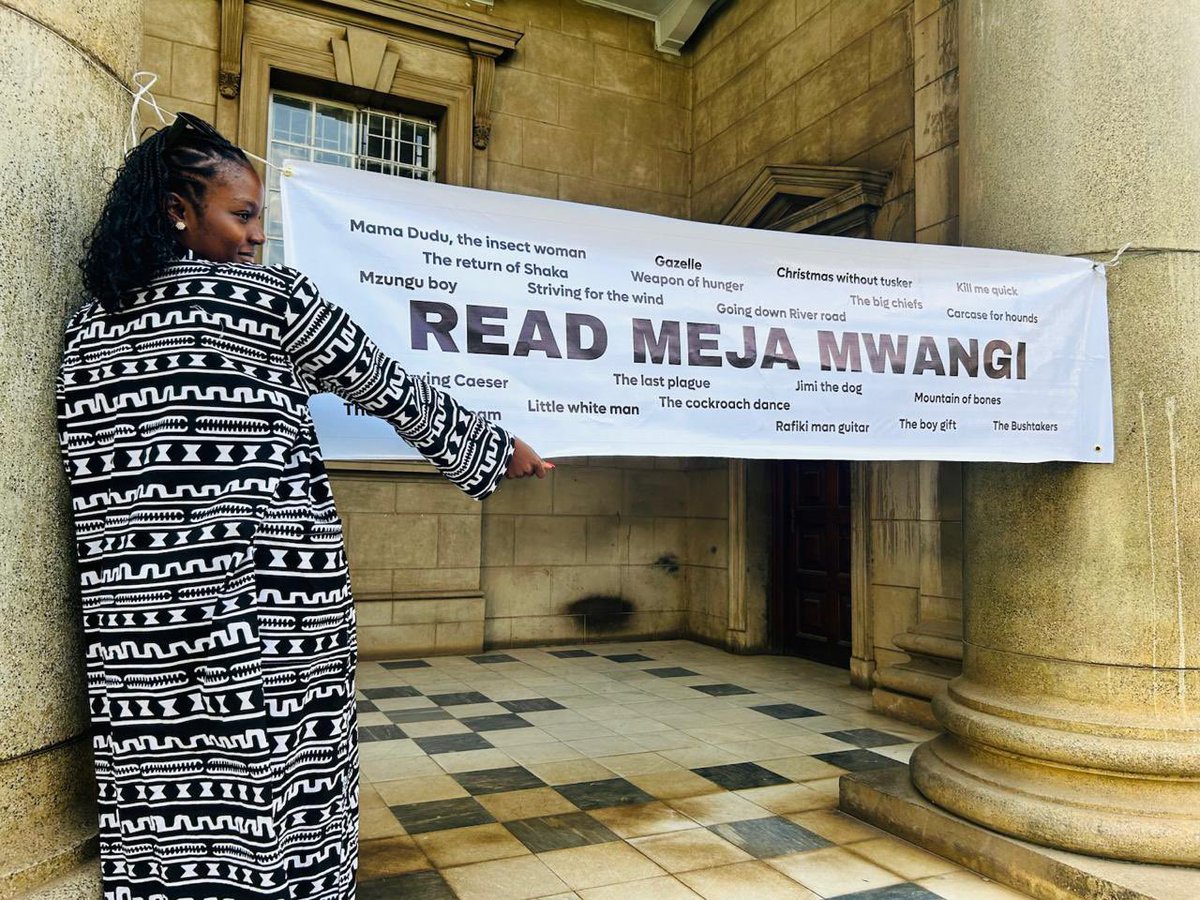
The beauty is that you gave Meja his flowers while he was still alive. And you introduced him to new audiences. Credit to you for the Read Meja Mwangi tag line.
Asante @Lexa_Lubanga
Meja Mwangi was a shape-shifter.
He carried the Kenyan novel beyond rural colonial life to urban postcolonial existence.
Soon, Meja turned to film to reach more audiences.
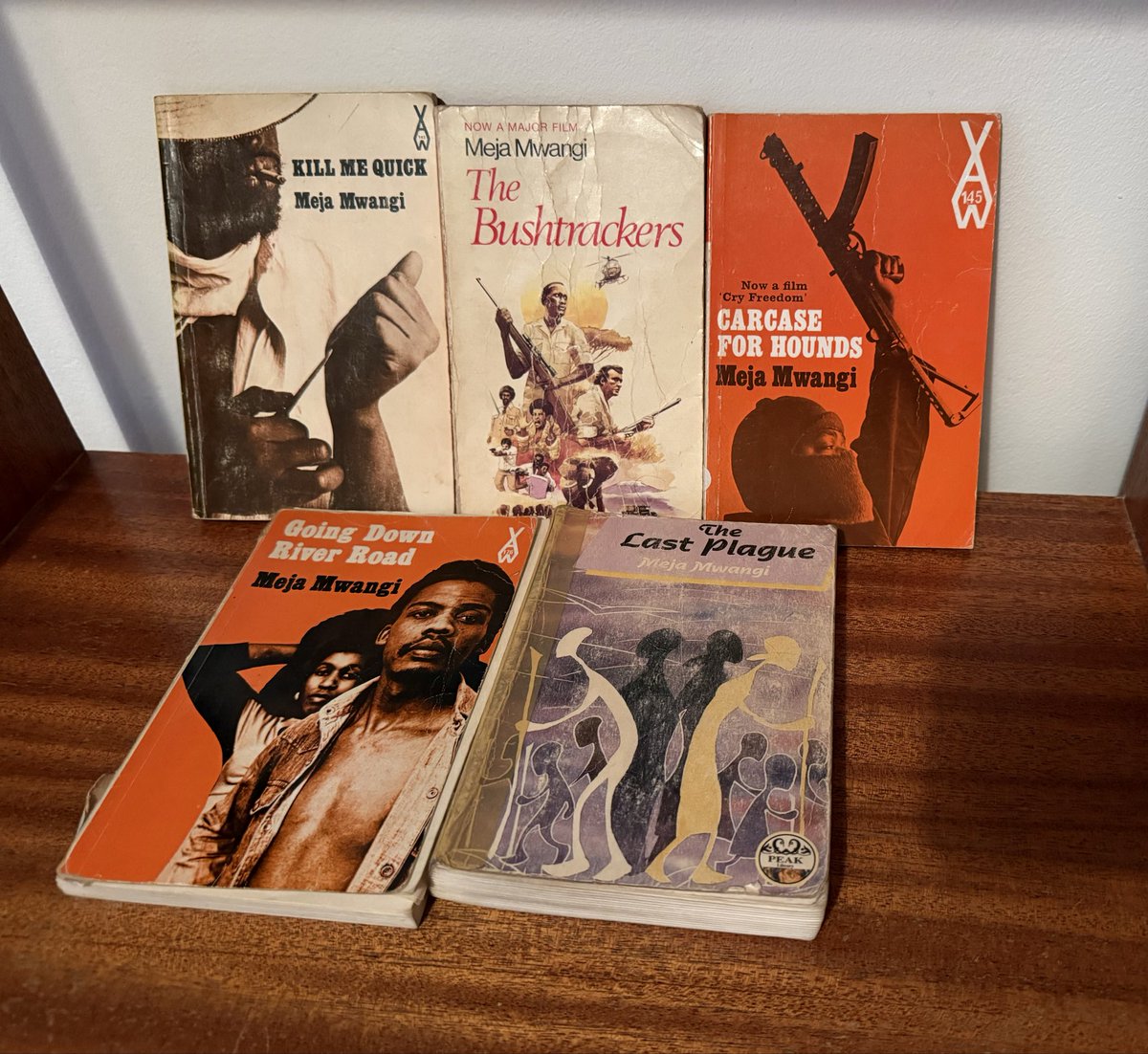
Then, as HIV/AIDS stilled many tongues, Meja unpacked our fears in “The Last Plague” (2000).
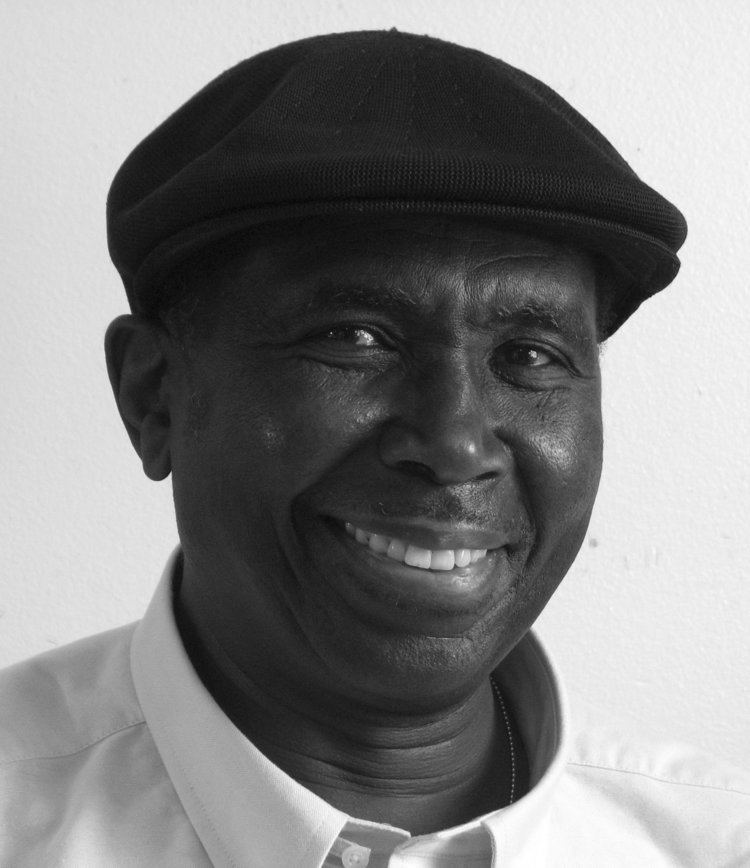
Meja Mwangi, who died yesterday, is/was the Greatest KENYAN Writer of all time.
I emphasize KENYAN, before I get into trouble with Ngugi wa Thiong’o’s disciples. Ngugi, who died in May this year, was a perennial nominee for the Nobel Prize in Literature, a continental (African) and global figure, widely regarded as one of the most consequential postcolonial writers, thinkers, and philosophers, especially in the English-speaking world.
But back home, Ngugi’s universe was the Kikuyu community (nothing absolutely wrong with this, as some of his detractors kept harping about it every time he was perennially nominated for the Nobel Prize in Literature). Ngugi’s first four novels were set against the backdrop of the Mau Mau and colonialism. None of these in any way negates Ngugi’s contribution to Kenyan letters, but he was of the world.
Enter Meja Mwangi.
Meja was ours. Kenyan to the core.
Meja Mwangi’s literature was more cosmopolitan, as most of his books were set in Nairobi, a synecdoche for Kenya and the Kenyan.
I first read Going Down River while in Class 8 or Form 1. I couldn’t put the book down. The prose was viscerally realistic. The writing was too detailed; it’s little wonder I learned later in life that Meja Mwangi went on to be a filmmaker. I wish I could watch any of his screen productions. Mwangi was only 28 when he penned what I consider the greatest Kenyan novel of all time and generations.
Nearly 35 years later, when the film Nairobi Half-Life was released, I observed that very little of Nairobi had changed between 1976 and 2012. Nairobi Half-Life was a descendant of Going Down River Road. That Nairobi underclass that will never change, no matter the speed of our internet, the Expressways, you people adopting BDSM, and such.
Around 2014, my uncle (bless his soul) took me back to Kibera to show me where I was born and spent part of my childhood. It was almost 20 years later. For sure, the roads were now paved, and there were huge streetlights, but that slum vibe was still there. My uncle took me to a woman who had been brewing chang’aa since the 1980s, still doing her thing, and introduced me to her, and told her this is the Son of Norah, and she was like, “How did you get so big?”
While there, I couldn’t help but think about how every part of Nairobi changes: people move on, out, and about, but our slums eternally retain that gritty persona. People may come and go, but newcomers always slip into the slum persona like gloves.
Anyone who grew up in Nairobi’s slums, Eastlands, Kawangware, Kangemi, can identify with all the characters in Meja Mwangi’s books, such as Going Down River Road, Kill Me Quick, Cockroach Dance, and a host of his other latter-day works. Any Kenyan, for that matter, save for the upper middle-class and the rich folks who live in a completely different Nairobi. Kill Me Quick " is the story most of us can relate to, because education promised us so much, and we moved to Nairobi, but now we live with no jobs, and all we can do is drink cheap liquor (Kill Me Quick), eat miraa, and smoke joints, because we are disillusioned. Younger millennials and Gen Zs definitely know what I am talking about.
Along with other writers such as Mwangi Ruheni, Mwangi Gicheru, Charles Mangua, and the Kibera brothers, Meja was among those who captured the zeitgeist of Nairobi and Kenya, as writers like Ngugi became full ideologues and full-time revolutionaries. Mwangi opted to be a revolutionary with his pen, hiding behind satire (that escaped authorities), while entertaining and provoking us.
Sadly, Mwangi was extremely reclusive and rarely granted interviews to scholars or journalists.
Last year, he wanted to come out and meet his fans and lovers of his work, thanks to the spirited efforts of his adopted literary daughter, @Lexa_Lubanga. We cleared our schedules in readiness to meet the man, the myth, and the legend himself, but unfortunately, he was taken ill, and that particular meet-up didn’t happen, and none would ever happen, as he has been sickly, and now he is gone.
A few years back, I asked what the Kenyan novel should be, and my choice was Going Down River Road.
The irony of his dying on the Eve of our 62nd anniversary of Independence is not lost on me, more so when successive regimes are determined to keep the youth poor, unemployed, and disillusioned, like a character in Mwangi’s book.
You can draw a straight line from Going Down River Road, to Ukoo Fulani’s Tafsiri Hii (1997), to Nairobi Half Life (2012), to Wakadinali’s Geri Inengi (2021), to whatever song that will come out of Kayole in 2030, depicting the never-changing life in the ghetto.
He leaves behind a vast body of work.
May Meja Mwangi travel well to the land yonder. Say hi to Ngugi wa Thiong’o, David Mulwa, Mwangi Gicheru, Margaret Ogola, Grace Ogot, Micere Mugo, Binyavanga Wainaina, and all the great men and women of letters we lost.
Photo: Courtesy
To all the lovers of Kenyan Literature, kesho kutakuwa na the Kenyan Readathon kutoka saa nane alasari mpaka saa kumi na jamo jioni.
Itakuwa an afternoon of book exhibitions, book discussions na a book launch.
Courtesy of @Lexa_Lubanga (wapi shangwe na vigelegele yake!)
Happy Friday folks!
Here's #WhatsOn at our hubs at Riverside Drive and Industrial Area;
🎤 KING OR QUEEN CIVIC RAP BATTLE - GRAND FINALE happening tomorrow at Baraza Media Lab Industrial Area! From 12:00 PM to 6:00 PM, the stage will light up with raw energy, sharp bars, and special performances from rising stars. In a fight for bragging rights, glory, and the throne, who will rise, King or Queen?
The September edition of Kids Lit Club kicks off on Saturday, Sept 20 at Baraza Media Lab Riverside Drive with Yvonne Wamuyu, author of A Little Nap, together with illustrator Felistas Thairu. A riddle session tied to the book’s theme will make it even more fun! RSVP and tag along your young readers: https://t.co/3baJElasEh
On Wednesday 23rd September, we join hands with the Mohamed Amin Foundation to honor the legacy of Africa’s most celebrated photojournalist, Mohamed “Mo” Amin, Together, we present Stand Together As One: The Famine, The Music, The Impact, a documentary that revisits the images and stories that moved the world during the Ethiopian famine of 1984 and sparked Live Aid and We Are the World.
Register today to be part of this commemoration: https://t.co/zIzugbMJSr
Podcasting is growing fast in Kenya and across Africa, but with growth comes important questions about taxation. What does this mean for podcasters and creators? Join us for the fourth edition of PodConnect on Thursday, 25th September from 5:00 PM at Baraza Media Lab Riverside Drive. In this session, we will be joined by Ivy Watti, a Tax Officer at the Kenya Revenue Authority (KRA), specialising in the taxation of the digital economy. Ivy brings expertise in digital services taxation, cross-border tax frameworks, and the evolving global tax landscape. Register here: https://t.co/8wtqFhSlq1
What a mix!
Fabulous pop-up market, huge secondhand book sale and loads of activities. See pinned message for full details.
Artist @bundiwamwai will be at the market for the first time with beautiful pottery.
Nuria Bookstore will be the Main Bookstore at the MACONDO LITERARY FESTIVAL 2025
The Macondo Literary Festival 2025 in Nairobi, Sept 19-21 at the Kenya Cultural Centre!
Theme "Chronicles & Currents," celebrating the vibrant literary ties of Africa, South America, and the Caribbean.
Get your tickets ready; https://t.co/hlSCqsXi0z
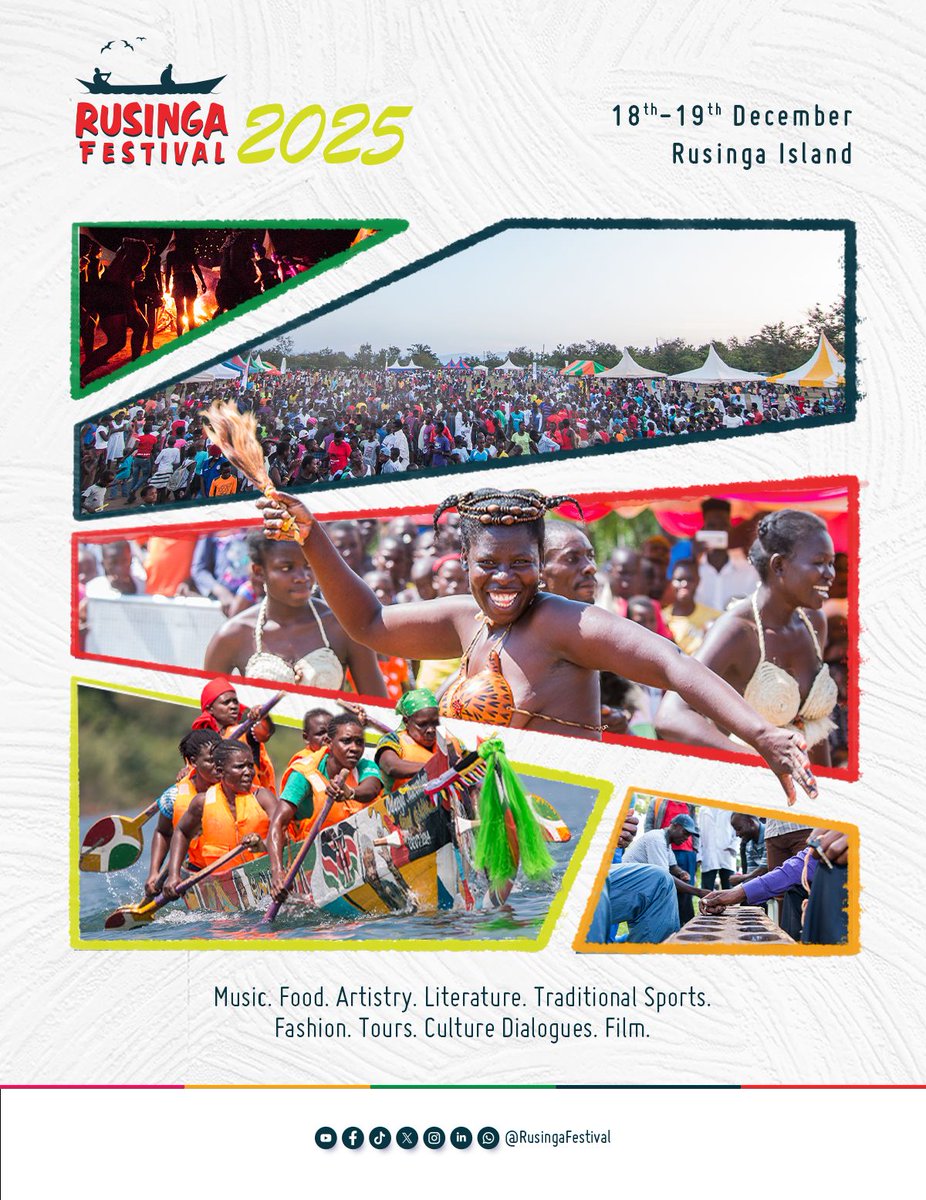
As is tradition, every last Thur & Fri before Christmas, @RusingaIsland comes alive with the colourful #RusingaFestival- a vibrant celebration of the Abasuba people & culture. This year will be no different. Save the dates for our 14th edition on 18th & 19th Dec. #RusingaFest2025