Are you ready for the new reality?
🌌 Blockchain is no longer just a platform for storing tokens - it's your digital universe
🚀 What if your account became a living reflection of your Web3 journey?
✨ Can you imagine how cool that would be?
@BrahmaFi
🧵👇
Trading is live again on THORChain.
After more than a month offline, the network is fully back. Signing, churning, secured and trade assets, LP actions, and swaps are all up and running. The world's leading Bitcoin DEX is open for business once again.
This recovery was never about speed, it was about doing it right. Every vault verified, every keyshare checked, every step taken with security and stability as the only priority. That patience paid off, and the network came back stronger than before.
None of this happens without the people behind it. Huge thanks to the node operators who stayed online through every vote and upgrade, the devs who worked relentlessly to ship the fixes, the Maya Protocol team for keeping the lights on, and a community that didn't flinch once.
The pipeline's stacked. $XMR is coming, with native Monero swaps already working end to end in testing and a live launch on the horizon. $ZEC follows close behind. Dynamic fees, and deeper liquidity are all on the way.
THORChain got hit, held the line, and kept shipping. Same chain, same ethos, same mission.
Welcome back, Chads. Let's trade.⚡️
The top RWA markets on Pendle are offering up to 20.26% fixed APY right now, with the full top 10 clearing 11%+.
In a volatile environment where variable rates shift with sentiment, fixed yield on RWA gives us the chance to actually predict and plan around.
A great new article just went live on the The Holding blog, explaining the logic behind The Holding ecosystem and how each fund plays a specific role within the overall capital structure.
Worth a read if you want to better understand how the system is designed to balance growth, yield, stability, and diversification.
• https://t.co/XL3boQiasP
LLM Knowledge Bases
Something I'm finding very useful recently: using LLMs to build personal knowledge bases for various topics of research interest. In this way, a large fraction of my recent token throughput is going less into manipulating code, and more into manipulating knowledge (stored as markdown and images). The latest LLMs are quite good at it. So:
Data ingest:
I index source documents (articles, papers, repos, datasets, images, etc.) into a raw/ directory, then I use an LLM to incrementally "compile" a wiki, which is just a collection of .md files in a directory structure. The wiki includes summaries of all the data in raw/, backlinks, and then it categorizes data into concepts, writes articles for them, and links them all. To convert web articles into .md files I like to use the Obsidian Web Clipper extension, and then I also use a hotkey to download all the related images to local so that my LLM can easily reference them.
IDE:
I use Obsidian as the IDE "frontend" where I can view the raw data, the the compiled wiki, and the derived visualizations. Important to note that the LLM writes and maintains all of the data of the wiki, I rarely touch it directly. I've played with a few Obsidian plugins to render and view data in other ways (e.g. Marp for slides).
Q&A:
Where things get interesting is that once your wiki is big enough (e.g. mine on some recent research is ~100 articles and ~400K words), you can ask your LLM agent all kinds of complex questions against the wiki, and it will go off, research the answers, etc. I thought I had to reach for fancy RAG, but the LLM has been pretty good about auto-maintaining index files and brief summaries of all the documents and it reads all the important related data fairly easily at this ~small scale.
Output:
Instead of getting answers in text/terminal, I like to have it render markdown files for me, or slide shows (Marp format), or matplotlib images, all of which I then view again in Obsidian. You can imagine many other visual output formats depending on the query. Often, I end up "filing" the outputs back into the wiki to enhance it for further queries. So my own explorations and queries always "add up" in the knowledge base.
Linting:
I've run some LLM "health checks" over the wiki to e.g. find inconsistent data, impute missing data (with web searchers), find interesting connections for new article candidates, etc., to incrementally clean up the wiki and enhance its overall data integrity. The LLMs are quite good at suggesting further questions to ask and look into.
Extra tools:
I find myself developing additional tools to process the data, e.g. I vibe coded a small and naive search engine over the wiki, which I both use directly (in a web ui), but more often I want to hand it off to an LLM via CLI as a tool for larger queries.
Further explorations:
As the repo grows, the natural desire is to also think about synthetic data generation + finetuning to have your LLM "know" the data in its weights instead of just context windows.
TLDR: raw data from a given number of sources is collected, then compiled by an LLM into a .md wiki, then operated on by various CLIs by the LLM to do Q&A and to incrementally enhance the wiki, and all of it viewable in Obsidian. You rarely ever write or edit the wiki manually, it's the domain of the LLM. I think there is room here for an incredible new product instead of a hacky collection of scripts.
Stablecoins just flipped the US banking system (ACH). Stablecoins processed $7.2T in February, surpassing ACH at $6.8T for the first time ever.
Crypto Twitter presence has collapsed over 90% since the peak of active users in 2025.
Google searches for "crypto" just hit 5-year lows. The same level hit during FTX collapse, bear market bottom, and every major capitulation.
Monero (XMR) pool on THORChain is created and a successful swap performed. This is a 0-1 development because it could bring fungibility to bitcoin and all crypto.
Rapid swaps now account for 34% of @THORChain volume, up from 1.5% at launch just 9 days ago.
Most frontends haven't integrated it yet. This is just the start. 🔥
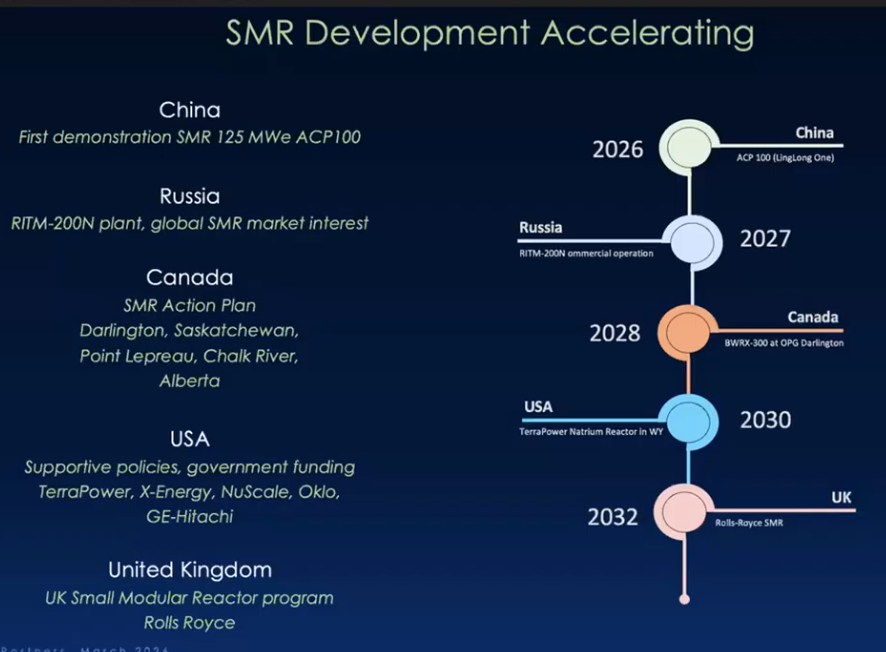
Here are a few of Treva's excellent slides👩💼 and excerpts from her talk that include very bullish #Nuclear fuel demand and #Uranium supply commentary coming from leading industry consultants:🎆😲
"We see incredible momentum building for the expansion of nuclear power. From alliances between countries on nuclear generation cooperation to license extensions and funding partnerships, it is clear that countries and governments realize that nuclear power will be needed to meet global electricity needs."
"The need for secure electricity supply and energy sources has only been further highlighted by the conflict in Iran and the closure of the Strait of Hormuz."
"In the last couple of years we've also witnessed the upending of long-standing trade relationships, policy positions, and alliances. This has all primarily been driven by political developments in the United States, and that continues even now. This has impacted several sectors, but most important for those of us here is the impact on nuclear power and uranium mining and that has been reflected in increased price volatility."
"At the same time, a lack of development on the supply side is contributing to what we see as a widening gap between supply and demand for the foreseeable future. And one of the reasons for that lack of development has been a lack of investment in new uranium production."
"You'll notice that the growth scenario is more clearly defined in this version. That is because we are seeing firm commitments across all sectors of nuclear generation, new builds, SMRs, upgrades, life extensions, and restarts. And this comes at a time when the availability of production from existing supply sources is under great strain."
"And the new updates to our demand forecasts reinforce the fact that the evolving deficit between supply and demand indeed requires that new uranium production is required well before 2030 and that need grows significantly. The demand is there and that demand evolves from policy promises to real reactor construction."
"Very similar to what AI has done for the technology sector, SMRs are drawing in big financial interests and support in anticipation of exponential advancements in the future. However, the projected growth in advanced nuclear power capacity now extends well beyond SMRs. The appetite for large-scale light-water reactors is growing in proportion to the rising electricity demand I mentioned earlier and several large reactors are progressing today alongside their smaller counterparts."
"Today full-scale reactor projects constitute the majority of planned capacity and these large units are largely behind a forecasted increase in uranium demand that could reach nearly 220 million pounds per year by 2030 which I have to remind everyone is just a few short years away!"
"And speaking of the larger reactors, I mentioned earlier that we need to meet certain policy goals, whether they're rooted in clean energy mandates, energy independence, or even in energy dominance. The industry must protect existing capacity."
"What we've witnessed in the industry in the 2020s is a shift from economically driven premature reactor shutdowns to a long-term trend in life extensions and capacity expansions. To date in the US, life extensions have preserved over 94 gigawatts of nuclear generating capacity. Upgrades and refurbishments have added 8 gigawatts of additional generating capacity and recommissioning is scheduled to reintroduce another 3 gigawatts of generating capacity to the US fleet. And this is a trend that is happening worldwide."
"Reactor recommissioning represents an unprecedented global trend and it is perhaps in our minds the truest indicator of the true level of support and demand for nuclear power in the US, where just a few years ago reactors were being shut down prematurely."
"And on that note, I want to also mention that several countries, not just in the US, are reversing their plans to exit nuclear power and seeking to preserve existing capacity. Just today, Taiwan affirmed its intention to reverse plans for a nuclear phase out. Other countries, including Belgium, the Netherlands, Switzerland, Italy, are all reconsidering their exit as well."
"As prices exceed production costs and near incentive pricings, several emerging suppliers are cued in their respective pre-construction final investment decision stages. Approximately two dozen emerging producers are positioned to produce up to 50 million pounds by 2030. However, fueling that immense demand is going to come at a cost and that cost is rising."
"Since the fourth quarter of 2021, explorers, developers, and producers have weathered inflated costs in several areas such as chemical reagents, consumables, specialist equipment, and key services pertinent to the uranium production sector. What is apparent is the steady pressure of inflation on the cost of key consumables, materials, and services used to produce uranium concentrates. And unless significant development emerges that would drive underlying costs down, these cost increases become embedded. And that's what we've seen over the last few years."
"Note that we expect to see additional spikes in some of these inputs due to the current tensions that we have in the Middle East, and that inflation data does lag. We do expect higher costs for petroleum, sulfuric acid and other consumables due to the current supply chain disruptions occurring in the Middle East. These increases will affect everyone in the supply stack, existing and incumbent producers as well as emerging production."
"Deposits have become more expensive to delineate and take longer to develop in the modern world. And those capital requirements and long lead times require a level of certainty that only long-term contracting and targeted investment can provide. And this reality is pushing uranium equities up because the horizon for new supply is relatively distant compared to previous cycles."
"From both a policy and financial standpoint, we're seeing greater support for uranium mines, including from retail and institutional investment. And the significant liquidity in this space is underpinned by government support. For example, in the US where the government is providing support for domestic production with streamlined licensing, trade restrictions on foreign imports and funding for critical mineral stockpiles. And we see these trends in other countries as well. This is all contributing to greater confidence among investors. It is exactly this kind of policy-driven financial framework that we believe will free up much needed capital for those new reactor projects we talked about earlier."
The future for the Uranium mining sector has never looked better!📈🔮👀🤠🐂
Some treat them like holy relics. Others, like loaded weapons.
No one agrees who made the first ones - code that mutated inside dead networks after the Spike.
Artefact concept sketches by Wētā Workshop.
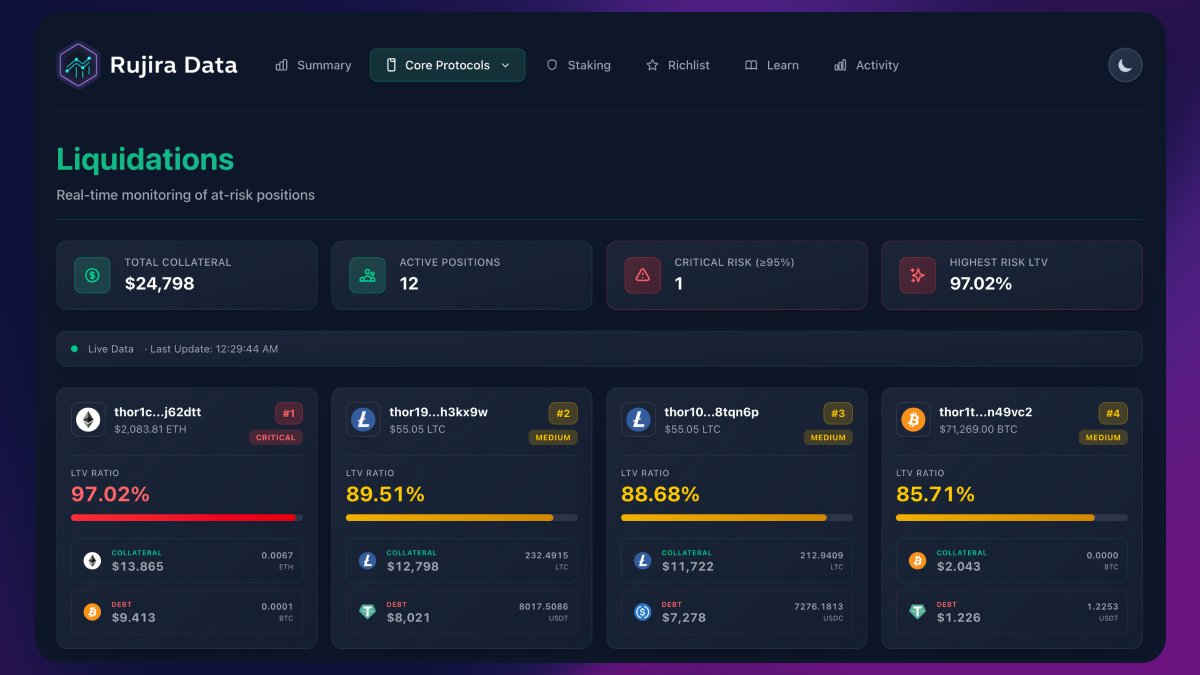
In most of DeFi, liquidations are captured by insiders or bots.
With RUJI Liquidations, we open the market so you can bid and participate alongside everyone else.
More loans lead to more liquidations and discounts.
A fairer system where anyone can compete. 🐳
Most people think using Claude Code is about writing better prompts.
It’s not.
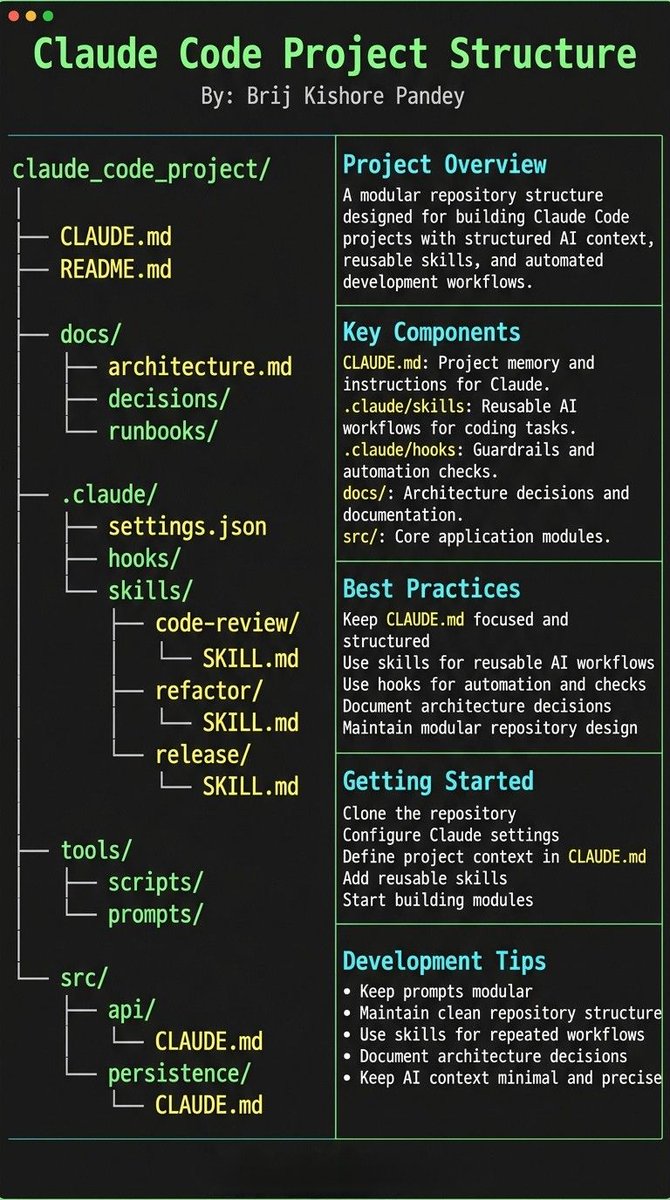
The real unlock is structuring your repository so Claude can think like an engineer.
If your repo is messy, Claude behaves like a chatbot.
If your repo is structured, Claude behaves like a developer living inside your codebase.
Your project only needs 4 things:
• the why → what the system does
• the map → where things live
• the rules → what’s allowed / forbidden
• the workflows → how work gets done
I call this:
The Anatomy of a Claude Code Project 👇
━━━━━━━━━━━━━━━
1️⃣ CLAUDE.md = Repo Memory (Keep it Short)
This file is the north star for Claude.
Not a massive document.
Just three things:
• Purpose → why the system exists
• Repo map → how the project is structured
• Rules + commands → how Claude should operate
If CLAUDE.md becomes too long, the model starts missing critical signals.
Clarity beats size.
━━━━━━━━━━━━━━━
2️⃣ .claude/skills/ = Reusable Expert Modes
Stop repeating instructions in prompts.
Turn common workflows into reusable skills.
Examples:
• code review checklist
• refactoring playbook
• debugging workflow
• release procedures
Now Claude can switch into specialized modes instantly.
Result:
More consistent outputs across sessions and teammates.
━━━━━━━━━━━━━━━
3️⃣ .claude/hooks/ = Guardrails
Models forget.
Hooks don’t.
Use hooks for things that must always happen automatically.
Examples:
• run formatters after edits
• trigger tests after core changes
• block sensitive directories (auth, billing, migrations)
Hooks turn AI workflows into reliable engineering systems.
━━━━━━━━━━━━━━━
4️⃣ docs/ = Progressive Context
Don’t overload prompts with information.
Instead, let Claude navigate your documentation.
Examples:
• architecture overview
• ADRs (engineering decisions)
• operational runbooks
Claude doesn’t need everything in memory.
It just needs to know where truth lives.
━━━━━━━━━━━━━━━
5️⃣ Local CLAUDE.md for Critical Modules
Some areas of your system have hidden complexity.
Add local context files there.
Example:
src/auth/CLAUDE.md
src/persistence/CLAUDE.md
infra/CLAUDE.md
Now Claude understands the danger zones exactly when it works in them.
This dramatically reduces mistakes.
━━━━━━━━━━━━━━━
Here’s the shift most people miss:
Prompting is temporary.
Structure is permanent.
Once your repository is designed for AI:
Claude stops acting like a chatbot...
…and starts behaving like a project-native engineer. 🚀
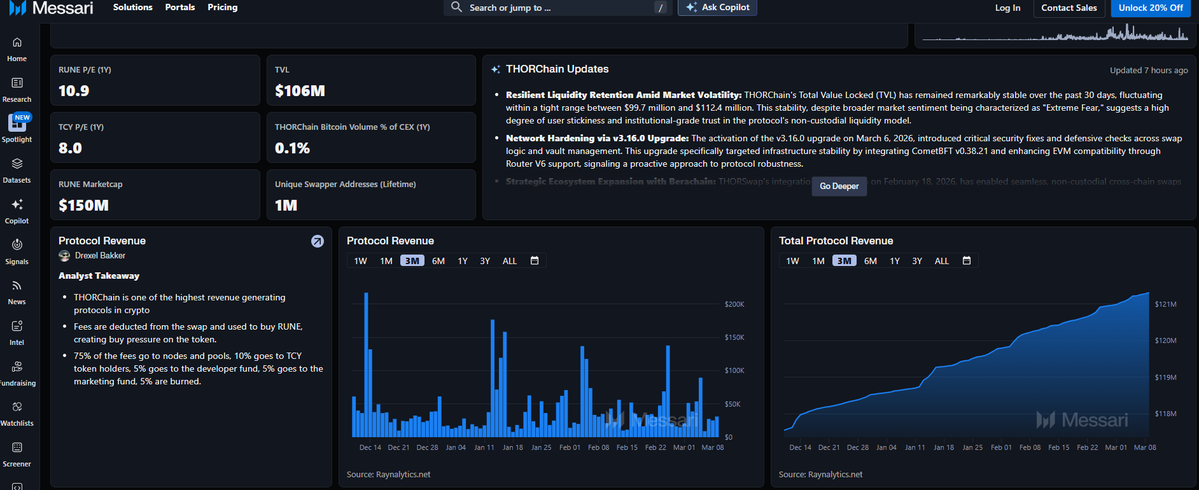
Mind-Blowing @THORChain Analysis! 🏛️
The Numbers:
• Lifetime Affiliate Revenue: $47M (🤯)
• Lifetime Protocol Revenue: $121M
• Lifetime Swap Volume: $121B
The Fundamentals:
• THORChain’s $BTC volume was at 0.26% vs CEX volume in 2025
• $RUNE P/E (1Y): 10.9
• $TCY P/E (1Y): 8.0
Key Analyst Takeaways:
1️⃣ Revenue King: One of the highest revenue-generating protocols in all of crypto.
2️⃣ Chain Leader: Ethereum led in swap fees ($14.7M) in 2025.
3️⃣ Capital Efficient: A pool with $5M depth can handle a $5M swap with ease.
4️⃣ Top Affiliate: @TrustWallet made $6.1M in fees in 2025, a big proof the integration works.
" The World’s Leading Bitcoin DEX - Powering the Future of Cross-Chain Finance " ⚡
Explore the latest @MessariCrypto 's THORChain Dashboard for a deep-dive. Link Below! 👇
Market making has traditionally been a game for large trading firms.
With Custom Concentrated Liquidity (CCL), that changes.
CCL will give anyone the ability to automatically trade and earn passive income from market volatility, 24/7.
Let’s dive into the basics of CCL 👇🧵
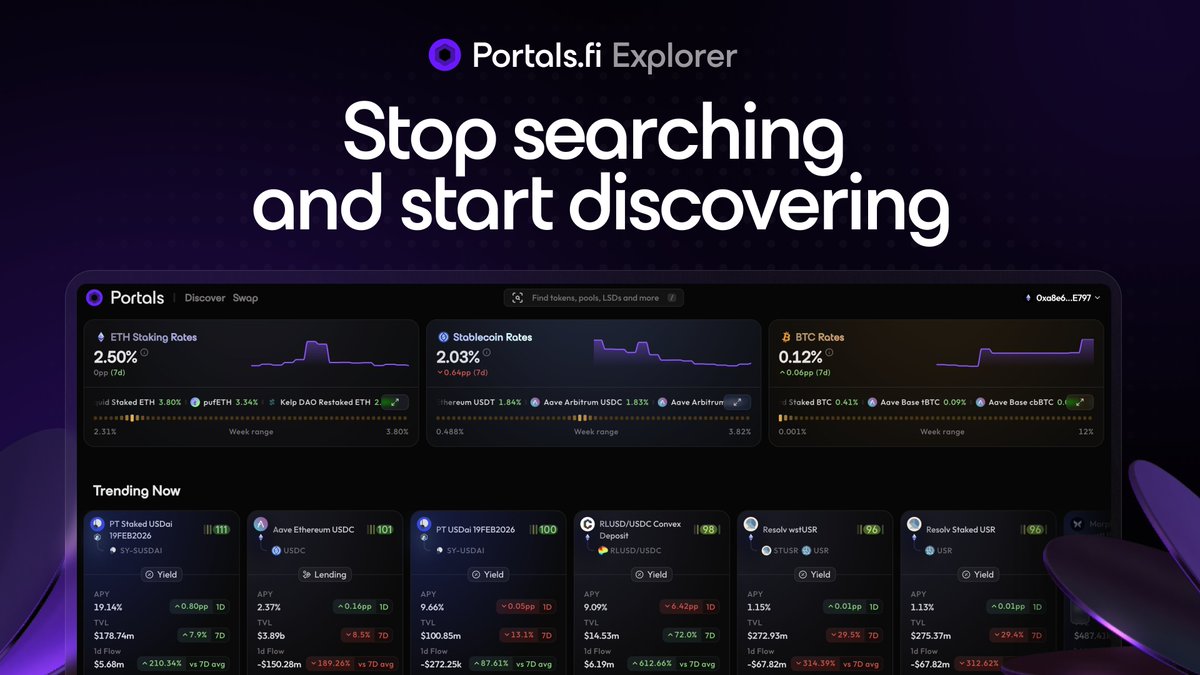
Our new Discover page allows you to get specific.
How specific?
Say, you’re looking for a stablecoin yield opportunity on @ethereum with a minimum 9% APY and at least $2M TVL.
And now, let's say, only on protocols @ipor_io & @yearnfi?
Done. What would you search for? 🤔
🚀 Portals Explorer just became your new base of DeFi operations, launching with all-new features & look 😎
Here are 6️⃣ ways to utilize its new capabilities and get the most out of your assets.
(1/8 🧵)👇