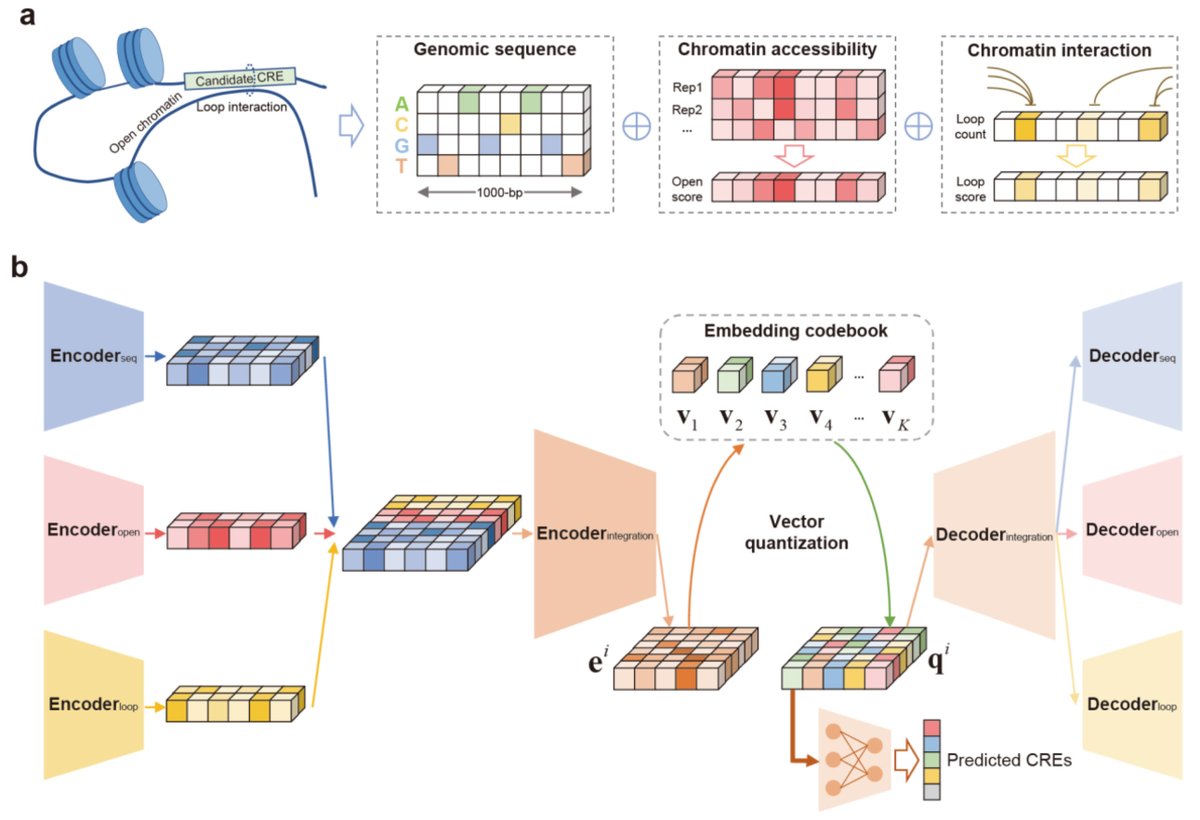
Excited to share my submission to the GI Builder Challenge #genomics#AI#bioinformatics@GenomeLayer
Turning a Genomic Model into a Sequence Designer: GI × Proto https://t.co/yjEwFKmvZr
Free scientific illustrations for biologists! 😍
@NIH has released a library of 500+ free scientific illustrations to create figures, presentations, and illustrations!
all freely available in the public domain.
Retweet and spread the message!
https://t.co/p1bD1kxO7H
BREAKING NEWS
The Royal Swedish Academy of Sciences has decided to award the 2024 #NobelPrize in Chemistry with one half to David Baker “for computational protein design” and the other half jointly to Demis Hassabis and John M. Jumper “for protein structure prediction.”
PlasmidGPT: a generative framework for plasmid design and annotation
1/ PlasmidGPT introduces a novel framework for designing plasmid DNA using a transformer-based generative model. It leverages 153,000 plasmid sequences to create new designs with low sequence similarity to the training data but with similar structural properties.
2/ One of the most exciting features is PlasmidGPT's ability to generate plasmid sequences based on specific user inputs, enabling controlled and custom designs. This opens up new possibilities for efficient plasmid creation in biotechnology applications.
3/ The model uses sequence embeddings to predict attributes like lab origin, species, and vector type, outperforming conventional models like CNNs. It demonstrated an 81% top 1 accuracy in predicting the lab of origin, a significant improvement over previous approaches.
4/ PlasmidGPT also successfully extends its capabilities to natural plasmids, showing comparable performance to CNNs, but with much faster computational time. This could facilitate rapid analysis of both engineered and natural plasmid sequences.
5/ A fascinating aspect is its application in predicting unseen plasmids. In out-of-distribution tests, PlasmidGPT accurately predicted the lab of origin and growth strain, demonstrating robustness in handling new data.
6/ By treating DNA sequences like language, PlasmidGPT provides an intuitive, efficient tool for plasmid analysis and design. Its ability to fine-tune for specific applications (e.g., mammalian vs. bacterial plasmids) highlights its versatility.
@ShaoBin_phy
💻Code: https://t.co/urkQPIqNCP
📜Paper: https://t.co/UN6BbedtP9
🧬 Happy to share our new work on enhancer-enhancer cooperativity in Drosophila! Using STARR-seq, we analyzed over 1,000 individual enhancers and 1 million enhancer pairs to explore how they regulate tissue-specific vs. housekeeping genes.
Read more: [https://t.co/mM0NQg63dN]
💥 ANNOUNCEMENT: Opik v1.0 is released! 💥
Opik is an open source LLM evaluation framework for:
🔥 Implementing LLM-based metrics
🪲 Logging/debugging LLM traces
💯 Scoring, annotating, and versioning LLM data
And so much more. Check out the repo below.
This "frugal CRISPR kit" costs about $2.
It includes a cell-free extract (no living cells), plasmids encoding colorful proteins, and Cas9 + guide RNAs.
Students express colorful proteins in the extract & then use CRISPR to cut the protein-coding genes, leading to loss of color.
After a high dose of psilocybin, the brain desynchronizes at a massive scale, causing loss of our sense of self, time, and space. This may drive the burst of plasticity caused by psychedelics. The next day, brain activity has largely returned to normal, but an echo remains – a reset of circuits critical to the sense of self.
Our study is out today in @Nature https://t.co/PjACA6nkAy
Single-cell profiling of H3K27ac, H3K27me3 and H3K4me3 histone modifications from progenitor to differentiated neural fates in human brain and retina #organoid models
@TreutleinLab@GrayCampLab@joschf@EpiGN_lab@ETHZ
https://t.co/VdSy3u7T52
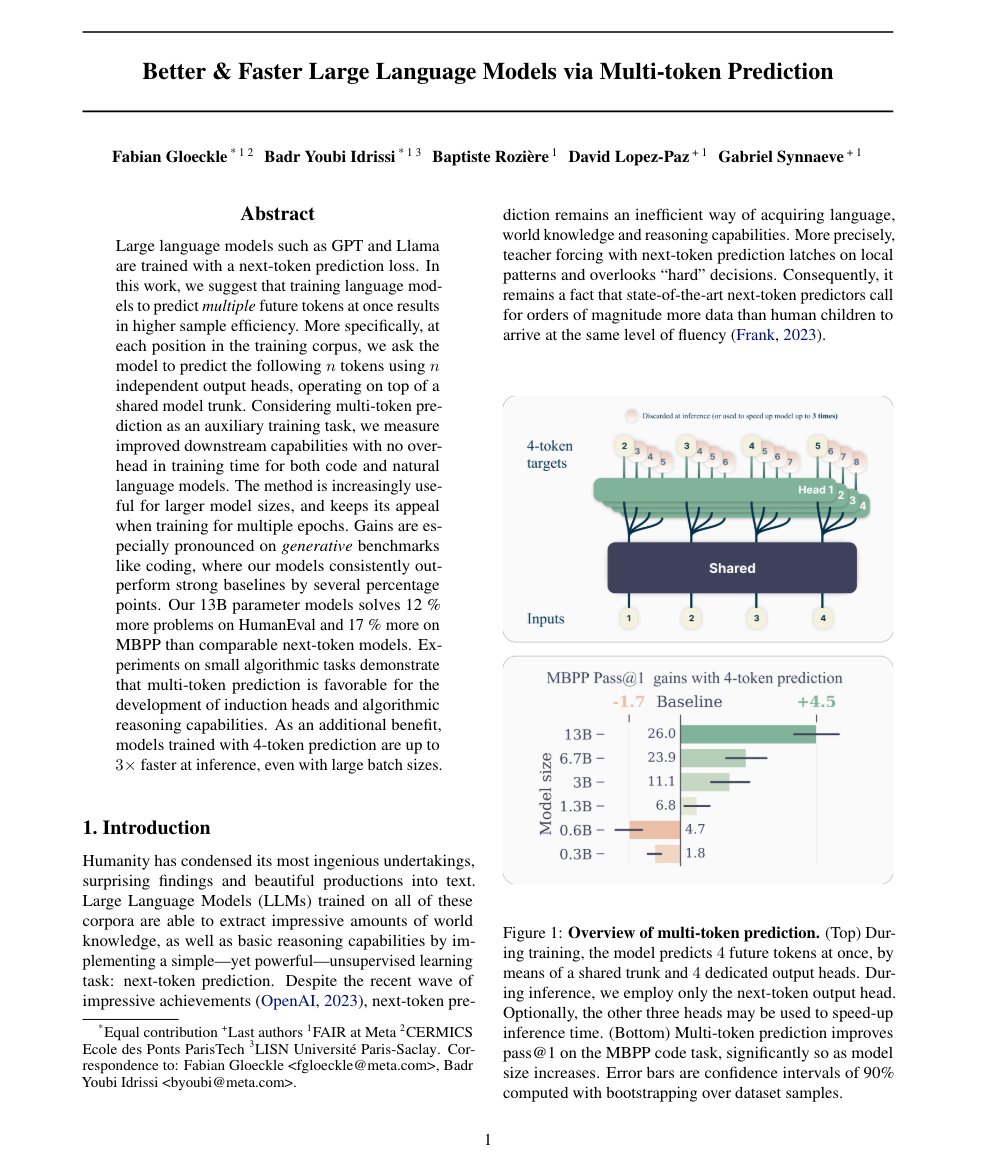
New research from FAIR: Better & Faster Large Language Models via Multi-token Prediction
Research paper ➡️ https://t.co/Q36b6FUjDj
We show that replacing next token prediction tasks with multiple token prediction can result in substantially better code generation performance with the exact same training budget and data — while also increasing inference performance by 3x.
While similar approaches have previously been used in fine-tuning to improve inference speed, this research expands to pre-training for large models, showing notable behaviors and results at these scales.
AI and Drug Discovery
Finally, we are seeing useful results in this critical field.
Researchers used graph neural networks to predict the toxicity of over 12M compounds. This would have been impossible to do in a wet lab. They then used these results in antibiotic discovery. (link in alt)
This directed approach makes sense and is an excellent example of deep learning, and AI can help in the real world.
In contrast, while there was a lot of hype around AlphaFold, an AI model that predicts protein structures, it hasn't resulted in any significant leap in drug discovery yet. In fact, I couldn't find any drug in the market that was discovered due to AlphaFold. Part of the issue is that protein structure is rarely the limiting factor in drug discovery.
This is another reminder that AI research hype far outpaces the reality on the ground.
Overall, AI and drug discovery is very early, but we are starting to see some promising results in the real world.
Don't pay ridiculous amounts of money to study Python, Data Science, and Machine Learning.
Learn from the experts at Google, IBM, Stanford, MIT, and Harvard universities.
(A thread) 👇 📌
One year after open-sourcing its AlphaFold Protein Structure Database, @DeepMind and @emblebi are expanding it from nearly 1M to over 200M protein structures, covering almost every organism that has had its genome sequenced, a huge milestone.
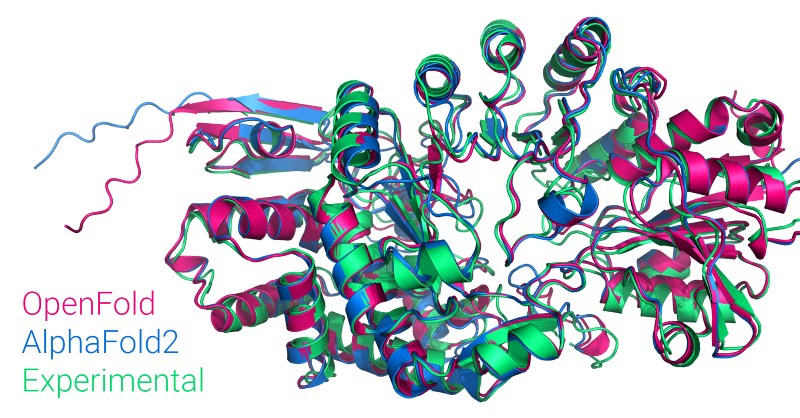
We have successfully trained OpenFold from scratch, our trainable PyTorch implementation of AlphaFold2. The new OpenFold (OF) (slightly) outperforms AlphaFold2 (AF2). I believe this is the first publicly available reproduction of AF2. We learned a lot. A🧵1/12
Come join us if you're in London this weekend! We'll be running a stall in the Great Exhibition Road festival - find us in the Adult Zone (Royal Geographical Society).