Stem cell differentiation involves passing through a reversible "licensing" (aka "specification") step, which we don't understand well. Why does this exist? @RGarciaTejera may have an explanation, from his modelling work predicting how the stem cell pool is impacted.
Stem cells often get licensed for differentiation and yet remain capable of fully regaining stem cell function. What is the role of licensing in homeostasis and regeneration? Read our latest preprint with @LinusSchumacher, @ramon_grima and Marc Amoyel:
https://t.co/OOGYzwUaoX
@LabRawlins@GurdonInstitute Has to be done! The rules are any time in January is still OK - bakeries sell it for the whole month. And definitely need someone under the table.
Therefore, we suggest that CK2 activity in stem cells maintains eIF4F-dependent translation through eIF3d phosphorylation. This leads to a selective translation programme, that changes upon loss of niche signals.
New lab preprint! Very excited to share this work, led by Ruoxu Wang. We study how stem cell fate is controlled post-transcriptionally and find a new regulator of translation initiation:
https://t.co/ru4mxs33N9
So we hypothesise that the phosphorylation of eIF3d is a way to strengthen the eIF3-eIF4F interaction. Indeed, work by Mykola in the @TelemanLab shows that CK2 inhibition weakens the interaction between eIF3d and eIF4F.
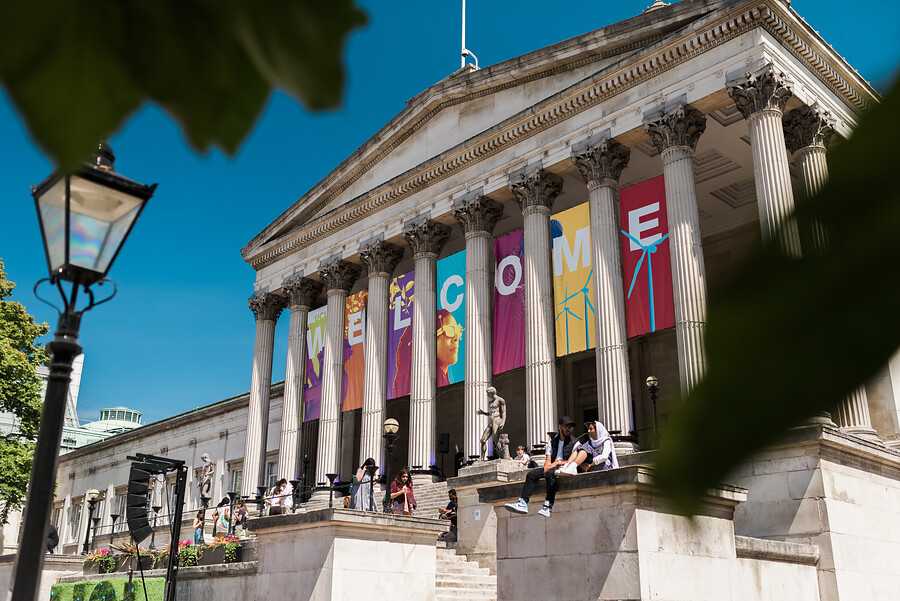
Announcing our new scholarship scheme! 👏
The UCL Research Excellence Scholarships (RES) is offering up to 40 scholarships to exceptional applicants from any country to pursue MPhil and PhDs at UCL!
Applications close on Friday 12 Jan - apply now!👇
https://t.co/ZqR3kKvD9M
First Postdoc paper, first 🦓🐟 paper, first journal cover! 🥳
🎶On the fourth day of Christmas, Dev Cell gave to me: An improved Erk biosensor that detects oscillatory Erk dynamics driven by mitotic erasure during early development🎶
https://t.co/0GPd7v7jJo...