তোমার বুকের 'পরে আমাদের পৃথিবীর অমোঘ সকাল;
তোমার বুকের 'পরে আমাদের বিকেলের রক্তিল বিন্যাস;
তোমার বুকের 'পরে আমাদের পৃথিবীর রাত ;
নদীর সাপিনী, লতা, বিলীন বিশ্বাস।
তোমাকে /জীবনানন্দ দাশ
If you stood in the grand labs of University College London in 1920, the toast of Europe was not a British aristocrat. It was a young Bengali who had lived a double life as an anti-British revolutionary, a man who would single-handedly build the hidden framework of modern Indian survival.
Here is the meat, the muscle & the deep historical bones of the ghost of Indian science: Jnanendra Nath Mukherjee.
Before he was a master of atoms, Jnanendra Nath Mukherjee was a targeted man.
Imagine a teenage boy in British-occupied Bengal, his father dead when he was 12. He is raised by a mother of steel who demands absolute discipline. By day, Jnanendra walks the halls of the Municipal High School in Burdwan, enduring the sneers of Christian missionaries mocking Indian civilization. The humiliation burns.
By night, he slips into the shadows. He becomes an active, underground operative of the Anushilan Samiti: the secret revolutionary society dedicated to the armed overthrow of the British Empire. He is learning physical fitness, martial arts & cell communication.
But Jnanendra realizes a profound truth: You cannot build a free nation if you do not understand the very soil it stands on. He chooses a weapon more potent than a bomb: the textbook.
He enters Presidency College, Calcutta. Look at this photograph from the era. He is standing shoulder-to-shoulder in the same class with Satyendra Nath Bose & Meghnad Saha. While his friends chase stars & quantum physics, Jnanendra looks down at the dirt.
In 1915, while still a master’s student, he writes a paper on the Electric Synthesis of Colloids. The Journal of the American Chemical Society publishes it instantly. No Indian student had ever pulled off such an audacity.
By 1919, he lands at University College London under the legendary F.G. Donnan. The European scientific establishment thinks they are dealing with a colonial subject. Jnanendra unleashes the Boundary Method.
Colloids are tiny, microscopic particles suspended in a liquid (like proteins in blood/clay in water). No 1 could accurately measure how fast they moved under an electric current. Jnanendra invents a completely novel visual technique using a sharp, physical boundary line to clock their exact speed, the cataphoretic speed.
He presents his paper on the Origin & Neutralisation of the Charge of Colloids at a massive joint discussion of the Faraday Society. The global journal Nature runs a glowing profile, crowning him as the undisputed exponent of colloid chemistry in the world.
When Donnan leaves the university for vacations, he does not hand the keys of the department to a British senior researcher. He hands his entire lecture load & his junior research students to Jnanendra Nath Mukherjee.
Jnanendra returns to India. He is appointed Director of the Imperial (now Indian) Agricultural Research Institute (IARI) in 1945. This is where his true, unsung masterpiece is forged.
In the 1940s, India is starving. The Bengal Famine has ripped through the country. The British are bleeding the land dry. Food security is a myth because no 1 actually understands what makes Indian soil tick. Bureaucrats treat soil like static dirt.
Jnanendra scoffs. He applies his complex, advanced European electrochemistry to mud. He maps out the Theory of Soil Acidity. He explains how clay particles hold onto nutrients via electrical charges, creating the "Calcutta School of Soil Science."
In 1944, working frantically against the clock, Jnanendra & 2 colleagues draw the 1st-ever comprehensive Soil Map of India.
It was not just a map; it was a blueprint for survival. It told a young, emerging nation exactly where to plant, what to fertilize & how to prevent the country from slipping into a permanent state of famine. He single-handedly laid the foundational data that the Green Revolution would later rely upon.
Yet, the personal cost was staggering. While Jnanendra was conquering global science, his young wife passed away, leaving him with a 2 yr old son. He never remarried. For the rest of his life, this global titan brought up his only child single-handedly, balancing the tears of a lonely toddler with the crushing weight of building India's agricultural institutions.
And how did the colonial administration reward this groundbreaking work on soil electrochemistry? They called it "Luxury Research."
Bureaucrats in white suits could not understand why a man with a London pedigree was using ultra-refined physical chemistry instruments to analyze clay. They tried to starve his lab of funding. They mocked the idea that physics belonged in a farmer's field.
He fought them tooth & nail. He used his formidable, stubborn personality to force the creation of the Indian Society of Soil Science. He served on committees for forestry, irrigation & land utility. He even single-handedly developed methods using UV light & fluorescence to differentiate crude oils for India’s early energy sectors!
Yet today, if you walk down the streets of Kolkata/Delhi, there are no giant statues of Jnanendra Nath Mukherjee. His peers who built rockets & split atoms became household names. But the man who mastered the microscopic electrical charges of the earth to keep millions from starving became a phantom.
He died in 1983 at the ripe age of 90. He did not leave behind a vault of wealth. He left behind a map, a theory & a well-fed nation.
Every single time an Indian farmer reaps a bumper crop of wheat/a modern soil scientist tests a field's pH value to save a village's livelihood, an invisible hand guides them. It is the hand of the revolutionary who traded his pistol for a pipette, the ultimate ghost of Indian science.
The story of how the Calcutta stock exchange started in the 1830s under a neem tree is mostly known. But what about the story of its death? It was unmitigated, unalloyed financial gothic horror. A billionaire’s caper, a twilight zone underground trading session & a ghost in the machine systematically took down India’s oldest trading floor in a single week.
In order to comprehend the horror, we need to meet Ketan Parekh (KP). KP was a Harshad Mehta mentee & famously known as the Pentafour Bull. In the late nineties, K-10 stocks, like Zee Telefilms & HFCL, were driven to unimaginable & impossible heights by KP singlehandedly in the roaring dot-com boom.
Zee Telefilms soared from ₹127 to a whopping ₹10000/share. However, Parekh indeed had structural problems. The newly formed National Stock Exchange (NSE) & the Bombay Stock Exchange (BSE) were tightening the norms. They possessed margin requirements & tracking computers.
Thus, KiP turned to East The Calcutta stock exchange was stuck at an old time. Its operations were still largely dependent on the age-old, semi-manual carry-forward lending system (Badla). The exchange operated like an old boys' club with slack enforcement of margins.
KP realized he could hide his massive, over-leveraged long positions in Calcutta, away from the prying eyes of Bombay's regulators.
By Feb 2001, the global dot-com bubble was bursting. Sensing blood in the water, a ruthless group of short-sellers in Bombay (the Bear Cartel) started aggressively shorting KP’s K-10 stocks. KP was running out of cash to defend his empire. He was desperately siphoning money out of cooperative banks using fraudulent pay orders, but the dam was about to burst.
Then 1 night of 2001 came along........
As the BSE & NSE official trading bells sounded their last on a chilly evening in early March 2001, a ghost market started unfolding inside the Calcutta Stock Exchange (CSE). From 5 o'clock until midnight, a huge & totally off the books underground trading took place in violation of every rule.
In a state of panic, KP along with his Calcutta front brokers, frantically sold off millions of K-10 shares into the CSE system to somehow raise margins & stay afloat. The bear cartel, however, was prepared. They soaked the dump & hammered those prices down with terrifying velocity.
When the official markets opened the next day, the structural damage caused during the midnight session was catastrophic. The K-10 stocks were not just down bad, they simply disappeared into a black hole.
Zee Telefilms: dropped sharply.
HFCL: 90% value destruction in just days.
CSE’s margins were so ridiculous that 3 leading Calcutta brokers who were acting as KP’s frontmen, Dinesh Singhania, Ashok Poddar & Harish Biyani were suddenly defaulting on a ₹120 cr payment. In 2001 it was fatal for a regional exchange.
The exchange's settlement fund was completely wiped out. The margin system had collapsed. CSE was forced to suspend trading.
The aftermath was devastating. The reason why Bombay’s BSE & NSE survived because of automated counterparty risk management. On the other hand, Calcutta Stock Exchange was almost institutionalized into ghost.
The stock market regulator SEBI took tough action against the broker-directors by removing their powers & ordering regional exchanges to shift to a stricter electronic format. However, the faith was shattered permanently.
The shouting, frantic hand signals & the paper-strewn floors of Lyon’s Range were gone. CSE has not traded on its own platform since 2013. The building, which is 100+ yrs old, stands as an architectural marvel. However, it is also a monument to that night the markets played in the dark & lost everything.
I do not know how it will be revived but it is an important piece of history that is here to stay.
1000s yrs before time was treated as a fundamental “backdrop” canvas by Western classical physics, our ancient schools developed a very specific mathematical idea that we can call Kali-Shakti (The Powers of Time).
Their logical reasoning about the nature of time is an astonishing blueprint for concepts such as the “geometric clock” & emergent spacetime models.
In the Kāla-Samuddeśa (the chapter on time in his book), Bhartṛhari states that time is not something that exists on its own. Rather, it is a limitation of operation (Kāla-Śakti) posited by the unmanifest Absolute upon the universe.
He provides an insight into 2 basic ways time works.
- Abhyanujñā (Permissive Progression): Allowing events to unfold sequentially.
- Pratibandha (Restriction/Prevention): Holding back/freezing parts of the cosmic fabric.
Bhartṛhari explicitly states that time has no fundamental reality on its own. It is a 2nd order geometry-dependent effect which arises only after the basic uniform substratum (Śabda-Brahman) gets structured differentiation
Bhartṛhari remarks that the Pratiband hanelies only when the physical limits & spatial distinctions are removed from the objects which otherwise create past, present & future. In a perfectly unvarying undifferentiated field, there is nothing for the mechanics of kāla-śakti to work upon so that a clock is fully operational.
For the past few days, social media platforms have been abuzz with debates over the renaming of a road in Kolkata. Many have rightly pointed out that, because of the actions of one Suhrawardy, another distinguished member of the Suhrawardy family is now being placed in the dock of public opinion. Yet the discussion does not end there. According to some critics, the elder Suhrawardy was the man who saved the life of British Governor Stanley Jackson from the bullets fired by the courageous Bina Das, handed her over to the colonial authorities, and was later rewarded with a knighthood by the British Raj.
Yes, these facts are well documented. But if we shift our gaze just a few years forward, history begins to present a far more complicated picture.
After her release from prison in 1939, Bina Das joined the Indian National Congress and continued her struggle against colonial rule. When the Quit India Movement erupted in 1942, she once again threw herself into the fight against British imperialism. It is here that history takes an intriguing turn.
At the time, Syama Prasad Mookerjee was serving as the Finance Minister in the Huq–Syama coalition government of Bengal. As mass protests against British rule swept across India, Mookerjee wrote a confidential letter to the then Governor of Bengal, John Herbert. The contents of the letter leave little doubt that he opposed the movement. He wrote,
"The question is how to combat this movement (Quit India) in Bengal? The administration of the province should be carried on in such a manner that in spite of the best efforts of the Congress, this movement will fail to take root in the province. It should be possible for us, especially responsible Ministers, to be able to tell the public that the freedom for which the Congress has started the movement, already belongs to the representatives of the people... Indians have to trust the British, not for the sake of Britain... but for the maintenance of the defense and freedom of the province itself."
His priorities, at least in this context, appeared closely aligned with those of the colonial administration. Historian R. C. Majumdar later observed,
"Syama Prasad ended the letter with a discussion of the mass movement organised by the Congress. He expressed the apprehension that the movement would create internal disorder and endanger internal security during the war by exciting popular feeling, and he opined that any government in power has to suppress it... In that letter, he mentioned item-wise the steps to be taken for dealing with the situation."
And what became of Bina Das, the fiery revolutionary who had dedicated her life to India's freedom? She was arrested at Hazra Crossing in Kolkata while leading a protest against British rule.
Does this history not place both Suhrawardy and Mookerjee on the same side of a crucial chapter in India's freedom struggle, while thousands of freedom fighters such as Bina Das endured imprisonment, repression, and police brutality in their quest to liberate their motherland?
Rather than engaging in endless battles over statues and street names, perhaps we should ask a more meaningful question, how can we truly honour those who sacrificed everything for India's freedom? Instead of erecting another monument or renaming another road, let us establish a Centre of Excellence in the name of Bina Das. India today does not need more symbolic gestures, it needs quality education that is accessible to ordinary people.
The greatest tribute we can pay to our freedom fighters is not through stone and signboards, but through empowering future generations with knowledge and opportunity.
It is time to move beyond symbolism and serve the people.
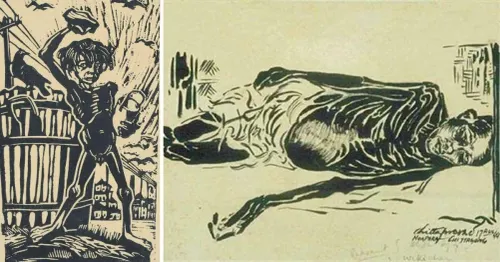
শ্যামাপ্রসাদ মুখার্জির ১২৫ তম জন্মদিনে ছুটি। বাজেটে যে ছুটি ঘোষণা হয়, তা এইবার জানা গেল। জিরাটে ১২৫ ফুট উঁচু, ২০০ কোটি টাকা ব্যয়ে। স্বাধীনতা সংগ্রামে কী অবদান ছিল জানা না গেলেও, চিত্তপ্রসাদের লেখায় রেখায় জানা যায় যে দুর্ভিক্ষে তিনি জিরাটে প্রাসাদোপম গৃহ নির্মাণ করেছিলেন।
A rare clip from a documentary released in 1985 on Kapil Dev.
The film offers a glimpse into Kapil’s early life, featuring his childhood home, school, teachers, and the ground where he honed his cricketing skills.
His wife, Romi Dev, also shares insights into Kapil’s personality, reflecting on both the cricketer and the man behind the success.
১৯৩০ সালের ১লা ফেব্রুয়ারি পশ্চিমবঙ্গের হাওড়া জেলার বাগনানের মুগকল্যাণ গ্রামে জন্মগ্রহণ করেন।পিতা ছিলেন স্থানীয় একটি স্কুলের শিক্ষক।গ্রামের স্কুল থেকে প্রাথমিক পাঠ শেষ করে বারাণসী হিন্দু বিশ্ববিদ্যালয়ে (BHU) ভর্তি হন। সেখান থেকে ফলিত গণিতে (Applied Mathematics) M. Sc লাভ করেন+
📅 On this day, 40 years ago, Diego Maradona produced one of the most iconic and controversial performances in football history during Argentina's World Cup quarter-final clash with England. 🇦🇷🏴
Maradona opened the scoring with the infamous "Hand of God" goal, using his hand to guide the ball into the net. The officials failed to spot the infringement and the goal was allowed to stand, giving Argentina the lead.
Just four minutes later, he delivered the complete opposite: a moment of pure genius. Picking up the ball inside his own half, Maradona dribbled past five England players before scoring what is widely regarded as the "Goal of the Century."
Argentina went on to win the match 2-1 before lifting the 1986 World Cup trophy later that summer. 🏆🇦🇷
Indian physicist Satyendra Nath Bose (1894–1974) made significant contributions to quantum mechanics, leading to the development of Bose-Einstein statistics and the prediction of a new state of matter called the Bose-Einstein condensate. Despite his groundbreaking work, Bose never received a Nobel Prize.
(Image: S.N Bose Archives)
Debendra Mohan Bose's PhD registration certificate issued in 24 July 1918 from Berlin.
D.M. Bose never actually intended to be a physicist. In 1902, he enrolled at the Bengal Engineering College in Shibpur to become a civil engineer. However, he caught a devastating, near-fatal bout of malaria that left his health completely shattered, forcing him to drop out of engineering entirely.
While he was sitting at home wondering what to do next, a family friend dropped by the house to check on him. That friend was none other than Rabindranath Tagore.
Tagore looked at the young, recovering boy, turned to his uncle J.C. Bose & said something to the effect of: "Forget engineering. It is too physically taxing for him right now. Put him into pure Physics instead."
D.M. Bose listened to Tagore, enrolled in Presidency College & ended up topping the entire university in his Master's. The rest is history.
French artist Gustave Caillebotte’s many passionate interests included gardening ~ in his Les Jardiniers (1875), bare-foot gardeners water the lettuces, a line of bell-shaped glass cloches protect tender young plants, & the back wall holds espaliered trees and tall cypresses
In February 1888, Van Gogh left Paris for Arles.
The southern light, he wrote, was ‘sulphur yellow’ and intensely blue; his colors began to burn, pushing him past Paris’s half-tones. #artbots#vangogh
𝐈𝐍𝐃𝐈𝐀 𝐀𝐑𝐄 𝐂𝐇𝐀𝐌𝐏𝐈𝐎𝐍𝐒! 𝐓𝐇𝐄 𝐂𝐔𝐏 𝐈𝐒 𝐂𝐎𝐌𝐈𝐍𝐆 𝐇𝐎𝐌𝐄! 🏆🇮🇳
For the second time, India are crowned the FIH Hockey Women’s Nations Cup champions! ❤️
A dominant unbeaten campaign brings glory as the Women in Blue defeat hosts New Zealand in the Final and bring the trophy home once again. 🔥🏆
#HockeyIndia #IndiaKaGame #FIHNationsCup
In 1925, a young Indian chemist stood at the benches of the world-renowned Sorbonne University in Paris, manually separating complex, highly volatile minerals containing rare elements like Scandium, Europium & Gadolinium. His chemical separation techniques were so breathtakingly precise that France’s greatest authority on rare earths, Professor Georges Urbain, hosted him & benefited from his work greatly. He returned to India with the knowledge to unlock the subcontinents' hidden geological treasures.
But when he asked the University of Calcutta for basic instruments to analyze India's minerals, the administration turned its back, claiming they had no funds. Undeterred, the scientist quietly spent decades slicing his own monthly salary in half to personally buy state of the art European spectrometers, donating them anonymously to his department. He literally bought India's entry into advanced atomic spectroscopy out of his own pocket, only to die a ghost whose name is missing from the very labs he personally built.
Born in Calcutta on 22nd Nov, 1896, Pulin Bihari Sarkar was raised in a family that deeply valued intellectual depth. When he entered Presidency College, he came under the direct, transformative influence of Acharya Prafulla Chandra Ray: the father of Indian chemistry. Acharya Ray taught him a fundamental lesson: Chemistry is not just a career; it is a nationalist duty.
After topping his university exams, Pulin traveled to Paris to work at the Sorbonne under Georges Urbain.
Rare-earth elements were a complete chemical nightmare at the time. Because elements like Scandium & Gadolinium sit closely on the periodic table, their chemical behaviors are nearly identical. Separating them from a single raw mineral chunk required mind-numbing patience & a microscopic understanding of fractional crystallization.
Pulin Sarkar perfected the art. He became so fluent in the science that he mastered French just to write & defend his monumental State Doctorate (Docteur ès Sciences) thesis in their native tongue. To make his experiments even more accurate, he manually trained himself in elite glassblowing, fashioning tiny, specialized micro-filtration gadgets & wash bottles that were so compact he could literally carry an entire micro-testing lab in the palm of his hand.
When Dr. Pulin Bihari Sarkar returned to India as a lecturer, he wanted to map the mineral wealth of his own soil. He knew India was sitting on massive, untouched deposits of rare elements vital for the future of industrial & nuclear chemistry.
But when he walked into the University College of Science in Calcutta, he faced a desolate reality. The lab lacked the sophisticated optical instruments needed to analyze atomic structures. The colonial-era administration flatly refused to provide financial aid.
Pulin faced a choice: give up research & become a comfortable, dry lecturer/find another way. He chose the hard path.
Every single month, for yrs, Pulin took a massive chunk of his professor's salary & set it aside. He did not buy property/luxury items. Instead, he reached out to the elite instrument manufacturers of Europe. Out of his own personal funds, he purchased a Hilger Large E Quartz Spectrograph, a high-precision microphotometer & a constant duration spectrometer: the gold standard of global analytical tech.
He did not brag about it. He quietly set the heavy crates up in the university lab, unboxed them & formally donated them to the Department of Chemistry.
Armed with his self-funded laboratory, Prof. Sarkar & his students began analyzing Indian minerals.
He discovered that a minor magnetic constituent of Indian sphalerite contained rare traces of Germanium, a element that would later become the literal core of modern semiconductor electronics.
He developed revolutionary micro-volumetric techniques to determine complex uranium compositions, providing foundational analytical methods that India's early atomic energy programs quietly relied upon.
He published voluminous work on stabilizing rare elements like Rhenium, mapping chemical symmetries that European text-books actively quoted.
Prof. Sarkar had a pathological hatred for self-promotion. He lived an completely unassuming, minimalist life. After retiring as the Ghosh Professor of Chemistry in 1960, he continued working as an emeritus scientist until his failing eyesight could no longer look through the microscopes. He passed away quietly on 13th Jul, 1971.
Every single time a modern Indian metallurgist uses a high-tech spectrograph to map rare elements/an electronics lab tests a raw mineral for semiconductor traits, they are walking a path carved out by a man who had to buy his own microscopes just to prove his country's worth. Pulin Bihari Sarkar poured his own life blood & wealth into the test tubes of India, but we left the literal Father of Indian Analytical Chemistry to remain a silent ghost fading into the background of his own reactions.
Vi ricordiamo che questa settimana siamo in pausa e non usciamo
Per farci perdonare, vi regaliamo del gossip
Viviane Dièye, vedova del grande Bruno Metsu, pare sia l'attuale compagna di Herve Renard. Anche lei ama i cacciatori di contratto come noi. Ok, non proprio come noi...
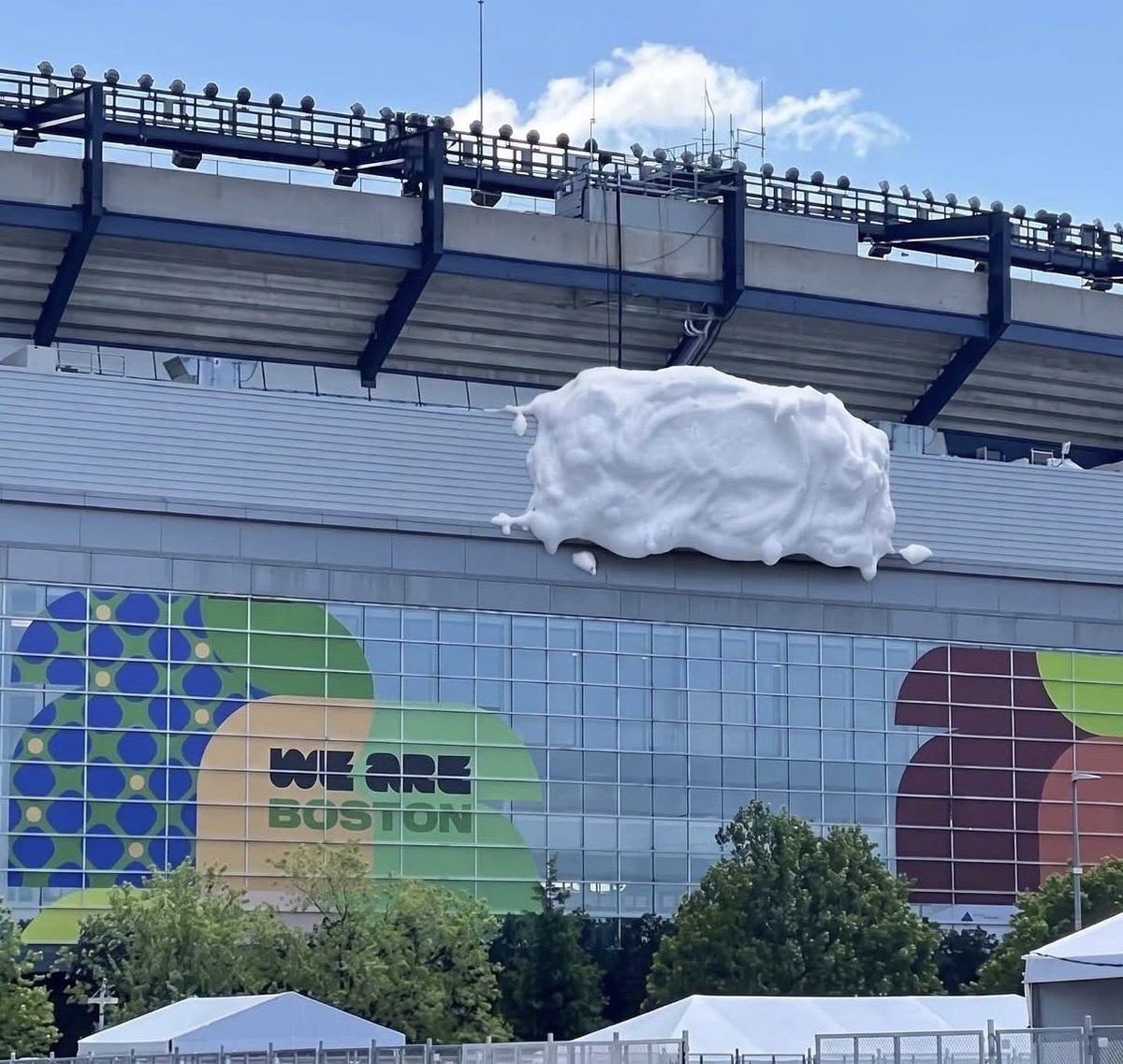
FIFA told Gillette to cover up its logo because it wasn’t an official World Cup sponsor.
Gillette responded by turning it into a giant blob of shaving foam. 😭🪒
Brilliant response from them… 🤣👏