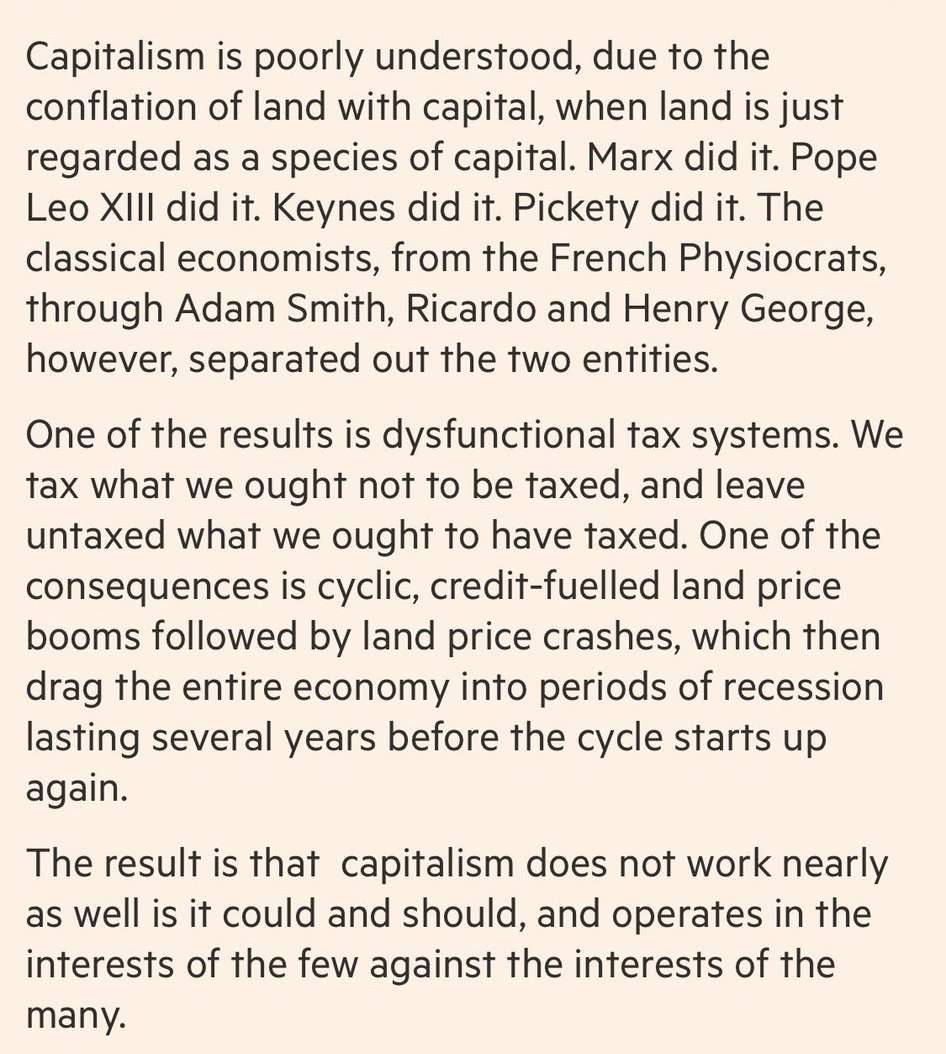
"Capitalism is poorly understood, due to the conflation of land with capital..." ~Comment under a Financial Times article.
#LVT#Physiocrats#HenryGeorge
@GrantCardone@SamCKx@PatrickHeizer You're suggesting we take money from renters in order to fund infrastructure that would increase the value of home they're renting as well as the home they'd like to buy.
Y'all can hate me all you want, but I genuinely believe that property taxes should be much higher, with income taxes much lower.
Reduce taxes on the working man's labor, not the landed gentry.
When I caught Covid, my friends rushed doses of Ivermectin to me — kicked Covid in 24 hours. Here’s a cancer surgeon revealing her discoveries about the impact of Ivermectin on CANCER… 9 min. must see:
A leading neuroscientist just confirmed a “wild conspiracy theory” about incandescent lights and LED bulbs.
Dr. Andrew Huberman told Bill Maher that the long wavelengths in incandescents can improve your vision and “charge your mitochondria.”
Conversely, LED bulbs are “causing disruptions in mitochondrial function.”
DR. ANDREW HUBERMAN: “Your mitochondria function better, you increase ATP production, your metabolism increases in the presence of red light, long wavelength light to the skin.”
“Shine long wavelength light on somebody, watch blood glucose levels in a blood glucose test, and it’s blunted.”
“Now, the LED lights that are commonly used now… that short wavelength light, in the absence of long wavelength light, has been shown to damage the mitochondria.”
“This used to be considered crazy. This was like chemtrail crazy, right?”
“But now we’re starting to see from animal studies and human studies, from Glenn Jeffreys and others, that people’s vision gets better when they get in front of an incandescent bulb once a day.”
“If they get sunlight, which also has long-wavelength light, your vision improves because of improvements in mitochondria.”
Scientific data backs Huberman up: https://t.co/LbqghqHNux
The Biden administration quietly pushed incandescents out of the market through aggressive energy regulations.
But you can still find them online today if you look hard enough.
If something as simple as your light bulb can disrupt your mitochondria, what else is quietly keeping your cells stuck in survival mode?
Once you understand how this works, the root cause of chronic disease starts to look very different. 🧵
A MIT professor taught the same lecture every January for 40 years, and every single time it was standing room only.
I watched it at 2am and it completely rewired how I think about communication.
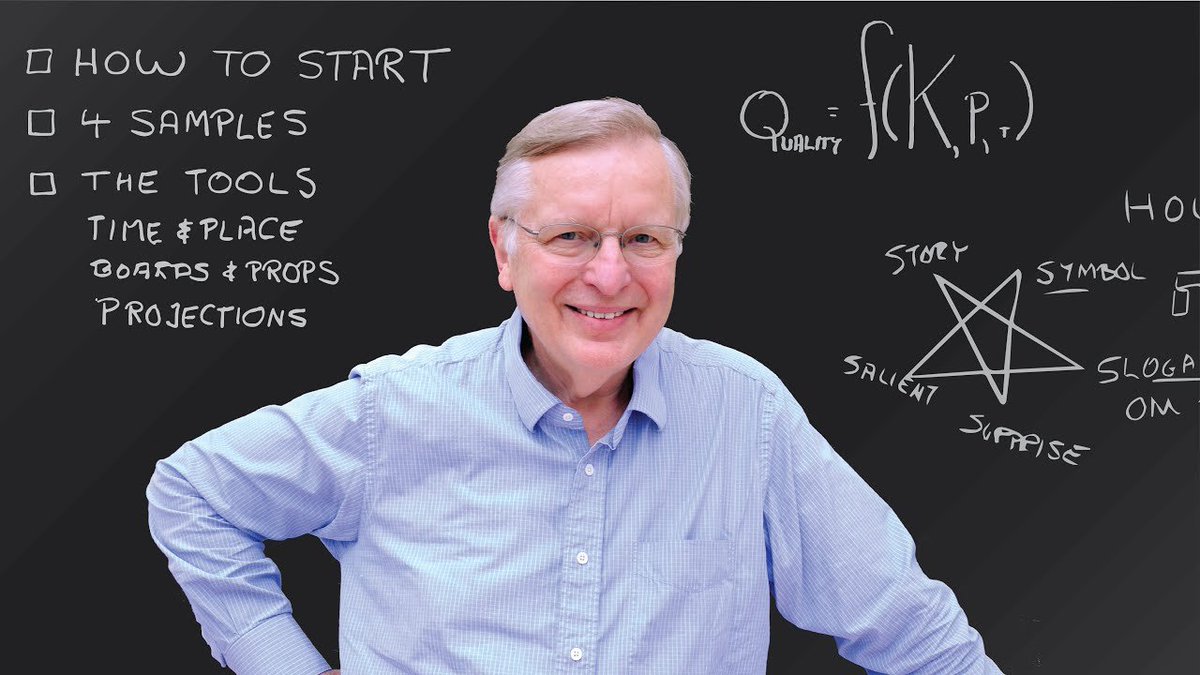
His name was Patrick Winston. The lecture is called "How to Speak."
His opening line hit like a truck: your success in life will be determined largely by your ability to speak, your ability to write, and the quality of your ideas in that order.
Not your GPA. Not your pedigree. Not your IQ. How you speak is what separates people who get heard from people who get ignored.
Here's the framework he drilled into MIT students for four decades.
He said never start with a joke. Start by telling people exactly what they're going to learn. Prime the pump before you pour anything in. He called it the "empowerment promise" give people a reason to stay in their seats within the first 60 seconds.
Then he broke down the 5S rule for making ideas stick: Symbol, Slogan, Surprise, Salient, and Story. Every idea worth remembering hits at least three of these.
The part that floored me was his "near miss" technique. Don't just show what's right show what almost looks right but isn't. That contrast is when the brain actually locks something in permanently.
His final rule before any big talk: end with a contribution, not a summary. Don't recap what you said. Tell people what you gave them that they didn't have before they walked in.
I've used this framework in pitches, interviews, and presentations ever since watching it, and the results are not subtle.
Patrick Winston passed away in 2019, but this lecture is still free on MIT OpenCourseWare. One hour, watched by millions, and it costs absolutely nothing.
The most important class MIT ever put on the internet isn't about code or math. It's about how to make people actually listen to you.
Tumors literally liquefied by sound waves — no scalpel, no chemo, no radiation.
This is histotripsy: focused ultrasound waves that rapidly expand and collapse gases inside cancer cells, destroying them mechanically in minutes while leaving healthy tissue untouched.
In the demo at one of the leading hospitals doing this procedure, doctors showed before-and-after liver tumor images — a large lesion basically gone four months later, with the liver healing naturally.
It’s FDA-approved for liver tumors in the US (since 2023, now available in 18 states) and has early/limited access in the UK, UAE, and Hong Kong, with trials underway for kidney, pancreatic, prostate, and more organs.
The procedure takes 1–3 hours; most patients go home the same day. Side effects are usually mild flu-like symptoms the next day as the body clears the debris.
This isn’t sci-fi — it’s happening now and expanding globally as more units are built.
What do you think — could non-invasive sound-wave tumor destruction become a game-changer, or is it still too early to get excited?
Your thoughts 👇
Never leave your loved one alone in the hospital. Every hour you are allowed to be there, if you are able to, I highly recommend being there.
Be perfectly cordial with staff. But watch over everything like a hawk.
Trust me on this.
The Strait of Hormuz has been closed for 8 days. Everyone thinks this is about oil. This is about what oil becomes. 92% of the world's sulfur comes from refining oil and gas. Close the Strait of Hormuz and you don't just lose 20 million barrels of crude per day. You lose the feedstock for sulfuric acid, the single most produced chemical on Earth. Sulfuric acid is how we extract copper. It's how we extract cobalt. Without it, you can't make transformers, EV batteries, or the substrates inside every data center on the planet. One chemical, made from one feedstock, shipped through one chokepoint. The cascade goes further: Qatar ships 30% of Taiwan's liquefied natural gas through Hormuz. Taiwan has 11 days of reserves left. TSMC, the company that makes 90% of the world's advanced chips, draws 8.9% of Taiwan's total electricity. No gas, no power, no chips. Then food. 33% of the world's nitrogen fertilizer feedstock moves through the Strait. Half of all humans alive today exist because of synthetic nitrogen. Sulfur, semiconductors, food. That makes three supply chains, one 21-nautical-mile chokepoint, and zero domestic alternatives at scale.
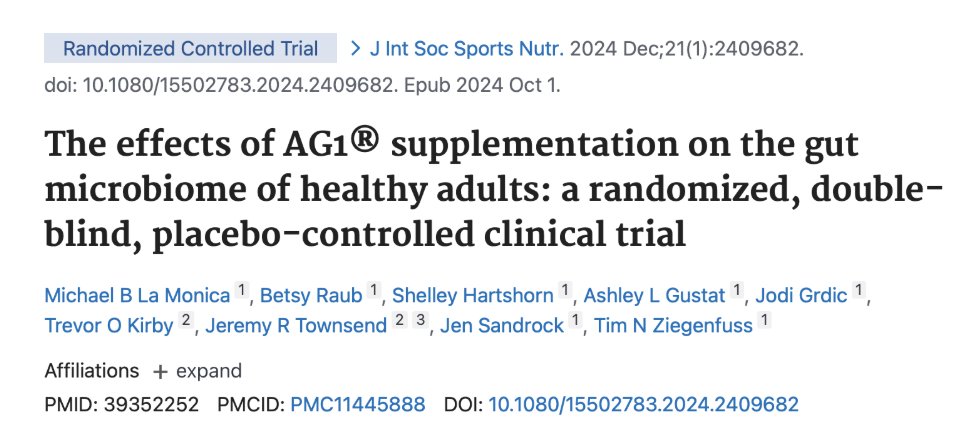
I’d cancel your AG1 subscription. They just completed a clinical trial and the results show no clinical benefit.
This has been obvious for years. AG1 has no real product substance and is fundamentally an influencer heist.
Two simple alternatives (75% and 56% less $), outperform AG1 in randomized clinical trials.
Two simple mono-ingredient alternatives that outperform AG1:
1. Chicory inulin 12 g daily ($20/mo)
2. Resistant starch 30 g daily for 12 weeks ($35/mo)
AG1 is not worth $79/mo.
AG1 study results (4-weeks, N=30):
+ No significant changes in blood biomarkers compared to placebo (CBC, CMP, lipids).
+ No statistically significant improvement in digestive quality-of-life scores (p = 0.058).
+ No significant metabolic or inflammatory biomarker benefits of any kind within the scope of what was measured in the trial.
+ Only small shifts in microbiome taxa but clinically irrelevant at this stage.
+ The intervention did not increase microbiome diversity compared to placebo. Alpha diversity was unchanged, and the taxa changes seen were only from pre- to post-analysis within each group. Between-group differences were limited, and the placebo actually showed similar or even potentially larger shifts. This means the observed changes fall within normal placebo-driven variability, not a real treatment effect. No global microbiota shifts were detected.
Chicory inulin 12 g in constipation patients
+ 12 g of chicory inulin daily for 4 weeks (compared to maltodextrin placebo)
+ Global microbiota shifts: enrichment in butyrate-producing Bifidobacterium and Anaerostipes, and depletion of the pro-inflammatory Bilophila.
+The effect was seen by comparing intervention vs placebo in a cross-over setting, a very rigorous type of clinical analysis in which each person serves as their own control, eliminating a lot of individual random noise.
+ The trial also met its primary objective by improving constipation symptoms in the targeted patient group.
Resistant starch daily 30g for 12 weeks in older adults
+ Significant increase in Bifidobacterium in both middle-aged and elderly participants, with an increase in the beneficial microbiome byproduct butyrate, and reductions in Proteobacteria (including inflammatory Escherichia–Shigella) in the elderly.
+ Resistant starch also significantly reduced blood glucose, and produced greater reductions in blood insulin and insulin resistance (HOMA-IR) in the elderly group.
This was an eye opener from Jensen Huang
When asked whether he would rather relive his 20s or be 20 years old today, this is what he had to say:
"I thought our 20s were happier than these 20s. I think everyone deserves some time to be oblivious, and not wear all of the world's problems on their shoulders on Day 1
We are raising a generation that is very cynical and too informed
They are cynical, not because they are inherently cynical. They are cynical because they see so much stuff. It is too much stuff
You have to build up some internal reserve of optimism. You have to build up some reserve of goodness."
This teacher-turned-cognitive scientist shared a disturbing reality that left the room stunned.
“Our kids are LESS cognitively capable than we were at their age.”
Every previous generation outperformed its parents since we began recording in the late 1800s.
So, what happened?
Screens.
Dr. Jared Horvath explained:
“Gen Z is the first generation in modern history to underperform us on basically every cognitive measure we have, from basic attention to memory, to literacy, to numeracy, to executive functioning, to EVEN GENERAL IQ, even though they go to more school than we did.”
“So why? … The answer appears to be the tools we are using within schools to drive that learning (screens).”
“If you look at the data, once countries adopt digital technology widely in schools, performance goes down significantly, to the point where kids who use computers about five hours per day in school for learning purposes will score over two-thirds of a standard deviation LESS than kids who rarely or never touch tech at school. And that’s across 80 countries.”
But screens aren’t just decimating learning and making new generations less intelligent than the ones before them.
They’re doing something far worse. And when you take a closer look, it isn’t pretty. 🧵
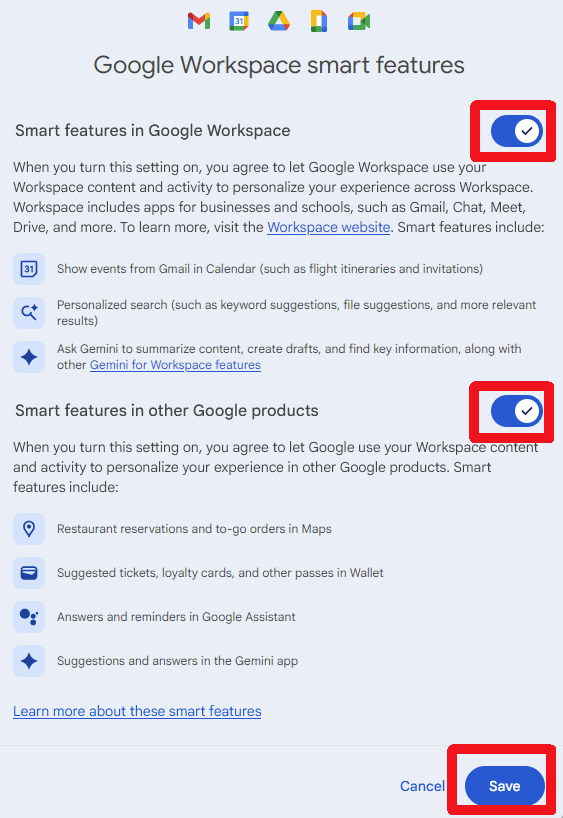
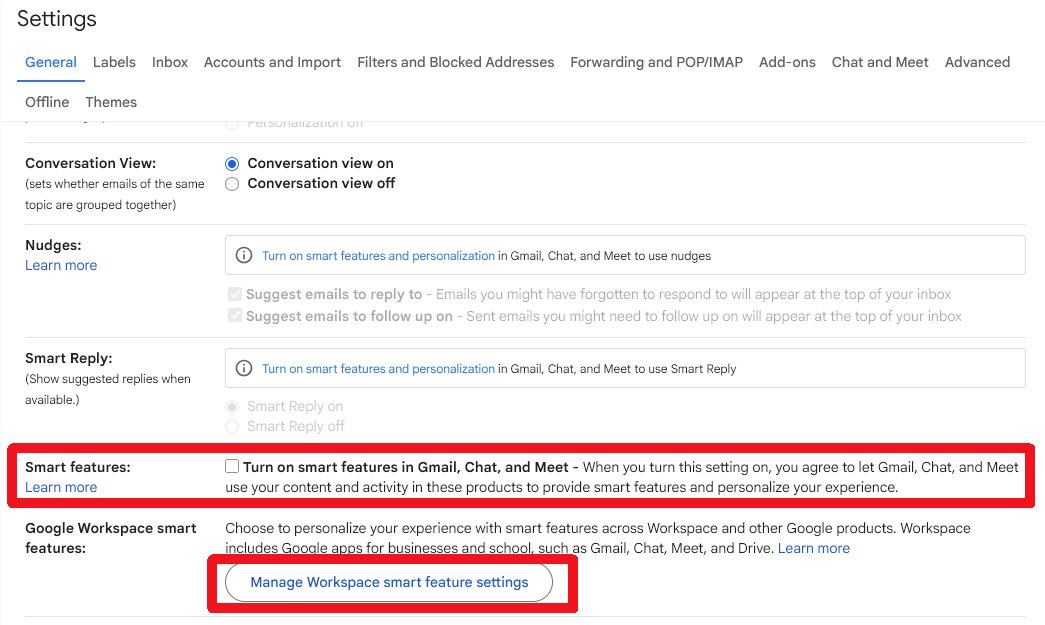
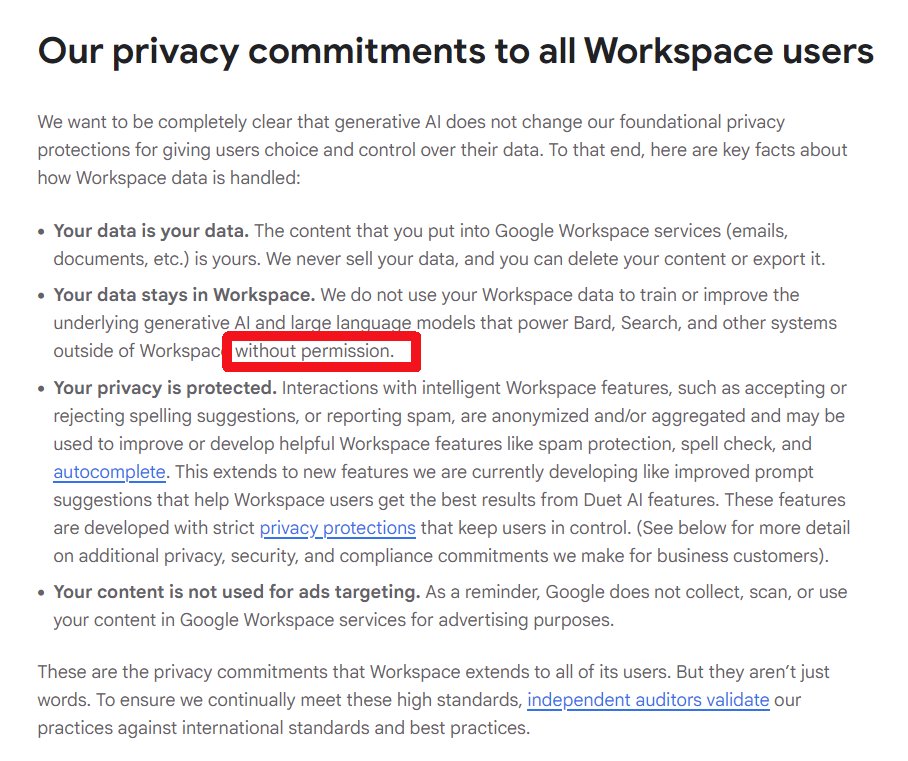
IMPORTANT message for everyone using Gmail.
You have been automatically OPTED IN to allow Gmail to access all your private messages & attachments to train AI models.
You have to manually turn off Smart Features in the Setting menu in TWO locations.
Retweet so every is aware.
@morganhousel@austin_rief If zoning requirements are relaxed, the cost of the building lot will just go up so it might be cheaper to build the house but the final price will still be the same.