What allowing Russia to sell oil products means was heard most clearly in Kyiv just now, when, after repeated attacks on energy facilities with jet-powered “shaheds,” Russia launched a ballistic missile attack as well. Some of the missiles were intercepted. This once again clearly demonstrates Russia’s true intentions. They count on prolonging the war, terrorizing ordinary people, and destroying infrastructure.
Every additional billion dollars they can earn from exports will be spent on nothing but sourcing and importing critical components and equipment to manufacture weapons, upgrading “shaheds,” producing missiles, and recruiting even more mercenaries to fight at the front. Russia’s choice is war. And they will be ready to end it only when they feel that their ability to drag the war out is diminishing.
Unfortunately, the signals Russia received yesterday were entirely different – signals suggesting that it could simply keep attacking. And this needs to be corrected. Strong signals are needed from the United States, Europe, and other partners – signals in support of Ukraine and to RESTRICT Russia’s ability to wage war and terrorize people. Thank you to everyone who stands with Ukraine!
3,500 process steps - all consistent, traceable, and connected.
HORAGE engineers their entire movement in one Onshape document, so one change updates hundreds of linked components instantly. No inconsistencies. No rework.
Get to know how → https://t.co/yLcqEHbxqk
3,500 process steps - all consistent, traceable, and connected.
HORAGE engineers their entire movement in one Onshape document, so one change updates hundreds of linked components instantly. No inconsistencies. No rework.
Get to know how → https://t.co/yLcqEHbxqk
NASA posted an ARTEMIS II crew photograph that I think is one of the best I have seen. This is the continent of Antarctica.
The area around the continent is clear. This is the Southern Ocean that circles Antarctica. The cold air and water tend to rob the moisture in the air. No clouds.
In the middle left of the photo is the Antarctica Peninsula.
To the left of the peninsula is Tierra del Fuego. Continuing up the upper left of the photo is the Atlantic coast of South America.
The land mass in the lower right is probably New Zealand.
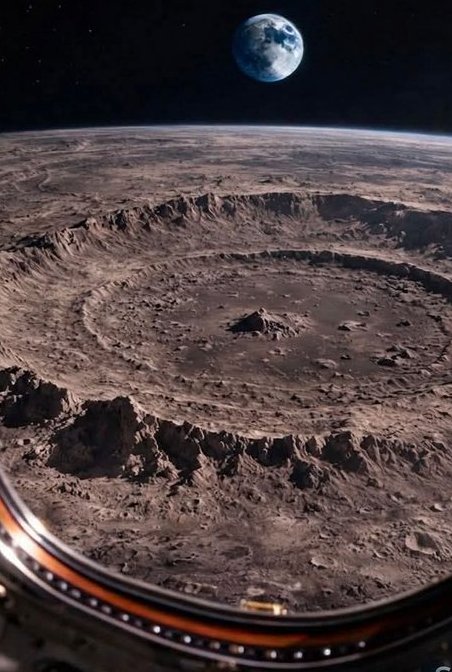
Historic First: Artemis II Crew Becomes the First Humans to Witness the Orientale Basin in Its EntiretyBREAKING: In a stunning milestone for deep-space exploration, the Artemis II astronauts have captured the first-ever view of the Moon’s Orientale Basin with human eyes — seeing its complete, majestic structure for the first time in https://t.co/PDp5ThHPbd the Orion spacecraft swept past the lunar limb during its historic flyby, the crew photographed the entire basin in one breathtaking frame, with Earth hanging beautifully in the black void beyond.A 930-Kilometer Cosmic BullseyeThe Orientale Basin is one of the Moon’s most impressive geological features — a massive multi-ringed impact structure roughly 930 km (580 miles) across. Formed about 3.8 billion years ago by a colossal asteroid or comet strike, its concentric rings ripple outward like frozen waves from a stone dropped into a cosmic pond.The outermost Cordillera ring forms the dramatic outer rim, while inner rings (the Rook mountains) mark zones of dramatic crustal rebound and collapse after the initial impact. Because Orientale straddles the Moon’s near and far sides near the southwestern limb, it has always appeared severely foreshortened and partially hidden from Earth-based telescopes and earlier missions. Only now, from Orion’s unique vantage during the flyby, has the full scale and symmetry been revealed directly to human observers.The Shot of a LifetimeThe image was taken through an Orion window as the crew passed over the site at just the right moment — with perfect illumination highlighting every ridge, ring, and shadow. It’s not just a photo. It’s a pivotal new dataset that complements decades of orbital data from Lunar Reconnaissance Orbiter, GRAIL’s gravity maps, and earlier probes.Entering the Zone of SilenceAs Orion continues its trajectory around the Moon, the crew is now heading into the most isolated phase of the mission: loss of signal. For roughly 40 minutes, the bulk of the Moon will completely block all radio communication with Earth, leaving Reid Wiseman, Victor Glover, Christina Koch, and Jeremy Hansen in profound solitude on the far side.They are venturing where only a handful of Apollo astronauts have gone before — deeper into cislunar space, pushing the boundaries of human exploration farther than any crew since 1970.The Moon is yielding its secrets once again… and humanity is watching live.This is what returning to the Moon — and preparing for Mars — truly looks like.
Creo que en este mundo de imágenes que solo generan ruido, muchas veces sin sentido… no estamos entendiendo la dimensión de lo que estamos viendo en la expedición de Artemis II.